Building Blocks
Sottocategorie di "Building Blocks"
- Acidi boronici e derivati dell'acido boronico(5.784 prodotti)
- Building Blocks Chirali(1.242 prodotti)
- Building Blocks Idrocarburici(6.105 prodotti)
- Building Blocks organici(61.061 prodotti)
Trovati 205399 prodotti di "Building Blocks"
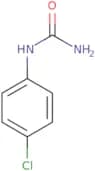
4-Chlorophenylurea
CAS:4-Chlorophenylurea is an urea derivative that has been shown to inhibit the activity of a number of enzymes. It has been used as a chemical intermediate and in the synthesis of other compounds. 4-Chlorophenylurea is stable in dry environments and does not react with air. The enzyme hydrolysis can be inhibited by adding piperonyl butoxide, which prevents the cleavage of the urea ring. The enzyme's activity can also be suppressed by adding acidic compounds such as hydrochloric acid, which increases its activation energy. The chemical structure of 4-Chlorophenylurea contains a carbonyl group and two chloro groups that are responsible for its inhibitory effect on tumour cells. This compound can also be analysed using liquid chromatography methods, which provide structural data about the product being tested.Formula:C7H7ClN2OPurezza:Min. 95%Colore e forma:PowderPeso molecolare:170.6 g/mol2-[(2-Aminoethyl)sulfanyl]acetic acid hydrochloride
CAS:2-[(2-Aminoethyl)sulfanyl]acetic acid hydrochloride is a versatile building block that can be used in a wide range of chemical reactions. This reagent is useful as an intermediate for synthesizing other compounds, such as pharmaceuticals and agrochemicals. In addition, 2-[(2-Aminoethyl)sulfanyl]acetic acid hydrochloride has been proven to be a useful scaffold for producing complex compounds. The compound also has application in the field of fine chemicals, research chemicals, and speciality chemicals.Formula:C4H10ClNO2SPurezza:Min. 95 Area-%Peso molecolare:171.65 g/mol6-Methoxyindole-2-carboxylic acid
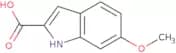
CAS:6-Methoxyindole-2-carboxylic acid (6MI) is a potent inhibitor of the enzyme catechol-O-methyltransferase (COMT). This inhibition prevents the conversion of catecholamines, such as dopamine and norepinephrine, to their corresponding methylated products. COMT inhibitors are used clinically to treat Parkinson's disease and other diseases that result from excessive levels of these neurotransmitters. 6MI is also an effective inhibitor of tyrosinase activity in vitro. It has been shown to inhibit the synthesis of melanin by melanocytes and inhibits the production of eumelanin, which is responsible for black or brown skin pigments. The inhibitory potency of 6MI was found to be greater than that for kojic acid, arbutin, and hydroquinone. Optimization studies showed that 6MI was most potent at a concentration of 1 mM and had an IC50 value of 0.3 mM in
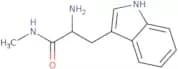
Formula:C10H9NO3Purezza:Min. 95%Colore e forma:PowderPeso molecolare:191.18 g/mol(2S)-2-Amino-3-(1H-indol-3-yl)-N-methylpropanamide
CAS:Acetaminophen is a non-opioid analgesic and antipyretic drug. It is a common medication used to treat pain, fever, and inflammation. Acetaminophen inhibits matrix metalloproteinase (MMPs) by binding to the active site of the enzyme, thus preventing it from breaking down collagen in the extracellular matrix. This inhibition has been shown to be effective against cancer cells. Acetaminophen also has an antioxidative activity that may be due to its ability to inhibit lipid peroxidation, which is important for cell membrane integrity. Acetaminophen has been shown to reduce ulceration in animal models.Formula:C12H15N3OPurezza:Min. 95%Colore e forma:PowderPeso molecolare:217.27 g/mol4-Mercaptoethylpyridine HCl
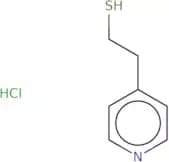
CAS:Used for antibody separation by hydrophobic charge induction chromatography
Formula:C7H9NS·HClPurezza:Min. 97 Area-%Colore e forma:PowderPeso molecolare:175.68 g/mol4-Methoxycinnamic acid methyl ester
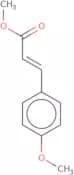
CAS:4-Methoxycinnamic acid methyl ester is an organic compound that has potential use as a reaction modifier. The C8-C9 alkene, which is a common structural motif in fatty acids and cinnamic acid derivatives, can be efficiently produced through the use of this chemical. This organic acid is also used to modify the reactivity of other molecules by changing their steric or electronic properties. It has been shown to increase the diameter of filamentous fungi and to have a significant effect on the selectivity for reactions involving alkene substrates.Formula:C11H12O3Purezza:Min. 95%Colore e forma:PowderPeso molecolare:192.21 g/mol4-(Dimethylamino)benzene-1-sulfonyl chloride
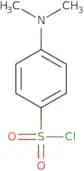
CAS:Versatile small molecule scaffoldFormula:C8H10ClNO2SPurezza:Min. 95%Colore e forma:PowderPeso molecolare:219.69 g/mol6-Methyluracil
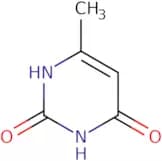
CAS:6-Methyluracil is an antimetabolite that inhibits protein synthesis and is therefore used in the treatment of infectious diseases. 6-Methyluracil has two hydroxyl groups, which are located in adjacent positions on the ring. The optimum concentration for this drug is 3-10 μM, which can be achieved with a malonic acid buffer solution at pH 7.4. 6-Methyluracil reacts with sodium succinate to form an acid complex, which may have antiinflammatory activity. 6-Methyluracil has been shown to inhibit prostaglandin synthesis and exhibits a reaction with radiation to produce photoproducts that can be detected by analytical chemistry.Formula:C5H6N2O2Purezza:Min. 95%Colore e forma:PowderPeso molecolare:126.12 g/molN-Benzyloxycarbonylhydroxylamine
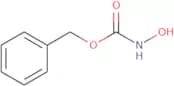
CAS:N-Benzyloxycarbonylhydroxylamine is a synthetic amino acid that is used in the synthesis of hydroxamic acids. It is prepared by the reaction of benzyl groups with sodium periodate and then irradiation with UV light. The resulting triazolopyrimidine can be oxidized to form an N-benzyloxycarbonylhydroxylamine. This product has been shown to be a potent inhibitor of bacterial enzymes, such as β-aminoacylase, which are involved in the synthesis of peptides and proteins. Hydroxamic acids have also been shown to have cationic surfactant properties and are used in synthesizing organocatalysts for organic reactions.Formula:C8H9NO3Purezza:Min. 95%Peso molecolare:167.16 g/molN,N-Dimethyl-4-(piperidin-4-yl)aniline
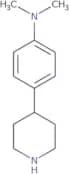
CAS:Versatile small molecule scaffoldFormula:C13H20N2Purezza:90%MinColore e forma:PowderPeso molecolare:204.31 g/mol2-Methyl-3-phenylpyrazine
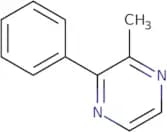
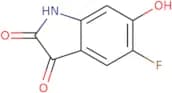
CAS:2-Methyl-3-phenylpyrazine is an organic compound that is a yellow crystalline solid. Its electronic structures are determined by the molecular orbitals, which determine the probability of finding electrons in different regions of space. Excitons are pairs of photons that have been emitted due to the interaction between two molecules, and can be measured with devices such as spectroscopes or photomultipliers. 2-Methyl-3-phenylpyrazine has been used to synthesize carbenes, which are ligands for organometallic compounds. It has also been used in singlet catalysis, where it coordinates with a metal atom to activate another molecule and form a new chemical bond.Formula:C11H10N2Purezza:Min. 95%Colore e forma:PowderPeso molecolare:170.21 g/mol5-Fluoro-6-hydroxy-2,3-dihydro-1H-indole-2,3-dione
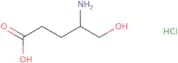
CAS:5-Fluoro-6-hydroxy-2,3-dihydro-1H-indole-2,3-dione is a reagent and useful scaffold for the synthesis of complex compounds. It is a versatile building block that can be used as a precursor in the synthesis of a range of heterocyclic compounds. 5FHDI has been shown to be an excellent reaction component and useful intermediate in organic chemistry. This compound can be used to synthesize various speciality chemicals, such as pesticides and herbicides. 5FHDI is also used as a building block for the synthesis of drugs and pharmaceuticals.Formula:C8H4FNO3Purezza:Min. 95%Peso molecolare:181.12 g/mol(4S)-4-Amino-5-hydroxypentanoic acid hydrochloride
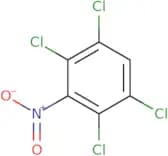
CAS:Versatile small molecule scaffoldFormula:C5H11NO3•HClPurezza:Min. 95%Colore e forma:PowderPeso molecolare:169.61 g/mol1,2,4,5-Tetrachloro-3-nitrobenzene
CAS:1,2,4,5-Tetrachloro-3-nitrobenzene is a heterocyclic compound that has the chemical formula C6H2Cl4NO2. It is a yellow crystalline solid that is soluble in organic solvents. It has applications as a standard for quantitative analysis by nuclear magnetic resonance.Formula:HC6Cl4NO2Purezza:Min. 95%Colore e forma:PowderPeso molecolare:260.89 g/moltert-Butyl 7-oxo-4-azaspiro[2.4]heptane-4-carboxylate
CAS:Tert-Butyl 7-oxo-4-azaspiro[2.4]heptane-4-carboxylate is a versatile building block that is used in the synthesis of complex compounds, research chemicals, and reagents. It is a high quality and useful intermediate with a wide range of applications. Tert-butyl 7-oxo-4-azaspiro[2.4]heptane-4-carboxylate has been shown to be a useful scaffold for the synthesis of biologically active compounds.
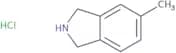
Formula:C11H17NO3Purezza:Min. 95%Colore e forma:Clear LiquidPeso molecolare:211.26 g/mol5-Methyl-2,3-dihydro-1H-isoindole hydrochloride
CAS:5-Methyl-2,3-dihydro-1H-isoindole hydrochloride is a chemical that can be used as a reagent in organic synthesis. It may also be useful in the manufacture of pharmaceuticals, dyes, and other chemicals. 5-Methyl-2,3-dihydro-1H-isoindole hydrochloride is an important building block for making complex compounds and fine chemicals. This chemical has been assigned CAS No. 1204600-16-7, which identifies it as a high quality research chemical.Formula:C9H12ClNPurezza:Min. 95%Colore e forma:PowderPeso molecolare:169.65 g/mol2-Azaspiro[3.3]heptane-1-carboxylic acid hydrochloride
CAS:2-Azaspiro[3.3]heptane-1-carboxylic acid hydrochloride is a versatile building block that can be used in the synthesis of a wide variety of chemical compounds. It is a high quality, useful intermediate that has been shown to be an effective scaffold for synthesis of various complex compounds.
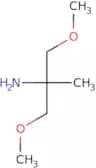
Formula:C7H11NO2•HClPurezza:Min. 95%Peso molecolare:177.63 g/mol1,3-Dimethoxy-2-methylpropan-2-amine
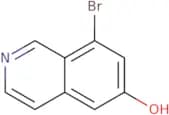
CAS:1,3-Dimethoxy-2-methylpropan-2-amine is a chemical compound that is an intermediate for the synthesis of other chemicals. It can be used as a reaction component in organic chemistry to form useful scaffolds and high quality research chemicals. This compound has many uses in bioorganic chemistry, such as being a versatile building block for complex compounds and a useful intermediate for the synthesis of other chemicals. 1,3-Dimethoxy-2-methylpropan-2-amine is also said to have potential applications in the treatment of diseases such as cancer.Formula:C6H15NO2Purezza:Min. 95%Colore e forma:PowderPeso molecolare:133.19 g/mol8-Bromoisoquinolin-6-ol
CAS:Versatile small molecule scaffoldFormula:C9H6BrNOPurezza:Min. 95%Colore e forma:PowderPeso molecolare:224.05 g/molAcrylamide
CAS:Used for gel preparation for protein electrophoresisFormula:C3H5NOPurezza:Min. 95%Colore e forma:PowderPeso molecolare:71.08 g/mol

![2-[(2-Aminoethyl)sulfanyl]acetic acid hydrochloride](/_next/image/?url=https%3A%2Fstatic.cymitquimica.com%2Fproducts%2F3D%2Fthumb-webp%2FKCA11666.webp&w=3840&q=75)
![tert-Butyl 7-oxo-4-azaspiro[2.4]heptane-4-carboxylate](/_next/image/?url=https%3A%2Fstatic.cymitquimica.com%2Fproducts%2F3D%2Fthumb-webp%2FRID73628.webp&w=3840&q=75)
![2-Azaspiro[3.3]heptane-1-carboxylic acid hydrochloride](/_next/image/?url=https%3A%2Fstatic.cymitquimica.com%2Fproducts%2F3D%2Fthumb-webp%2FJBD30513.webp&w=3840&q=75)