Building Blocks
Questa sezione contiene prodotti fondamentali per la sintesi di composti organici e biologici. Building blocks sono i materiali di partenza essenziali utilizzati per costruire molecole complesse attraverso varie reazioni chimiche. Svolgono un ruolo critico nella scoperta di farmaci, nella scienza dei materiali e nella ricerca chimica. Presso CymitQuimica, offriamo una gamma diversificata di building blocks di alta qualità per supportare le tue ricerche innovative e progetti industriali, assicurandoti di avere i componenti essenziali per una sintesi di successo.
Sottocategorie di "Building Blocks"
- Acidi boronici e derivati dell'acido boronico(5.756 prodotti)
- Building Blocks Chirali(1.242 prodotti)
- Building Blocks Idrocarburici(6.093 prodotti)
- Building Blocks organici(60.525 prodotti)
Trovati 195536 prodotti di "Building Blocks"
Ordinare per
Purezza (%)
0
100
|
0
|
50
|
90
|
95
|
100
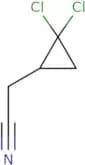
2-(2,2-Dichlorocyclopropyl)acetonitrile
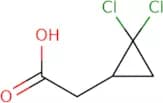
CAS:<p>2-(2,2-Dichlorocyclopropyl)acetonitrile is a polyatomic molecule that is often used in the synthesis of other compounds. It has been shown to react with sodium cyanide to form a compound called covid-19, which is then reacted with piperidine and thiophenol to form polyatomic molecules. Covid-19 is also the active ingredient in a vaccine that was developed as a response to the pandemic of H1N1 influenza. This drug has been shown to be effective against influenza A strains and other flu viruses, including avian flu.</p>Formula:C5H5Cl2NPurezza:Min. 95%Peso molecolare:150 g/mol2-(2,2-Dichlorocyclopropyl)acetic acid
CAS:<p>Versatile small molecule scaffold</p>Formula:C5H6Cl2O2Purezza:Min. 95%Peso molecolare:169 g/mol1,8-Dioxo-1,3,4,8-tetrahydro-2H-pyrido[1,2-a]pyrazine-6-carboxylic acid
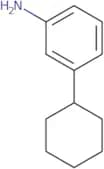
CAS:<p>Versatile small molecule scaffold</p>Formula:C9H8N2O4Purezza:Min. 95%Peso molecolare:208.17 g/mol3-Cyclohexylaniline
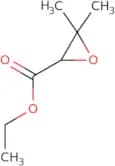
CAS:<p>Versatile small molecule scaffold</p>Formula:C12H17NPurezza:Min. 95%Peso molecolare:175.27 g/molEthyl 3,3-dimethyloxirane-2-carboxylate
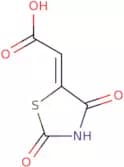
CAS:<p>Versatile small molecule scaffold</p>Formula:C7H12O3Purezza:Min. 95%Peso molecolare:144.17 g/mol(2Z)-(2,4-Dioxo-1,3-thiazolidin-5-ylidene)acetic acid
CAS:<p>Versatile small molecule scaffold</p>Formula:C5H3NO4SPurezza:Min. 95%Peso molecolare:173.15 g/mol1-Benzyloxy-3-iodopropane
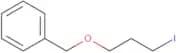
CAS:<p>1-Benzyloxy-3-iodopropane is an enantiopure prenyl alcohol, which can be used in the alkylation of unsaturated fatty acids. It has been used to synthesize pseudoephedrine with yields of up to 97% and chirality that is stereospecific and enantiopure. In addition, it can be used as a reagent for biomolecular studies.</p>Formula:C10H13IOPurezza:Min. 95%Peso molecolare:276.11 g/mol2-Chloro-4-methylbenzenethiol
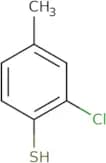
CAS:<p>Versatile small molecule scaffold</p>Formula:C7H7ClSPurezza:Min. 95%Peso molecolare:158.65 g/mol4-(1,3,4-Oxadiazol-2-yl)phenol
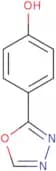
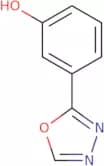
CAS:<p>4-(1,3,4-Oxadiazol-2-yl)phenol (ODOP) is a potent and selective apoptosis inducer that causes the death of cancer cells by generating reactive oxygen species. ODOP activates polyphosphoric acid in the mitochondria to form reactive oxygen species. The cytotoxicity of ODOP is dose-dependent and can be reconfirmed by nucleophilic attack on DNA. ODOP has been shown to have pharmacokinetic properties that are similar to those of other drugs in the same class, such as acylhydrazides. These drugs are rapidly metabolized by esterases or glucuronidases in vivo and are excreted mainly through urine.</p>Formula:C8H6N2O2Purezza:Min. 95%Peso molecolare:162.15 g/mol3-(1,3,4-Oxadiazol-2-yl)phenol
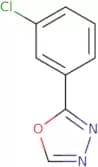
CAS:<p>Versatile small molecule scaffold</p>Formula:C8H6N2O2Purezza:Min. 95%Peso molecolare:162.15 g/mol2-(3-Chlorophenyl)-1,3,4-oxadiazole
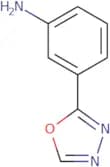
CAS:<p>Versatile small molecule scaffold</p>Formula:C8H5ClN2OPurezza:Min. 95%Peso molecolare:180.59 g/mol3-(1,3,4-Oxadiazol-2-yl)aniline
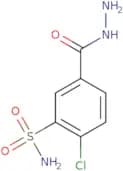
CAS:<p>Versatile small molecule scaffold</p>Formula:C8H7N3OPurezza:Min. 95%Peso molecolare:161.16 g/mol2-Chloro-5-(hydrazinecarbonyl)benzene-1-sulfonamide
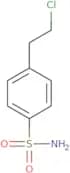
CAS:<p>2-Chloro-5-(hydrazidecarbonyl)benzene-1-sulfonamide is an aliphatic aldehyde that is used to synthesize other chemicals. It can be synthesized from the condensation of 2-chloroacetaldehyde with hydrazine and formaldehyde in the presence of a base. This compound has been shown to have diuretic and saluretic properties, which are due to its ability to increase urine flow by inhibiting reabsorption of sodium ions in the kidney tubules. 2-Chloro-5-(hydrazidecarbonyl)benzene-1-sulfonamide is soluble in alcohols and dioxane, but insoluble in water. This compound hydrolyzes in acidic conditions, so it cannot be stored for long periods without protection from moisture.</p>Formula:C7H8ClN3O3SPurezza:Min. 95%Peso molecolare:249.68 g/mol4-(2-Chloroethyl)benzene-1-sulfonamide
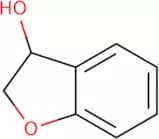
CAS:<p>Versatile small molecule scaffold</p>Formula:C8H10ClNO2SPurezza:Min. 95%Peso molecolare:219.69 g/mol2,3-Dihydro-1-benzofuran-3-ol
CAS:<p>Versatile small molecule scaffold</p>Formula:C8H8O2Purezza:Min. 95%Peso molecolare:136.15 g/mol3-(Hydroxymethyl)benzo[b]thiophene
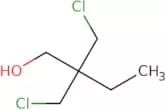
CAS:<p>3-(Hydroxymethyl)benzo[b]thiophene is a potential anticancer agent that inhibits the PI3K/Akt pathway. It has been shown to have cytotoxic effects on colorectal adenocarcinoma cells, as well as other cancer cells. 3-(Hydroxymethyl)benzo[b]thiophene also binds to DNA and alters the structure of the double helix, leading to inhibition of DNA synthesis, which may lead to cell death. The compound has been tested in vitro and found to be effective against leukemia and colon cancer cells. It has also shown anticancer activity in vivo in mice, with no observable side effects or toxicity.</p>Formula:C9H8OSPurezza:Min. 95%Peso molecolare:164.22 g/mol2,2-Bis(chloromethyl)butan-1-ol
CAS:<p>Versatile small molecule scaffold</p>Formula:C6H12Cl2OPurezza:Min. 95%Peso molecolare:171.06 g/mol1,3-Diphenylpropan-2-ol
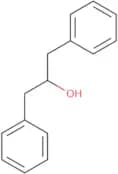
CAS:<p>1,3-Diphenylpropan-2-ol is an organic molecule that can be used in analytical toxicology. It has been shown to have a nonequivalence of 1,3-diphenylpropane and 2-hydroxypentane. The functional groups present on this molecule are the silicon atom and the organic acids. This molecule is metastable due to its radical coupling. 1,3-Diphenylpropan-2-ol is found in a number of chemical reactions including bond cleavage, aldehyde formation, alkene formation, and asymmetric synthesis. Cleavage products include 3-phenylpropanoic acid, phenylacetic acid, and phenylglycolic acid.</p>Formula:C15H16OPurezza:Min. 95%Peso molecolare:212.29 g/mol1-tert-Butylpiperidin-4-ol
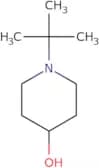
CAS:<p>1-tert-Butylpiperidin-4-ol is a chemical compound that is used as a model drug. It is injected into the muscle to calibrate a signal and extract spatial information. The nitroxyl radical has been shown to have radical scavenging activity, and liposomal encapsulation of the drug may be an effective way to deliver it to cells in the body. 1-tert-Butylpiperidin-4-ol has been shown to have lipophilic properties, which would allow it to cross the blood brain barrier more easily than other drugs with hydrophilic properties.</p>Formula:C9H19NOPurezza:Min. 95%Peso molecolare:157.26 g/mol2-Cyano-N-(4-methoxyphenyl)acetamide
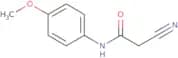
CAS:<p>2-Cyano-N-(4-methoxyphenyl)acetamide is a synthetic compound with inhibitory effects on the enzyme dipeptidyl peptidase IV (DPP-IV). This enzyme is involved in the degradation of incretins, such as glucagon-like peptide 1 (GLP-1), and has been implicated in the development of type 2 diabetes mellitus. The synthesis and characterization of this compound was reported in a paper published in 2000. It has been shown to be a potent inhibitor of DPP-IV, with IC50 values of 0.10 μM for rat pancreatic DPP-IV and 0.06 μM for human recombinant enzyme. The effects of this compound on GLP-1 levels were also studied, showing that it had no effect on basal levels but significantly increased postprandial GLP-1 secretion.</p>Formula:C10H10N2O2Purezza:Min. 95%Peso molecolare:190.2 g/mol

![1,8-Dioxo-1,3,4,8-tetrahydro-2H-pyrido[1,2-a]pyrazine-6-carboxylic acid](/_next/image/?url=https%3A%2Fstatic.cymitquimica.com%2Fproducts%2F3D%2Fthumb-webp%2FFAA36842.webp&w=3840&q=75)
![3-(Hydroxymethyl)benzo[b]thiophene](/_next/image/?url=https%3A%2Fstatic.cymitquimica.com%2Fproducts%2F3D%2Fthumb-webp%2FFAA38124.webp&w=3840&q=75)