Building Blocks
Questa sezione contiene prodotti fondamentali per la sintesi di composti organici e biologici. Building blocks sono i materiali di partenza essenziali utilizzati per costruire molecole complesse attraverso varie reazioni chimiche. Svolgono un ruolo critico nella scoperta di farmaci, nella scienza dei materiali e nella ricerca chimica. Presso CymitQuimica, offriamo una gamma diversificata di building blocks di alta qualità per supportare le tue ricerche innovative e progetti industriali, assicurandoti di avere i componenti essenziali per una sintesi di successo.
Sottocategorie di "Building Blocks"
- Acidi boronici e derivati dell'acido boronico(5.756 prodotti)
- Building Blocks Chirali(1.242 prodotti)
- Building Blocks Idrocarburici(6.095 prodotti)
- Building Blocks organici(61.037 prodotti)
Trovati 196200 prodotti di "Building Blocks"
Ordinare per
Purezza (%)
0
100
|
0
|
50
|
90
|
95
|
100
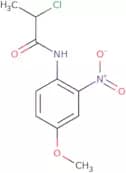
2-Chloro-N-(4-methoxy-2-nitrophenyl)propanamide
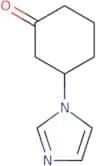
CAS:<p>Versatile small molecule scaffold</p>Formula:C10H11ClN2O4Purezza:Min. 95%Peso molecolare:258.66 g/mol3-(1H-Imidazol-1-yl)cyclohexan-1-one
CAS:<p>Versatile small molecule scaffold</p>Formula:C9H12N2OPurezza:Min. 95%Peso molecolare:164.2 g/mol2-{[4-(Thiophen-2-yl)-6-(trifluoromethyl)pyrimidin-2-yl]sulfanyl}acetic acid
CAS:<p>Versatile small molecule scaffold</p>Formula:C11H7F3N2O2S2Purezza:Min. 95%Peso molecolare:320.3 g/molN-[2-(Hydroxymethyl)phenyl]furan-2-carboxamide
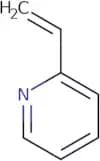
CAS:<p>Versatile small molecule scaffold</p>Formula:C12H11NO3Purezza:Min. 95%Peso molecolare:217.22 g/mol2-Vinylpyridine, stabilized with TBC
CAS:<p>2-Vinylpyridine is a reactive, organic compound that can form hydrogen bonds with other molecules. It has been used in the synthesis of detergent compositions and as a reactant to produce polymers. 2-Vinylpyridine is also used in the treatment of autoimmune diseases, such as hepatitis C. 2-Vinylpyridine has been shown to bind to proteins by forming hydrogen bonds with amino acid residues that have an amine group or a hydroxyl group. The binding of 2-vinyl pyridine to these sites leads to conformational changes and enzyme inhibition. 2-Vinylpyridine can be synthesized from pyridine and hydrochloric acid in a two step process involving condensation followed by cyclization. 2-Vinylpyridine was first synthesized by Kolbe and Woodward in 1883 using x-ray crystallography, which involved exposing crystals of pyridine to x-rays, thereby providing structural</p>Formula:C7H7NPurezza:Min. 95%Colore e forma:Clear LiquidPeso molecolare:105.14 g/molVinyltributyltin
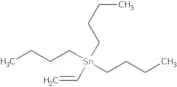
CAS:Prodotto controllato<p>Vinyltributyltin is a dibutyltin oxide (DBTO) enantiomer that has been shown to inhibit the HIV-1 protease. Vinyltributyltin has also been shown to reduce inflammation in bowel disease, as well as to have synergistic effects with other drugs in the treatment of cancer and inflammatory bowel disease. The mechanism of action of vinyltributyltin is not yet known, but it may be related to its ability to inhibit the quinazolone-dependent formation of reactive oxygen species. Vinyltributyltin also inhibits the NS3 protease, which is an enzyme involved in hepatitis C virus replication.</p>Formula:C14H30SnPurezza:Min. 95%Colore e forma:Colorless Clear LiquidPeso molecolare:317.1 g/mol2,4,6-Trimethylbenzonitrile
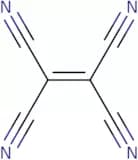
CAS:<p>2,4,6-Trimethylbenzonitrile (TMBN) is a reactive unsaturated ketone that reacts with phosphorus pentachloride to form the corresponding chloroform. It is used in nucleophilic substitution reactions and can be hydrolyzed by hydrochloric acid to form an n-oxide. The reaction mechanism of TMBN with phosphorus pentachloride has been studied using molecular modeling and NMR spectroscopy. TMBN can be converted into an oxide, which can react with hydrogen chloride to form the corresponding chloroform. Reaction products include the 2,4,6-trichlorobenzonitrile (TCBN), which is a carcinogen.</p>Formula:C10H11NPurezza:Min. 95%Colore e forma:PowderPeso molecolare:145.2 g/molTetracyanoethylene
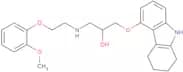
CAS:<p>Used for post-functional addition to polyphenylacetylene derivatives</p>Formula:C6N4Colore e forma:White PowderPeso molecolare:128.09 g/mol6,7,8,9-Tetrahydro carvedilol
CAS:<p>Please enquire for more information about 6,7,8,9-Tetrahydro carvedilol including the price, delivery time and more detailed product information at the technical inquiry form on this page</p>Formula:C24H30N2O4Purezza:Min. 95%Peso molecolare:410.51 g/molTazarotenic acid methyl ester
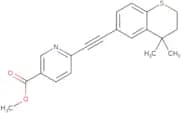
CAS:<p>Please enquire for more information about Tazarotenic acid methyl ester including the price, delivery time and more detailed product information at the technical inquiry form on this page</p>Formula:C20H19NO2SPurezza:Min. 95%Peso molecolare:337.44 g/mol3-Tolperisone hydrochloride
CAS:<p>Please enquire for more information about 3-Tolperisone hydrochloride including the price, delivery time and more detailed product information at the technical inquiry form on this page</p>Formula:C16H23NO•HClPurezza:Min. 95%Peso molecolare:281.82 g/molTrisodium 7-hydroxynaphthalene-1,3,6-trisulphonate
CAS:<p>Please enquire for more information about Trisodium 7-hydroxynaphthalene-1,3,6-trisulphonate including the price, delivery time and more detailed product information at the technical inquiry form on this page</p>Formula:C10H8O10S3•Na3Purezza:Min. 95%Peso molecolare:453.33 g/mol(+)-α-Tocopherol-d6
CAS:Prodotto controllato<p>Please enquire for more information about (+)-α-Tocopherol-d6 including the price, delivery time and more detailed product information at the technical inquiry form on this page</p>Formula:C29H44D6O2Purezza:Min. 95%Peso molecolare:436.74 g/molTetrahydrodicyclopentadiene
CAS:<p>Please enquire for more information about Tetrahydrodicyclopentadiene including the price, delivery time and more detailed product information at the technical inquiry form on this page</p>Formula:C10H16Purezza:Min. 95%Peso molecolare:136.23 g/moltrans-4,5-Epoxy-2(E)-decenal
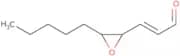
CAS:<p>Trans-4,5-Epoxy-2(E)-Decenal is a polyunsaturated molecule that can react with amines to form nitrosamines. This compound is found in fried foods and has been shown to inhibit the activity of detoxification enzymes. Trans-4,5-Epoxy-2(E)-Decenal reacts with reactive oxygen species and forms DNA adducts, which are mutagenic and carcinogenic. It also is able to induce the production of malondialdehyde, a marker for lipid peroxidation. The effect of this compound on cancer cells was assessed using CD1 mouse skin cells in vitro and in vivo. In vitro studies showed that trans-4,5-epoxy-2(E)-decenal inhibited transcriptional regulation by downregulating fatty acid synthase expression and upregulating p21 protein expression. In vivo studies demonstrated that trans-4,5-epoxy-2(E)-decenal</p>Formula:C10H16O2Purezza:Min. 95%Peso molecolare:168.23 g/molTriallyl Isocyanurate
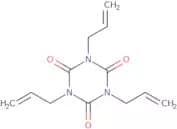
CAS:<p>Increases crosslinking efficiency in manufacture of polymers and rubbers</p>Formula:C12H15N3O3Purezza:Min. 95%Peso molecolare:249.27 g/mol2,3,5-Trichloropyridine
CAS:<p>2,3,5-Trichloropyridine is a chemical compound that reacts with chlorine and hydroxide to form hydrogen chloride and sodium hydroxide. It is used in the wastewater treatment process as an oxidizing agent for the removal of organic compounds from water. 2,3,5-Trichloropyridine is also used as a chlorinating agent for various purposes such as the production of acrylonitrile or the destruction of hazardous wastes. The reaction products are hydrochloric acid and sodium carbonate. This substance may react with nucleophiles to form more reactive species such as nitronium ions.</p>Formula:C5H2Cl3NPurezza:Min. 95%Peso molecolare:180.925281,2,3,4-Tetrahydro-2,6-naphthyridine
CAS:<p>1,2,3,4-Tetrahydro-2,6-naphthyridine is a metalated naphthyridine. It is an inhibitor of the transporter and reuptake transporter of histamine and serotonin. The compound has been shown to bind to the transporter site of neurotransmitters such as serotonin and histamine. This binding blocks the uptake and release of neurotransmitters from nerve cells, preventing the transmission of nerve impulses.</p>Formula:C8H10N2Purezza:Min. 95%Peso molecolare:134.18 g/molTripropylphosphine
CAS:<p>Tripropylphosphine is a fatty acid that can be synthesized by reacting tripropyl alcohol with phosphorus trichloride. Tripropylphosphine is soluble in organic solvents, and has an optical rotation of +58°. It has been shown to have cancer-inhibiting properties, as well as the ability to inhibit tumor growth and induce apoptosis in cancer cells. This compound may also be used as a growth regulator, since it inhibits the synthesis of certain proteins and enzymes.</p>Formula:C9H21PPurezza:Min. 95%Peso molecolare:160.24 g/molp-Toluenesulfonic acid monohydrate
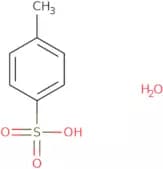
CAS:<p>p-Toluenesulfonic acid monohydrate is a white, crystalline solid that is soluble in water. It is used as a catalyst for the synthesis of various organic compounds and pharmaceuticals. p-Toluenesulfonic acid monohydrate has been shown to have an effect on the thermal expansion of certain polymers and to be useful for preparation of medicinal preparations with high uptake. This compound can also be used as a carbon source for the production of various organic compounds.</p>Formula:CH3C6H4SO3H·H2OColore e forma:PowderPeso molecolare:190.22 g/mol

![2-{[4-(Thiophen-2-yl)-6-(trifluoromethyl)pyrimidin-2-yl]sulfanyl}acetic acid](/_next/image/?url=https%3A%2Fstatic.cymitquimica.com%2Fproducts%2F3D%2Fthumb-webp%2FFVA05460.webp&w=3840&q=75)
![N-[2-(Hydroxymethyl)phenyl]furan-2-carboxamide](/_next/image/?url=https%3A%2Fstatic.cymitquimica.com%2Fproducts%2F3D%2Fthumb-webp%2FFVA05286.webp&w=3840&q=75)