


Building Blocks
Questa sezione contiene prodotti fondamentali per la sintesi di composti organici e biologici. Building blocks sono i materiali di partenza essenziali utilizzati per costruire molecole complesse attraverso varie reazioni chimiche. Svolgono un ruolo critico nella scoperta di farmaci, nella scienza dei materiali e nella ricerca chimica. Presso CymitQuimica, offriamo una gamma diversificata di building blocks di alta qualità per supportare le tue ricerche innovative e progetti industriali, assicurandoti di avere i componenti essenziali per una sintesi di successo.
Sottocategorie di "Building Blocks"
- Acidi boronici e derivati dell'acido boronico(5.756 prodotti)
- Building Blocks Chirali(1.242 prodotti)
- Building Blocks Idrocarburici(6.095 prodotti)
- Building Blocks organici(61.038 prodotti)
Trovati 196817 prodotti di "Building Blocks"
Ordinare per
Purezza (%)
0
100
|
0
|
50
|
90
|
95
|
100
(2R,5R)-1-[(tert-Butoxy)carbonyl]-5-phenylpyrrolidine-2-carboxylic acid
CAS:<p>Versatile small molecule scaffold</p>Formula:C16H21NO4Purezza:Min. 95%Peso molecolare:291.3 g/mol5-(2-Aminoethyl)-2-pyridinamine dihydrochloride
CAS:<p>Versatile small molecule scaffold</p>Formula:C7H13Cl2N3Purezza:Min. 95%Peso molecolare:210.1 g/mol5H,6H,7H,8H,9H-[1,2,4]Triazolo[4,3-d][1,4]diazepine dihydrochloride
CAS:<p>Versatile small molecule scaffold</p>Formula:C6H12Cl2N4Purezza:Min. 95%Peso molecolare:211.09 g/molrac-(1R,3S)-N1,N1-Dimethylcyclopentane-1,3-diamine dihydrochloride
CAS:<p>Versatile small molecule scaffold</p>Formula:C7H18Cl2N2Purezza:Min. 95%Peso molecolare:201.1 g/molrac-(1R,3R)-3-(Dimethylamino)cyclobutane-1-carboxylic acid hydrochloride
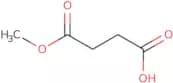
CAS:<p>Versatile small molecule scaffold</p>Formula:C7H14ClNO2Purezza:Min. 95%Peso molecolare:179.6 g/mol4-Methoxy-4-oxobutanoic acid
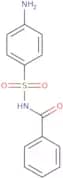
CAS:<p>Succinic acid monomethyl ester (SAMME) is an antimicrobial agent that inhibits the enzyme activities of succinate dehydrogenase, producing mitochondrial membrane depolarization and neuronal death. SAMME has been shown to be effective in treating syncytial virus infection and solid tumours, although it has not been studied in depth. The biological sample used for this study was water vapor, which is a substrate molecule for the enzyme succinic acid semialdehyde dehydrogenase (SASD). This enzyme converts SAMME to succinic acid, which can then inhibit phosphofructokinase-1 or pyruvate kinase, leading to cellular necrosis.</p>Formula:C5H8O4Purezza:Min. 95%Peso molecolare:132.11 g/molSulfabenzamide
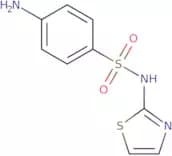
CAS:<p>Sulfabenzamide is a sulfa drug that has been used in the treatment of infectious diseases. It inhibits microbial growth by inhibiting synthesis of folic acid, which is essential for bacterial growth. Sulfabenzamide has been shown to have antimicrobial effects against a number of microorganisms, including several Gram-positive and Gram-negative bacteria. This drug also has anti-inflammatory properties and can be used in the treatment of bowel disease, such as ulcerative colitis. Sulfabenzamide is used to treat choroidal neovascularization in patients with age-related macular degeneration. This drug binds to glycol esters on the surface of human erythrocytes and can be extracted using dispersive solid-phase extraction (DSPE). The DSPE extract was analyzed by a LC-MS/MS method and found to contain sulfabenzamide and sulfadiazine.</p>Formula:C13H12N2O3SPurezza:Min. 95%Colore e forma:White PowderPeso molecolare:276.31 g/molSulfathiazole
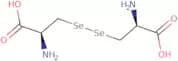
CAS:<p>Sulfathiazole is a sulfonamide antibacterial agent with a chemical structure similar to that of the sulfa drugs. It is active against Gram-positive and Gram-negative bacteria, including those resistant to other antibiotics. Sulfathiazole has been shown to be effective against infectious diseases caused by Escherichia coli, Klebsiella pneumoniae, Proteus mirabilis, and Salmonella typhi. The mechanism of action of sulfathiazole is not fully understood. One hypothesis is that it inhibits the synthesis of folic acid in bacteria by inhibiting enzymes involved in purine metabolism. This drug also has complex pharmacological effects on human cells because it can inhibit both receptor activity and enzyme activity in complex cellular processes such as protein synthesis and DNA synthesis.</p>Formula:C9H9N3O2S2Purezza:Min. 95%Colore e forma:PowderPeso molecolare:255.32 g/molD-Selenocystine
CAS:<p>Selenocystine is a non-protein amino acid that belongs to the group of selenoamino acids. Selenocystine is found in plants and microorganisms, where it plays a role in bacterial metabolism. Selenocystine can be synthesized by bacteria from D-glutamate, cysteine, and hydrogen sulfide. It has been shown to have synergistic effects with other compounds such as carbon sources, hydroxyl ions, and subunits. Selenocystine has been shown to inhibit the growth of certain strains of bacteria that are resistant to antibiotics such as penicillin or erythromycin. These effects are mediated through the mitochondrial membrane potential and may also be due to its ability to inhibit microbial respiration.</p>Formula:C6H12N2O4Se2Purezza:Min. 95%Colore e forma:PowderPeso molecolare:334.09 g/mol5-{[Dimethyl(oxo)-λ6-sulfanylidene]amino}thiophene-2-carboxylic acid
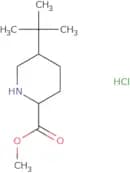
CAS:<p>Versatile small molecule scaffold</p>Formula:C7H9NO3S2Purezza:Min. 95%Peso molecolare:219.3 g/molMethyl 5-tert-butylpiperidine-2-carboxylate hydrochloride
CAS:<p>Versatile small molecule scaffold</p>Formula:C11H22ClNO2Purezza:Min. 95%Peso molecolare:235.8 g/mol1-(5-Amino-1H-1,2,4-triazol-3-yl)pyrrolidine-3-carboxylic acid dihydrochloride
CAS:<p>Versatile small molecule scaffold</p>Formula:C7H13Cl2N5O2Purezza:Min. 95%Peso molecolare:270.1 g/molEthyl 2-amino-3-[4-(difluoromethyl)phenyl]propanoate hydrochloride
CAS:<p>Versatile small molecule scaffold</p>Formula:C12H16ClF2NO2Purezza:Min. 95%Peso molecolare:279.7 g/molN-(3-Methoxypropyl)cyclohexanamine hydrochloride
CAS:<p>Versatile small molecule scaffold</p>Formula:C10H22ClNOPurezza:Min. 95%Peso molecolare:207.7 g/mol2-[(tert-Butoxy)carbonyl]-8-thia-2-azaspiro[4.5]decane-3-carboxylic acid
CAS:<p>Versatile small molecule scaffold</p>Formula:C14H23NO4SPurezza:Min. 95%Peso molecolare:301.4 g/mol{6,7,8,9-Tetrahydro-5H-benzo[7]annulen-7-yl}methanol
CAS:<p>Versatile small molecule scaffold</p>Formula:C12H16OPurezza:Min. 95%Peso molecolare:176.3 g/mol1-[(3-Fluorophenyl)methyl]piperidin-4-one hydrochloride
CAS:<p>Versatile small molecule scaffold</p>Formula:C12H15ClFNOPurezza:Min. 95%Peso molecolare:243.7 g/mol4-(Bromomethyl)-2-oxabicyclo[2.1.1]hexane
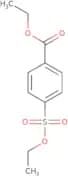
CAS:<p>Versatile small molecule scaffold</p>Formula:C6H9BrOPurezza:Min. 95%Peso molecolare:177.04 g/molEthyl 4-(ethoxysulfonyl)benzoate
CAS:<p>Versatile small molecule scaffold</p>Formula:C11H14O5SPurezza:Min. 95%Peso molecolare:258.3 g/molMethyl 2-[(piperidin-4-yl)methoxy]acetate hydrochloride
CAS:<p>Versatile small molecule scaffold</p>Formula:C9H18ClNO3Purezza:Min. 95%Peso molecolare:223.7 g/mol
![(2R,5R)-1-[(tert-Butoxy)carbonyl]-5-phenylpyrrolidine-2-carboxylic acid](/_next/image/?url=https%3A%2Fstatic.cymitquimica.com%2Fproducts%2F3D%2Fthumb-webp%2FFPD90101.webp&w=3840&q=75)


![5H,6H,7H,8H,9H-[1,2,4]Triazolo[4,3-d][1,4]diazepine dihydrochloride](/_next/image/?url=https%3A%2Fstatic.cymitquimica.com%2Fproducts%2F3D%2Fthumb-webp%2FFPD91349.webp&w=3840&q=75)


![5-{[Dimethyl(oxo)-λ6-sulfanylidene]amino}thiophene-2-carboxylic acid](/_next/image/?url=https%3A%2Fstatic.cymitquimica.com%2Fproducts%2F3D%2Fthumb-webp%2FFSD25390.webp&w=3840&q=75)
![Ethyl 2-amino-3-[4-(difluoromethyl)phenyl]propanoate hydrochloride](/_next/image/?url=https%3A%2Fstatic.cymitquimica.com%2Fproducts%2F3D%2Fthumb-webp%2FFSD25407.webp&w=3840&q=75)

![2-[(tert-Butoxy)carbonyl]-8-thia-2-azaspiro[4.5]decane-3-carboxylic acid](/_next/image/?url=https%3A%2Fstatic.cymitquimica.com%2Fproducts%2F3D%2Fthumb-webp%2FFSD25461.webp&w=3840&q=75)
![{6,7,8,9-Tetrahydro-5H-benzo[7]annulen-7-yl}methanol](/_next/image/?url=https%3A%2Fstatic.cymitquimica.com%2Fproducts%2F3D%2Fthumb-webp%2FFSD25464.webp&w=3840&q=75)
![1-[(3-Fluorophenyl)methyl]piperidin-4-one hydrochloride](/_next/image/?url=https%3A%2Fstatic.cymitquimica.com%2Fproducts%2F3D%2Fthumb-webp%2FFSD25466.webp&w=3840&q=75)
![4-(Bromomethyl)-2-oxabicyclo[2.1.1]hexane](/_next/image/?url=https%3A%2Fstatic.cymitquimica.com%2Fproducts%2F3D%2Fthumb-webp%2FFSD25469.webp&w=3840&q=75)
![Methyl 2-[(piperidin-4-yl)methoxy]acetate hydrochloride](/_next/image/?url=https%3A%2Fstatic.cymitquimica.com%2Fproducts%2F3D%2Fthumb-webp%2FFSD25475.webp&w=3840&q=75)