Building Blocks
Questa sezione contiene prodotti fondamentali per la sintesi di composti organici e biologici. Building blocks sono i materiali di partenza essenziali utilizzati per costruire molecole complesse attraverso varie reazioni chimiche. Svolgono un ruolo critico nella scoperta di farmaci, nella scienza dei materiali e nella ricerca chimica. Presso CymitQuimica, offriamo una gamma diversificata di building blocks di alta qualità per supportare le tue ricerche innovative e progetti industriali, assicurandoti di avere i componenti essenziali per una sintesi di successo.
Sottocategorie di "Building Blocks"
- Acidi boronici e derivati dell'acido boronico(5.756 prodotti)
- Building Blocks Chirali(1.242 prodotti)
- Building Blocks Idrocarburici(6.095 prodotti)
- Building Blocks organici(61.055 prodotti)
Trovati 199650 prodotti di "Building Blocks"
Ordinare per
Purezza (%)
0
100
|
0
|
50
|
90
|
95
|
100
6-Bromo-3,4-dihydroquinazolin-2(1H)-one
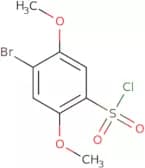
CAS:<p>Versatile small molecule scaffold</p>Formula:C8H7BrN2OPurezza:Min. 95%Peso molecolare:227.06 g/mol4-Bromo-2,5-dimethoxybenzene-1-sulfonyl chloride
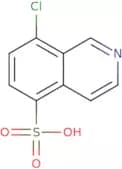
CAS:<p>Versatile small molecule scaffold</p>Formula:C8H8BrClO4SPurezza:Min. 95%Peso molecolare:315.57 g/mol8-Chloro-5-isoquinolinesulfonic acid
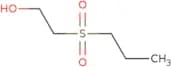
CAS:<p>Versatile small molecule scaffold</p>Formula:C9H6ClNO3SPurezza:Min. 95%Peso molecolare:243.67 g/mol2-(Propane-1-sulfonyl)ethan-1-ol
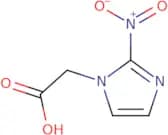
CAS:<p>Versatile small molecule scaffold</p>Formula:C5H12O3SPurezza:Min. 95%Peso molecolare:152.21 g/mol2-(2-Nitro-1H-imidazol-1-yl)acetic acid
CAS:<p>2-(2-Nitro-1H-imidazol-1-yl)acetic acid is a potential drug candidate that has been shown to be an inhibitor of DNA gyrase and topoisomerase IV, which are enzymes that maintain the integrity of bacterial DNA. The linker can be attached to the 2-nitroimidazole ring in order to optimize its pharmacological profile. In addition, a nitroimidazole conjugate can be synthesized to provide a diagnostic tool for the detection of bacterial infections.</p>Formula:C5H5N3O4Purezza:Min. 95%Peso molecolare:171.11 g/mol3H,4H,5H-Pyridazino[4,5-b]indol-4-one
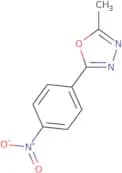
CAS:<p>3H,4H,5H-Pyridazino[4,5-b]indol-4-one is a drug that has been shown to inhibit the angiogenic activity of endothelial cells. It also inhibits the production of factor receptor by cancer cells, which may be responsible for its anti-cancer effects. 3H,4H,5H-Pyridazino[4,5-b]indol-4-one also inhibits the growth of endothelial cells and reduces the formation of new blood vessels in an experimental model of angiogenesis. This drug has been shown to have a protective effect on neuronal cells in an animal model of Alzheimer's disease. 3H,4H,5H-Pyridazino[4,5-b]indol-4-one can be used as a treatment for diabetes mellitus type II and diabetic neuropathy because it is believed to promote the regeneration of nerve fibers by blocking the</p>Formula:C10H7N3OPurezza:Min. 95%Peso molecolare:185.18 g/mol5-Methyl-2-[4-(nitrophenyl)-1,3,4-oxadiazole
CAS:<p>Versatile small molecule scaffold</p>Formula:C9H7N3O3Purezza:Min. 95%Peso molecolare:205.17 g/mol2-(3,4-Dichloro-benzyl)-isothiourea hydrochloride
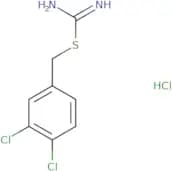
CAS:<p>2-(3,4-Dichloro-benzyl)-isothiourea hydrochloride (2DICH) is a sulfinyl compound that has been shown to be an effective inhibitor of bacterial growth. It binds to the C1-6 alkyl group in the amino acid cysteine and inhibits the synthesis of proteins. 2DICH is bactericidal against organisms such as P. aeruginosa, Staphylococcus aureus and Gram-negative bacteria. The mechanism of action by which 2DICH kills bacteria is not yet known, but it may involve hemolytic activity or interaction with the cell membrane.<br>2DICH was found to have no effect on stenotrophomonas maltophilia and other Gram-positive bacteria such as Bacillus subtilis or Enterococcus faecalis.</p>Formula:C8H9Cl3N2SPurezza:Min. 95%Peso molecolare:271.59 g/molMethyl 3-(methylsulfonyl)benzoate
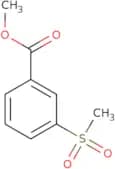
CAS:<p>Versatile small molecule scaffold</p>Formula:C9H10O4SPurezza:Min. 95%Peso molecolare:214.24 g/mol3-Methanesulfonylbenzamide
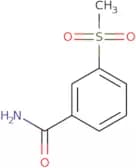
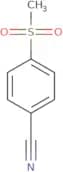
CAS:<p>Versatile small molecule scaffold</p>Formula:C8H9NO3SPurezza:Min. 95%Peso molecolare:199.23 g/mol4-(Methylsulfonyl)benzonitrile
CAS:<p>Versatile small molecule scaffold</p>Formula:C8H7NO2SPurezza:Min. 95%Peso molecolare:181.21 g/mol4-(Methylsulfonyl)benzyl alcohol
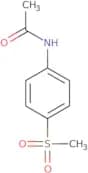
CAS:<p>Versatile small molecule scaffold</p>Formula:C8H10O3SPurezza:Min. 95%Peso molecolare:186.23 g/mol4'-(Methylsulfonyl)acetanilide
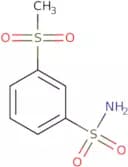
CAS:<p>4'-(Methylsulfonyl)acetanilide is an organic compound that has been shown to have antibacterial and antiviral activity. It targets the benzene nucleus, and inhibits the synthesis of nucleic acids by inhibiting the enzyme ribonucleotide reductase. 4'-(Methylsulfonyl)acetanilide also inhibits viral replication, by binding to the active site of a viral protein (a DNA polymerase), which blocks the incorporation of nucleotides into the virus's DNA. In addition, 4'-(methylsulfonyl)acetanilide is an anti-helminthic agent, as it can inhibit worm motility and kill larvae in vitro. The structure-activity relationships between this molecule and other benzimidazole derivatives were analysed in order to identify new potential drugs for treating diseases caused by viruses or parasites.</p>Formula:C9H11NO3SPurezza:Min. 95%Peso molecolare:213.26 g/mol3-Methanesulfonylbenzene-1-sulfonamide
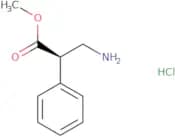
CAS:<p>Versatile small molecule scaffold</p>Formula:C7H9NO4S2Purezza:Min. 95%Peso molecolare:235.3 g/molMethyl (3R)-3-amino-3-phenylpropanoate hydrochloride
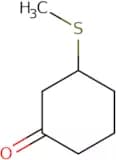
CAS:Versatile small molecule scaffoldFormula:C10H13NO2·HClPurezza:Min. 95%Peso molecolare:215.68 g/mol3-(Methylsulfanyl)cyclohexan-1-one
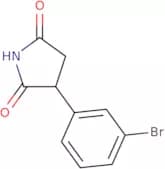
CAS:<p>Versatile small molecule scaffold</p>Formula:C7H12OSPurezza:Min. 95%Peso molecolare:144.24 g/mol3-(3-Bromophenyl)pyrrolidine-2,5-dione
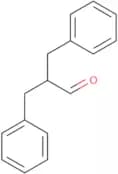
CAS:<p>3-(3-Bromophenyl)pyrrolidine-2,5-dione is a targetable iontophoretic drug that binds to the skin. It is used for the treatment of inflammatory and neuropathic pain. 3-(3-Bromophenyl)pyrrolidine-2,5-dione has been shown to be effective in both hydrophobic and hydrophilic environments, meaning it can be used in both diluents and in water. The drug is insoluble in water and has an activity index of 0.9. 3-(3-Bromophenyl)pyrrolidine-2,5-dione has a molecular electrostatic potential of -1.7eV, which makes it a good candidate for use with iontophoresis devices (devices that deliver drugs through the skin by passing a current across the skin). The drug is also targeted to specific cells or tissues because of its high concentration.</p>Formula:C10H8BrNO2Purezza:Min. 95%Peso molecolare:254.08 g/mol2-Benzyl-3-phenylpropanal
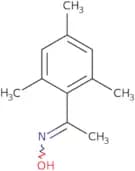
CAS:<p>Versatile small molecule scaffold</p>Formula:C16H16OPurezza:Min. 95%Peso molecolare:224.3 g/molEthanone, 1-(2,4,6-trimethylphenyl)-, oxime
CAS:<p>Ethanone, 1-(2,4,6-trimethylphenyl)-, oxime (1) is an electron-rich oxime with a geometry of C(3)h. It has a dihedral angle of 194.5° and a rotational constant of 3.037 cm-1. The major substituents on the benzene ring are methyl groups at positions 2 and 6, which have constants of 0.898 and 1.922 Å respectively. The molecule has a crystal structure with space group P21/n with unit cell dimensions of a = 12.738 Å, b = 12.738 Å, c = 13.096 Å and β = 102°</p>Formula:C11H15NOPurezza:Min. 95%Peso molecolare:177.24 g/mol3-Methyl-1-phenyl-4,5-dihydro-1H-1,2,4-triazol-5-one
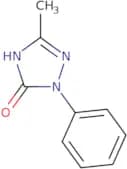
CAS:Versatile small molecule scaffoldFormula:C9H9N3OPurezza:Min. 95%Peso molecolare:175.19 g/mol


![3H,4H,5H-Pyridazino[4,5-b]indol-4-one](/_next/image/?url=https%3A%2Fstatic.cymitquimica.com%2Fproducts%2F3D%2Fthumb-webp%2FXAA81413.webp&w=3840&q=75)