Building Blocks
Questa sezione contiene prodotti fondamentali per la sintesi di composti organici e biologici. Building blocks sono i materiali di partenza essenziali utilizzati per costruire molecole complesse attraverso varie reazioni chimiche. Svolgono un ruolo critico nella scoperta di farmaci, nella scienza dei materiali e nella ricerca chimica. Presso CymitQuimica, offriamo una gamma diversificata di building blocks di alta qualità per supportare le tue ricerche innovative e progetti industriali, assicurandoti di avere i componenti essenziali per una sintesi di successo.
Sottocategorie di "Building Blocks"
- Acidi boronici e derivati dell'acido boronico(5.778 prodotti)
- Building Blocks Chirali(1.242 prodotti)
- Building Blocks Idrocarburici(6.098 prodotti)
- Building Blocks organici(61.059 prodotti)
Trovati 199580 prodotti di "Building Blocks"
Ordinare per
Purezza (%)
0
100
|
0
|
50
|
90
|
95
|
100
4-chlorofuro[3,2-c]pyridine-2-carbaldehyde
CAS:<p>Versatile small molecule scaffold</p>Formula:C8H4ClNO2Purezza:Min. 95%Peso molecolare:181.6 g/mol4-chlorofuro[3,2-c]pyridine-2-carboxylic acid
CAS:<p>Versatile small molecule scaffold</p>Formula:C8H4ClNO3Purezza:Min. 95%Peso molecolare:197.6 g/mol1-{4-Chlorofuro[3,2-c]pyridin-2-yl}ethan-1-one
CAS:<p>Versatile small molecule scaffold</p>Formula:C9H6ClNO2Purezza:Min. 95%Peso molecolare:195.6 g/mol4,5-Dihydro-4-oxo-furo[3,2-C]pyridine-2-carboxaldehyde
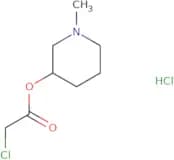
CAS:<p>Versatile small molecule scaffold</p>Formula:C8H5NO3Purezza:Min. 95%Peso molecolare:163.13 g/mol1-Methylpiperidin-3-yl 2-chloroacetate hydrochloride
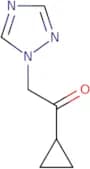
CAS:<p>Versatile small molecule scaffold</p>Formula:C8H15Cl2NO2Purezza:Min. 95%Peso molecolare:228.1 g/mol1-Cyclopropyl-2-(1H-1,2,4-triazol-1-yl)ethan-1-one
CAS:<p>Versatile small molecule scaffold</p>Formula:C7H9N3OPurezza:Min. 95%Peso molecolare:151.17 g/mol1-[4-Chloro-2-(trifluoromethyl)phenyl]ethan-1-one
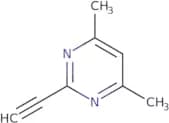
CAS:Versatile small molecule scaffoldFormula:C9H6ClF3OPurezza:Min. 95%Peso molecolare:222.59 g/mol2-Ethynyl-4,6-dimethylpyrimidine
CAS:<p>2-Ethynyl-4,6-dimethylpyrimidine (2EDMP) is a ligand that can be used to form two-dimensional supramolecular frameworks. It can assemble into chains and trifluoroacetate chains by hydrogen bonds with other 2EDMP molecules. The solvent evaporation technique is used to form these supramolecular frameworks from the liquid solution of 2EDMP. The structural properties of 2EDMP are well characterized by its two-dimensional crystal structure and the intermolecular interactions between it and other molecules in the crystal.</p>Formula:C8H8N2Purezza:Min. 95%Peso molecolare:132.16 g/mol1-(4-Methylbenzenesulfonyl)bicyclo[1.1.0]butane
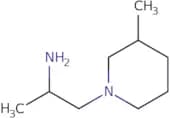
CAS:<p>Versatile small molecule scaffold</p>Formula:C11H12O2SPurezza:Min. 95%Peso molecolare:208.28 g/mol1-(3-Methylpiperidin-1-yl)propan-2-amine
CAS:Versatile small molecule scaffoldFormula:C9H20N2Purezza:Min. 95%Peso molecolare:156.27 g/molMethyl 2,4,6-trichlorobenzoate
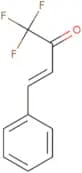
CAS:Versatile small molecule scaffoldFormula:C8H5Cl3O2Purezza:Min. 95%Peso molecolare:239.5 g/mol1,1,1-Trifluoro-4-phenylbut-3-en-2-one
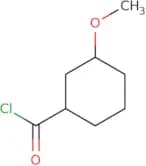
CAS:<p>Trifluoromethanesulfonic acid is a superacidic acid that has been used in organic synthesis. It has been shown to be reactive with electron-deficient molecules such as methyl cinnamate, which can lead to the formation of anions and carbanions. Trifluoromethanesulfonic acid is also able to protonate carbonyls, which makes it useful for the synthesis of functionalized carbonyls. Trifluoromethanesulfonic acid is hydrophobic and reacts with membranes, making it useful for protein extraction. It also reacts with s. typhimurium, a bacterium that causes food poisoning.</p>Formula:C10H7F3OPurezza:Min. 95%Peso molecolare:200.16 g/mol3-Methoxycyclohexane-1-carbonyl chloride
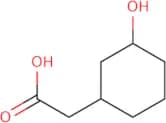
CAS:<p>Versatile small molecule scaffold</p>Formula:C8H13ClO2Purezza:Min. 95%Peso molecolare:176.64 g/mol2-(3-Hydroxycyclohexyl)acetic acid
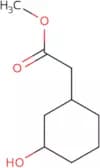
CAS:<p>Versatile small molecule scaffold</p>Formula:C8H14O3Purezza:Min. 95%Peso molecolare:158.19 g/molMethyl 2-(3-hydroxycyclohexyl)acetate
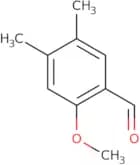
CAS:<p>Versatile small molecule scaffold</p>Formula:C9H16O3Purezza:Min. 95%Peso molecolare:172.22 g/mol2-Methoxy-4,5-dimethylbenzaldehyde
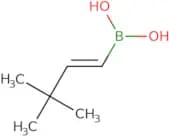
CAS:<p>Versatile small molecule scaffold</p>Formula:C10H12O2Purezza:Min. 95%Peso molecolare:164.2 g/mol2-t-Butyl-E-vinylboronic acid
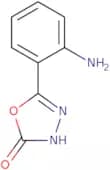
CAS:<p>Versatile small molecule scaffold</p>Formula:C6H13BO2Purezza:Min. 95%Peso molecolare:127.98 g/mol5-(2-Aminophenyl)-2,3-dihydro-1,3,4-oxadiazol-2-one
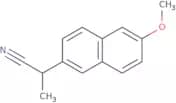
CAS:<p>5-(2-Aminophenyl)-2,3-dihydro-1,3,4-oxadiazol-2-one is an organic compound that belongs to the class of hydrazides. It has been used in the synthesis of other compounds and is used as a catalyst for peptide coupling reactions. The melting point of this compound is 139°C, and it decomposes at temperatures above 230°C. 5-(2-Aminophenyl)-2,3-dihydro-1,3,4-oxadiazol-2-one hydrolyzes to release ammonia and 2HCl. This reaction can be catalyzed by methylamine or hydrazine. 5-(2-Aminophenyl)-2,3-dihydro-1,3,4-oxadiazol-2-one can also undergo rearrangement reactions with methylamine or hydrazine to form anth</p>Formula:C8H7N3O2Purezza:Min. 95%Peso molecolare:177.16 g/mol2-(6-Methoxynaphthalen-2-yl)propanenitrile
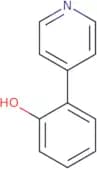
CAS:<p>2-(6-Methoxynaphthalen-2-yl)propanenitrile is a naturally occurring amino acid that can be synthesized in the laboratory. It has been found to inhibit enzyme activities such as ammonium sulfate, microbial metabolism and amide formation in bacteria. 2-(6-Methoxynaphthalen-2-yl)propanenitrile also inhibits the growth of bacteria by blocking the synthesis of proteins, DNA and RNA. The activity of this drug is specific for bacterial strains and does not affect higher organisms such as humans or mice. This compound is chiral, meaning that it can exist in two forms which are mirror images of each other. 2-(6-Methoxynaphthalen-2-yl)propanenitrile has been shown to be active against a number of bacterial strains including Pseudomonas aeruginosa, Streptococcus pyogenes and Staphylococcus aure</p>Formula:C14H13NOPurezza:Min. 95%Peso molecolare:211.26 g/mol2-(Pyridin-4-yl)phenol
CAS:Versatile small molecule scaffoldFormula:C11H9NOPurezza:Min. 95%Peso molecolare:171.19 g/mol
![4-chlorofuro[3,2-c]pyridine-2-carbaldehyde](/_next/image/?url=https%3A%2Fstatic.cymitquimica.com%2Fproducts%2F3D%2Fthumb-webp%2FLDA51807.webp&w=3840&q=75)

![4-chlorofuro[3,2-c]pyridine-2-carboxylic acid](/_next/image/?url=https%3A%2Fstatic.cymitquimica.com%2Fproducts%2F3D%2Fthumb-webp%2FLDA51808.webp&w=3840&q=75)
![1-{4-Chlorofuro[3,2-c]pyridin-2-yl}ethan-1-one](/_next/image/?url=https%3A%2Fstatic.cymitquimica.com%2Fproducts%2F3D%2Fthumb-webp%2FLDA51810.webp&w=3840&q=75)
![4,5-Dihydro-4-oxo-furo[3,2-C]pyridine-2-carboxaldehyde](/_next/image/?url=https%3A%2Fstatic.cymitquimica.com%2Fproducts%2F3D%2Fthumb-webp%2FLDA51817.webp&w=3840&q=75)
![1-[4-Chloro-2-(trifluoromethyl)phenyl]ethan-1-one](/_next/image/?url=https%3A%2Fstatic.cymitquimica.com%2Fproducts%2F3D%2Fthumb-webp%2FLDA52034.webp&w=3840&q=75)
![1-(4-Methylbenzenesulfonyl)bicyclo[1.1.0]butane](/_next/image/?url=https%3A%2Fstatic.cymitquimica.com%2Fproducts%2F3D%2Fthumb-webp%2FLDA53730.webp&w=3840&q=75)