


Building Blocks
Questa sezione contiene prodotti fondamentali per la sintesi di composti organici e biologici. Building blocks sono i materiali di partenza essenziali utilizzati per costruire molecole complesse attraverso varie reazioni chimiche. Svolgono un ruolo critico nella scoperta di farmaci, nella scienza dei materiali e nella ricerca chimica. Presso CymitQuimica, offriamo una gamma diversificata di building blocks di alta qualità per supportare le tue ricerche innovative e progetti industriali, assicurandoti di avere i componenti essenziali per una sintesi di successo.
Sottocategorie di "Building Blocks"
- Acidi boronici e derivati dell'acido boronico(5.756 prodotti)
- Building Blocks Chirali(1.242 prodotti)
- Building Blocks Idrocarburici(6.095 prodotti)
- Building Blocks organici(61.038 prodotti)
Trovati 196817 prodotti di "Building Blocks"
Ordinare per
Purezza (%)
0
100
|
0
|
50
|
90
|
95
|
100
1-Hydroxycyclopentane-1-carbonitrile
CAS:<p>1-Hydroxycyclopentane-1-carbonitrile is a monomer that is hydrolyzed to form benzoin and cyanohydrins. It can be used in the production of scifinder as a monomer or dimerizer.</p>Formula:C6H9NOPurezza:Min. 95%Peso molecolare:111.14 g/mol9-Anthracenemethanol
CAS:<p>9-Anthracenemethanol is a carcinogenic, mutagenic, and teratogenic compound. It is metabolized by a number of enzymatic reactions, including oxidation by cytochrome P450 enzymes and reduction by glutathione reductase. The compound has been shown to be activated in acid conditions, with an activation energy of 10 kcal/mol. It also forms an acid when heated, which can cause damage to cells. 9-Anthracenemethanol has been shown to have photochemical properties that may be used for the production of dyes or pigments.</p>Formula:C15H12OPurezza:Min. 95%Colore e forma:Yellow PowderPeso molecolare:208.26 g/mol2-Aminoimidazole sulfate
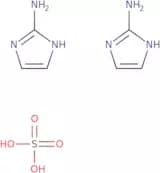
CAS:<p>2-Aminoimidazole sulfate is a chemical compound that is used as a transfection reagent. It has been shown to have high transfection efficiency with low cytotoxicity. The diameter of the molecule is in the range of 2 - 3 nm, which allows it to be taken up by cells and thus be active in them. This chemical can be dehydrogenated to form imidazole-2-sulfonic acid, which may interact with other molecules. There have been many advances in this area, including modifications and gaseous forms of the molecule. Research into the interactions of this compound with other chemicals and their effects on cellular uptake are ongoing.</p>Formula:C3H5N3•(H2O4S)0Purezza:Min. 95%Colore e forma:Off-White PowderPeso molecolare:264.26 g/mol2-Amino-6-chloropurine
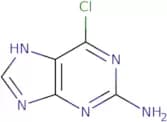
CAS:<p>2-Amino-6-chloropurine is a nucleophilic substituent that is used in the synthesis of 2-amino-6-chloropurine. It reacts with hydroxyl groups to form a palladium-catalyzed coupling reaction solution, which is then treated with hydrochloric acid and trifluoroacetic acid. The product is purified by crystallization and recrystallization. This compound has potent antitumor activity against carcinoma cell lines, but it has not been shown to have any effect against Mycobacterium tuberculosis.</p>Formula:C5H4ClN5Purezza:Min. 95%Colore e forma:Off-White PowderPeso molecolare:169.57 g/molAdamantane
CAS:<p>Adamantane is a potent antiviral drug for the treatment of influenza. It is an oxidation catalyst that also has biological properties, such as a potent antitumor activity and potent antiviral resistance. Adamantane has been used to treat many human pathogens, including viruses, fungi and bacteria. Adamantane is a skeleton-like structure with four carbons and six hydrogen atoms that can be oxidized to adamantane oxide or reduced to adamantane alcohol. The adamantane molecule binds to the viral protein at a site called the toll-like receptor. This binding prevents viral replication by inhibiting mRNA synthesis in the virus.</p>Formula:C10H16Purezza:Min. 95%Colore e forma:White Off-White PowderPeso molecolare:136.23 g/moltert-Butyl 3-amino-5-methyl-1H-pyrazole-1-carboxylate
CAS:Versatile small molecule scaffoldFormula:C9H15N3O2Purezza:Min. 95%Peso molecolare:197.23 g/mol1-Amino-2,3-dihydro-1H-indene-5-carbonitrile hydrochloride
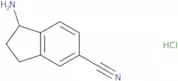
CAS:<p>Versatile small molecule scaffold</p>Formula:C10H11ClN2Purezza:Min. 95%Peso molecolare:194.66 g/moltert-Butyl 4-(5-aminoisoxazol-3-yl)piperidine-1-carboxylate
CAS:<p>Versatile small molecule scaffold</p>Formula:C13H21N3O3Purezza:Min. 95%Peso molecolare:267.32 g/mol3,6-Dichlorobenzene-1,2-diol
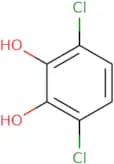
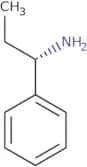
CAS:<p>3,6-Dichlorobenzene-1,2-diol is a conjugate acid of benzene. It has two dimensions in the plane of the molecule and three dimensions in space. The molecule is composed of six carbon atoms, six hydrogen atoms, and one chlorine atom. 3,6-Dichlorobenzene-1,2-diol has a centroid at the center of the molecule that is surrounded by a ring of four hydrogen atoms. The hydrogen-bonded molecules stack on top of each other to form a hexagonal shape. 3,6-Dichlorobenzene-1,2-diol forms hydrogen bonds with other molecules through its lone pairs of electrons on both oxygen atoms as well as through its pi electron system.</p>Formula:C6H4Cl2O2Purezza:Min. 95%Peso molecolare:179 g/mol(S)-(-)-1-Phenylpropylamine
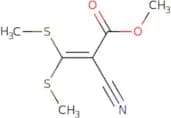
CAS:<p>(S)-(-)-1-Phenylpropylamine is a compound that can be synthesized by the asymmetric synthesis of 1-phenylethylamine. It is an amine that is used in the production of other compounds and has been shown to be reactive with a number of different compounds. The chemical profile of (S)-(-)-1-Phenylpropylamine consists mainly of aldehydes, amides, amines, and alkylating agents. This chiral molecule can be used for the production of drugs or as a precursor for other chemicals.</p>Formula:C9H13NPurezza:Min. 95%Peso molecolare:135.21 g/molMethyl 3,3-bis(methylthio)-2-cyanoacrylate
CAS:<p>Methyl 3,3-bis(methylthio)-2-cyanoacrylate is a diphenyl ether that is used as a bactericide. It has been shown to be effective against both Gram-positive and Gram-negative bacteria. Methyl 3,3-bis(methylthio)-2-cyanoacrylate is synthesized by the reaction of malonate with dimethylamine chloride in the presence of hydrochloric acid salt in order to produce chloride ions. The reaction is then heated, which causes the methyl 3,3-bis(methylthio)-2-cyanoacrylate to form. This compound is soluble in organic solvents such as formic acid and can be purified by recrystallization or by distillation.</p>Formula:C7H9NO2S2Purezza:Min. 95%Peso molecolare:203.28 g/mol3-Methylbenzo[b]thiophene-2-carboxylic acid
CAS:<p>3-Methylbenzo[b]thiophene-2-carboxylic acid (MBTCA) is a heterocyclic compound that is an intermediate in the synthesis of 3-methylthiophene-2-carboxylic acid, a precursor to other drugs. MBTCA is an aerobic, nonpolar compound that has shown antimicrobial activity against some bacteria and fungi. It also has been shown to have practicality as a biomolecular probe for methyl groups in organic solvents. MBTCA can be synthesized by nitration of benzene in the presence of sulfur and sulfoxides. This reaction produces nitrobenzene, which can then be oxidized by potassium permanganate or hydrogen peroxide to produce MBTCA. The most common isomer of MBTCA is 2-(3,5-dimethoxybenzylidene)tetrahydrofuran, with three methyl groups on the</p>Formula:C10H8O2SPurezza:Min. 95%Peso molecolare:192.23 g/mol(2R)-2-Acetamido-3,3-dimethylbutanoic acid
CAS:<p>Versatile small molecule scaffold</p>Formula:C8H15NO3Purezza:Min. 95%Peso molecolare:173.21 g/molGlycidyltrimethylammonium Chloride
CAS:<p>Glycidyltrimethylammonium chloride is a quaternary ammonium compound that has been widely used as a disinfectant and in wastewater treatment. It is mainly used to kill bacteria and viruses, although it can also be used to remove hazardous material from water. Glycidyltrimethylammonium chloride has the ability to inhibit bacterial growth by causing cell membrane damage. This compound is also able to inhibit the synthesis of DNA, RNA, and protein in cells by binding to their respective building blocks. In addition, glycidyltrimethylammonium chloride has cytotoxic effects on human cells and significantly inhibits the replication of oral pathogens.</p>Formula:C6H14ClNOPurezza:Min. 95%Colore e forma:Clear LiquidPeso molecolare:151.63 g/mol4-Bromo-2,3-difluoropyridine
CAS:<p>Versatile small molecule scaffold</p>Formula:C5H2BrF2NPurezza:Min. 95%Peso molecolare:193.98 g/mol(2S,6S)-2,6-Dimethylmorpholine
CAS:<p>(2S,6S)-2,6-Dimethylmorpholine is an optically pure compound that can be used to optimize the epoxidase reaction. It belongs to the class of morpholines and has two enantiomers. The (2R,6R)-enantiomer is more active than the (2S,6S)-enantiomer in catalyzing the epoxidase reaction. The temperature optima for both enantiomers are different with the (2R,6R)-enantiomer having a higher optimal temperature than the (2S,6S) enantiomer. This compound can be used as a chiral auxiliary to separate racemic mixtures by focusing on one enantiomer at a time. It can also be used as an analytical method for determining plate number and plate height.</p>Formula:C6H13NOPurezza:Min. 95%Peso molecolare:115.17 g/molDimethyl pyridine-3,4-dicarboxylate
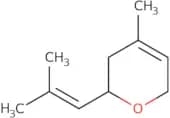
CAS:<p>Dimethyl pyridine-3,4-dicarboxylate is an organic compound that is used as a precursor to make other chemicals. It is a pyridinedicarboxylic acid and it can be synthesized from the reduction of pyridine with sodium borohydride in ethanol. Dimethyl pyridine-3,4-dicarboxylate is also used in the production of acetaldehyde by way of hydrosilylation with chloride and chloroform. This chemical has been found to be useful for the synthesis of various drugs such as antiepileptics, antihistamines, antipsychotics, and antidepressants.</p>Formula:C9H9NO4Purezza:Min. 95%Peso molecolare:195.17 g/molNerol oxide
CAS:<p>Nerol oxide is a natural compound and fragrance ingredient that has been shown to have anti-aging effects. Nerol oxide is an ester of citronellal, nerolic acid and ethyl decanoate. It is found naturally in orange blossoms and other citrus plants, as well as in lavender oil. Nerol oxide can be extracted from the plant material using solid phase microextraction. The chemical analyses of this extract reveal the presence of various fatty acids, including ethyl esters, fatty acids and their corresponding alcohols. These compounds are used to produce nerol oxide by polymerization with an initiator such as potassium hydroxide or sodium hydroxide at a neutral pH.</p>Formula:C10H16OPurezza:Min. 95%Peso molecolare:152.23 g/mol3,6-Dichloropicolinonitrile
CAS:<p>3,6-Dichloropicolinonitrile is a peroxide that is used in the synthesis of organic compounds. It is produced by the reaction of sodium carbonate and hydrochloric acid with nitric acid as a catalyst. 3,6-Dichloropicolinonitrile has been shown to be more selective than other oxidizing agents such as hydrogen peroxide and potassium permanganate. The product can then be purified by adding diacetate, which selectively reacts with the chlorine to form acetyl chloride and glycolic acid. The resulting mixture can then be distilled to produce 3,6-dichloropicolinonitrile in high purity. 3,6-Dichloropicolinonitrile can also be used in electrochemical methods for the synthesis of cyanides or biochemically for virulent products such as pesticides and organic solvents.</p>Formula:C6H2Cl2N2Purezza:Min. 95%Peso molecolare:173 g/moltert-Butyl N-[3-(tetramethyl-1,3,2-dioxaborolan-2-yl)propyl]carbamate
CAS:<p>Versatile small molecule scaffold</p>Formula:C14H28BNO4Purezza:Min. 95%Peso molecolare:285.19 g/mol





![3-Methylbenzo[b]thiophene-2-carboxylic acid](/_next/image/?url=https%3A%2Fstatic.cymitquimica.com%2Fproducts%2F3D%2Fthumb-webp%2FDAA13378.webp&w=3840&q=75)



![tert-Butyl N-[3-(tetramethyl-1,3,2-dioxaborolan-2-yl)propyl]carbamate](/_next/image/?url=https%3A%2Fstatic.cymitquimica.com%2Fproducts%2F3D%2Fthumb-webp%2FAZC30580.webp&w=3840&q=75)