Building Blocks
Questa sezione contiene prodotti fondamentali per la sintesi di composti organici e biologici. Building blocks sono i materiali di partenza essenziali utilizzati per costruire molecole complesse attraverso varie reazioni chimiche. Svolgono un ruolo critico nella scoperta di farmaci, nella scienza dei materiali e nella ricerca chimica. Presso CymitQuimica, offriamo una gamma diversificata di building blocks di alta qualità per supportare le tue ricerche innovative e progetti industriali, assicurandoti di avere i componenti essenziali per una sintesi di successo.
Sottocategorie di "Building Blocks"
- Acidi boronici e derivati dell'acido boronico(5.778 prodotti)
- Building Blocks Chirali(1.242 prodotti)
- Building Blocks Idrocarburici(6.098 prodotti)
- Building Blocks organici(61.063 prodotti)
Trovati 197855 prodotti di "Building Blocks"
Ordinare per
Purezza (%)
0
100
|
0
|
50
|
90
|
95
|
100
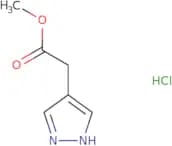
(1H-Pyrazol-4-yl)-acetic acid methyl ester hydrochloride
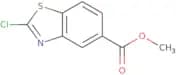
CAS:<p>Versatile small molecule scaffold</p>Formula:C6H9ClN2O2Purezza:Min. 95%Peso molecolare:176.6 g/molMethyl 2-chloro-1,3-benzothiazole-5-carboxylate
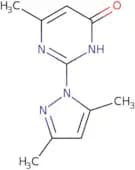
CAS:<p>Versatile small molecule scaffold</p>Formula:C9H6ClNO2SPurezza:Min. 95%Peso molecolare:227.67 g/mol2-(3,5-Dimethyl-1H-pyrazol-1-yl)-6-methylpyrimidin-4-ol
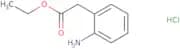
CAS:<p>2-(3,5-Dimethyl-1H-pyrazol-1-yl)-6-methylpyrimidin-4-ol is a tautomeric form of 2-(3,5-dimethylpyrazol-1-yl)-6-[(2R,3S)-3,5-dimethoxyphenyl]pyrimidin-4-ol. It is a potent inhibitor of lipases and has been shown to have antiinflammatory properties. The drug has also been found to decrease the number of inflammatory cells in the bowel and can be used for the treatment of inflammatory bowel disease. The drug may also be effective for treating other autoimmune diseases such as thyroiditis and scleroderma. This drug also has cancer prevention effects because it inhibits cell division and tumor growth by binding to DNA.</p>Formula:C10H12N4OPurezza:Min. 95%Peso molecolare:204.23 g/molethyl 2-(2-aminophenyl)acetate hydrochloride
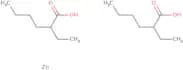
CAS:<p>Versatile small molecule scaffold</p>Formula:C10H13NO2·HClPurezza:Min. 95%Peso molecolare:215.67 g/molEthylhexanoic acid zinc
CAS:<p>Ethylhexanoic acid zinc salt is a viscosity-increasing agent that is used in the production of high-viscosity polymers. It is a carboxylate salt of ethyl hexanoic acid and zinc. The reaction of ethylhexane with zirconium oxide produces a viscous liquid with a strong cationic polymerization activity. This product reacts with diphenyl ether and aromatic hydrocarbons to form solid products. The reaction with calcium stearate, an ester of glycerol, results in the formation of particles that are insoluble in water but soluble in organic solvents. Ethylhexane also reacts with ethylene diamine to form methyl myristate, which has kinetic data available for it.</p>Formula:C16H30O4ZnPurezza:Min. 95%Peso molecolare:351.8 g/molN-[4-Chloro-3-(trifluoromethyl)phenyl]-2-hydroxybenzamide
CAS:<p>Versatile small molecule scaffold</p>Formula:C14H9ClF3NO2Purezza:Min. 95%Peso molecolare:315.67 g/mol[2,2-Bis(propan-2-yl)-1,3-dioxolan-4-yl]methanol
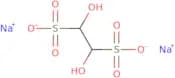
CAS:<p>2,2-Bis(propan-2-yl)-1,3-dioxolan-4-yl]methanol is a chemical compound with the molecular formula CHO. It is a colorless liquid that readily decomposes at high temperatures and has a pungent odor. 2,2-Bis(propan-2-yl)-1,3-dioxolan-4-yl]methanol is used as a buffer in sodium citrate injections to prevent the formation of kidney stones. It also has antiinflammatory properties and is used in horticultural applications to control pests and plant diseases. This chemical can be reconstituted with water to form an occlusive or inflammatory agent for use in controlling diseases such as herpes simplex virus and inflammatory diseases such as rheumatoid arthritis.</p>Formula:C10H20O3Purezza:Min. 95%Peso molecolare:188.26 g/molGlyoxal bis(sodium hydrogen sulfite) adduct hydrate
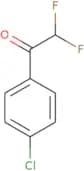
CAS:<p>Glyoxal bis(sodium hydrogen sulfite) adduct hydrate is a reactive compound that has been shown to react with quinoxaline derivatives. The nitrogen atoms in the amide and nitrogen atoms in the quinoxaline derivative are oxidized by oxidation catalyst, such as sodium carbonate, to form an amide-quinone. This reaction leads to the formation of a polyvinyl polymer that can be used for sample preparation. In addition, this compound has been shown to have receptor activity and detergent compositions. Glyoxal bis(sodium hydrogen sulfite) adduct hydrate also has antimicrobial properties and can be used for plant physiology studies and pharmacokinetic properties.</p>Formula:OHCCHO·2NaHSO3Purezza:Min. 95%Peso molecolare:266.16 g/mol1-(4-Chloro-phenyl)-2,2-difluoro-ethanone
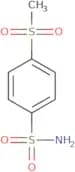
CAS:<p>Versatile small molecule scaffold</p>Formula:C8H5ClF2OPurezza:Min. 95%Peso molecolare:190.57 g/mol4-Methanesulfonylbenzene-1-sulfonamide
CAS:<p>4-Methanesulfonylbenzene-1-sulfonamide is a research chemical that is used in assays to study the metabolism of penicillium chrysogenum and other fungi. The metabolite 4-methanesulfonylbenzenesulfonic acid has been shown to inhibit fungal growth by inhibiting the synthesis of proteins, such as ribosomal proteins, which are necessary for cell division. This research chemical has also been shown to inhibit the production of aflatoxins, which are carcinogenic compounds produced by Aspergillus flavus and other species of fungi. 4-Methanesulfonylbenzene-1-sulfonamide has been found to be safe for use in humans and animals and can be used as a replacement for methyl bromide due to its sustainable functionality.</p>Formula:C7H9NO4S2Purezza:Min. 95%Peso molecolare:235.3 g/molTricyclo[2.2.1.0,2,6]heptane-3-carboxylic acid
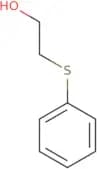
CAS:<p>Versatile small molecule scaffold</p>Formula:C8H10O2Purezza:Min. 95%Peso molecolare:138.16 g/mol2-(Phenylthio)ethanol
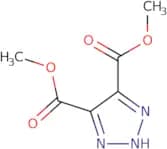
CAS:<p>2-Phenylthioethanol is a monomer that is used in the synthesis of silver trifluoromethanesulfonate. 2-Phenylthioethanol reacts with hydroxyl groups to form an ether linkage, which is the basis for its use as a monomer. 2-Phenylthioethanol has been shown to react with orthophosphate to form an ester linkage. This reaction is catalyzed by a nucleophile (e.g., chloride) and occurs at neutral pH in the presence of aluminium powder. The rate of this reaction increases with temperature and can be accelerated by diphenyl sulfoxide. The coatings industry uses 2-phenylthioethanol as a solvent for polyvinylchloride and polyurethane coatings, due to its ability to dissolve these materials without degrading them.</p>Formula:C8H10OSPurezza:Min. 95%Peso molecolare:154.23 g/mol4,5-Dimethyl 1H-1,2,3-triazole-4,5-dicarboxylate
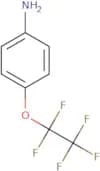
CAS:<p>Versatile small molecule scaffold</p>Formula:C6H7N3O4Purezza:Min. 95%Peso molecolare:185.14 g/mol4-(Perfluoroethoxy)aniline
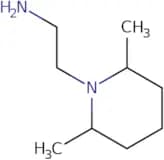
CAS:<p>Versatile small molecule scaffold</p>Formula:C8H6F5NOPurezza:Min. 95%Peso molecolare:227.13 g/mol2-(2,6-Dimethylpiperidin-1-yl)ethan-1-amine
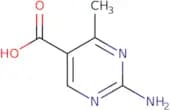
CAS:<p>Versatile small molecule scaffold</p>Formula:C9H20N2Purezza:Min. 95%Peso molecolare:156.27 g/mol2-Amino-4-methyl-pyrimidine-5-carboxylic acid
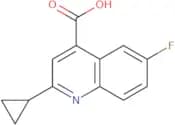
CAS:<p>2-Amino-4-methyl-pyrimidine-5-carboxylic acid is a spleen cell immunogen that induces antibody production in animals. 2-Amino-4-methyl-pyrimidine-5-carboxylic acid is an immunogen that belongs to the class of pyrimidine carboxylic acids. It has been optimised for use as an animal vaccine by inoculating it into tissues and monitoring antibody production with an enzyme linked immunosorbent assay. This compound has also been used to monitor and screen for antibodies in liquid chromatography.</p>Formula:C6H7N3O2Purezza:Min. 95%Peso molecolare:153.14 g/mol2-Cyclopropyl-6-fluoroquinoline-4-carboxylic acid
CAS:<p>Versatile small molecule scaffold</p>Formula:C13H10FNO2Purezza:Min. 95%Peso molecolare:231.22 g/mol5-(4-Nitro-phenyl)-[1,3,4]thiadiazol-2-ylamine
CAS:<p>Versatile small molecule scaffold</p>Formula:C8H6N4O2SPurezza:Min. 95%Peso molecolare:222.23 g/mol4-Bromo-6-methyl-2,3-dihydro-1H-inden-1-one
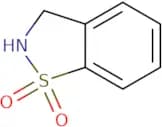
CAS:<p>Versatile small molecule scaffold</p>Formula:C10H9BrOPurezza:Min. 95%Peso molecolare:225.09 g/mol2,3-dihydro-1lambda6,2-benzothiazole-1,1-dione
CAS:<p>2,3-Dihydro-1lambda6,2-benzothiazole-1,1-dione is a plant growth regulator that is used in horticultural applications. It is an anion that can be used as an additive to prevent corrosion and rusting of metals. 2,3-Dihydro-1lambda6,2-benzothiazole-1,1-dione reacts with chloride ions to form the corresponding chromatographic product. This compound also forms reaction products with other compounds such as pyrrole, amide and carbonyl group.</p>Formula:C7H7NO2SPurezza:Min. 95%Peso molecolare:169.2 g/mol

![N-[4-Chloro-3-(trifluoromethyl)phenyl]-2-hydroxybenzamide](/_next/image/?url=https%3A%2Fstatic.cymitquimica.com%2Fproducts%2F3D%2Fthumb-webp%2FAAA36974.webp&w=3840&q=75)
![[2,2-Bis(propan-2-yl)-1,3-dioxolan-4-yl]methanol](/_next/image/?url=https%3A%2Fstatic.cymitquimica.com%2Fproducts%2F3D%2Fthumb-webp%2FAAA47043.webp&w=3840&q=75)
![Tricyclo[2.2.1.0,2,6]heptane-3-carboxylic acid](/_next/image/?url=https%3A%2Fstatic.cymitquimica.com%2Fproducts%2F3D%2Fthumb-webp%2FAAA69756.webp&w=3840&q=75)
![5-(4-Nitro-phenyl)-[1,3,4]thiadiazol-2-ylamine](/_next/image/?url=https%3A%2Fstatic.cymitquimica.com%2Fproducts%2F3D%2Fthumb-webp%2FAAA83363.webp&w=3840&q=75)