


Building Blocks
Questa sezione contiene prodotti fondamentali per la sintesi di composti organici e biologici. Building blocks sono i materiali di partenza essenziali utilizzati per costruire molecole complesse attraverso varie reazioni chimiche. Svolgono un ruolo critico nella scoperta di farmaci, nella scienza dei materiali e nella ricerca chimica. Presso CymitQuimica, offriamo una gamma diversificata di building blocks di alta qualità per supportare le tue ricerche innovative e progetti industriali, assicurandoti di avere i componenti essenziali per una sintesi di successo.
Sottocategorie di "Building Blocks"
- Acidi boronici e derivati dell'acido boronico(5.778 prodotti)
- Building Blocks Chirali(1.242 prodotti)
- Building Blocks Idrocarburici(6.098 prodotti)
- Building Blocks organici(61.092 prodotti)
Trovati 199296 prodotti di "Building Blocks"
Ordinare per
Purezza (%)
0
100
|
0
|
50
|
90
|
95
|
100
6-Bromo-4-hydroxypyrazolo[1,5-a]pyridine-3-carbonitrile
CAS:<p>Please enquire for more information about 6-Bromo-4-hydroxypyrazolo[1,5-a]pyridine-3-carbonitrile including the price, delivery time and more detailed product information at the technical inquiry form on this page</p>Formula:C8H4BrN3OPurezza:Min. 95%Peso molecolare:238.04 g/molBisaboloxide A
CAS:<p>Please enquire for more information about Bisaboloxide A including the price, delivery time and more detailed product information at the technical inquiry form on this page</p>Formula:C15H26O2Purezza:Min. 95%Peso molecolare:238.37 g/moltrans-1-Bromo-1-propene - stablised with Copper
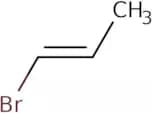
CAS:<p>Trans-1-bromo-1-propene is a compound that has been stabilized by copper. It is used in the synthesis of quinoline derivatives and alkanoic acids. Trans-1-bromo-1-propene is an antimicrobial agent, which kills bacteria by interfering with the fatty acid synthesis. This substance also has antioxidant properties.</p>Formula:C3H5BrPurezza:95%NmrColore e forma:Clear LiquidPeso molecolare:120.98 g/mol2-Bromo-5-hydroxypyridine
CAS:2-Bromo-5-hydroxypyridine is an aromatic compound that is used in the synthesis of a variety of pharmaceuticals and other organic compounds. It can be synthesized by the Suzuki coupling reaction from 2-bromobenzaldehyde and 5-aminopyridine. 2-Bromo-5-hydroxypyridine has been shown to be a hepatotoxin in humans, with possible carcinogenic activity. It also has cholinergic properties, as well as being able to cause fluorescence when exposed to halogens. The carbon next to the hydroxyl group is a stereocenter, so there are two different configurations for this molecule. The configuration shown above (R) is the more stable form of this molecule due to its electron withdrawing power on the neighboring oxygen atom.Formula:C5H4BrNOPurezza:Min. 95%Colore e forma:White PowderPeso molecolare:174 g/mol4-(Benzyloxy)piperidine HCl
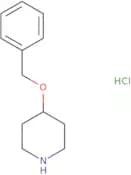
CAS:<p>4-(Benzyloxy)piperidine HCl is a versatile building block that is used in the synthesis of complex compounds such as research chemicals, reagents and speciality chemicals. 4-(Benzyloxy)piperidine HCl is also a useful intermediate in organic synthesis and can be used as a reaction component. 4-(Benzyloxy)piperidine HCl has CAS number 81151-68-0 and is a useful scaffold for chemical syntheses.</p>Formula:C12H17NOHClPurezza:Min. 95%Colore e forma:White PowderPeso molecolare:227.73 g/mol(R)-4-N-Boc-2-hydroxymethyl-piperazine
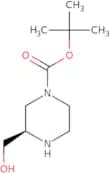
CAS:<p>Please enquire for more information about (R)-4-N-Boc-2-hydroxymethyl-piperazine including the price, delivery time and more detailed product information at the technical inquiry form on this page</p>Formula:C10H20N2O3Purezza:Min. 95%Peso molecolare:216.28 g/mol2-Bromobenzo[d]thiazol-6-amine
CAS:<p>Please enquire for more information about 2-Bromobenzo[d]thiazol-6-amine including the price, delivery time and more detailed product information at the technical inquiry form on this page</p>Formula:C7H5BrN2SPurezza:Min. 95%Peso molecolare:229.1 g/mol(R)-tert-Butyl 2-methylpiperazine-1-carboxylate
CAS:<p>(R)-tert-Butyl 2-methylpiperazine-1-carboxylate is a versatile building block that can be used for the synthesis of complex compounds. The compound is a reagent, speciality chemical, and useful building block in research. It can be used as a reaction component or scaffold in synthesis. (R)-tert-Butyl 2-methylpiperazine-1-carboxylate has been shown to react with nucleophiles such as amines and alcohols to form stable products. This product has high quality and is useful for chemical reactions involving carbonyl groups.</p>Formula:C10H20N2O2Purezza:Min. 95%Colore e forma:White PowderPeso molecolare:200.28 g/mol3-Bromo-4-chloroaniline
CAS:<p>3-Bromo-4-chloroaniline is a chloroaniline compound. It is synthesized by reacting hexamethylenetetramine with chlorine gas in the presence of formaldehyde and paraformaldehyde. 3-Bromo-4-chloroaniline has been used to produce other compounds, such as trimethylchlorosilane, which is used in the production of silicone rubber. Chloroanilines are toxic chemicals that can be found in the environment and react with formaldehyde to produce carcinogenic substances called halofuginones.</p>Formula:C6H5BrClNPurezza:Min. 95%Peso molecolare:206.47 g/mol3-Bromo-4-nitropyridine
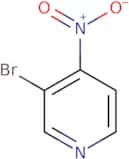
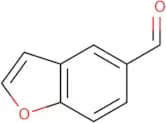
CAS:<p>3-Bromo-4-nitropyridine is a pyridine compound that has been identified as an environmental contaminant. It is used to synthesize other compounds, such as 4-(3-bromopyridin-2-yl)morpholine, which is used in the synthesis of acetonitrile. 3-Bromo-4-nitropyridine undergoes nucleophilic substitution reactions with amines, leading to homoconjugation and bond cleavage. This reaction may be followed by nitration to give 3-(3'-nitro)pyridine. 3-Bromo-4-nitropyridine can be converted into its n-oxide form or into the ionic form by treatment with acetonitrile.</p>Formula:C5H3BrN2O2Purezza:Min. 95%Colore e forma:Yellow PowderPeso molecolare:202.99 g/mol1-Benzofuran-5-carbaldehyde
CAS:1-Benzofuran-5-carbaldehyde is a synthetic compound that inhibits the enzyme ido1. It has been shown to have potent cytotoxicity, potent inhibition, and neurotrophic properties in a number of cell lines. 1-Benzofuran-5-carbaldehyde also exhibits inhibitory effects on the enzymes hydrolyzing dopamine, which is involved in the synthesis of norepinephrine and epinephrine. The chemical structure of 1-benzofuran-5-carbaldehyde closely resembles that of dopamine and its derivatives, and can be used for the treatment of neurodegenerative diseases such as Parkinson's disease.Formula:C9H6O2Purezza:Min. 95%Colore e forma:Yellow To Brown SolidPeso molecolare:146.14 g/mol4-Bromobenzaldehyde
CAS:<p>4-Bromobenzaldehyde is a chemical compound that belongs to the group of aromatic compounds. It has been shown to have a potent stimulatory effect on locomotor activity in mice, which may be due to its ability to increase levels of epidermal growth factor and gamma-aminobutyric acid in the brain. 4-Bromobenzaldehyde can be synthesized from 2,4-dibromophenol and anhydrous copper chloride in the presence of sodium hydroxide. The reaction mechanism for this synthesis is believed to involve an intermediate enamine form of 4-bromobenzaldehyde, which can then undergo hydrolysis into 2,4-dibromophenol and benzaldehyde. This product is used as a reagent in organic synthesis because it can be used to form esters with trifluoroacetic acid or hydrochloric acid in high yield.</p>Formula:C7H5BrOPurezza:Min. 90 Area-%Colore e forma:White PowderPeso molecolare:185.02 g/molBenzophenone-4-carboxylic acid
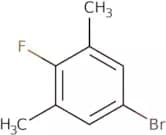
CAS:<p>Organic intermediate</p>Formula:C14H10O3Purezza:Min. 98 Area-%Colore e forma:White PowderPeso molecolare:226.23 g/mol5-Bromo-2-fluoro-1,3-dimethylbenzene
CAS:Please enquire for more information about 5-Bromo-2-fluoro-1,3-dimethylbenzene including the price, delivery time and more detailed product information at the technical inquiry form on this pageFormula:C8H8BrFPurezza:Min. 95%Colore e forma:Clear Colourless To Yellow LiquidPeso molecolare:203.05 g/mol3-Bromo-2-fluoro-6-methylpyridine
CAS:<p>Please enquire for more information about 3-Bromo-2-fluoro-6-methylpyridine including the price, delivery time and more detailed product information at the technical inquiry form on this page</p>Formula:C6H5BrFNPurezza:Min. 95%Peso molecolare:190.01 g/mol5-Bromo-2-dimethylaminopyridine
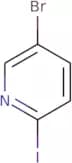
CAS:Prodotto controllato<p>Please enquire for more information about 5-Bromo-2-dimethylaminopyridine including the price, delivery time and more detailed product information at the technical inquiry form on this page</p>Formula:C7H9BrN2Purezza:Min. 95%Peso molecolare:201.01 g/mol5-Bromo-2-iodopyridine
CAS:<p>5-Bromo-2-iodopyridine is an antibiotic that is used to treat bacterial infections. It has been shown to inhibit the growth of bacteria by binding to the 50S ribosomal subunit. This drug also has a toxic effect on respiratory system cells, which may be due to its ability to induce apoptosis. 5-Bromo-2-iodopyridine interacts with DNA in a triazine ring and inhibits bacterial growth by inhibiting protein synthesis. The drug binds to the 50S ribosomal subunit at a site that is different from that of rifampin and other antibiotics. The reaction is catalyzed by palladium at high temperatures and takes place in organic solvents such as chloroform or benzene. This synthetic process can be made more efficient by using inexpensive starting materials, such as bromine, iodine, and acetone, rather than expensive starting materials like platinum or gold salts.</p>Formula:C5H3BrINPurezza:Min. 95%Colore e forma:Slightly Yellow PowderPeso molecolare:283.89 g/mol4-Bromopyridine hydrochloride
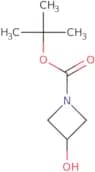
CAS:<p>4-Bromopyridine HCl is a chemical compound with the molecular formula C6H5BrN. It is an aromatic heterocycle and is used in organic synthesis as a coupling partner in cross-coupling reactions. The bromine atom of 4-bromopyridine is replaced by chloride, resulting in 4-chloropyridine. The chlorination reaction can be conducted using either hydrochloric acid or thionyl chloride. This process can be done on an industrial scale and the chlorinated product has been used in the manufacture of pharmaceuticals, dyes, and pesticides. The reaction mechanism for this substitution reaction involves a nucleophilic attack by chlorine on the pyridine ring at carbon atom 2 followed by displacement of hydrogen from the adjacent position on nitrogen atom 3. Acylation reactions are oxidation processes that involve conversion of carboxylic acids to acyl halides or acyl chlorides through treatment with acidified halogenating agents such</p>Formula:C5H4BrN•HClPurezza:Min. 95%Colore e forma:White PowderPeso molecolare:194.46 g/molN-Boc-3-Azetidinol
CAS:This linker is chemically stable and not cleavable under standard intracellular or extracellular conditions. N-Boc-3-Azetidinol is also a versatile organic intermediate used primarily in the pharmaceutical industry for synthesizing a wide range of drugs, including antibacterials, immunosuppressants, and cancer therapies.Formula:C8H15NO3Purezza:Min. 95%Peso molecolare:173.21 g/mol1-[(tert-butoxy)carbonyl]-5,5-difluoropiperidine-3-carboxylic acid
CAS:<p>Versatile small molecule scaffold</p>Formula:C11H17F2NO4Purezza:Min. 95%Peso molecolare:265.3 g/mol
![6-Bromo-4-hydroxypyrazolo[1,5-a]pyridine-3-carbonitrile](/_next/image/?url=https%3A%2Fstatic.cymitquimica.com%2Fproducts%2F3D%2Fthumb-webp%2FFB182798.webp&w=3840&q=75)



![2-Bromobenzo[d]thiazol-6-amine](/_next/image/?url=https%3A%2Fstatic.cymitquimica.com%2Fproducts%2F3D%2Fthumb-webp%2FFB144124.webp&w=3840&q=75)







![1-[(tert-butoxy)carbonyl]-5,5-difluoropiperidine-3-carboxylic acid](/_next/image/?url=https%3A%2Fstatic.cymitquimica.com%2Fproducts%2F3D%2Fthumb-webp%2FFAC66686.webp&w=3840&q=75)