Building Blocks
Questa sezione contiene prodotti fondamentali per la sintesi di composti organici e biologici. Building blocks sono i materiali di partenza essenziali utilizzati per costruire molecole complesse attraverso varie reazioni chimiche. Svolgono un ruolo critico nella scoperta di farmaci, nella scienza dei materiali e nella ricerca chimica. Presso CymitQuimica, offriamo una gamma diversificata di building blocks di alta qualità per supportare le tue ricerche innovative e progetti industriali, assicurandoti di avere i componenti essenziali per una sintesi di successo.
Sottocategorie di "Building Blocks"
- Acidi boronici e derivati dell'acido boronico(5.778 prodotti)
- Building Blocks Chirali(1.242 prodotti)
- Building Blocks Idrocarburici(6.098 prodotti)
- Building Blocks organici(61.092 prodotti)
Trovati 199296 prodotti di "Building Blocks"
Ordinare per
Purezza (%)
0
100
|
0
|
50
|
90
|
95
|
100
1-Boc-3-Oxo-1,4-diazepane
CAS:<p>Versatile small molecule scaffold</p>Formula:C10H18N2O3Purezza:Min. 95%Peso molecolare:214.27 g/mol4-Fluoro-2-methoxy-5-nitroaniline
CAS:<p>Intermediate in the synthesis of osimertinib (AZD9291)</p>Formula:C7H7FN2O3Purezza:Min. 95%Peso molecolare:186.14 g/mol2-(2,4-dimethoxyphenyl)ethan-1-amine
CAS:Prodotto controllato<p>Versatile small molecule scaffold</p>Formula:C10H15NO2Purezza:Min. 95%Peso molecolare:181.24 g/mol5-Chloro-2-ethoxy-phenylamine
CAS:<p>5-Chloro-2-ethoxy-phenylamine is an enzyme inhibitor that binds to the active site of glucocerebrosidase, the enzyme that catalyzes the hydrolysis of glucocerebroside to glucose and ceramide. This compound has been shown to be a selective inhibitor against this enzyme and not affect other hydrolases or chaperones. It was also found that 5-chloro-2-ethoxy-phenylamine can act as a chemical chaperone by stabilizing protein folding in vitro. 5-Chloro-2-ethoxy phenylamine is a new analogue of 3-(3,4,-dichlorophenyl)-1-[(1R,2S)-2-(5,6,-dichloropyridin-3 yl)ethenyl]-1H-pyrazole. It is an inhibitor of Gaucher disease caused by glu</p>Formula:C8H10ClNOPurezza:Min. 95%Peso molecolare:171.63 g/molN-Fluorobenzenesulfonimide
CAS:<p>N-Fluorobenzenesulfonimide is an organic compound with the molecular formula CHFNS. It is a fluorinating agent that can be used for the synthesis of organic compounds. N-Fluorobenzenesulfonimide has been shown to have anti-inflammatory properties and has shown promising results in animal studies for the treatment of hepatitis. The mechanism of action is not fully understood, but it may involve the formation of hydrogen bonds between N-fluorobenzenesulfonimide and amino acid residues in proteins, leading to inhibition of protein synthesis.</p>Formula:C12H10FNO4S2Purezza:Min. 95%Colore e forma:White PowderPeso molecolare:315.34 g/mol2,4-Dichloro-6-(propan-2-yl)pyrimidine
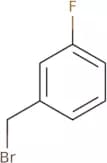
CAS:<p>Versatile small molecule scaffold</p>Formula:C7H8Cl2N2Purezza:Min. 95%Peso molecolare:191.05 g/mol3-Fluorobenzyl bromide
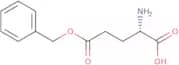
CAS:<p>3-Fluorobenzyl bromide is a fluorinated benzyl derivative that can be used as a fluorescent probe for the study of cellular uptake and metabolism. 3-Fluorobenzyl bromide has been shown to have potent inhibitory activity against the growth of cancer cells in culture. It has also been shown to reduce ischemia reperfusion injury in cardiac tissue. The pharmacokinetic properties of 3-fluorobenzyl bromide have been studied in detail, revealing a rapid uptake into cells and elimination by renal excretion. This compound also inhibits the growth of P. aeruginosa in an animal model, with no effect on other bacterial strains or mammalian cells.</p>Purezza:Min. 95%L-Glutamic acid 5-benzyl ester
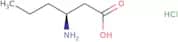
CAS:<p>L-Glutamic acid 5-benzyl ester is an amino acid that has been synthesized to have a lysine residue. It is an ester hydrochloride and has been shown to have broad-spectrum antimicrobial properties. L-glutamic acid 5-benzyl ester's antimicrobial activity is thought to be due to its chemical structure which allows it to act as an antimicrobial peptide, binding to receptors on the surface of bacterial cells and inhibiting their growth. L-glutamic acid 5-benzyl ester also inhibits osteogenic genes in cervical cancer cells, but not in normal cells.</p>Formula:C12H15NO4Purezza:Min. 95%Colore e forma:White Off-White PowderPeso molecolare:237.25 g/mol(S)-3-Aminohexanoic acid hydrochloride ee
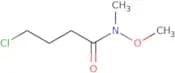
CAS:<p>Versatile small molecule scaffold</p>Formula:C6H14ClNO2Purezza:Min. 95%Peso molecolare:167.63 g/mol4-Chloro-N-methoxy-N-methylbutanamide
CAS:<p>Versatile small molecule scaffold</p>Formula:C6H12ClNO2Purezza:Min. 95%Peso molecolare:165.62 g/mol3-Bromofuran-2-carbaldehyde
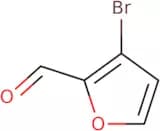
CAS:<p>3-Bromofuran-2-carbaldehyde is a chemical compound that belongs to the group of carbonyl compounds. It is an acetylated form of 3-bromofuran and its molecular formula is C6H5BrO. This chemical contains a carbonyl group, which reacts with the hydroxyl group in epidermal growth factor (EGF) to produce epidermal growth. 3-Bromofuran-2-carbaldehyde has been shown to be an adrenergic receptor agonist and can be used as a structural formula blocker or hydrochloric acid. The chemical can also be synthesized in acidic conditions using methods such as fluorination, chlorination, and acetylation.</p>Formula:C5H3BrO2Purezza:Min. 95%Peso molecolare:174.98 g/moltert-Butyl N-(4-methylphenyl)carbamate
CAS:<p>Tert-butyl N-(4-methylphenyl)carbamate is a reusable, efficient method for the synthesis of tert-butyl carbamates from amines and carbon dioxide. This reaction is an example of a C–H bond activation that proceeds through an anion intermediate. The reaction time can be reduced by irradiation to increase the efficiency. Electrons are unpaired during this process, which is modeled with quantum mechanics software. Chloride is used as a catalyst to activate the electron and generate a reactive intermediate. Amine functionalities are added to the molecule in order to give it desired properties. The chloride group can be replaced with other anions such as bromide or iodide, which will also introduce different reactivity patterns.</p>Formula:C12H17NO2Purezza:Min. 95%Peso molecolare:207.27 g/mol7-Bromo-3,4-dihydro-1H-quinolin-2-one
CAS:<p>Versatile small molecule scaffold</p>Formula:C9H8BrNOPurezza:Min. 95%Peso molecolare:226.07 g/mol4-{[(tert-butoxy)carbonyl]amino}bicyclo[2.2.2]octane-1-carboxylic acid
CAS:<p>Versatile small molecule scaffold</p>Formula:C14H23NO4Purezza:Min. 95%Peso molecolare:269.3 g/mol4-Hydrazinobenzoic acid
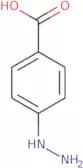
CAS:<p>4-Hydrazinobenzoic acid is a chemical compound that is used as an inhibitor of DNA synthesis. It prevents the formation of hydrogen bonds between nucleotides in DNA, which prevents the synthesis of new DNA strands. 4-Hydrazinobenzoic acid has been shown to inhibit the growth of human breast cancer cells by reactivating the tumor suppressor genes p21 and Rb1, which are responsible for regulating cell cycle progression. This compound also inhibits the production of hydrogen chloride (HCl) in reaction solutions containing sodium hypochlorite (NaOCl).</p>Formula:C7H8N2O2Purezza:Min. 95%Colore e forma:Slightly Yellow PowderPeso molecolare:152.15 g/mol8-Hydroxyquinoline hemisulfate salt hemihydrate
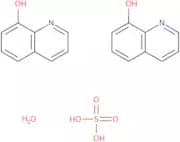
CAS:<p>8-Hydroxyquinoline is a sweet, water soluble, and heat stable inhibitor that has been used in the treatment of kidney disease. 8-Hydoxyquinoline has been shown to inhibit the growth of the rootstock Asiaticus by interfering with cell metabolism. It is also an insecticide that kills insects by causing damage to their cells. 8-Hydoxyquinoline inhibits polymerase chain reaction (PCR) by binding to DNA polymerase, blocking its activity and reducing its ability to synthesize DNA. This drug is also a potent blocker of angiotensinogen synthesis, which leads to reduced blood pressure levels.</p>Formula:C9H7NOH2SO4H2OColore e forma:Yellow PowderPeso molecolare:203.21 g/mol1-Hydroxypyridine-2-thione zinc
CAS:<p>Zinc pyrithione is a chemical compound that can be used as an antifungal agent. It has been shown to have genotoxic activity in vitro and in vivo. Zinc pyrithione binds to the surface of the fungal cell wall and inhibits the synthesis of ergosterol, a component of the fungal cell membrane. This binding prevents the formation of an ergosterol-zinc complex with cytochrome P450 enzymes, which are required for sterol biosynthesis, leading to inhibition of energy metabolism. The model system for zinc pyrithione is a mixture of 1-hydroxypyridine-2-thione (1HP) and zinc ions in water. Some studies have shown that zinc pyrithione can cause long-term toxicity, including glycol ether toxicity, when applied topically on hair or skin. Acute toxicities may include skin irritation or contact dermatitis from shampoos containing this substance.</p>Formula:C10H8N2O2S2ZnPurezza:Min. 95%Colore e forma:White/Off-White SolidPeso molecolare:317.69 g/mol2-Oxa-spiro[3.3]heptan-6-ol
CAS:<p>Versatile small molecule scaffold</p>Formula:C6H10O2Purezza:Min. 95%Peso molecolare:114.14 g/mol2-Amino-5-fluoro-4-methoxybenzoic acid
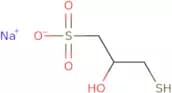
CAS:Versatile small molecule scaffoldFormula:C8H8FNO3Purezza:Min. 95%Peso molecolare:185.15 g/mol2-Hydroxy-3-mercapto-1-propanesulfonic acid sodium salt
CAS:2-Hydroxy-3-mercapto-1-propanesulfonic acid sodium salt (2HMP) is a diagnostic agent that can be used for the detection of bacterial infections. The conformational properties of 2HMP are similar to those of ATP, which allows it to bind to the polymerase chain reaction enzyme and initiate an enzymatic reaction. This leads to the production of a signal that can be detected by spectrophotometry or fluorometry. 2HMP has also been shown to have chemokine activity in vitro, but this has not been tested in vivo. 2HMP is a competitive inhibitor of human protein serine proteases, such as trypsin and chymotrypsin, with an IC50 value of approximately 1 μM.Formula:C3H7NaO4S2Purezza:Min. 95%Peso molecolare:194.2 g/mol




![4-{[(tert-butoxy)carbonyl]amino}bicyclo[2.2.2]octane-1-carboxylic acid](/_next/image/?url=https%3A%2Fstatic.cymitquimica.com%2Fproducts%2F3D%2Fthumb-webp%2FNJB30476.webp&w=3840&q=75)

![2-Oxa-spiro[3.3]heptan-6-ol](/_next/image/?url=https%3A%2Fstatic.cymitquimica.com%2Fproducts%2F3D%2Fthumb-webp%2FNEC38108.webp&w=3840&q=75)