Building Blocks
Questa sezione contiene prodotti fondamentali per la sintesi di composti organici e biologici. Building blocks sono i materiali di partenza essenziali utilizzati per costruire molecole complesse attraverso varie reazioni chimiche. Svolgono un ruolo critico nella scoperta di farmaci, nella scienza dei materiali e nella ricerca chimica. Presso CymitQuimica, offriamo una gamma diversificata di building blocks di alta qualità per supportare le tue ricerche innovative e progetti industriali, assicurandoti di avere i componenti essenziali per una sintesi di successo.
Sottocategorie di "Building Blocks"
- Acidi boronici e derivati dell'acido boronico(5.756 prodotti)
- Building Blocks Chirali(1.242 prodotti)
- Building Blocks Idrocarburici(6.095 prodotti)
- Building Blocks organici(61.055 prodotti)
Trovati 199650 prodotti di "Building Blocks"
Ordinare per
Purezza (%)
0
100
|
0
|
50
|
90
|
95
|
100
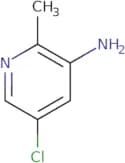
3-Amino-5-chloropicoline
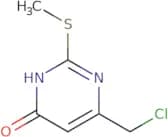
CAS:<p>Versatile small molecule scaffold</p>Formula:C6H7ClN2Purezza:Min. 95%Peso molecolare:142.59 g/mol6-(Chloromethyl)-2-(methylsulfanyl)-3,4-dihydropyrimidin-4-one
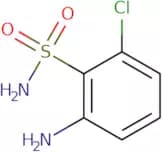
CAS:<p>Versatile small molecule scaffold</p>Formula:C6H7ClN2OSPurezza:Min. 95%Peso molecolare:190.65 g/mol2-Amino-6-chlorobenzene-1-sulfonamide
CAS:<p>2-Amino-6-chlorobenzene-1-sulfonamide is a sulfonamide that inhibits the ATP sensitive potassium channel. It is used as a muscle relaxant and to treat muscle spasms. 2-Amino-6-chlorobenzene-1-sulfonamide has been shown to have an inhibitory effect on the chlorine atom of ATP sensitive potassium channels in vitro, which may lead to vasorelaxation through the opening of potassium channels. This drug has also been shown to be more potent than other drugs with similar effects, such as heptaminol and diazoxide. In addition, this drug has a low toxicity profile.</p>Formula:C6H7ClN2O2SPurezza:Min. 95%Peso molecolare:206.65 g/mol3,4-Dimethylthiophene-2-carboxylic acid
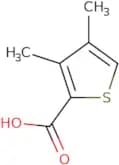
CAS:<p>3,4-Dimethylthiophene-2-carboxylic acid is an experimental compound that has been shown to be a linear molecule with a molecular weight of 144. The experimental equation for the formation of 3,4-dimethylthiophene-2-carboxylic acid from 3,4-dimethoxythiophene and acetic acid is:</p>Formula:C7H8O2SPurezza:Min. 95%Peso molecolare:156.2 g/molMethyl 6-oxo-1,6-dihydropyridazine-4-carboxylate
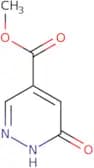
CAS:<p>Versatile small molecule scaffold</p>Formula:C6H6N2O3Purezza:Min. 95%Peso molecolare:154.12 g/mol5-Chloro-3-(2-methylpropyl)-1,2,4-thiadiazole
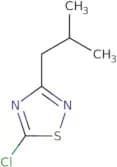
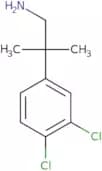
CAS:<p>Versatile small molecule scaffold</p>Formula:C6H9ClN2SPurezza:Min. 95%Peso molecolare:176.67 g/mol2-(3,4-Dichlorophenyl)-2-methylpropan-1-amine
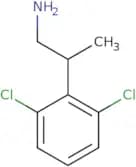
CAS:<p>Versatile small molecule scaffold</p>Formula:C10H13Cl2NPurezza:Min. 95%Peso molecolare:218.12 g/mol2-(2,6-Dichlorophenyl)propan-1-amine
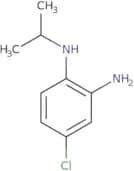
CAS:Prodotto controllato<p>Versatile small molecule scaffold</p>Formula:C9H11Cl2NPurezza:Min. 95%Peso molecolare:204.09 g/mol4-Chloro-1-N-(propan-2-yl)benzene-1,2-diamine
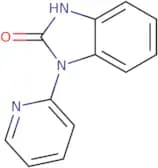
CAS:<p>Versatile small molecule scaffold</p>Formula:C9H13ClN2Purezza:Min. 95%Peso molecolare:184.66 g/mol1-(Pyridin-2-yl)-2,3-dihydro-1H-1,3-benzodiazol-2-one
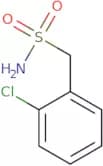
CAS:<p>Versatile small molecule scaffold</p>Formula:C12H9N3OPurezza:Min. 95%Peso molecolare:211.22 g/mol2-Chlorobenzylsulfonamide
CAS:<p>2-Chlorobenzylsulfonamide is a drug that binds to the receptor for neutral lipids, which is found on the surface of human fibroblasts. This binding inhibits the release of free fatty acids from adipose tissue and also prevents the uptake of these lipids by tissues such as muscle. 2-Chlorobenzylsulfonamide has been shown to be effective at reducing hyperlipidemia in mice. This drug has a limited effect on heparin-induced lipoprotein lipase activity in vivo, but it does have an antidiabetic effect on rats when given orally. The mechanism of this effect may be due to its ability to inhibit lipolysis or to activate lipoprotein lipase.</p>Formula:C7H8ClNO2SPurezza:Min. 95%Peso molecolare:205.66 g/molPyridin-3-yl[3-(trifluoromethyl)phenyl]methanol
CAS:<p>Versatile small molecule scaffold</p>Formula:C13H10F3NOPurezza:Min. 95%Peso molecolare:253.22 g/molIsbogrel
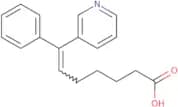
CAS:<p>Isbogrel is a pharmaceutical preparation that belongs to the group of fatty acids. It has been shown to be effective in the treatment of inflammatory bowel disease, and has also been shown to have anti-platelet properties. Isbogrel is an analog of the natural product arachidonic acid, which is synthesized from linoleic acid through the activity of enzymes called phospholipase A2 (PLA2). Isbogrel inhibits prostaglandin synthesis by binding to and inhibiting PLA2, thereby preventing arachidonic acid production. Isbogrel may also be used for the prevention and treatment of myocardial infarcts due to its ability to reduce blood pressure and improve symptoms.</p>Formula:C18H19NO2Purezza:Min. 95%Peso molecolare:281.3 g/mol1-(5-Bromo-1H-indol-2-yl)ethan-1-one
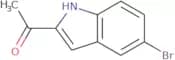
CAS:<p>Versatile small molecule scaffold</p>Formula:C10H8BrNOPurezza:Min. 95%Peso molecolare:238.08 g/molbicyclo[3.1.0]hexan-3-amine hcl
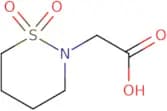
CAS:<p>Versatile small molecule scaffold</p>Formula:C6H12ClNPurezza:Min. 95%Peso molecolare:133.62 g/mol2-(1,1-Dioxido-1,2-thiazinan-2-yl)acetic acid
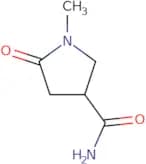
CAS:<p>Versatile small molecule scaffold</p>Formula:C6H11NO4SPurezza:Min. 95%Peso molecolare:193.22 g/mol1-Methyl-2-oxopyrrolidine-4-carboxamide
CAS:<p>1-Methyl-2-oxopyrrolidine-4-carboxamide is a bioactive molecule found in leaves. It was isolated by GC–MS analysis and identified by comparison of its retention time with the standard toluene, formic acid, and formaldehyde. 1-Methyl-2-oxopyrrolidine-4-carboxamide has shown to have antiinflammatory properties. Quantitative analysis of this molecule showed that it is present at 0.1% of the leaf extract.</p>Formula:C6H10N2O2Purezza:Min. 95%Peso molecolare:142.16 g/mol5-Acetylfuran-3-carboxylic acid
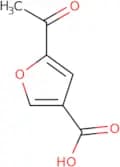
CAS:<p>Versatile small molecule scaffold</p>Formula:C7H6O4Purezza:Min. 95%Peso molecolare:154.12 g/mol3-Methylthiophene-2,5-dicarboxylic acid
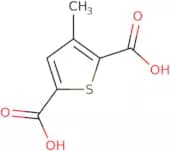
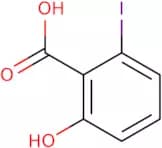
CAS:<p>Versatile small molecule scaffold</p>Formula:C7H6O4SPurezza:Min. 95%Peso molecolare:186.19 g/mol2-Hydroxy-6-iodobenzoic acid
CAS:<p>2-Hydroxy-6-iodobenzoic acid is a synthetic salicylate that has been shown to inhibit the x-ray induced release of catecholamines from chromaffin cells. It also inhibits the ATPase activity of V-ATPase in mouse granulosa cells, which may be due to its ability to inhibit phosphorylation at Ser/Thr residues. 2-Hydroxy-6-iodobenzoic acid has also been shown to have antitumor properties and to inhibit the growth of both leukemia and lymphoma cells. The natural product is an inhibitor of protein synthesis, as well as a potent antimicrobial agent. Its structure consists of a macrolide fused with a quinoline ring system. It is an effective inhibitor of bacterial protein synthesis and can be used as a starting material for the synthesis of other compounds that are structurally similar to 2HIB.</p>Formula:C7H5IO3Purezza:Min. 95%Peso molecolare:264.02 g/mol

![Pyridin-3-yl[3-(trifluoromethyl)phenyl]methanol](/_next/image/?url=https%3A%2Fstatic.cymitquimica.com%2Fproducts%2F3D%2Fthumb-webp%2FPDA66720.webp&w=3840&q=75)
![bicyclo[3.1.0]hexan-3-amine hcl](/_next/image/?url=https%3A%2Fstatic.cymitquimica.com%2Fproducts%2F3D%2Fthumb-webp%2FPDA67680.webp&w=3840&q=75)