


Building Blocks
Questa sezione contiene prodotti fondamentali per la sintesi di composti organici e biologici. Building blocks sono i materiali di partenza essenziali utilizzati per costruire molecole complesse attraverso varie reazioni chimiche. Svolgono un ruolo critico nella scoperta di farmaci, nella scienza dei materiali e nella ricerca chimica. Presso CymitQuimica, offriamo una gamma diversificata di building blocks di alta qualità per supportare le tue ricerche innovative e progetti industriali, assicurandoti di avere i componenti essenziali per una sintesi di successo.
Sottocategorie di "Building Blocks"
- Acidi boronici e derivati dell'acido boronico(5.756 prodotti)
- Building Blocks Chirali(1.242 prodotti)
- Building Blocks Idrocarburici(6.095 prodotti)
- Building Blocks organici(61.038 prodotti)
Trovati 196817 prodotti di "Building Blocks"
Ordinare per
Purezza (%)
0
100
|
0
|
50
|
90
|
95
|
100
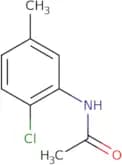
N-(2-Chloro-5-methylphenyl)acetamide
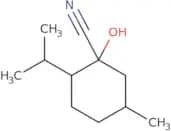
CAS:<p>Versatile small molecule scaffold</p>Formula:C9H10ClNOPurezza:Min. 95%Peso molecolare:183.63 g/mol(1R,2S,5R)-1-Hydroxy-5-methyl-2-(propan-2-yl)cyclohexane-1-carbonitrile
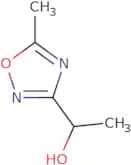
CAS:<p>Versatile small molecule scaffold</p>Formula:C11H19NOPurezza:Min. 95%Peso molecolare:181.3 g/mol1-(5-Methyl-1,2,4-oxadiazol-3-yl)ethan-1-ol
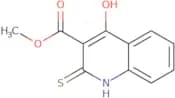
CAS:<p>Versatile small molecule scaffold</p>Formula:C5H8N2O2Purezza:Min. 95%Peso molecolare:128.13 g/molMethyl 4-hydroxy-2-sulfanylquinoline-3-carboxylate
CAS:<p>Methyl 4-hydroxy-2-sulfanylquinoline-3-carboxylate (MSQ) is a synthetic molecule that has shown to have antiviral activity against the hepatitis B virus. This compound is a competitive inhibitor of the virus and prevents it from infecting cells. MSQ has also been shown to inhibit other viruses, such as herpes simplex virus, influenza A and C, rotavirus, and human immunodeficiency virus type 1 (HIV-1). The high inhibition of MSQ can be attributed to its ability to form hydrogen bonds with the amino acid residues in viral proteins. Additionally, MSQ interacts with anions in the active site of the enzymes that are necessary for viral replication through alkylation reactions.<br>MSQ has been found to be selective for influenza A and C by binding at different sites on the enzyme compared to other compounds like zanamivir and oseltamivir. The single-crystal x</p>Formula:C11H9NO3SPurezza:Min. 95%Peso molecolare:235.26 g/mol[(2-Bromo-5-chlorophenyl)methyl](2-methylpropyl)amine
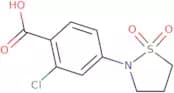
CAS:<p>Versatile small molecule scaffold</p>Formula:C11H15BrClNPurezza:Min. 95%Peso molecolare:276.6 g/mol2-Chloro-4-(1,1-dioxo-1,2-thiazolidin-2-yl)benzoic acid
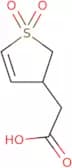
CAS:<p>Versatile small molecule scaffold</p>Formula:C10H10ClNO4SPurezza:Min. 95%Peso molecolare:275.71 g/mol2,3-Dihydro-3-thiopheneacetic acid 1,1-dioxide
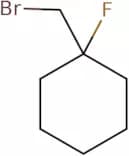
CAS:<p>2,3-Dihydro-3-thiopheneacetic acid 1,1-dioxide is a nucleophilic reagent that can be used to synthesize amides. It reacts with amines to form 2,3-dihydro-3-thiophenecarboxylic acid 1,1-diamide. Reactions of this compound with heterocycles such as pyridine and quinoline result in the formation of heterocyclic amines.</p>Formula:C6H8O4SPurezza:Min. 95%Peso molecolare:176.19 g/mol1-(Bromomethyl)-1-fluorocyclohexane
CAS:<p>Versatile small molecule scaffold</p>Formula:C7H12BrFPurezza:Min. 95%Peso molecolare:195.07 g/mol8-Thia-1-azabicyclo[3.2.1]octane-5-carboxylic acid 8,8-dioxide
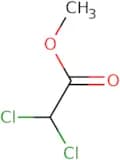
CAS:<p>Versatile small molecule scaffold</p>Formula:C7H11NO4SPurezza:Min. 95%Peso molecolare:205.2 g/molDichloroacetic Acid Methyl Ester
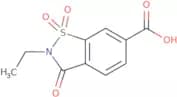
CAS:<p>Dichloroacetic acid methyl ester (DCA) is a metabolic disorder agent that belongs to the group of detergent compositions. It is an important intermediate in the synthesis of sodium salts and hiv infection inhibitors, such as hydrochloric acid and covalent linkages. DCA reacts with water molecules to form hydroxyl groups and then reacts with metal carbonyls to produce anhydrous sodium. This product also reacts with fatty acids to produce alcohol residue and can be used in the reaction solution. The product has a pyrazole ring with a hydroxyl group at one end and an alcohol residue at the other end.</p>Formula:C3H4Cl2O2Purezza:Min. 95%Peso molecolare:142.97 g/mol2-Ethyl-2,3-dihydro-3-oxo-1,2-benzisothiazole-6-carboxylic acid 1,1-dioxide
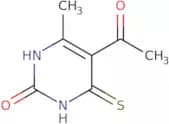
CAS:<p>Versatile small molecule scaffold</p>Formula:C10H9NO5SPurezza:Min. 95%Peso molecolare:255.25 g/mol5-Acetyl-6-methyl-4-sulfanyl-1,2-dihydropyrimidin-2-one
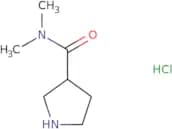
CAS:<p>Versatile small molecule scaffold</p>Formula:C7H8N2O2SPurezza:Min. 95%Peso molecolare:184.22 g/mol(3S)-N,N-Dimethyl-3-pyrrolidinecarboxamide hydrochloride
CAS:<p>Versatile small molecule scaffold</p>Formula:C7H15ClN2OPurezza:Min. 95%Peso molecolare:178.66 g/molChloromethyl cyclohexyl carbonate
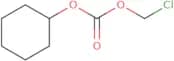
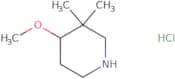
CAS:<p>Chloromethyl cyclohexyl carbonate is a new acyclic nucleoside phosphonate that has been shown to have antiviral properties. It is active against HIV strains and inhibits the production of clotting factors. Chloromethyl cyclohexyl carbonate can be used as a drug substance for treating bowel disease, hepatitis, and cancer. It also modulates syncytial cells and heterocycles. Pharmacokinetic studies on chloromethyl cyclohexyl carbonate have shown that it has high bioavailability in the small intestine and liver after oral administration. It is metabolized by tyrosine kinase, which indicates that it may interfere with other drugs such as warfarin or phenytoin. Chloromethyl cyclohexyl carbonate has been found to be effective in treating gastritis and cancer in animal models.</p>Formula:C8H13ClO3Purezza:Min. 95%Peso molecolare:192.64 g/mol4-Methoxy-3,3-dimethylpiperidine hydrochloride
CAS:<p>Versatile small molecule scaffold</p>Formula:C8H18ClNOPurezza:Min. 95%Peso molecolare:179.69 g/mol6-Cyclopropylimidazo[2,1-b][1,3]thiazole-5-carbaldehyde
CAS:<p>Versatile small molecule scaffold</p>Formula:C9H8N2OSPurezza:Min. 95%Peso molecolare:192.24 g/mol(2E)-3-[2-(Allyloxy)phenyl]acrylic acid
CAS:<p>Versatile small molecule scaffold</p>Formula:C12H12O3Purezza:Min. 95%Peso molecolare:204.22 g/mol(4-Methoxyphenyl)(pyrrolidin-2-yl)methanol
CAS:<p>Versatile small molecule scaffold</p>Formula:C12H17NO2Purezza:Min. 95%Peso molecolare:207.27 g/mol2-Methyl-6-[(2,2,2-trifluoroethyl)amino]pyridine-4-carboxylic acid
CAS:<p>Versatile small molecule scaffold</p>Formula:C9H9F3N2O2Purezza:Min. 95%Peso molecolare:234.17 g/mol5-Methyl-1H-indol-6-amine
CAS:<p>Versatile small molecule scaffold</p>Formula:C9H10N2Purezza:Min. 95%Peso molecolare:146.19 g/mol

amine](/_next/image/?url=https%3A%2Fstatic.cymitquimica.com%2Fproducts%2F3D%2Fthumb-webp%2FSJC31753.webp&w=3840&q=75)
![8-Thia-1-azabicyclo[3.2.1]octane-5-carboxylic acid 8,8-dioxide](/_next/image/?url=https%3A%2Fstatic.cymitquimica.com%2Fproducts%2F3D%2Fthumb-webp%2FRPD13848.webp&w=3840&q=75)
![6-Cyclopropylimidazo[2,1-b][1,3]thiazole-5-carbaldehyde](/_next/image/?url=https%3A%2Fstatic.cymitquimica.com%2Fproducts%2F3D%2Fthumb-webp%2FPXA44330.webp&w=3840&q=75)
![(2E)-3-[2-(Allyloxy)phenyl]acrylic acid](/_next/image/?url=https%3A%2Fstatic.cymitquimica.com%2Fproducts%2F3D%2Fthumb-webp%2FPWB51701.webp&w=3840&q=75)

![2-Methyl-6-[(2,2,2-trifluoroethyl)amino]pyridine-4-carboxylic acid](/_next/image/?url=https%3A%2Fstatic.cymitquimica.com%2Fproducts%2F3D%2Fthumb-webp%2FPMC93616.webp&w=3840&q=75)
