Building Blocks
Questa sezione contiene prodotti fondamentali per la sintesi di composti organici e biologici. Building blocks sono i materiali di partenza essenziali utilizzati per costruire molecole complesse attraverso varie reazioni chimiche. Svolgono un ruolo critico nella scoperta di farmaci, nella scienza dei materiali e nella ricerca chimica. Presso CymitQuimica, offriamo una gamma diversificata di building blocks di alta qualità per supportare le tue ricerche innovative e progetti industriali, assicurandoti di avere i componenti essenziali per una sintesi di successo.
Sottocategorie di "Building Blocks"
- Acidi boronici e derivati dell'acido boronico(5.778 prodotti)
- Building Blocks Chirali(1.242 prodotti)
- Building Blocks Idrocarburici(6.098 prodotti)
- Building Blocks organici(61.059 prodotti)
Trovati 199580 prodotti di "Building Blocks"
Ordinare per
Purezza (%)
0
100
|
0
|
50
|
90
|
95
|
100
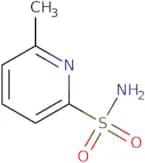
6-Methylpyridine-2-sulfonamide
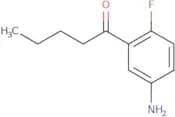
CAS:<p>Versatile small molecule scaffold</p>Formula:C6H8N2O2SPurezza:Min. 95%Peso molecolare:172.21 g/mol1-(5-Amino-2-fluorophenyl)pentan-1-one
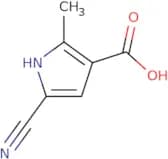
CAS:<p>Versatile small molecule scaffold</p>Formula:C11H14FNOPurezza:Min. 95%Peso molecolare:195.23 g/mol5-Cyano-2-methyl-1H-pyrrole-3-carboxylic acid
CAS:<p>Versatile small molecule scaffold</p>Formula:C7H6N2O2Purezza:Min. 95%Peso molecolare:150.13 g/mol4-[(tert-Butoxy)methyl]aniline
CAS:<p>Versatile small molecule scaffold</p>Formula:C11H17NOPurezza:Min. 95%Peso molecolare:179.26 g/mol{[(4-Fluorophenyl)methyl]carbamoyl}formic acid
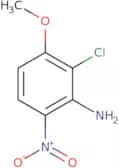
CAS:<p>Versatile small molecule scaffold</p>Formula:C9H8FNO3Purezza:Min. 95%Peso molecolare:197.16 g/mol2-Chloro-3-methoxy-6-nitroaniline
CAS:<p>2-Chloro-3-methoxy-6-nitroaniline is a chemical compound that has been shown to have antimicrobial and anti-HIV activities. It is active against various bacteria, including methicillin resistant Staphylococcus aureus (MRSA). 2-Chloro-3-methoxy-6-nitroaniline has also been shown to have cytotoxic effects on MT4 cells, which are human lymphocytes. This drug may be useful as an HIV inhibitor because of its ability to inhibit HIV's reverse transcriptase enzyme activity.</p>Formula:C7H7ClN2O3Purezza:Min. 95%Peso molecolare:202.59 g/mol3-Methanesulfonylphenol
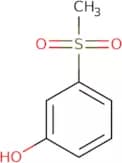
CAS:<p>3-Methanesulfonylphenol is a reactive and computationally descriptors, damages, neutralizing, piperidine, vector, oxygen species, molecular descriptors, antioxidant, phenolic lead compound that was synthesized for the purpose of identifying new potential antioxidants. 3-Methanesulfonylphenol has been shown to inhibit the oxidation of lipids and proteins in cells. It also has a strong antioxidant activity against peroxyl radicals and hydroxyl radicals. 3-Methanesulfonylphenol also inhibits the production of hydrogen peroxide by reacting with peroxides in vivo. This results in reduced levels of lipid hydroperoxides and protein carbonyls.</p>Formula:C7H8O3SPurezza:Min. 95%Peso molecolare:172.2 g/mol{4H,5H,6H,7H,8H-Cyclohepta[D][1,2]oxazol-3-yl}methanesulfonyl chloride
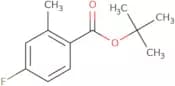
CAS:<p>Versatile small molecule scaffold</p>Formula:C9H12ClNO3SPurezza:Min. 95%Peso molecolare:249.72 g/moltert-Butyl 4-fluoro-2-methylbenzoate
CAS:<p>Versatile small molecule scaffold</p>Formula:C12H15FO2Purezza:Min. 95%Peso molecolare:210.24 g/moltert-Butyl 3a-aminohexahydrocyclopenta[b]pyrrole-1(2H)-carboxylate
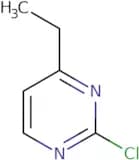
CAS:<p>Versatile small molecule scaffold</p>Formula:C12H22N2O2Purezza:Min. 95%Peso molecolare:226.32 g/mol2-Chloro-4-ethylpyrimidine
CAS:<p>2-Chloro-4-ethylpyrimidine is a chemical compound that is used in the synthesis of carboxylic acids, acylation reactions, and other organic reactions. 2-Chloro-4-ethylpyrimidine is also used as a catalyst for these reactions. It has been shown to catalyze the reaction of carboxylic acids with alcohols in the presence of potassium hydroxide. This product can be used as a catalyst in aliphatic acylation reactions. The product can also be used to synthesize pyrimidines and biomolecules.</p>Formula:C6H7ClN2Purezza:Min. 95%Peso molecolare:142.59 g/mol2-[(tert-butoxy)carbonyl]-1H,2H,3H,4H-pyrrolo[1,2-a]pyrazine-6-carboxylic acid
CAS:<p>Versatile small molecule scaffold</p>Formula:C13H18N2O4Purezza:Min. 95%Peso molecolare:266.3 g/mol3-(Chloromethyl)-1h,4h,5h,6h-cyclopenta[c]pyrazole hydrochloride
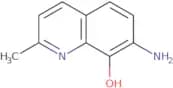
CAS:<p>Versatile small molecule scaffold</p>Formula:C7H9N2Cl·HClPurezza:Min. 95%Peso molecolare:193.07 g/mol7-Amino-2-methylquinolin-8-ol
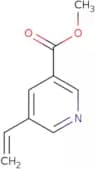
CAS:<p>Versatile small molecule scaffold</p>Formula:C10H10N2OPurezza:Min. 95%Peso molecolare:174.2 g/mol5-Vinylnicotinic acid methyl ester
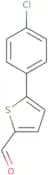
CAS:<p>5-Vinylnicotinic acid methyl ester belongs to the group of antimicrobial agents. It is a chemical compound that has been shown to be effective against cervical cancer and may have potential as an anticancer drug. 5-Vinylnicotinic acid methyl ester inhibits the growth of human chorionic gonadotropin (HCG) in women, which is a hormone necessary for ovulation and pregnancy. This compound also inhibits the growth of viruses, such as herpes simplex virus type 1 (HSV-1), and bacteria, such as dittrichia sp., which causes inflammation of the throat. 5-Vinylnicotinic acid methyl ester has also been shown to inhibit protein synthesis in human osteosarcoma cells at low concentrations, but not at high concentrations.</p>Formula:C9H9NO2Purezza:Min. 95%Peso molecolare:163.17 g/mol5-(4-Chlorophenyl)thiophene-2-carbaldehyde
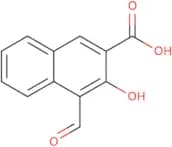
CAS:<p>Versatile small molecule scaffold</p>Formula:C11H7ClOSPurezza:Min. 95%Peso molecolare:222.69 g/mol4-Formyl-3-hydroxynaphthalene-2-carboxylic acid
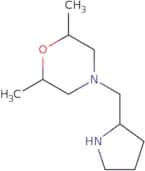
CAS:<p>4-Formyl-3-hydroxynaphthalene-2-carboxylic acid (4FHN) is an antibacterial agent. It is bacteriostatic and has been shown to be effective against gram-negative bacteria such as Escherichia coli and Pseudomonas aeruginosa, but not against gram-positive bacteria such as Staphylococcus aureus. 4FHN was found to inhibit the growth of both gram-positive and gram-negative bacteria by binding to the ribosomal RNA in the bacterial cell wall, thereby inhibiting protein synthesis and cell division. 4FHN also shows antimicrobial activity due to its ability to form stable hydrazones with nucleophilic centers in the bacterial cell wall. These compounds react with cellular macromolecules, leading to cell death.</p>Formula:C12H8O4Purezza:Min. 95%Peso molecolare:216.19 g/mol2,6-Dimethyl-4-(pyrrolidin-2-ylmethyl)morpholine
CAS:<p>Versatile small molecule scaffold</p>Formula:C11H22N2OPurezza:Min. 95%Peso molecolare:198.31 g/mol2-{3,5-Dioxo-10-oxa-4-azatricyclo[5.2.1.0,2,6]decan-4-yl}acetic acid
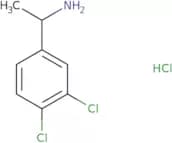
CAS:<p>Versatile small molecule scaffold</p>Formula:C10H11NO5Purezza:Min. 95%Peso molecolare:225.2 g/mol(R)-1-(3,4-Dichlorophenyl)ethanamine Hydrochloride
CAS:<p>Versatile small molecule scaffold</p>Formula:C8H9NCl2·HClPurezza:Min. 95%Peso molecolare:226.53 g/mol

![4-[(tert-Butoxy)methyl]aniline](/_next/image/?url=https%3A%2Fstatic.cymitquimica.com%2Fproducts%2F3D%2Fthumb-webp%2FPRB31145.webp&w=3840&q=75)
![{[(4-Fluorophenyl)methyl]carbamoyl}formic acid](/_next/image/?url=https%3A%2Fstatic.cymitquimica.com%2Fproducts%2F3D%2Fthumb-webp%2FPJB24464.webp&w=3840&q=75)
![{4H,5H,6H,7H,8H-Cyclohepta[D][1,2]oxazol-3-yl}methanesulfonyl chloride](/_next/image/?url=https%3A%2Fstatic.cymitquimica.com%2Fproducts%2F3D%2Fthumb-webp%2FNKD16955.webp&w=3840&q=75)
![tert-Butyl 3a-aminohexahydrocyclopenta[b]pyrrole-1(2H)-carboxylate](/_next/image/?url=https%3A%2Fstatic.cymitquimica.com%2Fproducts%2F3D%2Fthumb-webp%2FNHC24127.webp&w=3840&q=75)
![2-[(tert-butoxy)carbonyl]-1H,2H,3H,4H-pyrrolo[1,2-a]pyrazine-6-carboxylic acid](/_next/image/?url=https%3A%2Fstatic.cymitquimica.com%2Fproducts%2F3D%2Fthumb-webp%2FNEC38086.webp&w=3840&q=75)
![3-(Chloromethyl)-1h,4h,5h,6h-cyclopenta[c]pyrazole hydrochloride](/_next/image/?url=https%3A%2Fstatic.cymitquimica.com%2Fproducts%2F3D%2Fthumb-webp%2FNEC21033.webp&w=3840&q=75)
![2-{3,5-Dioxo-10-oxa-4-azatricyclo[5.2.1.0,2,6]decan-4-yl}acetic acid](/_next/image/?url=https%3A%2Fstatic.cymitquimica.com%2Fproducts%2F3D%2Fthumb-webp%2FMYB31079.webp&w=3840&q=75)