


Building Blocks
Sottocategorie di "Building Blocks"
- Acidi boronici e derivati dell'acido boronico(5.784 prodotti)
- Building Blocks Chirali(1.243 prodotti)
- Building Blocks Idrocarburici(6.105 prodotti)
- Building Blocks organici(61.066 prodotti)
Trovati 205426 prodotti di "Building Blocks"
3-(3-Methylbutyl)cyclopentan-1-one
CAS:Versatile small molecule scaffold
Formula:C10H18OPurezza:Min. 95%Peso molecolare:154.25 g/mol6-Ethyltetrahydro-2H-pyran-2-one
CAS:6-Ethyltetrahydro-2H-pyran-2-one is a monatomic chemical in the diptera family. It is used as a detection method for host plants, and has been found to be present in fatty acids of coatings and analytical chemistry. 6-Ethyltetrahydro-2H-pyran-2-one can also be found in cuticular hydrocarbons and viscosity. The fluorescence of this compound is an analytical method that can be used to identify it. This chemical has also been shown to have antiviral properties, which are due to its ability to induce the expression of genes involved in the production of aldolases.
Formula:C7H12O2Purezza:Min. 95%Peso molecolare:128.17 g/mol9-Methylfluorene-9-carboxylic acid
CAS:9-Methylfluorene-9-carboxylic acid is an organic compound that has a benzyl group attached to the 9th carbon of the fluorene ring. It is a colorless solid with a melting point of -78.5 °C. The synthesis of this compound involves the reaction of 9-fluorenone with diethyl ether in the presence of formic acid and phosphorous pentoxide. This reaction results in the formation of 9-methylene-9-fluorene, which is then oxidized to form 9-methylanthracene. Finally, methanol is added to form 9-methylfluorene-9-carboxylic acid. The molecular weight for this compound is 152 g/mol and it has an mp at -78.5 °C and bp at 138 °C. This compound can be used as a fingerprinting agent due to its characteristic UV absorption spectrum, which peaks
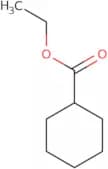
Formula:C15H12O2Purezza:Min. 95%Peso molecolare:224.25 g/molEthyl Cyclohexanecarboxylate
CAS:Ethyl cyclohexanecarboxylate is an anti-inflammatory drug that belongs to the class of hydroxylated glycol ethers. It has been shown to have a significant effect on autoimmune diseases, such as multiple sclerosis and rheumatoid arthritis. The active form of ethyl cyclohexanecarboxylate is metabolized through nitro reduction by cytochrome P450 enzymes, which are present in most mammalian tissues. This drug also has a high phase transition temperature and can be used as a catalyst for organic reactions at low temperatures. Ethyl cyclohexanecarboxylate has been shown to inhibit dpp-iv (dipeptidyl peptidase IV), which is an enzyme that cleaves the dipeptides from the N-terminal ends of proteins, leading to increased levels of fatty acids and other alkanoic acids in the blood.
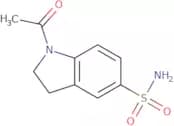
Formula:C9H16O2Purezza:Min. 95%Peso molecolare:156.22 g/mol1-Acetyl-5-indolinesulfonamide
CAS:Versatile small molecule scaffold
Formula:C10H12N2O3SPurezza:Min. 95%Peso molecolare:240.28 g/mol[4-(Hexyloxy)phenyl]methanol
CAS:4-(Hexyloxy)phenyl]methanol (4-HPMA) is a liquid crystal and crystalline compound that is synthesized from an aryl group. 4-HPMA has been used in the production of devices such as liquid crystal displays, and is currently being investigated for use in crystalline compounds. Its mesogenic properties have made it useful for the production of crystalline materials with a high melting point, and its aryl ring structure makes it suitable for use in organic crystals.
Formula:C13H20O2Purezza:Min. 95%Peso molecolare:208.3 g/mol3-Oxa-1-azaspiro[4.4]nonane-2,4-dione
CAS:Versatile small molecule scaffold
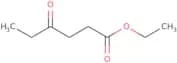
Formula:C7H9NO3Purezza:Min. 95%Peso molecolare:155.15 g/molEthyl 4-oxohexanoate
CAS:Ethyl 4-oxohexanoate is an organic compound that is a dicarboxylic acid. It is used in the synthesis of esters and lactones. Ethyl 4-oxohexanoate undergoes decarboxylation to produce diethyl succinate. This reaction can be accelerated by heating ethyl 4-oxohexanoate with a catalyst such as calcium oxide, giving evolution of carbon dioxide gas. Hydrolysis of ethyl 4-oxohexanoate produces ethyl acetate as well as ethanol, which are both volatile liquids at room temperature.
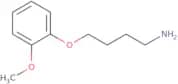
Formula:C8H14O3Purezza:Min. 95%Peso molecolare:158.19 g/mol4-(2-Methoxyphenoxy)butan-1-amine
CAS:Versatile small molecule scaffold
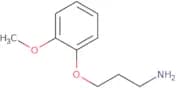
Formula:C11H17NO2Purezza:Min. 95%Peso molecolare:195.26 g/mol3-(2-Methoxyphenoxy)propan-1-amine
CAS:Versatile small molecule scaffold
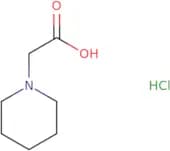
Formula:C10H15NO2Purezza:Min. 95%Peso molecolare:181.23 g/molPiperidin-1-yl-acetic acid hydrochloride
CAS:Piperidin-1-yl-acetic acid hydrochloride is a labile, medicinal compound that is effective at low doses. It is used to treat hypercholesterolemia and inflammation. Piperidin-1-yl-acetic acid hydrochloride is an organic compound that belongs to the group of carboxylic acids. The molecule can exist in two different forms, which are called anomers: alpha and beta. The alpha form is more stable than the beta form and has higher medicinal properties. Piperidin-1-yl-acetic acid hydrochloride lowers cholesterol levels by inhibiting its synthesis.
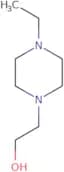
Formula:C7H14ClNO2Purezza:Min. 95%Peso molecolare:179.64 g/mol2-(4-Ethylpiperazin-1-yl)ethan-1-ol
CAS:Versatile small molecule scaffold
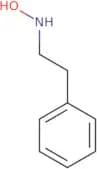
Formula:C8H18N2OPurezza:Min. 95%Peso molecolare:158.24 g/molN-(2-Phenylethyl)hydroxylamine
CAS:Prodotto controllatoN-(2-Phenylethyl)hydroxylamine (NPEHA) is an antidiabetic agent that is a member of the class of amides. It has been shown to inhibit the transcriptional regulation of metabolic rate and physiological activities. NPEHA binds to the dopamine receptor and may be useful in treating Parkinson’s disease. NPEHA also inhibits cancer cell growth by binding to the lps-stimulated raw264.7 cells, which are a type of mouse macrophage cell line. The hydrogen bond between the hydroxyl group and the nitrogen atom on NPEHA is critical for its activity as an antidiabetic agent.
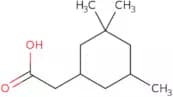
Formula:C8H11NOPurezza:Min. 95%Peso molecolare:137.18 g/mol2-(3,3,5-Trimethylcyclohexyl)acetic acid
CAS:Versatile small molecule scaffold
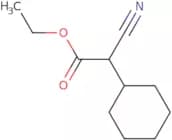
Formula:C11H20O2Purezza:Min. 95%Peso molecolare:184.27 g/molEthyl 2-cyano-2-cyclohexylacetate
CAS:Ethyl 2-cyano-2-cyclohexylacetate is an organic compound that belongs to the group of cycloaliphatic amides. It is a colorless liquid with a camphoraceous odor. The molecule consists of two rings: one of these is an aromatic ring, and the other is a saturated cycloalkane ring. This compound is prepared by the saponification and decarboxylation of camphene. Ethyl 2-cyano-2-cyclohexylacetate has been shown to react with hydrochloric acid to form nitro compounds, which are gaseous at room temperature. At higher temperatures, it decomposes into peroxides, peroxide, and isopropyl radicals.
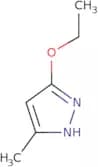
Formula:C11H17NO2Purezza:Min. 95%Peso molecolare:195.26 g/mol3-Ethoxy-5-methyl-1H-pyrazole
CAS:Versatile small molecule scaffold
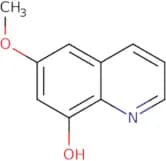
Formula:C6H10N2OPurezza:Min. 95%Peso molecolare:126.16 g/mol6-Methoxyquinolin-8-ol
CAS:Versatile small molecule scaffold
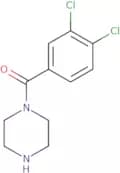
Formula:C10H9NO2Purezza:Min. 95%Peso molecolare:175.18 g/mol1-(3,4-Dichlorobenzoyl)piperazine
CAS:Versatile small molecule scaffold
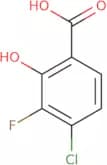
Formula:C11H12Cl2N2OPurezza:Min. 95%Peso molecolare:259.13 g/mol4-Chloro-3-fluoro-2-hydroxybenzoic acid
CAS:Versatile small molecule scaffold
Formula:C7H4ClFO3Purezza:Min. 95%Peso molecolare:190.55 g/mol1,4-Dioxadispiro[4.1.4.3]tetradecan-12-one
CAS:Versatile small molecule scaffold
Formula:C12H18O3Purezza:Min. 95%Peso molecolare:210.27 g/mol



![[4-(Hexyloxy)phenyl]methanol](/_next/image/?url=https%3A%2Fstatic.cymitquimica.com%2Fproducts%2F3D%2Fthumb-webp%2FDAA25638.webp&w=3840&q=75)
![3-Oxa-1-azaspiro[4.4]nonane-2,4-dione](/_next/image/?url=https%3A%2Fstatic.cymitquimica.com%2Fproducts%2F3D%2Fthumb-webp%2FDAA25344.webp&w=3840&q=75)
![1,4-Dioxadispiro[4.1.4.3]tetradecan-12-one](/_next/image/?url=https%3A%2Fstatic.cymitquimica.com%2Fproducts%2F3D%2Fthumb-webp%2FCTC55221.webp&w=3840&q=75)