Alcoli
Sottocategorie di "Alcoli"
Trovati 5813 prodotti di "Alcoli"
4-[(2,4-Dimethylbenzyl)oxy]butan-1-ol
CAS:Prodotto controllatoPlease enquire for more information about 4-[(2,4-Dimethylbenzyl)oxy]butan-1-ol including the price, delivery time and more detailed product information at the technical inquiry form on this page
Formula:C13H20O2Purezza:Min. 95%Peso molecolare:208.3 g/molRef: 3D-FD131280
Prodotto fuori produzione4-Aminobicyclo[2.2.2]octan-1-ol hydrochloride
CAS:Please enquire for more information about 4-Aminobicyclo[2.2.2]octan-1-ol hydrochloride including the price, delivery time and more detailed product information at the technical inquiry form on this page
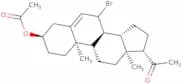
Formula:C8H15NO•HClPurezza:Min. 95%Peso molecolare:177.67 g/mol7-Bromo-3-O-acetyl pregnenolone
CAS:Prodotto controllatoPlease enquire for more information about 7-Bromo-3-O-acetyl pregnenolone including the price, delivery time and more detailed product information at the technical inquiry form on this page
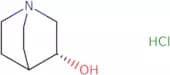
Formula:C23H33BrO3Purezza:Min. 95%Peso molecolare:437.41 g/molR-(-)-3-Quinuclininol HCl
CAS:Prodotto controllatoPlease enquire for more information about R-(-)-3-Quinuclininol HCl including the price, delivery time and more detailed product information at the technical inquiry form on this page
Purezza:Min. 95%Ref: 3D-FQ03212
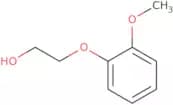
Prodotto fuori produzione2-(2-Methoxyphenoxy)ethanol
CAS:2-(2-Methoxyphenoxy)ethanol (2-MPE) is a metabolite of propanediol, which is a precursor in the synthesis of polyurethanes. 2-MPE can be oxidized by monooxygenases to form syringyl and other reactive metabolites. Basic hydrolysis may also produce monomers such as phenols, alcohols, and carboxylic acids. Syringyl is one of the metabolic products of 2-MPE, which has been shown to be resistant to degradation by basidiomycete fungi.
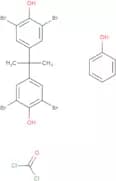
Formula:C9H12O3Purezza:Min. 95%Peso molecolare:168.19 g/molPHenoxy terminated carbonate oligomer of tetrabispHenol A
CAS:Prodotto controllatoPhenoxy-terminated carbonate oligomer of tetrabispHenol A (PCO-TBA) is a chemical that has been used as an additive in the food industry. It is a colorless, odorless solid. PCO-TBA has been shown to be toxic to humans by causing organ damage and cancer. The toxicity of PCO-TBA may be due to its ability to form polyhalogenated dibenzodioxins or biphenyls when heated at high temperatures. PCO-TBA also reacts with human serum, forming diphenyl ethers. This chemical is a potential carcinogen and, although used as a food additive, should not be consumed on a regular basis.
Purezza:Min. 95%Colore e forma:PowderPeso molecolare:736.90 g/molRef: 3D-FP39597
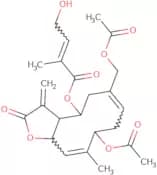
Prodotto fuori produzioneEupalinolide A
CAS:Eupalinolide A is a sesquiterpene lactone that is extracted from Eupatorium. It has been shown to have anti-inflammatory and antioxidant properties, as well as the ability to activate caspase-9 in cells. This drug also inhibits the production of reactive oxygen species (ROS) by inhibiting mitochondrial membrane potential, which leads to cell death. Eupalinolide A also has the ability to inhibit collagen synthesis and can be used for the treatment of chronic bronchitis, hepatitis, and liver cirrhosis.
Formula:C24H30O9Purezza:Min. 95%Peso molecolare:462.49 g/mol(2-Iodophenyl)(2,3,6,7-tetrahydro-1H,5H-benzo[ij]quinolizin-9-yl)methanone
2-Iodophenyl)(2,3,6,7-tetrahydro-1H,5H-benzo[ij]quinolizin-9-yl)methanone is a high quality reagent that can be used as a useful intermediate and building block in the synthesis of complex compounds.
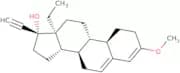
Formula:C19H18INOPurezza:Min. 95 Area-%Peso molecolare:403.26 g/mol(17a)-13-Ethyl-3-methoxy-18,19-dinorpregna-3,5-dien-20-yn-17-ol
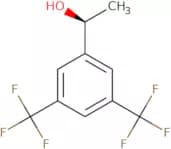
CAS:Prodotto controllatoPlease enquire for more information about (17a)-13-Ethyl-3-methoxy-18,19-dinorpregna-3,5-dien-20-yn-17-ol including the price, delivery time and more detailed product information at the technical inquiry form on this pageFormula:C22H30O2Purezza:Min. 95%Peso molecolare:326.47 g/mol(S)-3',5'-Bis(trifluoromethyl)-1-phenethanol
CAS:(S)-3',5'-Bis(trifluoromethyl)-1-phenethanol is a choline derivative that is used in the treatment of liver cancer. It has been shown to increase the permeability of cell membranes and to suppress the growth of tumor cells by inhibiting protein synthesis. (S)-3',5'-Bis(trifluoromethyl)-1-phenethanol can be used as a surfactant and a hydrophobic solvent for optimization of reaction parameters. This chemical also has been shown to be active against Gram-positive bacteria such as Staphylococcus aureus and Enterococcus faecalis, but not against Gram-negative bacteria such as Escherichia coli or Pseudomonas aeruginosa. The mechanism of this effect is mediated by chloride ions that act as bioreductive agents on cellular membranes, leading to increased permeability and cell death.
Formula:C10H8F6OPurezza:Min. 95%Peso molecolare:258.16 g/molRef: 3D-FB18756
Prodotto fuori produzione6-Bromoisoquinoline
CAS:6-Bromoisoquinoline is a tetradentate ligand that can be used as a molecular model to study the binding of metal ions and organic molecules. 6-Bromoisoquinoline has been shown to bind covalently and noncovalently with phosphate groups on the surface of Caco-2 cells and to induce surface-enhanced Raman spectroscopy. This ligand has a high nucleophilicity and reacts readily with chloride, which is an acidic functional group. The reaction products are hydrochloric acid, trifluoroacetic acid, or both. 6-Bromoisoquinoline can also act as an allosteric modulator in some enzymes, such as phosphofructokinase in glycolysis.
Formula:C9H6BrNPurezza:Min. 95%Peso molecolare:208.05 g/molRef: 3D-FB11908
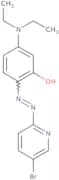
Prodotto fuori produzione2-(5-Bromo-2-pyridylazo)-5-(diethylamino)phenol
CAS:2-(5-Bromo-2-pyridylazo)-5-(diethylamino)phenol is a chemical that is used for the detection of hydrochloric acid in water vapor. It reacts with zirconium oxide, which generates a red fluorescing complex. The reaction can be detected by using a fluorescence spectrometer with a test sample. 2-(5-Bromo-2-pyridylazo)-5-(diethylamino)phenol is also used to detect the presence of nitrogen atoms and sodium citrate in samples by reacting with them. This chemical reacts with an acid complex to form stable complexes. The analytical method is based on measuring the redox potential of this reaction. The flow system of this technique allows for dehydration of dehydroascorbic acid (DHA).
Formula:C15H17BrN4OPurezza:Min. 95%Colore e forma:PowderPeso molecolare:349.23 g/mol2-Dimethylaminoethanol (+)-bitartrate salt
CAS:Prodotto controllato2-Dimethylaminoethanol (+)-bitartrate salt is a potent, reversible inhibitor of protein synthesis that binds reversibly to the 50S ribosomal subunit. It is used in regulatory toxicology and clinical pathology as a positive control for the study of chronic toxicity and long-term effects. 2-Dimethylaminoethanol (+)-bitartrate salt has shown no treatment effect on ovary weight or estrous cycle length in female Sprague-Dawley rats after chronic exposure and long-term exposure at doses up to 1,000 mg/kg/day. This drug has also shown no effect on rat fertility or reproductive performance, indicating it does not cause reproductive toxicity.
Formula:C4H11NO·C4H6O6Colore e forma:White Off-White PowderPeso molecolare:239.22 g/mol
![4-[(2,4-Dimethylbenzyl)oxy]butan-1-ol](/_next/image/?url=https%3A%2Fstatic.cymitquimica.com%2Fproducts%2F3D%2Fthumb-webp%2FFD131280.webp&w=3840&q=75)

![4-Aminobicyclo[2.2.2]octan-1-ol hydrochloride](/_next/image/?url=https%3A%2Fstatic.cymitquimica.com%2Fproducts%2F3D%2Fthumb-webp%2FFA63102.webp&w=3840&q=75)
![(2-Iodophenyl)(2,3,6,7-tetrahydro-1H,5H-benzo[ij]quinolizin-9-yl)methanone](/_next/image/?url=https%3A%2Fstatic.cymitquimica.com%2Fproducts%2F3D%2Fthumb-webp%2FI-7660.webp&w=3840&q=75)