Alcoli
Sottocategorie di "Alcoli"
Trovati 5818 prodotti di "Alcoli"
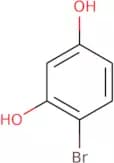
4-Bromoresorcinol
CAS:4-Bromoresorcinol is a synthetic compound that belongs to the group of sulfonamides. It is used in the production of dyes, pharmaceuticals, and agricultural chemicals. 4-Bromoresorcinol is synthesized by sulfonation with trifluoroacetic acid followed by hydrolysis with hydrochloric acid. The polymerization kinetics of this compound have been studied using azobenzene as a model substrate. The reaction products are vignafuran and an organic solvent (e.g., methanol). In addition, 4-bromoresorcinol has potent antibacterial activity against bacteria such as Staphylococcus aureus and Mycobacterium tuberculosis. This drug has minimal inhibitory concentrations (MICs) less than 0.01 ppm for most strains of bacteria tested, including those resistant to penicillin G or erythromycin. The drug also inhibits hydroxylase enzymesFormula:C6H5BrO2Purezza:Min. 95%Colore e forma:White PowderPeso molecolare:189.01 g/mol2-Amino-6-bromo-4-methoxyphenol
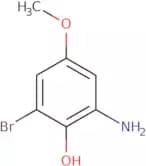
CAS:2-Amino-6-bromo-4-methoxyphenol (2ABMP) is a benzyl compound that can be used as a substitute for 2,4-diaminophenol. It has been shown to have estrogenic activity and may function as an estrogen receptor agonist. 2ABMP has also been shown to inhibit the growth of breast cancer cells in culture. The role of this drug in the treatment of breast cancer is not yet clear, but it may be useful in combination therapy with other drugs.Formula:C7H8BrNO2Purezza:Min. 95%Colore e forma:PowderPeso molecolare:218.05 g/molrac-Falcarinol
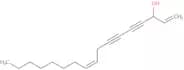
CAS:Rac-falcarinol is an organic compound that has the chemical formula CH(OH)CH(COOH)(CH). It is a colorless solid and is soluble in alcohol, acetone, and ether. Rac-falcarinol has been used as a versatile building block to make complex compounds with high purity. It has also been used as a reaction component for research chemicals. The compound can be used for making fine chemicals or speciality chemicals.
Formula:C17H24OPurezza:Min. 94 Area-%Colore e forma:PowderPeso molecolare:244.37 g/mol3,4-Dihydro-2(1H)-Quinolinone
CAS:3,4-Dihydro-2(1H)-quinolinone is a potent inhibitor of dopamine β-hydroxylase and is used as a model system to study the pharmacokinetic properties of carbostyril. It has been shown that 3,4-dihydro-2(1H)-quinolinone binds to the chloride ion in the active site of dopamine β-hydroxylase. This binding prevents the formation of a complex with the enzyme's substrate, which is required for catalysis. 3,4-Dihydro-2(1H)-quinolinone also interacts with the alkynyl group on dopamine and competitively inhibits its metabolism by monoamine oxidase (MAO).Formula:C9H9NOPurezza:Min. 95%Colore e forma:PowderPeso molecolare:147.17 g/mol3-Nitrobenzyl alcohol
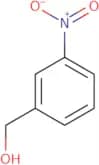
CAS:3-Nitrobenzyl alcohol is a low potency drug that is used for the treatment of cancer. It is a derivative of trifluoroacetic acid, which has been shown to have anti-tumor effects in animals. 3-Nitrobenzyl alcohol binds to the matrix on the surface of cells by hydrogen bonding and forms an intramolecular hydrogen bond with the nitrogen atom. This process leads to increased fluorescence intensity, which can be detected using matrix-assisted laser desorption ionization mass spectrometry (MALDI MS). The fatty acid group found in 3-nitrobenzyl alcohol increases its solubility in water and facilitates penetration into lipid bilayers. This compound exhibits cytotoxicity against monoclonal antibody-positive B cell lymphoma cells and may also have anti-inflammatory properties due to its inhibition of picolinic acid synthesis.Formula:C7H7NO3Purezza:Min 98%Colore e forma:PowderPeso molecolare:153.14 g/mol2-(3,5-Dimethyl-1H-pyrazol-1-yl)quinolin-8-amine
CAS:2-(3,5-Dimethyl-1H-pyrazol-1-yl)quinolin-8-amine is a fine chemical that belongs to the group of versatile building blocks. It can be used as a reagent or as a speciality chemical in research and development. 2-(3,5-Dimethyl-1H-pyrazol-1-yl)quinolin-8-amine is also a useful scaffold for the synthesis of complex compounds and has been shown to be an effective inhibitor of protein tyrosine kinases.Formula:C14H14N4Purezza:Min. 95%Colore e forma:PowderPeso molecolare:238.29 g/mol1,2-Distearoyl-sn-glycerol
CAS:1,2-Distearoyl-sn-glycerol (DAG) is a lipid molecule that is found in the cell membrane and can be used as an antimicrobial agent. DAG has been shown to inhibit the growth of bacteria by binding to their fatty acid chains. It also has been shown to bind to the receptor P2Y6, which is involved in mediating inflammatory responses, and inhibits its activity. This drug may be useful for treating diseases such as atherosclerosis and diabetes mellitus type 2.Formula:C39H76O5Colore e forma:PowderPeso molecolare:625.02 g/mol3-[2-(Ethylhexyl)oxyl]-1,2-propandiol
CAS:3-[2-(Ethylhexyl)oxyl]-1,2-propandiol is an organic compound that belongs to the group of sodium salts. It is used as an antimicrobial agent and preservative in cosmetic products. 3-[2-(Ethylhexyl)oxyl]-1,2-propandiol has been shown to have a synergistic effect with benzalkonium chloride, which is another antimicrobial agent. It has also been found to be effective against skin cells that are infected with the bacteria Staphylococcus aureus. 3-[2-(Ethylhexyl)oxyl]-1,2-propandiol has been shown to have an inhibitory effect on fatty acid synthesis in skin cells and may be useful for treating acne.Formula:C11H24O3Purezza:Min. 95%Colore e forma:Colorless Clear LiquidPeso molecolare:204.31 g/mol3-Nitro-4-(trifluoromethyl)phenol
CAS:3-Nitro-4-(trifluoromethyl)phenol is an amino acid that has been found in fossils of the proterozoic era. It is believed to have played a role in evolution and the onset of life because it was resistant to damage by oxygen free radicals. 3-Nitro-4-(trifluoromethyl)phenol has been shown to be damaging to mesenchymal cells, which are cells that form cartilage and bone, leading to cell death. The chemical damages mesenchymal stem cells, which can lead to diseases such as osteoarthritis or rheumatoid arthritis. Researchers believe that this chemical may have played a role in the orogeny, or mountain formation, that occurred during the late Proterozoic Era.Formula:C7H4F3NO3Purezza:Min. 95%Colore e forma:PowderPeso molecolare:207.11 g/mol2-[(4-Amino-2-methyl-5-nitrylbenzyl)amino]ethylalcohol
CAS:2-[(4-Amino-2-methyl-5-nitrylbenzyl)amino]ethylalcohol is a reactive, hydrated, colorant that belongs to the group of hydroxy compounds. It has a chromophore and is used in the production of cosmetics. 2-[(4-Amino-2-methyl-5-nitrylbenzyl)amino]ethylalcohol is used for alkalization and in the production of particle pigments. This compound can be found in fatty acid esters, as it has a long hydrocarbon chain, which makes it soluble. It also has fatty acids and an amine group that provides color.Formula:C9H13N3O3Purezza:Min. 95%Peso molecolare:211.22 g/mol4-Chloro-2-methylbenzyl alcohol
CAS:4-Chloro-2-methylbenzyl alcohol is an organic compound that has a sensor and hydroxyl group. It is used in pest control as an insecticide. 4-Chloro-2-methylbenzyl alcohol has been shown to be effective against ants, cockroaches, and other insects. There are multiple instabilities of this compound, including low oxygen stability when exposed to air, which may lead to the degradation of this chemical. Impurities in 4-chloro-2-methylbenzyl alcohol may also lead to its instability as it reacts with alkali metals at high temperatures. The instability of 4-chloro-2-methylbenzyl alcohol can be reduced by storing it at low temperatures or by adding cryogenic substances such as liquid nitrogen or carbon dioxide gas.Formula:C8H9ClOPurezza:Min. 95%Peso molecolare:156.61 g/molN-(6-Hydroxyhexyl)trifluoroacetamide
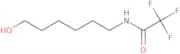
CAS:6-(Trifluoroacetylamino)-1-Hexanol is a magnetic compound that has been shown to bind to liposomes and hydrophobic membranes. It is also amphipathic, meaning it contains both hydrophilic and hydrophobic properties. This compound can be used for the diagnosis of certain diseases, such as cancer, by detecting gadolinium ions in the body. 6-(Trifluoroacetylamino)-1-Hexanol is also an imidazolide ligand that binds to ribonucleotides and nucleic acid matrix proteins. This allows it to be used as a contrast agent in magnetic resonance imaging (MRI).Formula:C8H14F3NO2Purezza:Min. 95%Colore e forma:PowderPeso molecolare:213.2 g/mol4-Methoxyresorcinol
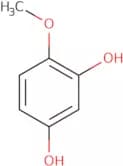
CAS:4-Methoxyresorcinol is a chemical compound that has the molecular formula CHNO. It has a hydroxyl group in the 4-position and a methyl group on the 8-position. The intramolecular hydrogen of this molecule is denatured by heating to about 220°C. This process converts it into resorcinol, which is structurally similar but has different properties. 4-Methoxyresorcinol can be used as a polymerization initiator for polycarboxylic acid or quinoline derivatives, and its analytical methods are used in determining its structure.Formula:C7H8O3Purezza:Min. 95%Colore e forma:PowderPeso molecolare:140.14 g/mol17-Epiestriol
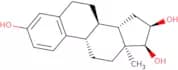
CAS:Prodotto controllato17-Epiestriol is a weak estrogen that regulates the menstrual cycle, prevents pre-eclampsia, and decreases the risk of cardiovascular disease. 17-Epiestriol is sometimes used to treat menopausal symptoms. The concentration of 17-epiestriol in blood plasma is determined by body mass index (BMI). This hormone plays an important role in maintaining a woman's health during her reproductive years. It has been shown that there is a negative correlation between levels of 17-epiestriol and the use of nonsteroidal anti-inflammatory drugs (NSAIDs). Preterm birth may be due to lack of 17-epiestriol.Formula:C18H24O3Purezza:Min. 95%Colore e forma:PowderPeso molecolare:288.38 g/molMaytansinol
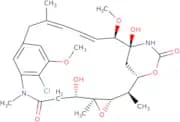
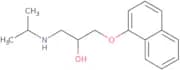
CAS:Maytansinol is a molecule that has potent antitumor activity. It has been shown to be effective against leukemia cells, and inhibits the growth of cells in culture by binding to the lymphatic vessels. Maytansinol is also able to bind to metal ions and forms a chelate complex with them. The effective dose of maytansinol is 3-5mg/kg body weight, which can be administered orally or intravenously. The drug has been shown to have an activity test using genus monoclonal antibody (Mab). Maytansinol hydrolyzes at alkaline pH and reacts with hydroxy groups in its structure.Formula:C28H37ClN2O8Purezza:Min. 95 Area-%Colore e forma:White PowderPeso molecolare:565.05 g/molrac-Propranolol hydrochloride
CAS:Prodotto controllatoPropranolol is a beta-adrenergic receptor antagonist that is used to treat high blood pressure, chest pain and heart failure. It also has been shown to be effective in the treatment of inflammatory bowel disease (IBD). Propranolol blocks the binding of proprotein convertase subtilisin/kexin type 9 (PCSK9) to its receptors, which inhibits the production of LDL cholesterol. In humans, propranolol is metabolized through hydrolysis by esterases or glucuronidases, oxidation by cytochrome P450 enzymes, reduction by glutathione reductase, or conjugation with glucuronic acid. The drug also has a synergic effect with other drugs such as erythromycin and phenobarbital. Propranolol binds to proteins in red blood cells and decreases diastolic pressure.
Formula:C16H22ClNO2Purezza:Min. 98%Colore e forma:White PowderPeso molecolare:295.8 g/mol15,16-Bis-nor-LABD-11-En-13-on-8-ol
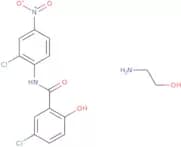
15,16-bis-nor-LABD-11-En-13-on-8-ol is a fine chemical that is useful as a building block for research chemicals and as a reagent in the synthesis of speciality chemicals. This compound has been found to be an intermediate for the synthesis of various other compounds, including complex compounds and versatile building blocks. 15,16-bis-nor-LABD-11-En-13-on-8--ol is also a versatile scaffold due to its ability to undergo reactions with various functional groups.Formula:C18H30O2Purezza:Min. 95%Peso molecolare:278.43 g/molNiclosamide ethanolamine salt
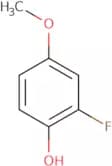
CAS:Chemically a chlorinated salicylanilide, niclosamide is clinically used as an anthelmintic agent. The action of niclosamide has been proven to proceed by inhibiting the STAT3 signaling pathway. Recently, niclosamide, has been considered as an antiproliferative agent in cancer treatment, e.g. melanoma and colorectal cancer. In 2021, niclosamide has been tested for the treatment of COVID-19 patients.Formula:C15H15Cl2N3O5Colore e forma:PowderPeso molecolare:388.2 g/mol2-Fluoro-4-methoxyphenol
CAS:2-Fluoro-4-methoxyphenol is a white crystalline solid with a melting point of 100°C. It is soluble in water, ethanol and ether and insoluble in chloroform. The compound has been shown to be an intermediate for the synthesis of other organic compounds, such as 2-fluoro-4-(2,2,2-trifluoroethoxy)benzaldehyde, 2-fluoro-4-(3,3,3-trifluoropropoxy)benzaldehyde and 4-(2,2,2-trifluoroethoxy)-3'-nitroacetophenone. 2-Fluoro-4-methoxyphenol can also be used as a building block for speciality chemicals including research chemicals.Formula:C7H7FO2Purezza:Min. 95%Colore e forma:Clear LiquidPeso molecolare:142.13 g/mol10-Azido-1-decanol
CAS:10-Azido-1-decanol is a non-polar solvent with reactive properties. It has been shown to cause cellular damage in proton and 6-chloropurine, which is a precursor for the synthesis of nucleic acids. 10-Azido-1-decanol has been used as an ultraviolet light absorber in strategies to protect tissues from ultraviolet light and it can also be used to study the effects of functional groups on optical properties. 10-Azido-1-decanol's hypochromic behavior makes it useful in bilayer studies because it can be easily distinguished from other solvents or water molecules.Formula:C10H21N3OPurezza:Min. 95%Colore e forma:Clear LiquidPeso molecolare:199.29 g/mol




![3-[2-(Ethylhexyl)oxyl]-1,2-propandiol](/_next/image/?url=https%3A%2Fstatic.cymitquimica.com%2Fproducts%2F3D%2Fthumb-webp%2FFE151191.webp&w=3840&q=75)

![2-[(4-Amino-2-methyl-5-nitrylbenzyl)amino]ethylalcohol](/_next/image/?url=https%3A%2Fstatic.cymitquimica.com%2Fproducts%2F3D%2Fthumb-webp%2FFA146928.webp&w=3840&q=75)