Alcoli
Sottocategorie di "Alcoli"
Trovati 5818 prodotti di "Alcoli"
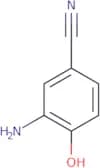
2-Amino-4-cyano-phenol
CAS:2-Amino-4-cyano-phenol is a compound that has been shown to have antitubercular activity. It modulates the activity of cromakalim, which is a drug used for the treatment of tuberculosis. 2-Amino-4-cyano-phenol is also an antibacterial agent and has been shown to activate bacterial DNA replication and protein synthesis. The mechanism of action of this compound is thought to be due in part to its ability to bind with the ribosomes on the outside surface of cells and inhibit their function. 2-Amino-4-cyano-phenol has also been shown to have structural similarities with phenylephrine, which inhibits bacterial growth by binding to DNA gyrase, thereby preventing transcription and replication.Formula:C7H6N2OPurezza:Min. 95%Colore e forma:PowderPeso molecolare:134.14 g/mol4-Methylthiophenol
CAS:4-Methylthiophenol is a colorless liquid that is soluble in water. It has a molecular weight of 98.12 and an empirical formula of C6H7O2S. 4-Methylthiophenol is used as an analytical reagent, solvent, and chemical intermediate. It exhibits hydrogen bonding interactions with sodium carbonate and trifluoroacetic acid and forms a salt with sodium carbonate. The molecule's stability increases when it interacts with amines and the presence of nucleophiles such as water or alcohols. 4-Methylthiophenol has been shown to be effective at enhancing the fluorescence signal emitted by amines, which makes it useful for laser ablation mass spectrometry (LA-MS). 4-Methylthiophenol can also be used for kinetic energy measurements using FTIR spectroscopy because it will absorb infrared light at 1680 cm−1 from the CO2 laser beam.Formula:C7H8SPurezza:Min. 95%Colore e forma:White PowderPeso molecolare:124.2 g/mol4-Nitroresorcinol
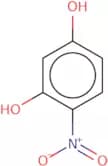
CAS:4-Nitroresorcinol is a hydroxamic acid that inhibits bacterial growth by reacting with riboflavin, which is essential for the synthesis of flavoproteins and folate. This compound has been shown to have a specific growth rate on the order of 10^-5 and 10^-6 M. The reaction of 4-Nitroresorcinol with riboflavin leads to the production of nitric oxide and hydrogen peroxide, which can lead to the destruction of cells. 4-Nitroresorcinol has been synthesized in an organic solvent using various techniques such as thermal decomposition, photochemical synthesis, and hydrolysis. 4-Nitroresorcinol can be viewed under a microscope using techniques such as electron microscopy or light microscopy.Formula:C6H5NO4Purezza:Min. 98 Area-%Colore e forma:PowderPeso molecolare:155.11 g/mol2-Methoxy-4-vinylphenol
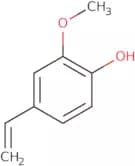
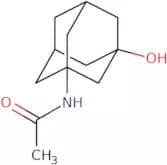
CAS:2-Methoxy-4-vinylphenol is a chlorogenic acid that has been shown to inhibit the growth of Candida glabrata. It binds to ferulic acid and caffeic acids, which are natural compounds found in plants. The optimum concentration at which 2-methoxy-4-vinylphenol inhibits the growth of C. glabrata is between 0.5 and 1 mM. This compound can be readily analyzed using an analytical method with high selectivity for chlorogenic acids, such as liquid chromatography coupled with mass spectrometry (LC/MS). The binding of 2-methoxy-4-vinylphenol to ferulic acid and caffeic acid may also have implications for its use as an anti-inflammatory agent.Formula:C9H10O2Purezza:Min. 98%Colore e forma:Clear LiquidPeso molecolare:150.17 g/mol3-Acetylamino-1-adamantanol
CAS:3-Acetylamino-1-adamantanol is a fluorescent, non-ionic dye that is used in the preparation of coatings and optical elements. It can also be used as an oxidation catalyst for alcohols. This compound has been shown to have excellent alkaline hydrolysis and high yield in the acetonitrile process. 3-Acetylamino-1-adamantanol has been shown to react with nitro groups to form a fluorescent product. This reaction is important because it allows for the identification of explosives. 3-Acetylamino-1-adamantanol has also been found to be useful as a hologram developer or photoresist for optical discs and lenses.Formula:C12H19NO2Purezza:Min. 95%Colore e forma:White/Off-White SolidPeso molecolare:209.28 g/mol6-Amino-2,4-dichlorophenol
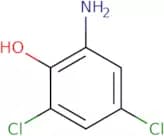
CAS:6-Amino-2,4-dichlorophenol is an organic solution that has been shown to inhibit the uptake of quinoline derivatives by lung fibroblasts. It also inhibits cellular targets such as flavin, blood pressure and v79 cells. 6-Amino-2,4-dichlorophenol has potent antibacterial activity and a reactive nucleophilic group that can form covalent bonds with proteins in the cell membrane. 6-Amino-2,4-dichlorophenol is a reactive agent that binds to DNA and RNA in the bacterial cell's cytoplasmic membrane and inhibits protein synthesis.
Formula:C6H5Cl2NOPurezza:Min. 95%Colore e forma:PowderPeso molecolare:178.02 g/mol5-Bromo-3-methoxybenzyl alcohol
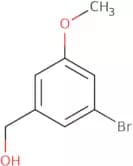
CAS:5-Bromo-3-methoxybenzyl alcohol is a synthetic hydroxyphenyl compound that can be used as a coupling agent. It is prepared by the reaction of bromoacetaldehyde with 3-hydroxybenzyl alcohol in the presence of an amine base, such as pyridine. 5-Bromo-3-methoxybenzyl alcohol can also be used to synthesize pyridines and bromides.Formula:C8H9BrO2Purezza:Min. 95%Colore e forma:PowderPeso molecolare:217.06 g/molN-Methyl-5-tetrazolethiol
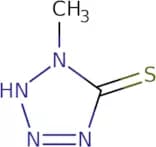
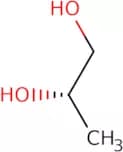
CAS:N-Methyl-5-tetrazolethiol is a vitamin B6 (pyridoxine) analog that inhibits bacterial growth by competitively inhibiting enzymes involved in the synthesis of folate. It has been shown to be toxic for animals and humans at high doses, but the toxicity of this compound has not been studied extensively. N-Methyl-5-tetrazolethiol has been shown to inhibit the activity of enzymes such as methionine synthase, cytochrome C reductase, and nitroreductase in vitro. This drug is used as a treatment for infectious diseases such as malaria and toxoplasmosis. The mechanism of action of N-methyl tetrazolethiol is not known, but it is believed to be related to its ability to inhibit enzyme activity.Formula:C2H4N4SPurezza:Min. 95 Area-%Colore e forma:PowderPeso molecolare:116.15 g/mol(S)-(+)-1,2-Propanediol
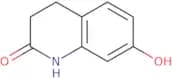
CAS:(S)-(+)-1,2-Propanediol is a diol that is a chemical compound with the molecular formula HOCHCHOH. It has an asymmetric carbon atom and can exist as two enantiomers (S)-(+)-1,2-propanediol and (R)-(-)-1,2-propanediol. The compound is produced in the laboratory by oxidation of propylene with hydrogen peroxide in the presence of a metal catalyst. It undergoes dehydration reactions to form sugars such as erythritol and xylitol. This process also occurs naturally in some plants and bacteria where glucose is oxidized to form glycerol. The conversion of propane-1,2-diol to glycerol is catalyzed by alcohol dehydrogenase from yeast or fungi such as Candida boidinii or Candida kefyr. It also reacts with other molecules such as proteins via amide formation to form new compounds called aFormula:C3H8O2Purezza:Min. 98%Colore e forma:Colorless Slightly Yellow Clear LiquidPeso molecolare:76.09 g/mol3,4-Dihydro-7-hydroxy-2(1H)-quinolinone
CAS:3,4-Dihydro-7-hydroxy-2(1H)-quinolinone is a synthetic compound that has been shown to have antidiabetic activity in vitro. It binds to the alpha2A receptor subtype and inhibits the uptake of chloride ions by cells. 3,4-Dihydro-7-hydroxy-2(1H)-quinolinone also inhibits the uptake of aluminium ions and has been shown to inhibit tumor growth in human nasopharyngeal carcinoma cells. The synthesis of 3,4-dihydro-7-hydroxy-2(1H)-quinolinone is accomplished by reacting aniline with acetophenone and hydrochloric acid in the presence of aluminium chloride and carbostyril. This reaction yields a 50% yield of the desired product.Formula:C9H9NO2Purezza:Min. 98 Area-%Colore e forma:PowderPeso molecolare:163.17 g/mol3-[2-(Ethylhexyl)oxyl]-1,2-propandiol
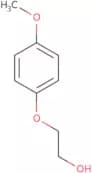
CAS:3-[2-(Ethylhexyl)oxyl]-1,2-propandiol is an organic compound that belongs to the group of sodium salts. It is used as an antimicrobial agent and preservative in cosmetic products. 3-[2-(Ethylhexyl)oxyl]-1,2-propandiol has been shown to have a synergistic effect with benzalkonium chloride, which is another antimicrobial agent. It has also been found to be effective against skin cells that are infected with the bacteria Staphylococcus aureus. 3-[2-(Ethylhexyl)oxyl]-1,2-propandiol has been shown to have an inhibitory effect on fatty acid synthesis in skin cells and may be useful for treating acne.Formula:C11H24O3Purezza:Min. 95%Colore e forma:Colorless Clear LiquidPeso molecolare:204.31 g/mol2-(4-Methoxyphenoxy)ethanol
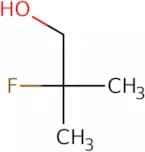
CAS:2-(4-Methoxyphenoxy)ethanol is a carboxylic acid. It has been used as a hydrogen peroxide donor in catalytic reactions, and as an ethylene glycol ether in the production of polyester resins. 2-(4-Methoxyphenoxy)ethanol has been shown to be useful in multilayer coatings with optimal reaction rates, and is a good oxidant for many organic compounds.Formula:C9H12O3Purezza:Min. 95%Colore e forma:PowderPeso molecolare:168.19 g/mol2-Fluoro-2-methyl-1-propanol
CAS:Please enquire for more information about 2-Fluoro-2-methyl-1-propanol including the price, delivery time and more detailed product information at the technical inquiry form on this page
Formula:C4H9FOPurezza:Min. 95%Colore e forma:Colorless PowderPeso molecolare:92.11 g/molPhenol red
CAS:Phenol red is a pH indicator that finds broad applications from chemistry to microbiology. Colour varies from yellow at pH<6.8 (lmax 443nm) through to light red/pink at 6.8<pH<8.2 (lmax 570 nm) to vivid purple/red at pH>8.2. It is widely used in cell culture to monitor pH and for colorimetric titration. For example, phenol red can be used to quantify Br- content in sea or fresh water. It is added to VTM as pH indicator, at the concentration of 10mg/ml, maintaining a pink colour at neutral pH.
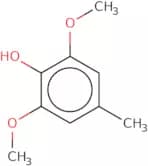
Formula:C19H14O5SColore e forma:PowderPeso molecolare:354.38 g/mol2,6-Dimethoxy-4-methylphenol
CAS:2,6-dimethoxy-4-methylphenol is a synthetic chemical with potential use as an insecticide. It is a cholinesterase inhibitor that inhibits the action of acetylcholinesterase, an enzyme that breaks down acetylcholine, which is a neurotransmitter important for cognitive function and muscle control. 2,6-dimethoxy-4-methylphenol has been shown to be toxic to insects in a sensitivity test and has also shown some toxicity to rats when administered orally at high doses. This chemical has been shown to inhibit the production of fatty acids in plants and can be used as a potential insecticide for human food crops.
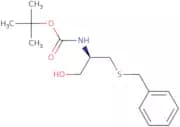
Formula:C9H12O3Purezza:Min. 97.0%Colore e forma:White Yellow PowderPeso molecolare:168.19 g/molBoc-S-benzyl-L-cysteinol
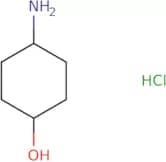
CAS:Please enquire for more information about Boc-S-benzyl-L-cysteinol including the price, delivery time and more detailed product information at the technical inquiry form on this pageFormula:C15H23NO3SPurezza:Min. 95%Colore e forma:PowderPeso molecolare:297.41 g/moltrans-4-Aminocyclohexanol hydrochloride
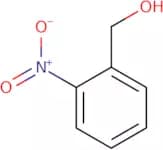
CAS:Trans-4-aminocyclohexanol hydrochloride is a monomer that has been used in the synthesis of polymers, which are used in the production of medical devices. Trans-4-aminocyclohexanol hydrochloride has shown anticancer activity and is used to inhibit the growth of murine leukemia cells. It has also shown uptake in different tissues and amination reaction with amino acids. The melting point of trans-4-aminocyclohexanol hydrochloride is 198°C, constant at 1.0, and impurities are less than 0.2%. Trans-4-aminocyclohexanol hydrochloride has been found to be a colorless solid with a molecular weight of 154.2 g/mol, an amorphous morphology, and a particle size distribution between 5 nm and 10 μm.Formula:C6H13NO·HClColore e forma:White Off-White PowderPeso molecolare:151.63 g/mol2-Nitrobenzyl alcohol
CAS:2-Nitrobenzyl alcohol is a molecule with photochemical properties. It has been used as a solid catalyst and in genotoxic studies. 2-Nitrobenzyl alcohol is also toxic to liver cells, although the mechanism behind this toxicity is not yet clear. The chemical biology of this molecule is being studied, which includes its receptor binding and interactions with human liver cells.Formula:C7H7NO3Purezza:Min. 97%Colore e forma:PowderPeso molecolare:153.14 g/mol2-[[(4-Anilinophenyl)imino]methyl]-4,6-dichlorophenol
CAS:2-[[(4-Anilinophenyl)imino]methyl]-4,6-dichlorophenol is a chemical that has been used in the synthesis of pharmaceuticals and other organic compounds. It is a versatile building block for the preparation of complex compounds and fine chemicals. This product can be used as a reagent or reaction component for research purposes. It is also useful as an intermediate or building block in the synthesis of drugs and other organic compounds. CAS No. 303215-67-0Formula:C19H14Cl2N2OPurezza:Min. 95%Colore e forma:Red PowderPeso molecolare:357.23 g/mol4-Nitroquinoline-N-oxide
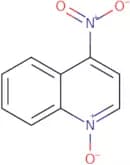
CAS:4-Nitroquinoline-N-oxide is a polymerase chain reaction (PCR) inhibitor that blocks the activity of methyltransferases, which are enzymes involved in DNA replication and repair. The mechanism of action has been shown to be due to the inhibition of the activities of these enzymes in cancer tissues. The efficacy of 4-Nitroquinoline-N-oxide has been demonstrated using an experimental model system composed of cells from Candida glabrata and other cancers, as well as a model system for carcinogenesis in vitro. This compound also shows antiinflammatory activity and can be used as a natural compound for chemotherapy. Chromatographic analysis has revealed that 4-Nitroquinoline-N-oxide is not toxic to wild type strains, but it is toxic to cancer cells with mutations in their DNA repair mechanisms.Formula:C9H6N2O3Purezza:Min. 95%Colore e forma:PowderPeso molecolare:190.16 g/mol


![3-[2-(Ethylhexyl)oxyl]-1,2-propandiol](/_next/image/?url=https%3A%2Fstatic.cymitquimica.com%2Fproducts%2F3D%2Fthumb-webp%2FFE151191.webp&w=3840&q=75)

![2-[[(4-Anilinophenyl)imino]methyl]-4,6-dichlorophenol](/_next/image/?url=https%3A%2Fstatic.cymitquimica.com%2Fproducts%2F3D%2Fthumb-webp%2FFA71703.webp&w=3840&q=75)