Alcoli
Sottocategorie di "Alcoli"
Trovati 5817 prodotti di "Alcoli"
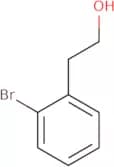
2-(2-Bromophenyl)ethanol
CAS:2-(2-Bromophenyl)ethanol is a functional group that contains a bromine atom and an ethoxy group. This compound is used to synthesize condensation products, such as the crystal x-ray diffraction of crystallized palladium complexes with acetaldehyde. The 2-(2-bromophenyl)ethanol analog was synthesized in order to study the synthesis and reactivity of a chelate ring. The hydroxyl group on this compound is useful for forming a magnesium salt or for using it as a synthetic reagent.
Formula:C8H9BrOPurezza:Min. 95%Colore e forma:Colorless Clear LiquidPeso molecolare:201.06 g/mol3,6-Dithia-1,8-octanediol
CAS:3,6-Dithia-1,8-octanediol is a coordination complex that contains four chloride ions and six water molecules. It is made up of two molecules of 3,6-dithia-1,8-octanediol coordinated with two diphenyl ethers. The molecule is planar with the two oxygen atoms of the hydroxyl group in one plane and the two carbon atoms in another plane. The hydrogen atom on the oxygen atom has an intramolecular bond to a hydrogen atom on the other oxygen atom. The molecule has a magnetic resonance spectrum that can be used for identification purposes because it is unique among other compounds. 3,6-Dithia-1,8-octanediol can react with sodium hydroxide solution to form a precipitate. This reaction can be used as an analytical chemistry technique to determine the concentration of chloride ions in plasma mass spectrometry samples.Formula:C6H14O2S2Purezza:Min. 95%Colore e forma:White PowderPeso molecolare:182.31 g/mol2-(Hydroxymethyl)pyridin-4-ol
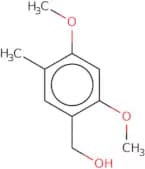
CAS:2-(Hydroxymethyl)pyridin-4-ol is a versatile building block that can be used in the synthesis of complex compounds and research chemicals. This fine chemical is a reagent, speciality chemical, and useful scaffold in organic synthesis. 2-(Hydroxymethyl)pyridin-4-ol is also an intermediate for the production of useful building blocks. It has high purity and can be used as a reaction component or a useful scaffold in organic synthesis.Formula:C6H7NO2Purezza:Min. 95%Colore e forma:White PowderPeso molecolare:125.13 g/mol2,4-Dimethoxy-5-methylbenzyl alcohol
CAS:2,4-Dimethoxy-5-methylbenzyl alcohol is a high quality chemical that is used as an intermediate for the synthesis of complex compounds. It has been used as a reagent and as a building block for the synthesis of other chemicals. This compound can be used to produce fine chemicals and research chemicals. 2,4-Dimethoxy-5-methylbenzyl alcohol has been shown to be useful in the production of versatile building blocks and reaction components.
Formula:C10H14O3Purezza:Min. 95%Peso molecolare:182.22 g/mol3-Chloroisoquinoline
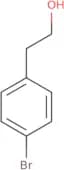
CAS:3-Chloroisoquinoline is a thiolate, which is a reactive chemical group. 3-Chloroisoquinoline has been shown to react with trifluoromethanesulfonic acid to form a compound with biological properties. The amide and palladium complexes of 3-chloroisoquinoline have been prepared in the past. Additionally, the two isomers of 3-chloroisoquinoline are known as the halides and magnetic resonance spectroscopy of this compound has been studied. Structural isomers and functional groups of 3-chloroisoquinoline have also been studied in detail. Tautomers and lactams are structural isomers of 3-chloroisoquinoline that have also been researched extensively. Finally, trifluoroacetic acid reacts with 3-chloroisoquinoline to form an ester product.Formula:C9H6ClNPurezza:Min. 95%Peso molecolare:163.6 g/mol2-(4-Bromophenyl)ethanol
CAS:2-(4-Bromophenyl)ethanol is an analog of histone lysine and histone H3. It is a synthetic substrate for the acylation reaction on the carboxyl group of fatty acids. 2-(4-Bromophenyl)ethanol has been shown to have optical properties similar to those of natural fatty acids and has been used as a polymer film for cell line A549.Formula:C8H9BrOPurezza:Min. 95%Colore e forma:Slightly Yellow Clear LiquidPeso molecolare:201.06 g/mol4-(Methylthiol)-1-(isothiocyanato)butane
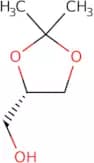
CAS:4-(Methylthiol)-1-(isothiocyanato)butane is commonly identified as sulforaphane, which is a naturally occurring organosulfur compound. This compound is predominantly sourced from cruciferous vegetables, such as broccoli, Brussels sprouts, and cabbage. It is specifically abundant in the seeds and sprouts of these plants.Formula:C6H11NS2Purezza:Min. 95%Colore e forma:PowderPeso molecolare:161.29 g/mol1,2-O-Isopropylidene-sn-glycerol
CAS:1,2-O-Isopropylidene-sn-glycerol (1,2-OIPG) is a synthetic molecule. It is synthesized from potassium thioacetate and chloride in an organic solvent with hexadecyl methanesulfonate as the catalyst. The product is obtained by intramolecular hydrogenation of the glyceride to produce 1,2-OIPG. This compound has been used as a strategy to generate hydrogen bonds in asymmetric synthesis, for example in the formation of d-mannitol with activated hydrogen bonds. The compound also has potential applications in the production of fatty acids.
Formula:C6H12O3Purezza:Min. 98 Area-%Colore e forma:Colorless Clear LiquidPeso molecolare:132.15 g/mol1-Oleoyl-rac-glycerol - 50%
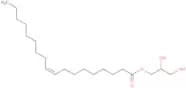
CAS:1-Oleoyl-rac-glycerol is a lipid that has been used in experimental studies to replace the use of animal-derived lipids for pharmaceutical applications. It can be synthesized by combining oleic acid with glycerol. 1-Oleoyl-rac-glycerol is soluble in water and has been shown to have a Langmuir adsorption isotherm, which means it can be used as a monoolein substitute. The basic protein in 1-Oleoyl-rac-glycerol has been determined using XRD data and found to be chitosan polymer. The experimental model for 1-Oleoyl-rac-glycerol was tested on rats and found not to cause toxicity, making it an ideal biocompatible polymer that can be used as an alternative to chitosan polymer.
Formula:C21H40O4Purezza:Min. 95%Colore e forma:Slightly Yellow Clear LiquidPeso molecolare:356.54 g/mol1,16-Hexadecanediol
CAS:1,16-Hexadecanediol is a plant hormone that is structurally related to abscisic acid and gibberellins. It is found in the tissues of plants. 1,16-Hexadecanediol has been shown to have the ability to regulate plant growth and development. The diffusional properties of this molecule suggest that it may be a model system for studying other molecules with similar properties. The conformational properties of this molecule are also important because they allow for hydrogen bonding, which stabilizes the molecule and prevents it from decomposing. This property also makes 1,16-hexadecanediol an excellent candidate as a low-energy sweetener. The molecule can be seen in nmr spectra as having two peaks at different chemical shifts because it contains intramolecular hydrogen bonds. The formula weight of 1,16-hexadecanediol is 270.27 g/mol.
Formula:C16H34O2Purezza:Min. 95%Colore e forma:White/Off-White SolidPeso molecolare:258.44 g/mol1-Methyl-1H-indol-4-ol
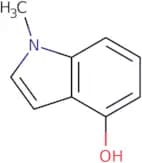
CAS:1-Methyl-1H-indol-4-ol is a sulfur containing natural product that has been shown to have antimicrobial activity. The compound is structurally similar to karanjin, an alkaloid found in the plant genus Camellia. In vitro studies with 1-methyl-1H-indol-4-ol have demonstrated antimicrobial activity against Gram positive bacteria such as Bacillus subtilis and Staphylococcus aureus, as well as anti fungal effects against Candida albicans and Cryptococcus neoformans. Furanoflavonoids are compounds that contain a furan ring and flavonoid group. 1-Methyl-1H-indol-4-ol is one of these compounds and has been shown to inhibit the growth of fungi by inhibiting the synthesis of proteins necessary for cell division.Formula:C9H9NOPurezza:Min. 95%Colore e forma:PowderPeso molecolare:147.17 g/mol2-Bromomethylquinoline
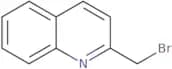
CAS:2-Bromomethylquinoline is a quinoline derivative that has been synthesized to study the interaction between metal ions, such as copper and zinc, and chelate rings. The reaction products formed by 2-bromomethylquinoline have been shown to have antifungal activity in vitro. It has been found that the addition of a fluorescent probe can be used to detect quinoline derivatives, which fluoresce when excited with light. This makes them useful as fluorescent probes for reactions involving metal ions.Formula:C10H8BrNPurezza:Min. 95%Colore e forma:SolidPeso molecolare:222.08 g/molQuinoline-5-carboxylic acid
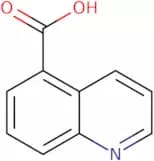
CAS:Quinoline-5-carboxylic acid is a peroxide that is produced by the oxidation of quinoline derivatives. Quinoline-5-carboxylic acid has been shown to have antibacterial activity, and it also has affinity values for chloride ions. The chemical isomers of quinoline-5-carboxylic acid are called quninolines, which are produced by the hydrolysis of quinoline-5-carboxylic acid. Quinolines can be obtained by the oxidation of aniline. Quinolines have been shown to catalyze reactions with carbonyl groups in organic molecules, such as the reaction between an alkoxycarbonyl group and a hydroxyl group to form an aldehyde or ketone. Kinetic data for this reaction was obtained using titration calorimetry.
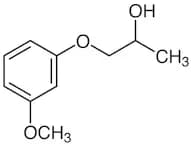
Formula:C10H7NO2Purezza:Min. 95%Colore e forma:White To Beige To Light Brown To Grey SolidPeso molecolare:173.17 g/mol1-(3-Methoxyphenoxy)-2-propanol
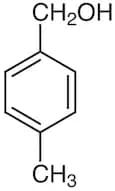
CAS:Formula:C10H14O3Purezza:>90.0%(GC)Colore e forma:Colorless to Light yellow to Light orange clear liquidPeso molecolare:182.224-Methylbenzyl Alcohol
CAS:Formula:C8H10OPurezza:>99.0%(GC)Colore e forma:White to Almost white powder to crystalPeso molecolare:122.17Oleic acid-biotin - solution in ethanol
CAS:Oleic acid-biotin is a fine chemical that is used as a versatile building block in the synthesis of complex compounds. It can also be used as a reagent for research purposes, and is a useful building block for the synthesis of various chemicals. Oleic acid-biotin is an intermediate in organic chemistry, and can be used as a reaction component in organic synthesis. It can also act as a scaffold for drug design and development. This product has been shown to have high quality and purity, making it suitable for use in various reactions.Formula:C28H50N4O3SPurezza:Min. 95%Colore e forma:Colorless PowderPeso molecolare:522.79 g/mol2-(2-Chlorophenyl)ethanol
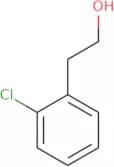
CAS:2-(2-Chlorophenyl)ethanol is a chemical used to synthesize aldehydes and fatty acids. It is also used to validate the purity of products, such as bulk drugs. 2-(2-Chlorophenyl)ethanol can be found in solvents, impurities, and chlorobenzene. It is not recommended for use at temperatures above 50°C or below -10°C. This chemical should not be left in contact with plastic or rubber tubing for extended periods of time because it may cause discoloration or cracking. 2-(2-Chlorophenyl)ethanol is not radioactive, but it may become so after irradiation.
2-(2-Chlorophenyl)ethanol can be found in solvents, impurities, and chlorobenzene. It is not recommended for use at temperatures above 50°C or below -10°C. This chemical should not be left in contact with plastic orFormula:C8H9ClOPurezza:Min. 95%Peso molecolare:156.61 g/molLinolenic acid, 98.5%
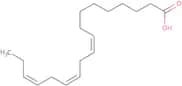
CAS:Linolenic acid is a polyunsaturated fatty acid that is an essential component of human nutrition. Linolenic acid has apoptosis-inducing properties and has been shown to induce the mitochondrial membrane potential in neuronal cells and induce neuronal death by decreasing the levels of pge2. Linolenic acid also participates in energy metabolism, as it can be converted into arachidonic acid, which is a precursor for prostaglandins. Linolenic acid has been shown to have physiological effects on humans, such as improving eye disorders and congestive heart failure. It does not seem to be linked with any toxicity or adverse effects.Formula:C18H30O2Purezza:Min. 95%Colore e forma:Colorless Clear LiquidPeso molecolare:278.43 g/mol2-Amino-4,6-dibromophenol
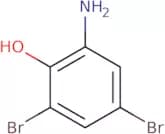
CAS:2-Amino-4,6-dibromophenol is an organic compound that is used in research for the synthesis of benzoxazoles and related compounds. It is a lactam analog that can be synthesized from commercially available starting materials. 2-Amino-4,6-dibromophenol has been shown to have pharmacological activity against tumor cells. This compound has also been used to synthesize regiospecific skeletal analogs of natural products.Formula:C6H5Br2NOPurezza:Min. 95 Area-%Colore e forma:Off-White PowderPeso molecolare:266.92 g/mol2-(2,4-Dichlorophenyl)ethanol
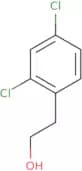
CAS:2-(2,4-Dichlorophenyl)ethanol is an organic compound that can be synthesized by reacting 2,4-dichlorobenzoic acid with trifluoroacetic acid in the presence of a base. The reaction scheme is:Formula:C8H8Cl2OPurezza:Min. 95%Peso molecolare:191.05 g/mol