Alcoli
Sottocategorie di "Alcoli"
Trovati 5816 prodotti di "Alcoli"
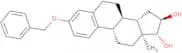
3-O-Benzyl estriol
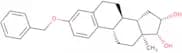
CAS:Prodotto controllato3-O-Benzyl estriol is a synthetic estrogen that is used to treat menopausal symptoms. This drug has been shown to have a high affinity for the estrogen receptor, and it is also able to activate the estrogen receptor in cells. 3-O-Benzyl estriol has been shown to be more potent than other estrogens such as estrone or estriol and has been shown to increase the synthesis of proteins by increasing RNA synthesis. 3-O-Benzyl estriol is conjugated with glucuronic acid and excreted in the bile. It also has a number of metabolic transformations, including pyrolysis, which produces cyanamid and triethylamine.Formula:C25H30O3Purezza:Min. 95%Peso molecolare:378.5 g/mol3-O-Benzyl 16-epiestriol
CAS:Prodotto controllatoPlease enquire for more information about 3-O-Benzyl 16-epiestriol including the price, delivery time and more detailed product information at the technical inquiry form on this pageFormula:C25H30O3Purezza:Min. 95%Peso molecolare:378.5 g/mol1,3-Dioleoyl-2-palmitoylglycerol
CAS:Dipalmitoylglycerol is a fatty acid that is naturally found in catfish. The optimal conditions for the synthesis of dipalmitoylglycerol from tripalmitin have been determined by surface methodology to be at pH 5 and at 0°C. Dipalmitoylglycerol has been shown to bind to the enzyme acetyl-CoA carboxylase, which is involved in the synthesis of fatty acids, and prevent its activation. As a result, there is no production of malonyl CoA, which is an important precursor in the synthesis of fatty acids. This may be beneficial for infants because it prevents them from developing allergies and asthma.Formula:C55H102O6Purezza:Min. 95%Peso molecolare:859.39 g/molp-Mentha-8-thiol-3-one
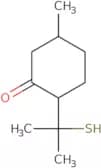
CAS:p-Mentha-8-thiol-3-one is a stabilizer that can be used in the synthesis of agathosma and other terpenes. It is also used as a mass spectrometric standard for the identification of stereoisomers. p-Mentha-8-thiol-3-one has been shown to have antibacterial effects against gram positive bacteria, including methicillin resistant Staphylococcus aureus (MRSA). This compound can be used in vitro to study the interactions between cytochrome P450 enzymes, lipid matrix and terpene compounds. In addition, it has been shown to work as a gas sensor, where it reacts with sodium sulfide to produce hydrogen sulfide gas.
Formula:C10H18OSPurezza:Min. 95%Colore e forma:Clear LiquidPeso molecolare:186.32 g/mol2-Cyclopentyl-4-chlorophenol
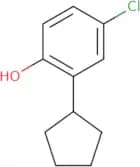
CAS:2-Cyclopentyl-4-chlorophenol is a synthetic fatty acid that is used as an antiviral agent. It inhibits the synthesis of fatty acids by inhibiting the conversion of 2,4-dienoyl CoA to 3-hydroxyacyl CoA. 2-Cyclopentyl-4-chlorophenol has been shown to be effective against a number of test organisms, including bacteria such as staphylococcus and virus such as herpes simplex virus. 2-Cyclopentyl-4-chlorophenol inhibits viral protein synthesis by blocking the action of host enzymes required for this process. The target cell for this drug is the host cell infected with a virus. This drug also has antihelminthic properties and can be used to treat parasitic infections caused by schistosoma haematobium and clonorchis sinensis worms. 2CPCP's structural formula is shown below:Formula:C11H13ClOPurezza:Min. 95%Peso molecolare:196.67 g/moltert-Butyl alcohol
CAS:Prodotto controllatoTert-butyl alcohol is used in wastewater treatment as a biocide. It has been shown to inhibit the growth of bacteria by binding to their aminotransferase enzymes. Tert-butyl alcohol binds to the active site of an enzyme and inhibits its activity by forming a covalent bond with an amino acid residue. Tert-butyl alcohol also binds to human serum albumin, which may be due to its ability to react with hydroxyl groups on the protein surface. The reaction solution is analyzed using a kinetic method, which determines how much tert-butyl alcohol is consumed over time (k1/2). This information can be used to determine the reaction mechanism for tert-butyl alcohol.Formula:C4H10OPurezza:(Gc) Min. 99.0%Colore e forma:Clear LiquidPeso molecolare:74.12 g/mol4-Aminophenyl methylcarbinol
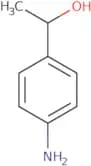
CAS:4-Aminophenyl methylcarbinol is a chemical compound that is used as an additive in the production of polyurethane. It accelerates the reaction between isocyanate and polyol, which enhances the rate of polymerization. 4-Aminophenyl methylcarbinol has been shown to increase the yield by about 30% when it was added to a reaction mixture. The activation energies for this reaction were found to be 29.6 kJ/mol for the nitro group and 29.8 kJ/mol for the carbonyl group. This chemical compound also has functional groups that are capable of forming hydrogen bonds with other molecules, which may help to bind them together during polymerization reactions.Purezza:Min. 95%3-Buten-1-ol
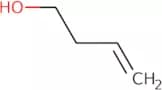
CAS:3-Buten-1-ol is a reactive, anhydrous alcohol that can be used as a model system for hydrogen bonding. It can also be used to demonstrate the uptake of hydrochloric acid and hydroxyl group substitution reactions. 3-Buten-1-ol is soluble in organic solvents such as benzene and chloroform, but insoluble in water. The structural analysis of 3-buten-1-ol has been performed using spectroscopic techniques such as laser ablation and x-ray diffraction to determine its molecular formula. The reaction solution of 3-buten-1-ol with zirconium oxide has been shown to produce intramolecular hydrogen bonds and solid catalysts.
Formula:C4H8OPurezza:Min. 95%Colore e forma:Clear LiquidPeso molecolare:72.11 g/mol4-Aminoquinoline-2-one
CAS:4-Aminoquinoline-2-one is a nonsteroidal anti-inflammatory drug that has tuberculostatic activity. It binds to the nitrogen atoms of the enzyme dihydropteroate synthase, which is involved in the synthesis of folic acid and DNA. This leads to an increase in reactive oxygen species and inflammation, which causes disease activity. 4-Aminoquinoline-2-one has been shown to be synergistic with monoclonal antibodies when used as a treatment for inflammatory diseases. In order for 4-aminoquinoline-2-one to be taken up by cells, it must bind to cellular uptake proteins through hydrogen bonds or disulfide bonds.
Formula:C9H8N2OPurezza:Min. 95%Peso molecolare:160.17 g/mol1,2-O-Dioctadecyl-sn-glycerol
CAS:1,2-O-Dioctadecyl-sn-glycerol is a hydrogenated glycerol that can be used as an advance in synthetic chemistry. It can be hydrogenolyzed to produce choline and cyclic phosphatidylglycerols. The catalytic properties of 1,2-O-dioctadecyl-sn-glycerol are due to its ability to react with chloride or cadmium chloride to form dialkyl glycerols. This product is also used in the synthesis of cadmium.Formula:C39H80O3Purezza:Min. 95%Peso molecolare:597.05 g/mol(3b,5a,17a)-19-Norpregnane-3,17-diol
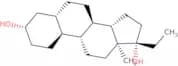
CAS:Prodotto controllatoPlease enquire for more information about (3b,5a,17a)-19-Norpregnane-3,17-diol including the price, delivery time and more detailed product information at the technical inquiry form on this pageFormula:C20H34O2Purezza:Min. 95%Peso molecolare:306.48 g/mol6-Heptyn-1-ol
CAS:6-Heptyn-1-ol is a naturally occurring chemical compound that has been isolated from the human colon and shown to have potent cytotoxicity against human colon carcinoma cells. 6-Heptyn-1-ol inhibits the growth of cancer cells by inducing apoptosis, the process by which a cell commits suicide. It also inhibits pancreatic lipase, an enzyme involved in fat digestion. 6-Heptyn-1-ol has been shown to be a chiral molecule with two enantiomers that can be synthesized artificially. The (R) form of 6-heptyn-1-ol is more potent than the (S) form in inducing apoptosis and inhibiting pancreatic lipase activity.Formula:C7H12OPurezza:Min. 95%Peso molecolare:112.17 g/molRac 1,2-bis-palmitoyl-3-chloropropanediol
CAS:Rac-1,2-bis-palmitoyl-3-chloropropanediol is a dispersive molecule that is composed of a fatty acid and a chlorinated derivative of palmitic acid. It is used to calibrate the mass spectrometer and as an internal standard in quantitative analysis. Rac-1,2-bis-palmitoyl-3-chloropropanediol reacts with electrospray ionization with a dose-dependent response. It has been shown to be toxic to kidney cells at high doses but not at low doses. This chemical has been detected in food samples after being absorbed from the gastrointestinal tract. Rac 1,2-bis-palmitoyl 3 chloropropanediol can be found in the dipalmitate form or as formic acid.
Formula:C35H67ClO4Purezza:95%NmrColore e forma:PowderPeso molecolare:587.36 g/mol4-Hydroxy-7-methoxyquinoline
CAS:4-Hydroxy-7-methoxyquinoline is an anti-malarial drug that belongs to the class of trimethyl, trifluoromethyl group. It is a cyclic compound and its synthesis starts with cyclization of the methyl derivative, which forms a ring. This product is used in clinical practice as an inhibitor of malarial protozoa and has been shown to have mechanistic effects on the cytochrome bc1 complex containing red blood cells. 4-Hydroxy-7-methoxyquinoline also inhibits the growth of bacteria by binding to the enzyme methionine synthase, which is involved in the biosynthesis of methionine from homocysteine. The product also has an inhibitory effect on DNA synthesis and protein synthesis.
Formula:C10H9NO2Purezza:Min. 95%Peso molecolare:175.18 g/mol(1-Hexyl-1H-benzimidazol-2-yl)methanol
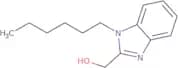
CAS:Prodotto controllatoPlease enquire for more information about (1-Hexyl-1H-benzimidazol-2-yl)methanol including the price, delivery time and more detailed product information at the technical inquiry form on this pageFormula:C14H20N2OPurezza:Min. 95%Peso molecolare:232.32 g/mol2-Fluoroestradiol
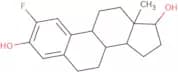
CAS:Prodotto controllato2-Fluoroestradiol is a synthetic form of 17β-estradiol that has been shown to inhibit the growth of tumor cells in an experimental model. 2-Fluoroestradiol binds to the estrogen receptor and inhibits the production of proteins needed for cell division, thus causing cancer. This drug has also been shown to inhibit lipoprotein lipase activity in rat liver microsomes, which may be due to its ability to induce chemical reactions. In addition, 2-fluoroestradiol inhibits lipid synthesis in fat cells and decreases lipogenesis in granulosa cells from ovaries. The inhibition of triglyceride synthesis by 2-fluoroestradiol is probably due to its ability to inhibit enzyme induction and increase the expression of mRNA for protein synthesis.Formula:C18H23FO2Purezza:Min. 95%Peso molecolare:290.37 g/molChromagnol
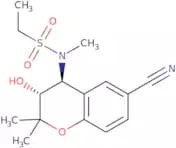
CAS:Chromagnol is a drug that inhibits the enzyme protein kinase C (PKC). It has been shown to have inhibitory properties on cardiac muscle cells and whole-cell recordings of heart cells. Chromagnol has also been shown to affect the function of bowel disease, including papillary muscle. Chromagnol has been shown to have effects on cardiac and atrial tissue. This drug may be a potential treatment for autoimmune diseases, such as multiple sclerosis, or other diseases that are caused by PKC overactivity. The mechanisms of action are not fully understood but it is believed that chromanol binds to the cytosolic Ca2+ ion channel, preventing it from opening and releasing Ca2+, which leads to an increase in intracellular Ca2+.
Formula:C15H20N2O4SPurezza:Min. 95%Peso molecolare:324.4 g/molα-(2,4-Dichlorophenyl)-1H-imidazole-1-ethanol
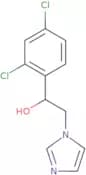
CAS:a-(2,4-Dichlorophenyl)-1H-imidazole-1-ethanol is an analytical reagent that is used to identify the presence of methylbenzene in a sample. It has been used as a drug target in schistosomiasis and interacting with imprinting genes. The synthetic method for this reagent includes sodium carbonate and methylbenzene, which are heated together at low energy to produce a-(2,4-Dichlorophenyl)-1H-imidazole-1-ethanol. The analytical method for this compound involves efficient methods such as high performance liquid chromatography and gas chromatography. Methylbenzene is dissolved in trifluoroacetic acid before being mixed with anhydrous potassium carbonate. This mixture is then heated to produce a-(2,4-Dichlorophenyl)-1H-imidazole-1-ethanol.Formula:C11H10Cl2N2OPurezza:Min. 95%Colore e forma:White To Beige SolidPeso molecolare:257.12 g/molFibrinolysis Inhibitng Factor
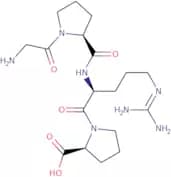
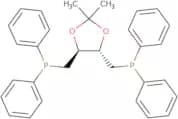
CAS:Fibrinolysis Inhibiting Factor is a surface glycoprotein that belongs to the group of human serum proteins. It has been shown to be involved in the pathogenesis of bowel diseases and is a target for dextran sulfate. Fibrinolysis inhibiting factor binds to the surfaces of cells and blocks blood coagulation by interfering with the conversion of fibrinogen into fibrin. The protein also binds calcium ions and prevents them from being deposited on cell surfaces, thereby preventing inflammatory reactions such as inflammation of the bowel. Fibrinolysis inhibiting factor has been shown to activate monoclonal antibodies in vitro, which may explain its effect on inflammatory bowel disease.Formula:C18H31N7O5Purezza:Min. 95%Peso molecolare:425.48 g/mol(2S,3S)-(+)-1,4-Bis(diphenylphosphino)-2,3-O-isopropylidene-2,3-butanediol
CAS:(2S,3S)-(+)-1,4-Bis(diphenylphosphino)-2,3-O-isopropylidene-2,3-butanediol is a chiral phosphine ligand. It has been used as an optical catalyst for styrene polymerization and as a homogeneous catalyst for the electrochemical oxidation of cyclic aldehydes. This compound has also been used in preparative voltammetric studies of phosphines and diphosphines. (2S,3S)-(+)-1,4-Bis(diphenylphosphino)-2,3-O-isopropylidene-2,3-butanediol can be obtained by reduction of bis-(diphenylphosphine)ethane with lithium aluminum hydride or sodium borohydride. This compound is soluble in solvents such as benzene and chloroFormula:C31H32O2P2Purezza:Min. 95%Peso molecolare:498.53 g/mol