Alcoli
Sottocategorie di "Alcoli"
Trovati 5814 prodotti di "Alcoli"
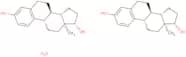
Estradiol hemihydrate
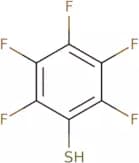
CAS:Prodotto controllatoEstradiol hemihydrate is a synthetic estrogen. It binds to estrogen receptors, causing the activation of DNA transcription and synthesis of messenger RNA. Estradiol hemihydrate has been used for the treatment of various symptoms, such as menopause, osteoporosis, breast cancer, and metabolic disorders. The drug is most often administered by injection or in a polymeric matrix that dissolves slowly in the mouth. The recommended dose is between 0.5mg and 1mg per day. Estradiol hemihydrate can be detected in plasma using an analytical method called liquid chromatography-tandem mass spectrometry (LC-MS/MS).Formula:(C18H24O2)2•H2OPurezza:Min. 95%Colore e forma:PowderPeso molecolare:562.78 g/molPentafluorobenzenethiol
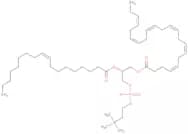
CAS:Pentafluorobenzenethiol is an organosulfur compound that is synthesized by the nucleophilic attack of deuterium on a hydrogenated aliphatic hydrocarbon. It is a colorless liquid with a characteristic low boiling point and high volatility. Pentafluorobenzenethiol has been shown to react with chelate rings and to form irreversible oxidation products. This chemical has analytical applications in the determination of potassium, sodium, and lithium in water samples; it also has semiconductor properties. The diameter of pentafluorobenzenethiol is 6.2 Å, which makes it a low energy aromatic hydrocarbon that can be easily transported through porous media.Formula:C6HF5SPurezza:Min. 95%Colore e forma:Colorless Clear LiquidPeso molecolare:200.13 g/mol1-Docosahexaenoin-2-oleoyl 3-phosphocholine
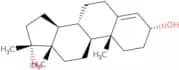
CAS:1-Docosahexaenoin-2-oleoyl 3-phosphocholine is a phospholipid compound that has shown promising potential in cancer research. This compound belongs to the steroid family and has been studied for its diagnostic capabilities in detecting breast cancer. It has also been investigated for its antiviral properties, particularly against HIV-1. Additionally, 1-Docosahexaenoin-2-oleoyl 3-phosphocholine has been researched for its use in diabetes management, with studies exploring its effects on insulin secretion and glucose metabolism. This compound has also been evaluated as a potential therapeutic agent for certain types of tumors due to its ability to inhibit tumor growth.Formula:C48H82NO8PPurezza:Min. 95%Peso molecolare:832.14 g/mol17-Methyl-4-androstene-3a,17a-diol
CAS:Prodotto controllatoPlease enquire for more information about 17-Methyl-4-androstene-3a,17a-diol including the price, delivery time and more detailed product information at the technical inquiry form on this pageFormula:C20H32O2Purezza:Min. 95%Peso molecolare:304.47 g/mol2-Morpholinoethanol
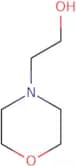
CAS:2-Morpholinoethanol is a potent inhibitor of the enzyme nitric oxide synthase, which is involved in the synthesis of nitric oxide. Nitric oxide is an important molecule that regulates many physiological processes, such as inflammation and blood flow. 2-Morpholinoethanol has been shown to have high resistance to thermal expansion, due to its intramolecular hydrogen bonding. It also inhibits the activity of amine oxidases, which are enzymes that catalyze reactions involving amines and oxygen. The mechanism of action of 2-morpholinoethanol has been studied by using group P2 fatty acids and amines as substrates for nitric oxide synthase.
Formula:C6H13NO2Purezza:Min. 95%Peso molecolare:131.17 g/mol4-Cinnolinecarboxaldehyde
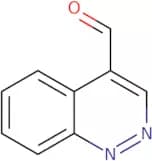
CAS:4-Cinnolinecarboxaldehyde is an organic compound that belongs to the group of cinnoline. It is a colorless liquid that can be used as a precursor in the production of aluminum metal. 4-Cinnolinecarboxaldehyde reacts with lithium aluminum hydride to form a compound that can be used as a reducing agent in organic chemistry. 4-Cinnolinecarboxaldehyde is also used as a precursor for preparing other compounds, such as lithium aluminum hydride and lithium aluminum trihydride.
Formula:C9H6N2OPurezza:Min. 95%Peso molecolare:158.16 g/molErgosta-5,24(28)-diene-3,7,16-triol
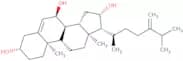
CAS:Prodotto controllatoPlease enquire for more information about Ergosta-5,24(28)-diene-3,7,16-triol including the price, delivery time and more detailed product information at the technical inquiry form on this page
Formula:C28H46O3Purezza:Min. 95%Peso molecolare:430.66 g/molDodecane-1-thiol
CAS:Dodecane-1-thiol is a chemical that is used as an ingredient in the production of nanoparticles. It has been shown to have high resistance to sodium salts and is chemically stable. Dodecane-1-thiol can be synthesized by reacting dodecane with hydroxylamine and mercaptan, which are both highly reactive compounds. Dodecane-1-thiol has a hydroxyl group on the thiol group and a dimethyl fumarate molecule attached to it. The hydroxyl group reacts with mercaptan, while the dimethyl fumarate molecule attaches to the thiol group to provide stability. Dodecane-1-thiol can also be synthesized using polymerization reactions.Formula:C12H26SPurezza:95%MinPeso molecolare:202.4 g/mol3,3-Diethoxy-1,2-propanediol
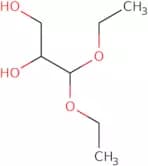
CAS:3,3-Diethoxy-1,2-propanediol is a chemical compound that has been found to have an acidic character and to be an allylation agent. This ingredient also has the ability to form flavonoids and act as a ring-opening polymerization catalyst. It can be used in leaf extract as an astringent or antibacterial. 3,3-Diethoxy-1,2-propanediol is used in the production of this product. The medicinal properties of this compound are scientifically analysed and tested for efficacy. It has been shown to act as a laxative when taken in excessive amounts. 3,3-Diethoxy-1,2-propanediol is not known to have any negative side effects on the human body such as skin irritation or sensitization.Formula:C7H16O4Purezza:Min. 95%Peso molecolare:164.2 g/mol(aR)-a-[[[2-(4-Nitrophenyl)ethyl]amino]methyl]benzenemethanol
CAS:(aR)-a-[[[2-(4-Nitrophenyl)ethyl]amino]methyl]benzenemethanol is a chiral, carbonyl compound that has been used in the synthesis of mirabegron. It is synthesized by reacting an amide with a hydrochloric acid salt. The product yield of (aR)-a-[[[2-(4-Nitrophenyl)ethyl]amino]methyl]benzenemethanol is high and it does not react with aluminium or amide impurities. This compound can be used for the industrial synthesis of mirabegron, which is a drug for the treatment of urinary incontinence. The reduction reaction and hydrolysis reactions are both important to this process.
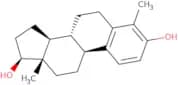
Purezza:Min. 95%4-Methyl estradiol
CAS:Prodotto controllato4-Methyl estradiol is an estrogen that is a naturally occurring metabolite of estradiol. It has been shown to have weak estrogenic effects and may be used in low doses to treat breast cancer. 4-Methyl estradiol binds to the estrogen receptor with high affinity, which leads to its activation and subsequent translocation into the nucleus, where it binds to DNA and regulates gene transcription. The binding of 4-methyl estradiol to the receptor also stimulates the production of other hormones such as progesterone and estrone.Formula:C19H26O2Purezza:Min. 95 Area-%Colore e forma:White PowderPeso molecolare:286.41 g/mol(R)-1-Phenylethanol
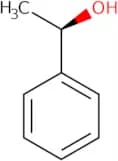
CAS:(R)-1-Phenylethanol is an organic compound that belongs to the class of aldehydes. It has an optimal redox potential and is used as a reactive intermediate in surface methodology. The kinetic data for this compound have been reported, including its reaction solution, kinetic, and stereoselective properties. (R)-1-Phenylethanol can be used to synthesize aromatic hydrocarbons with acyl chains or amines, using enzymatic reactions. It can also be used as an asymmetric synthesis reagent for the preparation of chiral alcohols and amines.
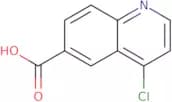
Formula:C8H10OPurezza:Min. 95%Colore e forma:Colourless To Yellow LiquidPeso molecolare:122.16 g/mol4-Chloroquinoline-6-carboxylicacid
CAS:Please enquire for more information about 4-Chloroquinoline-6-carboxylicacid including the price, delivery time and more detailed product information at the technical inquiry form on this pageFormula:C10H6ClNO2Purezza:Min. 95%Peso molecolare:207.61 g/mol5-Amino-8-hydroxyquinoline dihydrochloride
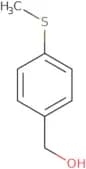
CAS:5-Amino-8-hydroxyquinoline dihydrochloride (5-AQDH) is an anticancer drug that inhibits the activity of survivin, a protein that is overexpressed in cancer cells. It has been shown to be effective in vivo against melanoma tumor growth. 5-AQDH binds to the unpaired cysteine residues of the survivin molecule and inhibits its function by binding to the active site, blocking access to ATP and preventing DNA synthesis. The efficacy of 5-AQDH has been confirmed in vitro by studying the effect on cell viability and DNA synthesis, as well as by measuring plasma mass spectrometry data from melanoma patients. This drug is currently being investigated for its potential use as an anticancer agent.Formula:C9H8N2O•(HCl)2Purezza:Min. 95%Peso molecolare:212.63 g/mol4-(Methylthio)benzyl Alcohol
CAS:4-(Methylthio)benzyl Alcohol (MSBA) is a sulfate salt of 4-(methylthio)benzol, which is used as an inhibitor for cytochrome P450 enzymes. MSBA forms a covalent bond with cytochrome P450 and inhibits the oxidation of substrates to form reactive metabolites. This inhibitor can also be used to identify the active site of cytochrome P450 enzymes by docking analysis. The inhibition by MSBA has been demonstrated in recombinant cytochrome P450s using acetonitrile and stilbene derivatives as substrates. The inhibitory potency of MSBA is related to its methoxy groups and sulfate salt groups, which are important for binding with the enzyme. MSBA has been shown to metabolize into primary alcohols, such as 2-propynyl ethyl alcohol, that have inhibitory activities against cytochrome P450 enzymes.
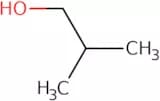
Formula:C8H10OSPurezza:Min. 95%Peso molecolare:154.23 g/mol2-Methyl-1-propanol
CAS:Prodotto controllato2-Methyl-1-propanol is a small molecule that inhibits the activity of certain enzymes. It is an inhibitor of alcohol dehydrogenase, which converts ethanol to acetaldehyde. 2-Methyl-1-propanol also inhibits the enzyme pyruvate decarboxylase, which catalyzes the conversion of pyruvic acid to acetaldehyde. These two effects result in increased levels of acetaldehyde in the blood and reduced levels of acetate in the blood. The effect on alcohol dehydrogenase has been shown in recombinant cells and in yeast cells with a mutation that leads to decreased alcohol dehydrogenase activity. 2-Methyl-1-propanol has been shown to inhibit the growth of wild type strains but not mutant strains of Escherichia coli, suggesting that its physiological effects are due to inhibition of alcohol dehydrogenase and pyruvate decarboxylase activities.
Formula:C4H10OPurezza:Min. 95%Colore e forma:Clear LiquidPeso molecolare:74.12 g/mol(1S,2R)-2-Aminocyclohexanol hydrochloride
CAS:Please enquire for more information about (1S,2R)-2-Aminocyclohexanol hydrochloride including the price, delivery time and more detailed product information at the technical inquiry form on this page
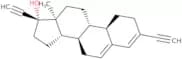
Formula:C6H14ClNOPurezza:Min. 95%Peso molecolare:151.63 g/mol(17a)-3-Ethynyl-19-norpregna-3,5-dien-20-yn-17-ol
CAS:Prodotto controllatoPlease enquire for more information about (17a)-3-Ethynyl-19-norpregna-3,5-dien-20-yn-17-ol including the price, delivery time and more detailed product information at the technical inquiry form on this page
Formula:C22H26OPurezza:Min. 95%Peso molecolare:306.44 g/molL-Prolinol 2-chlorotrityl resin
Please enquire for more information about L-Prolinol 2-chlorotrityl resin including the price, delivery time and more detailed product information at the technical inquiry form on this page
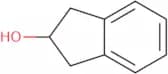
Purezza:Min. 95%2-Indanol
CAS:2-Indanol is a hydroxy compound that has a human immunodeficiency virus (HIV) replication inhibitor, antiviral activity, and structural formula. It has been shown to have anti-HIV activity in vitro at concentrations of 0.1 μM and 1 μM. 2-Indanol inhibits the process of reverse transcription by specifically binding to the hydroxyl group of the viral RNA polymerase and preventing it from making a hydrogen bond with the viral DNA template strand. 2-Indanol also slows down HIV replication by inhibiting protein synthesis. This inhibition is due to its ability to inhibit phosphorylation and dephosphorylation reactions in the host cell's ribosome machinery, which are required for protein synthesis. 2-Indanol has been shown to be active against covid-19 pandemic influenza viruses and has been used as an antiviral agent in mice infected with these viruses.
Formula:C9H10OPurezza:Min. 95%Peso molecolare:134.18 g/mol


![(aR)-a-[[[2-(4-Nitrophenyl)ethyl]amino]methyl]benzenemethanol](/_next/image/?url=https%3A%2Fstatic.cymitquimica.com%2Fproducts%2F3D%2Fthumb-webp%2FFN75044.webp&w=3840&q=75)