


Alcoli
Gli alcoli sono una vasta gamma di molecole organiche derivate dagli idrocarburi che contengono uno o più gruppi idrossilici (gruppo OH). Questi composti sono essenziali in varie reazioni chimiche e sono ampiamente utilizzati in laboratorio per la sintesi, come solventi e in chimica analitica. Da CymitQuimica, offriamo alcoli di alta qualità preparati per l'uso in laboratorio, supportando le tue ricerche e applicazioni industriali con prodotti affidabili ed efficaci. La nostra selezione garantisce che tu abbia gli alcoli giusti per le tue esigenze specifiche, sia per il lavoro di laboratorio di routine che per progetti di ricerca specializzati.
Sottocategorie di "Alcoli"
Trovati 5814 prodotti di "Alcoli"
Ordinare per
Purezza (%)
0
100
|
0
|
50
|
90
|
95
|
100
9-cisRetinol
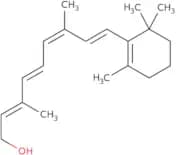
CAS:9-cisRetinol is a form of vitamin A that plays an important role in the synthesis of lipids and proteins. It has been shown to inhibit acid formation in the liver and to stimulate growth in some types of cancer cells. 9-cisRetinol is converted to all-trans retinoic acid, which is a nuclear hormone receptor that regulates gene expression. It also has been shown to be effective in clinical studies for the treatment of congenital amaurosis and cancer. 9-cisRetinol can inhibit phospholipase A2, which prevents the release of arachidonic acid from membrane phospholipids, as well as inhibit prostaglandin synthesis. The optimum pH for 9-cisRetinol activity is between 7 and 8.Formula:C20H30OPurezza:Min. 95%Peso molecolare:286.45 g/mol(16b,17a)-Estra-1,3,5(10)-triene-3,16,17-triol
CAS:Prodotto controllato(16b,17a)-Estra-1,3,5(10)-triene-3,16,17-triol is a molecule that belongs to the group of estrogens. Its structure is similar to 17β-estradiol and it has been shown to have inhibitory properties against bacterial growth. This compound has been found in human breast tissue and urine samples. 16b,17a)-Estra-1,3,5(10)-triene-3,16,17-triol has been shown to be active against colistin resistant bacteria. (16b,17a)-Estra-1,3,5(10)-triene-3,16,17-triol is also active against methicillin resistant staphylococcus aureus isolates. The optimum pH for this compound is 4.8 and it can be used for diagnostic purposes as it stains cells with a blue color in Gram's stain test.Formula:C18H24O3Purezza:Min. 95%Peso molecolare:288.38 g/mol3-Acetyl-1-propanol
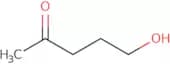
CAS:<p>3-Acetyl-1-propanol is a chemical substance that contains a hydroxy group and a hydrogen chloride molecule. The kinetic data for the reaction of 3-acetyl-1-propanol with water vapor has been found to be constant. This reaction is a nucleophilic attack on the C=O bond, which is followed by an intramolecular hydrogen transfer from one of the OH groups to the other. The product of this reaction is 3-hydroxypropanoic acid, which can be converted back to 3-acetyl propanol by hydrolysis. Hydrochloric acid is used as a catalyst in this process.</p>Formula:C5H10O2Purezza:Min. 95%Colore e forma:Colourless To Light (Or Pale) Yellow To Red-Brown LiquidPeso molecolare:102.13 g/mol3-(2-Methyl-1H-imidazol-1-yl)propan-1-ol hydrochloride
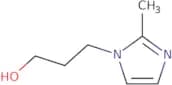
CAS:<p>Please enquire for more information about 3-(2-Methyl-1H-imidazol-1-yl)propan-1-ol hydrochloride including the price, delivery time and more detailed product information at the technical inquiry form on this page</p>Formula:C7H12N2OPurezza:Min. 95%Peso molecolare:140.18 g/mol5a-Estrane-3a,17a-diol
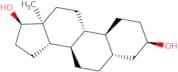
CAS:Prodotto controllatoPlease enquire for more information about 5a-Estrane-3a,17a-diol including the price, delivery time and more detailed product information at the technical inquiry form on this pageFormula:C18H30O2Purezza:Min. 95%Peso molecolare:278.43 g/mol5-Hexyn-1-ol
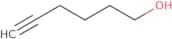
CAS:5-Hexyn-1-ol is a molecule that belongs to the group of organic compounds called fatty acids. It is a colorless liquid with an odor reminiscent of that of hexane. 5-Hexyn-1-ol has been shown to inhibit the proliferation of brain cells and tumor cells in culture. It also inhibits the growth of caco-2 cell lines, which are used as a model for human intestinal epithelial cells. The hydroxyl group in 5-hexyn-1-ol reacts with nitrogen nucleophiles such as picolinic acid and palladium chloride to form an intermediate compound, which can then be transformed into the desired product by addition of a second reactant.Formula:C6H10OPurezza:Min. 95%Peso molecolare:98.14 g/mol9-Chloro triamcinolone acetonide
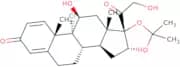
CAS:Please enquire for more information about 9-Chloro triamcinolone acetonide including the price, delivery time and more detailed product information at the technical inquiry form on this pageFormula:C24H31ClO6Purezza:Min. 95%Peso molecolare:450.95 g/mol1-Tetratriacontanol
CAS:1-Tetratriacontanol is a natural compound that is found in plants, such as Momilactone. It has been shown to have inhibitory properties on chemical interactions, which may be due to its enhancement of acetate extract. 1-Tetratriacontanol has also been shown to have potent inhibitory activity against human serum and fetal bovine cells. It has a diameter of approximately 1 nm and is composed of fatty acids and phosphatidylcholine. This compound has not yet been studied for its physiological effects.Formula:C34H70OPurezza:Min. 95%Peso molecolare:494.92 g/mol2-Chloroquinolin-8-ol
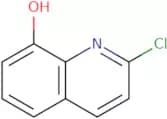
CAS:2-Chloroquinolin-8-ol is a chemical compound that binds to the human serum albumin and has cytotoxic effects on cancer cells. It has been shown to be an inhibitor of survivin, a protein that can promote cancer cell survival. 2-Chloroquinolin-8-ol has also been shown to inhibit the proliferation of human epidermoid carcinoma cells in vitro. This agent also inhibits the growth of Trichophyton mentagrophytes, a fungus that causes tinea versicolor, by binding to the ribosomal RNA. The binding constants for 2-chloroquinolin-8-ol were determined using atomic orbital calculations and vibrational spectroscopy. It has also been shown to bind with high affinity to hepg2 cells and cervical cancer cells.Formula:C9H6ClNOPurezza:Min. 95%Peso molecolare:179.6 g/molL-Phenylglycinol
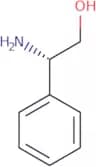
CAS:<p>L-phenylglycinol is a chiral compound that is synthesized by the reaction of phenylglycinol with hydroxide solution in the presence of an asymmetric synthesis catalyst. It is used as a precursor to chiral amides and aziridines, which are important for addressing the need for enantiopure compounds. The reaction mechanism involves nucleophilic substitution at the amino function, which can be catalyzed by copper complexes in solution. This reaction can also be monitored using liquid chromatography methods.</p>Formula:C8H11NOPurezza:Min. 95%Colore e forma:White PowderPeso molecolare:137.18 g/mol4-Pregnen-17a,20b-diol-3-one
CAS:Prodotto controllato<p>4-Pregnen-17a,20b-diol-3-one is a synthetic androgen with anabolic and androgenic activity. It has been shown in animal studies to increase maximal responses of the reproductive tract to gonadotropin stimulation. 4-Pregnen-17a,20b-diol-3-one binds to the activin receptor on the cell membrane, which leads to increased expression of a gene encoding for 3β-hydroxysteroid dehydrogenase (3βHSD), an enzyme involved in testosterone synthesis. This drug also increases the sensitivity of ovarian follicles to gonadotropins and decreases basal plasma levels of LH and FSH. 4-Pregnen-17a,20b-diol-3-one has not been found to be toxicologically significant at doses up to 10 mg/kg body weight per day.</p>Formula:C21H32O3Purezza:Min. 95%Peso molecolare:332.48 g/molβ-Alaninol 2-chlorotrityl resin
Please enquire for more information about beta-Alaninol 2-chlorotrityl resin including the price, delivery time and more detailed product information at the technical inquiry form on this pagePurezza:Min. 95%4-Cinnolinecarboxaldehyde
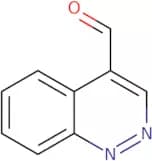
CAS:<p>4-Cinnolinecarboxaldehyde is an organic compound that belongs to the group of cinnoline. It is a colorless liquid that can be used as a precursor in the production of aluminum metal. 4-Cinnolinecarboxaldehyde reacts with lithium aluminum hydride to form a compound that can be used as a reducing agent in organic chemistry. 4-Cinnolinecarboxaldehyde is also used as a precursor for preparing other compounds, such as lithium aluminum hydride and lithium aluminum trihydride.</p>Formula:C9H6N2OPurezza:Min. 95%Peso molecolare:158.16 g/mol4-Hydroxy-3-nitro-2(1H)-quinolinone
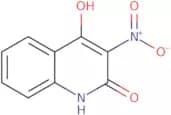
CAS:<p>4-Hydroxy-3-nitro-2(1H)-quinolinone is a quinoline derivative that has been shown to have anticancer activity against cancer cells. It can be used for the treatment of various types of cancer, including lung cancer, breast cancer, and colon cancer. This drug inhibits the growth of cancer cells by blocking the cycle at the G1 phase and inducing apoptosis. It also disrupts mitochondrial membrane potential, leading to an increase in reactive oxygen species and DNA damage. 4-Hydroxy-3-nitro-2(1H)-quinolinone is an epidermal growth factor receptor (EGFR) antagonist and blocks epidermal growth factor signaling through its inhibition of EGFR tyrosine kinase activity. It also downregulates TNFα expression in tumor cells by inhibiting NFκB activation.</p>Formula:C9H6N2O4Purezza:Min. 95%Peso molecolare:206.16 g/mol3,3-Dimethyl-1,2-butanediol
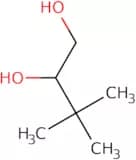
CAS:<p>3,3-Dimethyl-1,2-butanediol is a dioxolane with a constant boiling point of 110°C. This compound is synthesized from the reaction between acetone and formaldehyde, which produces a dioxolane ring. The reaction products can be profiled using gas chromatography to determine the ratio of each product. 3,3-Dimethyl-1,2-butanediol has been shown to have enantiomeric purity of greater than 99%. It has also been used as a chiral building block for the synthesis of carbohydrates with stereospecificity. 3,3-Dimethyl-1,2-butanediol's enzyme catalysis is used in the production of polyesters and polyurethanes.</p>Formula:C6H14O2Purezza:Min. 90.0 Area-%Colore e forma:PowderPeso molecolare:118.17 g/molL-allo-Threoninol
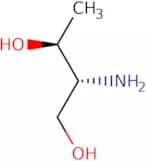
CAS:Please enquire for more information about L-allo-Threoninol including the price, delivery time and more detailed product information at the technical inquiry form on this pageFormula:C4H11NO2Purezza:Min. 95%Colore e forma:Colourless To Pale Yellow LiquidPeso molecolare:105.14 g/mol1,1,2,2-Tetrahydroperfluoro dodecanol
CAS:1,1,2,2-Tetrahydroperfluoro dodecanol (1HFPD) is a chemical substance used in analytical chemistry as an internal standard for gas chromatography. It is also used to prepare samples for analysis by particle-induced X-ray emission. 1HFPD has been shown to have a high uptake in preschool children and can be detected in human serum at levels of 0.5 micrograms per milliliter. The use of 1HFPD has been linked to adverse health effects such as kidney and liver damage.Formula:C12H5F21OPurezza:Min. 95%Peso molecolare:564.13 g/mol(3,5-Diiodo-Tyr1,D-Ala2,N-Me-Phe4,glycinol5)-Enkephalin acetate salt
CAS:Prodotto controllatoPlease enquire for more information about (3,5-Diiodo-Tyr1,D-Ala2,N-Me-Phe4,glycinol5)-Enkephalin acetate salt including the price, delivery time and more detailed product information at the technical inquiry form on this pageFormula:C26H33I2N5O6Purezza:Min. 95%Peso molecolare:765.38 g/molDiphenolic acid
CAS:Diphenolic acid is a reactive compound that is used as a solid catalyst. It has a hydroxyl group and a fatty acid, which makes it soluble in organic solvents. The methyl ethyl ester of diphenolic acid can be obtained from the reaction of diphenolic acid with methanol, ethanol or ethylene glycol. Diphenolic acid can also be obtained by reacting dibenzalacetone with an alcohol. Diphenolic acid has been used to synthesize monoclonal antibodies and linear calibration curves for electrochemical impedance spectroscopy. The hydroxyl group on diphenolic acid allows it to undergo reactions that are not possible for other compounds such as phenols, leading to its use in surface methodology and flow systems.Formula:C17H18O4Colore e forma:White PowderPeso molecolare:286.32 g/molBis[α,α-bis(trifluoromethyl)benzenemethanolato]diphenylsulfur
CAS:A dehydration agent. Also called Martin Sulfurane Dehydrating agentFormula:C30H20F12O2SPurezza:Min. 95%Peso molecolare:672.53 g/mol







![Bis[α,α-bis(trifluoromethyl)benzenemethanolato]diphenylsulfur](/_next/image/?url=https%3A%2Fstatic.cymitquimica.com%2Fproducts%2F3D%2Fthumb-webp%2FFB98713.webp&w=3840&q=75)