Alcoli
Sottocategorie di "Alcoli"
Trovati 5814 prodotti di "Alcoli"
Methallyl alcohol
CAS:Methallyl alcohol is a reactive hydroxide solution that is used as an intermediate in the industrial synthesis of polycarboxylic acids, glycol ethers, and other compounds. It reacts with hydrogen chloride to form methallyl chloride, which can be used to produce polymers. Methallyl alcohol can also be used as a reagent for the synthesis of various esters, amides, and other organic compounds. The enzyme inhibitors it produces inhibit reactions involving fatty acid and aliphatic hydrocarbon oxidation. Methallyl alcohol is produced by the reaction of methanol with allyl chloride. This reaction occurs in vivo under acidic conditions.
Formula:C4H8OPurezza:Min. 98 Area-%Colore e forma:Colorless Clear LiquidPeso molecolare:72.11 g/mol5-Bromo-3-fluorophenol
CAS:5-Bromo-3-fluorophenol is a chemical compound that is modified by hydrogen bonding. It displays anti-cancer activity against various human cancer cells, including breast and prostate cancer cells. 5-Bromo-3-fluorophenol also inhibits nicotinic acetylcholine receptors and the enzyme acetylcholinesterase, which are important for the function of the nervous system. This drug has been shown to interact with acetylcholine receptor sites on the surface of tumor cells, which may lead to apoptosis. The pharmacophore for 5-bromo-3-fluorophenol is a phenolic OH group linked to an aromatic ring with two nitro groups.Formula:C6H4BrFOPurezza:Min. 95%Colore e forma:PowderPeso molecolare:191 g/mol7-Chloro-4-piperazinylquinoline
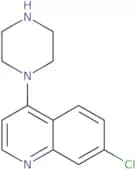
CAS:7-Chloro-4-piperazinylquinoline is a quinoline derivative that belongs to the group of organic solvents. It has anticancer activity and is used as a medicine. 7-Chloro-4-piperazinylquinoline is used as an intermediate in the preparation of sorafenib, which is a potent inhibitor of the protein tyrosine kinase. Sorafenib inhibits cancer cell proliferation and tumor growth by blocking the activity of tyrosine kinases, which are necessary for cellular proliferation and survival. It also inhibits phospholipase A2, which leads to cell death by apoptosis.Formula:C13H14ClN3Purezza:Min. 95%Peso molecolare:247.72 g/mol5-Nitro-2-aminophenol
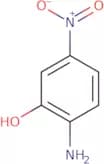
CAS:5-Nitro-2-aminophenol is an aminophenol that has been shown to be a carcinogen in animal studies. It can cause allergic reactions and has been shown to have oxidative DNA damage, which can lead to cancer. 5-Nitro-2-aminophenol is used as a chemical intermediate in the preparation of other chemicals and pharmaceuticals. This chemical has been studied extensively for its analytical properties and is used as a reagent in chromatography. The coordination geometry of 5-nitro-2-aminophenol is octahedral, with nitro groups occupying one axial site each. The toxicity of this compound in animals has been studied extensively, including carcinogenic potential and mutagenicity studies, and it has been shown to inhibit the growth of cultured cells at high concentrations.Formula:C6H6N2O3Purezza:Min. 95%Peso molecolare:154.12 g/molL-allo-Threoninol
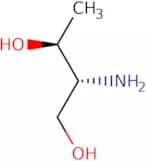
CAS:Please enquire for more information about L-allo-Threoninol including the price, delivery time and more detailed product information at the technical inquiry form on this pageFormula:C4H11NO2Purezza:Min. 95%Colore e forma:Colourless To Pale Yellow LiquidPeso molecolare:105.14 g/mol1,1,2,2-Tetrahydroperfluoro dodecanol
CAS:1,1,2,2-Tetrahydroperfluoro dodecanol (1HFPD) is a chemical substance used in analytical chemistry as an internal standard for gas chromatography. It is also used to prepare samples for analysis by particle-induced X-ray emission. 1HFPD has been shown to have a high uptake in preschool children and can be detected in human serum at levels of 0.5 micrograms per milliliter. The use of 1HFPD has been linked to adverse health effects such as kidney and liver damage.Formula:C12H5F21OPurezza:Min. 95%Peso molecolare:564.13 g/mol3-Keto petromyzonol-24-hemisuccinate
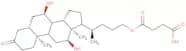
CAS:Prodotto controllatoPlease enquire for more information about 3-Keto petromyzonol-24-hemisuccinate including the price, delivery time and more detailed product information at the technical inquiry form on this pageFormula:C28H44O7Purezza:Min. 95%Colore e forma:PowderPeso molecolare:492.65 g/molLinolenic acid - 98%
CAS:Linolenic acid is a polyunsaturated fatty acid that is essential for human health. It is a precursor of prostaglandin E2 (PGE2), which has been implicated in the regulation of cell death and inflammation. Linolenic acid has been shown to induce apoptosis in vitro by inhibiting the mitochondrial membrane potential and activating caspases 3 and 9, thereby inducing neuronal death. In vivo, linolenic acid has been shown to have beneficial effects on cardiovascular function, including lowering cholesterol levels and improving blood flow to the heart. Linolenic acid also has antioxidant properties, which may be due to its ability to inhibit lipid peroxidation and scavenge free radicals.Formula:C18H30O2Purezza:Min. 95%Colore e forma:PowderPeso molecolare:278.43 g/mol3-Bromophenol
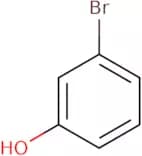
CAS:3-Bromophenol is an organic compound that is a bromophenol. It is used as a fluorometric probe in wastewater treatment and as a tracer for metabolic pathways in the proximal tubules of the kidney. 3-Bromophenol has a molecular weight of 184.16 g/mol and has been shown to be metabolized by bacteria into 2,4-dihydroxyphenylacetic acid (2,4-DPA). 3-Bromophenol can also be synthesized from 2,4-dihydroxyphenylacetic acid using sodium hydroxide solution and carbon source in a synthetic process. This synthetic process can be carried out at room temperature and atmospheric pressure.Formula:C6H5BrOPurezza:Min. 98 Area-%Colore e forma:Clear LiquidPeso molecolare:173.01 g/mol(alphaR)-alpha-[[[2-(4-Nitrophenyl)ethyl]amino]methyl]benzenemethanol hydrochloride
CAS:Intermediate in the synthesis of mirabegron
Formula:C16H18N2O3·HClPurezza:Min. 95%Peso molecolare:322.79 g/mol4-Fluoro-3-nitrobenzyl alcohol
CAS:4-Fluoro-3-nitrobenzyl alcohol (4FNA) is a potent, orally bioavailable, and selective inhibitor of the tyrosine kinase AXL. 4FNA binds to the ATP binding site on AXL and blocks phosphorylation of its tyrosine kinase domain. This binding leads to a conformational change in the AXL protein that prevents it from interacting with downstream signaling molecules, inhibiting T cell activation.
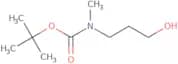
Formula:C7H6FNO3Purezza:Min. 95%Peso molecolare:171.13 g/molN-Methyl-N-boc-aminopropan-3-ol
CAS:N-Methyl-N-boc-aminopropan-3-ol is a fine chemical with CAS No. 98642-44-5 that is used in the synthesis of complex compounds, as a reagent for research chemicals, and as a speciality chemical. It is also used in the synthesis of versatile building blocks, reaction components and scaffolds. N-Methyl-N-boc-aminopropan-3-ol has a high quality and can be used as a versatile intermediate or a useful scaffold.Formula:C9H19NO3Purezza:Min. 95%Colore e forma:Colourless To Pale Yellow LiquidPeso molecolare:189.25 g/molDiphenolic acid
CAS:Diphenolic acid is a reactive compound that is used as a solid catalyst. It has a hydroxyl group and a fatty acid, which makes it soluble in organic solvents. The methyl ethyl ester of diphenolic acid can be obtained from the reaction of diphenolic acid with methanol, ethanol or ethylene glycol. Diphenolic acid can also be obtained by reacting dibenzalacetone with an alcohol. Diphenolic acid has been used to synthesize monoclonal antibodies and linear calibration curves for electrochemical impedance spectroscopy. The hydroxyl group on diphenolic acid allows it to undergo reactions that are not possible for other compounds such as phenols, leading to its use in surface methodology and flow systems.Formula:C17H18O4Colore e forma:White PowderPeso molecolare:286.32 g/mol1,5-Decalindiol
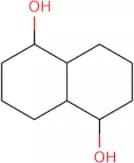
CAS:1,5-Decalindiol is a cyclic alicyclic compound that can be synthesized by the Diels-Alder reaction between 1,5-hexadiene and maleic anhydride. It contains two stereoisomers with different reactivity. One isomer reacts more rapidly than the other one. The termination of 1,5-decalindiol is calcitriol, which can be synthesized by reacting 1,5-decalindiol with naphthalene. The sequence of reactions for the synthesis of 1,5-decalindiol are analyzed in detail. Methoxy groups on the a ring play an important role in the reaction rate of this molecule.
1,5-Decalindiol also has an interaction with acetonitrile and a reaction product with dihydroxynaphthalenes.Formula:C10H18O2Purezza:Min. 95%Colore e forma:PowderPeso molecolare:170.25 g/molPigment Yellow 138;3,4,5,6-Tetrachloro-N-[2-(4,5,6,7-tetrachloro-2,3-dihydro-1,3-dioxo-1H-inden-2-yl)-8-Quinolyl]phthalimide
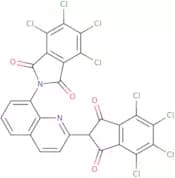
CAS:Pigment Yellow 138 is a polycarboxylic acid with the chemical formula C8H6Cl4O2. Pigment Yellow 138 has a molecular weight of 434.07 and can be used as a yellow pigment in paint, plastics, and textiles. Pigment Yellow 138 has an acidic pH and can be prepared by reacting phthalic anhydride with sodium hydroxide in aqueous solution to produce the sodium salt of pigment yellow 138. Pigment Yellow 138 is also soluble in hydroxide solutions, which makes it an excellent cross-linking agent for polymers. The color of pigments depends on the size of their particles; pigments with larger particle sizes are more opaque than those with smaller particle sizes.
Formula:C26H6Cl8N2O4Purezza:Strengh Min 95%.Peso molecolare:693.96 g/mol17β-Estradiol-d2
CAS:Prodotto controllato17-Estradiol-3,17-diol (17-E2) is the most potent estrogen found in humans. It has been shown to be able to stimulate the growth of breast cancer cells and is a known carcinogen in animals. 17-E2 is metabolized by cytochrome P450 enzymes into catechol estrogens, which are reactive and can bind to DNA. These metabolites can cause mutations that lead to cancer. Analysis of human breast tissue has revealed that 17-E2 is synthesized from estradiol by aromatase and then converted into catechol estrogens by 17β-hydroxysteroid dehydrogenase type 1. 17-E2 also binds to estrogen receptors, which may be linked with the development of certain cancers. The presence of 17-E2 in the environment has been linked with an increased risk for cancer in humans, as it can enter the body through water or food contaminated with waste products.Formula:C18H22D2O2Purezza:Min. 95%Colore e forma:PowderPeso molecolare:274.39 g/mol2-(Difluoromethoxy)Phenol
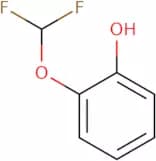
CAS:2-(Difluoromethoxy)Phenol is a purine derivative and pyrimidine derivative. It has been shown to inhibit the growth of cancer cells in vitro and in vivo. 2-(Difluoromethoxy)phenol inhibits multidrug resistance by inhibiting the transport of drugs into cells and thereby preventing their accumulation. As a result, it suppresses inflammatory diseases and autoimmune diseases. The hydroxyl group in this compound can be replaced with fluorine or nitro groups to generate new derivatives with different properties. Piperidine can also be added to this molecule to create an analogue that is more potent than 2-(difluoromethoxy)phenol and has a longer duration of action.Formula:C7H6F2O2Purezza:Min. 95%Peso molecolare:160.12 g/mol6,7-Dihydro-5H-quinolin-8-one
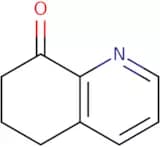
CAS:6,7-Dihydro-5H-quinolin-8-one is a quinoline derivative that can be used to treat cancer. It is an inhibitor of topoisomerase II, which is an enzyme that catalyzes the formation of single stranded breaks in DNA and then reseals them. The inhibition of topoisomerase II leads to the accumulation of single strand breaks, which causes cell death. 6,7-Dihydro-5H-quinolin-8-one has been shown to have inhibitory activity against cancer cells in laboratory tests and also inhibits the growth of breast cancer cells in mice. This compound also has a number of other biological effects including being a ligand for some receptors and amine oxidases as well as having antihistamine properties.
Formula:C9H9NOPurezza:Min. 95%Colore e forma:White PowderPeso molecolare:147.17 g/mol2,3,6,7,10,11-Triphenylenehexathiol
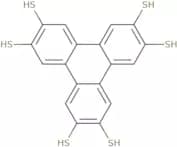
CAS:2,3,6,7,10,11-Triphenylenehexathiol is a drug that belongs to the class of disulfide bonds. It is used as a fluorescent probe in biochemical studies and has been shown to be an inhibitor of transcription-polymerase chain reaction (PCR) and protein synthesis. 2,3,6,7,10,11-Triphenylenehexathiol inhibits the activity of enzymes that maintain cellular homeostasis by binding with sulfur atoms in their active site. This drug also binds to nerve cells in the trigeminal nerve and may have anti-inflammatory properties.Formula:C18H12S6Purezza:Min. 92 Area-%Colore e forma:Green PowderPeso molecolare:420.68 g/mol2,2,4-Trimethyl-1,2-dihydroquinoline
CAS:2,2,4-Trimethyl-1,2-dihydroquinoline is a chemical compound with the formula C8H10N2. It is a white solid that is insoluble in water but soluble in nonpolar solvents such as benzene, toluene and hexane. 2,2,4-Trimethyl-1,2-dihydroquinoline has been shown to induce liver lesions in rats at doses of 1.25 g/kg/day. It also reacts with hydrogen fluoride to form calcium stearate. This compound is also used as a precursor for the synthesis of diazonium salts and has been shown to be carcinogenic in animal studies.
Formula:C12H15NPurezza:Min. 95%Colore e forma:Clear Viscous LiquidPeso molecolare:173.25 g/mol




![(alphaR)-alpha-[[[2-(4-Nitrophenyl)ethyl]amino]methyl]benzenemethanol hydrochloride](/_next/image/?url=https%3A%2Fstatic.cymitquimica.com%2Fproducts%2F3D%2Fthumb-webp%2FFN156825.webp&w=3840&q=75)