Alcoli
Gli alcoli sono una vasta gamma di molecole organiche derivate dagli idrocarburi che contengono uno o più gruppi idrossilici (gruppo OH). Questi composti sono essenziali in varie reazioni chimiche e sono ampiamente utilizzati in laboratorio per la sintesi, come solventi e in chimica analitica. Da CymitQuimica, offriamo alcoli di alta qualità preparati per l'uso in laboratorio, supportando le tue ricerche e applicazioni industriali con prodotti affidabili ed efficaci. La nostra selezione garantisce che tu abbia gli alcoli giusti per le tue esigenze specifiche, sia per il lavoro di laboratorio di routine che per progetti di ricerca specializzati.
Sottocategorie di "Alcoli"
Trovati 5814 prodotti di "Alcoli"
Ordinare per
Purezza (%)
0
100
|
0
|
50
|
90
|
95
|
100
cis-4-Cyclopentene-1,3-diol
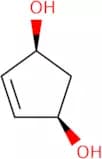
CAS:cis-4-Cyclopentene-1,3-diol is a useful chemical intermediate that can be converted to diacetate, acetylation, or chloroacetate. It has a reactive functional group that can be used for synthesizing polymers and other compounds. cis-4-Cyclopentene-1,3-diol is also an excellent substrate for lipase reactions and it reacts with hydrogen fluoride to give desired products. This section has conformational properties that make it suitable for hydrogen bonding and can act as a ligand in coordination chemistry. cis-4-Cyclopentene-1,3-diol is also able to undergo substitution at the carbonyl carbon atom by various reagents such as fluorine.Formula:C5H8O2Purezza:Min. 95%Colore e forma:PowderPeso molecolare:100.12 g/molZ-His(Z)-OH ethanol solvate
Please enquire for more information about Z-His(Z)-OH ethanol solvate including the price, delivery time and more detailed product information at the technical inquiry form on this pageFormula:C22H21N3O6Purezza:Min. 95%Peso molecolare:423.42 g/mol2-Chloro-5-pyridylcarbinol
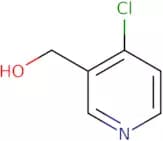
CAS:2-Chloro-5-pyridylcarbinol is an alkene that features a five-membered ring. It is a conformationally rigid molecule, which means it has no rotational or vibrational barriers. The molecule can be classified as a tricyclic heterocycle because the carbon atoms are arranged in three rings. The analogues of this compound feature six-membered carbocycles and intramolecular cycloadditions. 2-Chloro-5-pyridylcarbinol also constitutes one of the azomethine adducts of nicotine, which is a type of tricyclic heterocycle.Formula:C6H6ClNOPurezza:Min. 95%Peso molecolare:143.57 g/mol2-Chloro-3-methoxyphenol
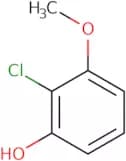
CAS:Please enquire for more information about 2-Chloro-3-methoxyphenol including the price, delivery time and more detailed product information at the technical inquiry form on this pageFormula:C7H7ClO2Purezza:Min. 95%Peso molecolare:158.58 g/molBoc-Thionoleu-1-(6-nitro)benzotriazolide
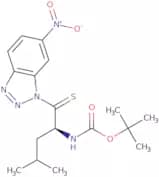
CAS:Please enquire for more information about Boc-Thionoleu-1-(6-nitro)benzotriazolide including the price, delivery time and more detailed product information at the technical inquiry form on this pageFormula:C17H23N5O4SPurezza:Min. 95%Peso molecolare:393.46 g/mol(S)-3-Amino-3-(4-chlorophenyl)-propan-1-ol
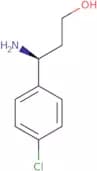
CAS:<p>Please enquire for more information about (S)-3-Amino-3-(4-chlorophenyl)-propan-1-ol including the price, delivery time and more detailed product information at the technical inquiry form on this page</p>Formula:C9H12ClNOPurezza:Min. 95%Peso molecolare:185.65 g/mol3-Pyridinemethanol
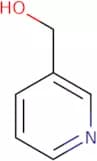
CAS:3-Pyridinemethanol is a chemical compound that is soluble in water. It has a molecular weight of 92.07 grams per mole, and the chemical formula CH3CH2NH. 3-Pyridinemethanol is used as a reagent for the synthesis of organic compounds, such as chlorides, esters, amides, nitriles, and thioamides. 3-Pyridinemethanol reacts with chloride to form an intermediate which reacts with water to produce hydrochloric acid and ammonium chloride. This reaction also produces heat, which can be used to generate energy or power other reactions. br> br> A nanotube was synthesized from 3-pyridinemethanol by using a template made from nickel atoms arranged in a hexagonal pattern on the surface of an indium tin oxide (ITO) glass substrate. The nanotubes are about 5 nm in diameter and can be upFormula:C6H7NOPurezza:Min. 95%Peso molecolare:109.13 g/mol4-Pentyn-1-ol
CAS:4-Pentyn-1-ol is a molecule with the chemical formula of C10H18O. It has intramolecular hydrogen, hydroxyl group and methyl ketones. 4-Pentyn-1-ol is used as a solvent and in perfumery. This compound can be synthesized by hydrochloric acid, hydrogen bond and proton. The FTIR spectroscopy of 4-pentyn-1-ol shows that it has a broad absorption band at 3300 cm−1 and a sharp peak at 1750 cm−1 which are assigned to the O–H stretching vibrations in the hydroxyl group. The IR spectrum also indicates that this compound has an intramolecular hydrogen bond. 4 pentyn - 1 - olFormula:C5H8OPurezza:Min. 95%Peso molecolare:84.12 g/mol4-[(4-Nitrophenyl)-azo]-phenol
CAS:<p>4-[(4-Nitrophenyl)-azo]-phenol is a molecular compound that has a nitro group, an azo group, and a phenolic hydroxyl group. It's also known as nitrophenyl diazonium salt. 4-[(4-Nitrophenyl)-azo]-phenol is used in the synthesis of other compounds such as dyes and pharmaceuticals. The magnetic resonance spectroscopy and optical microscope techniques were used to study the chemical structure of 4-[(4-Nitrophenyl)-azo]-phenol. The titration method was used to determine the purity of this compound. 4-[(4-Nitrophenyl)-azo]-phenol has been shown to have mesomorphic properties, which are exhibited by its ability to be either solid or liquid at room temperature (25°C). This property may be due to its functional groups that stabilize it in both states.</p>Purezza:Min. 95%Octreotide trifluoroacetate salt (Dimer, Antiparallel) (
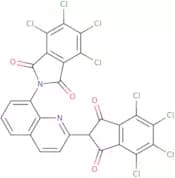
Please enquire for more information about Octreotide trifluoroacetate salt (Dimer, Antiparallel) ( including the price, delivery time and more detailed product information at the technical inquiry form on this pageFormula:C98H132N20O20S4Purezza:Min. 95%Peso molecolare:2,038.48 g/molPigment Yellow 138;3,4,5,6-Tetrachloro-N-[2-(4,5,6,7-tetrachloro-2,3-dihydro-1,3-dioxo-1H-inden-2-yl)-8-Quinolyl]phthalimide
CAS:<p>Pigment Yellow 138 is a polycarboxylic acid with the chemical formula C8H6Cl4O2. Pigment Yellow 138 has a molecular weight of 434.07 and can be used as a yellow pigment in paint, plastics, and textiles. Pigment Yellow 138 has an acidic pH and can be prepared by reacting phthalic anhydride with sodium hydroxide in aqueous solution to produce the sodium salt of pigment yellow 138. Pigment Yellow 138 is also soluble in hydroxide solutions, which makes it an excellent cross-linking agent for polymers. The color of pigments depends on the size of their particles; pigments with larger particle sizes are more opaque than those with smaller particle sizes.</p>Formula:C26H6Cl8N2O4Purezza:Strengh Min 95%.Peso molecolare:693.96 g/molTrichloroethanol
CAS:<p>Trichloroethanol is an alkanoic acid that is used as a solvent and a laboratory reagent. It is also a potential bioactive compound. Trichloroethanol has been shown to have neurotoxic effects in rats, causing histological changes in the trigeminal nerve, which may be due to its inhibition of mitochondrial energy metabolism. Trichloroethanol has been shown to inhibit the activity of matrix metalloproteinase-9 (MMP-9) in human serum and the α1 subunit of Toll-like receptor (TLR) 4 in human monocytes. This compound has also been shown to be toxic to rat liver microsomes at high concentrations.</p>Formula:C2H3Cl3OPurezza:Min. 98.5%Colore e forma:Clear LiquidPeso molecolare:149.4 g/mol1,6-Hexanediol
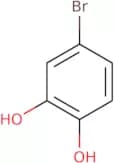
CAS:<p>1,6-Hexanediol is a diol that can be used as a control agent for radiation-sensitive polymeric matrices. It has been shown to bind to the hydroxyl groups of polymers and form hydrogen bonds with other molecules. 1,6-Hexanediol also reacts with trifluoroacetic acid in an electrochemical impedance spectroscopy study to produce low energy electrons. The kinetic data show that the optimum concentration of 1,6-hexanediol is between 0.1 and 0.2 M and the activation energies are in the range of 4.0 - 7.0 kcal/mol.</p>Formula:C6H14O2Purezza:Min. 95%Colore e forma:PowderPeso molecolare:118.17 g/mol4-Bromobenzene-1,2-diol
CAS:<p>4-Bromobenzene-1,2-diol is a reactive substance that has been shown to have receptor binding and reaction intermediates. It has been shown to inhibit the formation of reactive oxygen species in rat liver microsomes. The formation rate of 4-bromobenzene-1,2-diol is increased by carbon source such as bromobenzene. This substance has also been shown to be an inhibitor of the reaction mechanism. 4-Bromobenzene-1,2-diol is used as a reactant in organic synthesis reactions and can be found in dry weight measurements.</p>Formula:C6H5BrO2Purezza:Min. 95%Peso molecolare:189.01 g/mol3-(3'-Trifluoromethylphenyl)propanol
CAS:3-(3'-Trifluoromethylphenyl)propanol is a trifluoroacetic acid derivative that is used in acylation reactions to form esters. It can be obtained by the reaction of aluminium chloride, isopropyl alcohol, and phosphine with 3-trifluoromethylaniline. Impurities may include chloride and zirconium. The trifluoromethyl group on this molecule can react with the carbonyl group of an organic acid to form a trifluoroacetate ester.Purezza:Min. 95%17β-Estradiol-d2
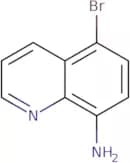
CAS:Prodotto controllato<p>17-Estradiol-3,17-diol (17-E2) is the most potent estrogen found in humans. It has been shown to be able to stimulate the growth of breast cancer cells and is a known carcinogen in animals. 17-E2 is metabolized by cytochrome P450 enzymes into catechol estrogens, which are reactive and can bind to DNA. These metabolites can cause mutations that lead to cancer. Analysis of human breast tissue has revealed that 17-E2 is synthesized from estradiol by aromatase and then converted into catechol estrogens by 17β-hydroxysteroid dehydrogenase type 1. 17-E2 also binds to estrogen receptors, which may be linked with the development of certain cancers. The presence of 17-E2 in the environment has been linked with an increased risk for cancer in humans, as it can enter the body through water or food contaminated with waste products.</p>Formula:C18H22D2O2Purezza:Min. 95%Colore e forma:PowderPeso molecolare:274.39 g/mol5-Bromoquinolin-8-amine
CAS:5-Bromoquinolin-8-amine is a topoisomerase inhibitor that can be used as an antitumor agent. It has been shown to inhibit the growth of tumor cell lines and suppress the growth of colon carcinoma cells in rats and human colon carcinomas in mice. 5-Bromoquinolin-8-amine interacts with DNA, specifically inhibiting the formation of supercoiled DNA. This interaction may lead to the inhibition of tumor cell growth. 5-Bromoquinolin-8-amine also inhibits protein synthesis by interacting with proteins at the ribosomal level, leading to inhibited cell growth.Formula:C9H7BrN2Purezza:Min. 95%Peso molecolare:223.07 g/molN-Boc-3-Azetidinol
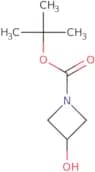
CAS:This linker is chemically stable and not cleavable under standard intracellular or extracellular conditions. N-Boc-3-Azetidinol is also a versatile organic intermediate used primarily in the pharmaceutical industry for synthesizing a wide range of drugs, including antibacterials, immunosuppressants, and cancer therapies.Formula:C8H15NO3Purezza:Min. 95%Peso molecolare:173.21 g/mol5-Amino-2-tert-butoxycarbonyl-1,2,3,4-tetrahydroisoquinoline
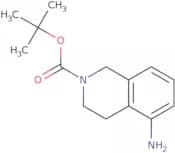
CAS:Please enquire for more information about 5-Amino-2-tert-butoxycarbonyl-1,2,3,4-tetrahydroisoquinoline including the price, delivery time and more detailed product information at the technical inquiry form on this pageFormula:C14H20N2O2Purezza:Min. 95%Peso molecolare:248.32 g/mol9,11b-Epoxidetriamcinolone
CAS:<p>Please enquire for more information about 9,11b-Epoxidetriamcinolone including the price, delivery time and more detailed product information at the technical inquiry form on this page</p>Formula:C21H26O6Purezza:Min. 95%Peso molecolare:374.43 g/mol



![4-[(4-Nitrophenyl)-azo]-phenol](/_next/image/?url=https%3A%2Fstatic.cymitquimica.com%2Fproducts%2F3D%2Fthumb-webp%2FFN31052.webp&w=3840&q=75)