Alcoli
Gli alcoli sono una vasta gamma di molecole organiche derivate dagli idrocarburi che contengono uno o più gruppi idrossilici (gruppo OH). Questi composti sono essenziali in varie reazioni chimiche e sono ampiamente utilizzati in laboratorio per la sintesi, come solventi e in chimica analitica. Da CymitQuimica, offriamo alcoli di alta qualità preparati per l'uso in laboratorio, supportando le tue ricerche e applicazioni industriali con prodotti affidabili ed efficaci. La nostra selezione garantisce che tu abbia gli alcoli giusti per le tue esigenze specifiche, sia per il lavoro di laboratorio di routine che per progetti di ricerca specializzati.
Sottocategorie di "Alcoli"
Trovati 5814 prodotti di "Alcoli"
Ordinare per
Purezza (%)
0
100
|
0
|
50
|
90
|
95
|
100
1,6-Hexanediol
CAS:<p>1,6-Hexanediol is a diol that can be used as a control agent for radiation-sensitive polymeric matrices. It has been shown to bind to the hydroxyl groups of polymers and form hydrogen bonds with other molecules. 1,6-Hexanediol also reacts with trifluoroacetic acid in an electrochemical impedance spectroscopy study to produce low energy electrons. The kinetic data show that the optimum concentration of 1,6-hexanediol is between 0.1 and 0.2 M and the activation energies are in the range of 4.0 - 7.0 kcal/mol.</p>Formula:C6H14O2Purezza:Min. 95%Colore e forma:PowderPeso molecolare:118.17 g/molZ-D-Alaninol
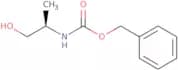
CAS:<p>Please enquire for more information about Z-D-Alaninol including the price, delivery time and more detailed product information at the technical inquiry form on this page</p>Formula:C11H15NO3Purezza:Min. 95%Peso molecolare:209.24 g/mol17β-Estradiol-d2
CAS:Prodotto controllato<p>17-Estradiol-3,17-diol (17-E2) is the most potent estrogen found in humans. It has been shown to be able to stimulate the growth of breast cancer cells and is a known carcinogen in animals. 17-E2 is metabolized by cytochrome P450 enzymes into catechol estrogens, which are reactive and can bind to DNA. These metabolites can cause mutations that lead to cancer. Analysis of human breast tissue has revealed that 17-E2 is synthesized from estradiol by aromatase and then converted into catechol estrogens by 17β-hydroxysteroid dehydrogenase type 1. 17-E2 also binds to estrogen receptors, which may be linked with the development of certain cancers. The presence of 17-E2 in the environment has been linked with an increased risk for cancer in humans, as it can enter the body through water or food contaminated with waste products.</p>Formula:C18H22D2O2Purezza:Min. 95%Colore e forma:PowderPeso molecolare:274.39 g/mol5-Bromo-3-fluorophenol
CAS:5-Bromo-3-fluorophenol is a chemical compound that is modified by hydrogen bonding. It displays anti-cancer activity against various human cancer cells, including breast and prostate cancer cells. 5-Bromo-3-fluorophenol also inhibits nicotinic acetylcholine receptors and the enzyme acetylcholinesterase, which are important for the function of the nervous system. This drug has been shown to interact with acetylcholine receptor sites on the surface of tumor cells, which may lead to apoptosis. The pharmacophore for 5-bromo-3-fluorophenol is a phenolic OH group linked to an aromatic ring with two nitro groups.Formula:C6H4BrFOPurezza:Min. 95%Colore e forma:PowderPeso molecolare:191 g/mol3,4-Dichlorothiophenol
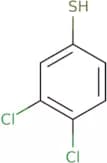
CAS:3,4-Dichlorothiophenol is a chemical compound that belongs to the group of reactive compounds. It can be used as a chemical intermediate for the synthesis of other organic compounds. 3,4-Dichlorothiophenol is an inhibitor of methylating enzymes such as glyoxalase I and II and glyceraldehyde-3-phosphate dehydrogenase. This inhibition leads to the accumulation of methylglyoxal and 3-deoxyglucosone in cells, which are potent inhibitors of protein glycosylation. 3,4-Dichlorothiophenol also inhibits nucleophilic attack on DNA by epoxide hydrolases such as epoxide hydrolase 1 and 2. This inhibition results in the accumulation of reactive metabolites that are covalently adducted with DNA bases.Formula:C6H4Cl2SPurezza:Min. 95%Peso molecolare:179.07 g/molDL-Phenylalaninol
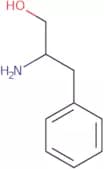
CAS:DL-Phenylalaninol is a chemical compound with the molecular formula CHNO. It is a white to pale yellow solid that is soluble in water and methanol, but not in diethyl ether. DL-Phenylalaninol has been synthesized by reacting cycloleucine with l-phenylalaninol. The reaction solution was heated at a temperature of 140°C for six hours, which yielded DL-Phenylalaninol as a hydroxy methyl compound. The synthesis of DL-Phenylalaninol was achieved through an asymmetric synthesis with sodium dodecyl sulfate surfactant. A detection sensitivity of 1 ppm and an enhancement at 260 nm were observed when analyzing the product by high performance liquid chromatography (HPLC).Formula:C9H13NOPurezza:Min. 95%Peso molecolare:151.21 g/mol1,2-Hexadecanediol
CAS:1,2-Hexadecanediol is a compound that reacts with diphenyl ether and organic solvents at a temperature of 100 degrees Celsius. The reaction time is 5 hours. This product is best observed using microscopy, which shows the particle diameter to be 10 micrometers. 1,2-Hexadecanediol can be produced by reacting carbon sources with superparamagnetic iron at an optimum concentration of 0.5 Molar (M). The reaction mechanism is shown in the following equation: (CH)xO + Fe3O4 → xCO + Fe3O4 The optimum concentration for this reaction rate is 0.5 Molar (M), while the growth rate is 0.1 M/s. 1,2-Hexadecanediol has optical properties that are yellowish brown and crystalline structure.Formula:C16H34O2Purezza:Min. 95%Peso molecolare:258.44 g/mol3-Keto petromyzonol-24-hemisuccinate
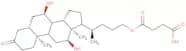
CAS:Prodotto controllatoPlease enquire for more information about 3-Keto petromyzonol-24-hemisuccinate including the price, delivery time and more detailed product information at the technical inquiry form on this pageFormula:C28H44O7Purezza:Min. 95%Colore e forma:PowderPeso molecolare:492.65 g/molEthynylestradiol
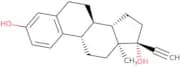
CAS:<p>Ethynylestradiol is a synthetic estrogen that is used in hormone replacement therapy. It belongs to the group of estrogens and has been shown to be a potent inhibitor of ovarian activity. Ethinyl estradiol is metabolized through catechol-O-methyltransferase (COMT) and sulfotransferases, which leads to an increased rate constant for its clearance from plasma. The drug also has interactions with other drugs, such as protease inhibitors, which may lead to disease activity or toxicity in the liver. Ethynylestradiol binds specifically to bcl-2 protein, which may be related to its anti-inflammatory properties.</p>Formula:C20H24O2Purezza:Min. 95%Colore e forma:PowderPeso molecolare:296.4 g/molGlycerol formal
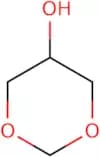
CAS:Glycerol formal is a glycol ether that contains two hydroxyl groups. It is a non-polymeric pharmacological agent with inhibitory properties against group P2 bacteria. The reaction mechanism of glycerol formal is the same as that of other glycol ethers and it is an antimicrobial agent. Glycerol formal has been shown to be effective against Escherichia coli, Staphylococcus aureus, and Salmonella typhi. This compound has also been used in injection solutions and as a solvent for fatty acids.Formula:C4H8O3Purezza:Min. 95%Colore e forma:Clear LiquidPeso molecolare:104.1 g/molBisphenol A glycerolate dimethacrylate
CAS:Bisphenol A glycerolate dimethacrylate is a synthetic polymer that has been used in various applications, including dental sealants and composites. It is a white or yellowish viscous liquid that is soluble in water and alcohol. Bisphenol A glycerolate dimethacrylate is used as a sealant due to its high viscosity. The molecular weight of this compound ranges from 2000 to 6000 Da. It also has an epoxy group that can form hydrogen bonds with other molecules. The major application for bisphenol A glycerolate dimethacrylate is in the dental industry as it provides an excellent sealant due to its high viscosity. This material is also used in composites due to its ability to form hydrogen bonding interactions with the polymer matrix. Bisphenol A glycerolate dimethacrylate is also known for its hemolytic activity and sugar transport properties, which are important for lactic acidFormula:C29H36O8Purezza:Min. 95%Colore e forma:Clear LiquidPeso molecolare:512.59 g/molCloprostenol sodium
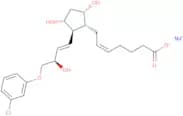
CAS:Cloprostenol sodium is a prostaglandin analogue that is used in veterinary medicine. It is administered intravenously to induce ovulation, improve estrus and fertility, or control luteal function in cows. Cloprostenol sodium has been shown to have a positive effect on the ovulatory process by stimulating the release of endogenous progesterone and estradiol benzoate from the follicle cells. This drug also increases luteal activity by increasing the production of progesterone and inhibiting its metabolism. Cloprostenol sodium has been shown to be effective in inducing ovulation in pregnant women who do not respond to clomiphene citrate (CC) alone. Cloprostenol sodium can also be used for induction of labour in pregnant women with an uncomplicated pregnancy at term, where it is given intravenously or intramuscularly, but intravaginally or orally are not recommended.Formula:C22H28ClNaO6Purezza:Min. 95%Colore e forma:White PowderPeso molecolare:446.9 g/mol(D-Ala2,N-Me-Phe4,methionin(O)-ol5)-Enkephalin trifluoroacetate salt
CAS:<p>D-Ala2,N-Me-Phe4,methionin(O)-ol5)-Enkephalin trifluoroacetate salt H-Tyr-D-Ala-Gly-N-Me-Phe-methionin(O)-ol trifluoroacetate salt is an analog of the endocannabinoid neurotransmitter, anandamide. It has been shown to be effective in the treatment of autoimmune diseases such as multiple sclerosis and inflammatory bowel disease. D-(3R)-3-[(1S,2R,3R,5R) -3-[2-(2,6 dichlorophenyl)ethenyl] -1H -indole]-1 -butanamine trifluoroacetate salt has been shown to inhibit the replication of a number of viruses including human immunodeficiency virus type 1 (HIV). This drug also inhibits the growth of organisms that are resistant</p>Formula:C29H41N5O7SPurezza:Min. 95%Peso molecolare:603.73 g/mol2-Aminoresorcinol
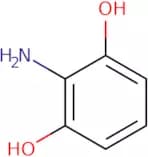
CAS:<p>2-Aminoresorcinol is a synthetic chemical compound that inhibits the reaction of amines with chlorine atoms. It is used as an intermediate in the production of resorcinol and 2-aminophenol. The reaction mechanism involves the formation of a chloramine (chlorine atom attached to an amine) which, in turn, reacts with malonic acid to produce an intermediate that undergoes intramolecular hydrogen transfer. This reaction results in the formation of a chloroform molecule. A second step involves hydroxylation by hydrochloric acid, which leads to the formation of chloral hydrate. In this way, 2-aminoresorcinol can be used for the synthesis of both resorcinol and 2-aminophenol. 2-Aminoresorcinol is also known for its inhibitory effects on certain reactions involving amines and sulfur compounds such as thiourea and carbonyl compounds such as malonic acid.</p>Formula:C6H7NO2Purezza:Min. 95%Colore e forma:White To Dark Brown SolidPeso molecolare:125.13 g/mol5-Bromoquinolin-8-amine
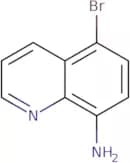
CAS:5-Bromoquinolin-8-amine is a topoisomerase inhibitor that can be used as an antitumor agent. It has been shown to inhibit the growth of tumor cell lines and suppress the growth of colon carcinoma cells in rats and human colon carcinomas in mice. 5-Bromoquinolin-8-amine interacts with DNA, specifically inhibiting the formation of supercoiled DNA. This interaction may lead to the inhibition of tumor cell growth. 5-Bromoquinolin-8-amine also inhibits protein synthesis by interacting with proteins at the ribosomal level, leading to inhibited cell growth.Formula:C9H7BrN2Purezza:Min. 95%Peso molecolare:223.07 g/mol3-Bromophenol
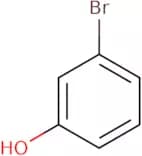
CAS:3-Bromophenol is an organic compound that is a bromophenol. It is used as a fluorometric probe in wastewater treatment and as a tracer for metabolic pathways in the proximal tubules of the kidney. 3-Bromophenol has a molecular weight of 184.16 g/mol and has been shown to be metabolized by bacteria into 2,4-dihydroxyphenylacetic acid (2,4-DPA). 3-Bromophenol can also be synthesized from 2,4-dihydroxyphenylacetic acid using sodium hydroxide solution and carbon source in a synthetic process. This synthetic process can be carried out at room temperature and atmospheric pressure.Formula:C6H5BrOPurezza:Min. 98 Area-%Colore e forma:Clear LiquidPeso molecolare:173.01 g/mol(alphaR)-alpha-[[[2-(4-Nitrophenyl)ethyl]amino]methyl]benzenemethanol hydrochloride
CAS:<p>Intermediate in the synthesis of mirabegron</p>Formula:C16H18N2O3·HClPurezza:Min. 95%Peso molecolare:322.79 g/molD-Threoninol
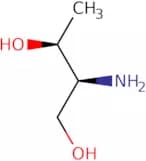
CAS:<p>Please enquire for more information about D-Threoninol including the price, delivery time and more detailed product information at the technical inquiry form on this page</p>Formula:C4H11NO2Purezza:Min. 95%Peso molecolare:105.14 g/molN-Boc-3-Azetidinol
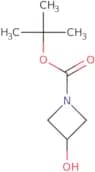
CAS:This linker is chemically stable and not cleavable under standard intracellular or extracellular conditions. N-Boc-3-Azetidinol is also a versatile organic intermediate used primarily in the pharmaceutical industry for synthesizing a wide range of drugs, including antibacterials, immunosuppressants, and cancer therapies.Formula:C8H15NO3Purezza:Min. 95%Peso molecolare:173.21 g/mol8-Bromo-1-octanol
CAS:<p>8-Bromo-1-octanol is a fluorescent compound that has been shown to be resistant to cancer. It can be used as a probe for the detection of malonic acid in urine samples, which are an indicator of oxidative stress. 8-Bromo-1-octanol is stable in the presence of alcohol groups, and can be used to prepare samples for population growth studies. This chemical has also been used to study the growth of bacteria such as Pseudomonas aeruginosa and Escherichia coli. 8-Bromo-1-octanol emits light at a wavelength of 490 nm when exposed to ultraviolet radiation, which makes it useful for detecting chlorine atoms in water samples. The product research involving this chemical includes its effects on k562 cells and P. aeruginosa. Studies have also been done on its hydroxyl group and fatty acids and fatty acid esters, which are found in animal fat and vegetable oils.</p>Formula:C8H17BrOPurezza:Min. 95%Colore e forma:Colorless Clear LiquidPeso molecolare:209.12 g/mol







![(alphaR)-alpha-[[[2-(4-Nitrophenyl)ethyl]amino]methyl]benzenemethanol hydrochloride](/_next/image/?url=https%3A%2Fstatic.cymitquimica.com%2Fproducts%2F3D%2Fthumb-webp%2FFN156825.webp&w=3840&q=75)