Alcoli
Gli alcoli sono una vasta gamma di molecole organiche derivate dagli idrocarburi che contengono uno o più gruppi idrossilici (gruppo OH). Questi composti sono essenziali in varie reazioni chimiche e sono ampiamente utilizzati in laboratorio per la sintesi, come solventi e in chimica analitica. Da CymitQuimica, offriamo alcoli di alta qualità preparati per l'uso in laboratorio, supportando le tue ricerche e applicazioni industriali con prodotti affidabili ed efficaci. La nostra selezione garantisce che tu abbia gli alcoli giusti per le tue esigenze specifiche, sia per il lavoro di laboratorio di routine che per progetti di ricerca specializzati.
Sottocategorie di "Alcoli"
Trovati 5814 prodotti di "Alcoli"
Ordinare per
Purezza (%)
0
100
|
0
|
50
|
90
|
95
|
100
2,4-Dibromobenzyl alcohol
CAS:<p>2,4-Dibromobenzyl alcohol is a selective inhibitor of sglt2, which is an enzyme that inactivates the incretin hormones glucagon-like peptide-1 (GLP-1) and glucose-dependent insulinotropic polypeptide (GIP). It has been shown to have a strong inhibitory effect on the activity of sglt2 in vitro. This inhibition leads to increased levels of GLP-1 and GIP, which may help improve glycemic control. 2,4-Dibromobenzyl alcohol has been shown to reduce blood glucose levels in diabetic mice to the same degree as tofogliflozin, which is marketed for diabetes treatment.</p>Formula:C7H6Br2OPurezza:Min. 95%Peso molecolare:265.93 g/molcis-4-Cyclopentene-1,3-diol
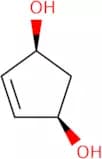
CAS:<p>cis-4-Cyclopentene-1,3-diol is a useful chemical intermediate that can be converted to diacetate, acetylation, or chloroacetate. It has a reactive functional group that can be used for synthesizing polymers and other compounds. cis-4-Cyclopentene-1,3-diol is also an excellent substrate for lipase reactions and it reacts with hydrogen fluoride to give desired products. This section has conformational properties that make it suitable for hydrogen bonding and can act as a ligand in coordination chemistry. cis-4-Cyclopentene-1,3-diol is also able to undergo substitution at the carbonyl carbon atom by various reagents such as fluorine.</p>Formula:C5H8O2Purezza:Min. 95%Colore e forma:PowderPeso molecolare:100.12 g/mol1,3-Bis(Dimethylamino)-2-Propanol
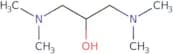
CAS:<p>1,3-Bis(dimethylamino)-2-propanol is a polymeric compound that is soluble in water and organic solvents. It has been shown to have a viscosity of less than 2.0 centipoise (cP) at 20°C and pH 8.5. This compound also has a high solubility in buffers, carboxylates, and chloride ions. 1,3-Bis(dimethylamino)-2-propanol has been used as an additive for silicone surfactants and in the production of tetranuclear gold nanoparticles for use in chemiluminescence applications.</p>Formula:C7H18N2OPurezza:Min. 95%Peso molecolare:146.23 g/mol1-O-Octadecyl-2-O-benzyl-sn-glycerol
CAS:<p>1-O-Octadecyl-2-O-benzyl-sn-glycerol (ODBG) is a novel antiviral drug that is being developed for the treatment of HIV. ODBG inhibits HIV by binding to the virus and preventing it from entering cells, which prevents the virus from replicating. ODBG has been shown to be effective against other viruses as well, such as herpes simplex virus and respiratory syncytial virus. ODBG is a lipid molecule that can cross cell membranes and has been shown to have low toxicity in animal studies. This drug also has potential to be used as an oral medication for patients with HIV.</p>Formula:C28H50O3Purezza:Min. 95%Peso molecolare:434.69 g/mol2-Pyrimidinemethanol
CAS:<p>2-Pyrimidinemethanol is a pyrimidine derivative that is used as a starting material for the synthesis of other compounds. 2-Pyrimidinemethanol is introduced into the body through the skin, lungs and gastrointestinal tract. It has been shown to cause sensitization in humans and rats, with photoexcitation being an important factor in its activity. 2-Pyrimidinemethanol binds to DNA and inhibits protein synthesis by inhibiting ribonucleotide reductase (RNR). The active site of this enzyme contains iron, which is why this compound may be toxic to humans.</p>Formula:C5H6N2OPurezza:Min. 95%Colore e forma:Light (Or Pale) Yellow To Brown LiquidPeso molecolare:110.11 g/molH-Tyr-L-1,2,3,4-tetrahydroisoquinoline-3-carboxamide·HCl
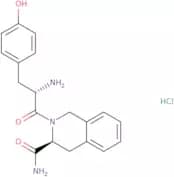
CAS:<p>H-Tyr-L-1,2,3,4-tetrahydroisoquinoline-3-carboxamide·HCl is a monoclinic crystalline compound. It has a molecular weight of 607.14 and contains the dipeptide Tyr-Lys in its structure. H-Tyr-L-1,2,3,4-tetrahydroisoquinoline-3-carboxamide·HCl crystallizes in the P21/c space group and has an asymmetric unit cell with dimensions a=8.851 Å, b=7.965 Å and c=5.98 Å. This compound has been shown to have antibacterial properties against methicillin resistant Staphylococcus aureus (MRSA) isolates and Clostridium perfringens strains by inhibiting bacterial protein synthesis through inhibition of peptidyl transferase activity.</p>Formula:C19H21N3O3·HClPurezza:Min. 95%Peso molecolare:375.85 g/mol4-Chloro-6,7-dimethoxyquinoline
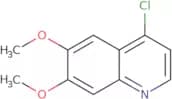
CAS:<p>4-Chloro-6,7-dimethoxyquinoline (4C6DMQ) is a potent inhibitor of the growth of prostate cancer cells. 4C6DMQ is an analog of chloropropyl chloride, which inhibits the growth of epidermal growth factor receptor (EGFR). The binding site for 4C6DMQ on EGFR is the same as that for chloropropyl chloride. 4C6DMQ inhibits EGFR by preventing the activation of downstream signaling cascades, leading to a decrease in cell proliferation and tumor size. The IC50 values for 4C6DMQ are approximately 10 times higher than those for chloropropyl chloride. This drug has been shown to be more potent than other inhibitors of EGFR such as erlotinib and gefitinib.</p>Formula:C11H10ClNO2Purezza:Min. 95%Colore e forma:White PowderPeso molecolare:223.66 g/mol2-[3-(S)-[3-(2-(7-Chloro-2-quinolinyl)ethenyl)phenyl]-3-hydroxypropyl]benzoic acid methyl ester
CAS:<p>2-[3-(S)-[3-(2-(7-Chloro-2-quinolinyl)ethenyl)phenyl]-3-hydroxypropyl]benzoic acid methyl ester is a synthetic compound that can be used as a reagent in the synthesis of polynucleotides and polypeptides. It can also be used as an inhibitor of ketoreductase, which is an enzyme involved in the synthesis of fatty acids and ketones. 2-[3-(S)-[3-(2-(7-Chloro-2-quinolinyl)ethenyl)phenyl]-3-hydroxypropyl]benzoic acid methyl ester has been shown to inhibit the growth of wild type and mutant strains of E. coli. The molecular weight of this compound is 439.</p>Formula:C28H24ClNO3Purezza:Min. 95%Peso molecolare:457.95 g/mol4-Fluoromethyl-α-methylbenzyl alcohol
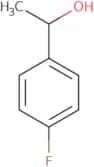
CAS:<p>4-Fluoromethyl-alpha-methylbenzyl alcohol is a nonclassical molecule that has been synthesized. This molecule has been modeled computationally and the results indicate that it exhibits a planar geometry with a diastereomeric ratio of 1:1. The theoretical calculations show that the reaction of 4-fluoromethyl-alpha-methylbenzyl alcohol with water is exothermic, which would result in the formation of an intermediate hydroxide ion. Kinetic studies have shown that this molecule can undergo transfer reactions and dehydrogenation reactions, both of which are possible mechanisms for its reactivity.</p>Formula:C8H9FOPurezza:Min. 95%Peso molecolare:140.15 g/molSodium 2,2,2-trifluoroethanolate
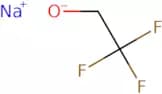
CAS:<p>Sodium 2,2,2-trifluoroethanolate is a fluorinated alcohol. It is used as an animal health drug and has been shown to have a significant inhibitory effect on the growth of bacteria. The reaction intermediate for this compound is trifluoroacetic acid, which can be formed from sodium and hydrogen fluoride in the presence of ethylene glycol. This molecule also reacts with nitrosyl chloride to form a nitrogen-containing product. Sodium 2,2,2-trifluoroethanolate has been shown to be active against both Gram-positive and Gram-negative bacteria. The FTIR spectra for this compound shows that it has two sets of absorption bands at 3,200 cm−1 (due to C–H stretching) and 3,000 cm−1 (due to C=C stretching).</p>Formula:C2H2F3NaOPurezza:Min. 95%Colore e forma:PowderPeso molecolare:122.02 g/mol9,11b-Epoxidetriamcinolone
CAS:<p>Please enquire for more information about 9,11b-Epoxidetriamcinolone including the price, delivery time and more detailed product information at the technical inquiry form on this page</p>Formula:C21H26O6Purezza:Min. 95%Peso molecolare:374.43 g/mol2,5-Pyrazinediethanol
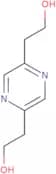
CAS:<p>2,5-Pyrazinediethanol is a neutral compound that hydrolyzes in water to form the acidic 2,5-diketopiperazine. It also reacts with sodium hydroxide to form the alkaline 2,5-diketopiperazine. The chemical structure of this compound is similar to that of clavulanic acid, which is a drug used in combination with amoxicillin (a penicillin antibiotic) for the treatment of bacterial infections. 2,5-Pyrazinediethanol has been shown to have antibacterial properties against Escherichia coli and Bacillus subtilis. However, it is less active than clavulanic acid against Staphylococcus aureus or Clostridium perfringens.</p>Formula:C8H12N2O2Purezza:(%) Min. 97%Colore e forma:PowderPeso molecolare:168.19 g/mol6-Aminoquinoline
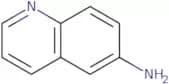
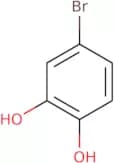
CAS:<p>6-Aminoquinoline is a chemical compound that is used as an intermediate in the synthesis of other compounds. It has been found to be effective in inhibiting the growth of human cancer cells and cell lines by binding to amines, which are important for cell proliferation. 6-Aminoquinoline also inhibits epidermal growth factor (EGF) and its receptor, which may be due to its ability to inhibit the transfer of phosphate groups from ATP to EGF. 6-Nitroquinoline, which is derived from 6-aminoquinoline, has been shown to have antiinflammatory activity.</p>Formula:C9H8N2Purezza:Min. 95%Colore e forma:Yellow PowderPeso molecolare:144.17 g/mol4-Bromobenzene-1,2-diol
CAS:<p>4-Bromobenzene-1,2-diol is a reactive substance that has been shown to have receptor binding and reaction intermediates. It has been shown to inhibit the formation of reactive oxygen species in rat liver microsomes. The formation rate of 4-bromobenzene-1,2-diol is increased by carbon source such as bromobenzene. This substance has also been shown to be an inhibitor of the reaction mechanism. 4-Bromobenzene-1,2-diol is used as a reactant in organic synthesis reactions and can be found in dry weight measurements.</p>Formula:C6H5BrO2Purezza:Min. 95%Peso molecolare:189.01 g/mol4-Fluoro-3-nitrobenzyl alcohol
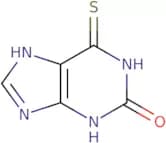
CAS:<p>4-Fluoro-3-nitrobenzyl alcohol (4FNA) is a potent, orally bioavailable, and selective inhibitor of the tyrosine kinase AXL. 4FNA binds to the ATP binding site on AXL and blocks phosphorylation of its tyrosine kinase domain. This binding leads to a conformational change in the AXL protein that prevents it from interacting with downstream signaling molecules, inhibiting T cell activation.</p>Formula:C7H6FNO3Purezza:Min. 95%Peso molecolare:171.13 g/mol6-Mercapto-9H-purin-2-ol
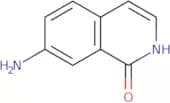
CAS:<p>6-Mercapto-9H-purin-2-ol (6MP) is a purine nucleoside that is used as an antimicrobial agent. It inhibits the enzyme adenosine deaminase, which converts adenosine to inosine, and therefore prevents the production of purines. 6MP has been shown to be effective against inflammatory bowel disease and bowel disease in animal models. At high concentrations, it has been shown to inhibit subcutaneous tumors in mice. 6MP also inhibits the metabolism of certain drugs such as rifampicin and phenytoin, thereby increasing their plasma concentration. 6MP has been shown to be effective against resistant mutants for some bacteria such as Salmonella enterica serovar Typhimurium and Escherichia coli through inhibition of beta-lactamases. The mechanism of action for 6MP is similar to that of β-lactams antibiotics, which are inhibitors of bacterial cell wall synthesis</p>Formula:C5H4N4OSPurezza:Min. 95%Colore e forma:Off-White PowderPeso molecolare:168.18 g/mol7-Amino-1(2h)-isoquinolinone
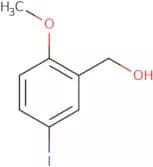
CAS:<p>Please enquire for more information about 7-Amino-1(2h)-isoquinolinone including the price, delivery time and more detailed product information at the technical inquiry form on this page</p>Formula:C9H8N2OPurezza:Min. 95%Peso molecolare:160.17 g/mol5-Iodo-2-methoxybenzyl alcohol
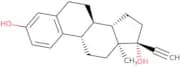
CAS:<p>5-Iodo-2-methoxybenzyl alcohol (5IMB) is a conjugate that inhibits tubulin polymerization and mitochondrial membrane integrity. It has significant inhibitory effects on colchicine-induced apoptosis in colon cancer cells, inducing apoptotic cell death by the activation of caspase 3 and annexin. 5IMB also has an inhibitory effect on mitochondria, leading to mitochondrial membrane depolarization and apoptotic cell death. This conjugate also induces the death of human cancer cells, specifically mcf-7, which are involved in tumour growth and metastasis. The mechanism of action for 5IMB is through its ability to induce mitochondrial membrane depolarization, leading to apoptotic cell death.</p>Formula:C8H9O2IPurezza:Min. 95%Peso molecolare:264.06 g/molEthynylestradiol
CAS:<p>Ethynylestradiol is a synthetic estrogen that is used in hormone replacement therapy. It belongs to the group of estrogens and has been shown to be a potent inhibitor of ovarian activity. Ethinyl estradiol is metabolized through catechol-O-methyltransferase (COMT) and sulfotransferases, which leads to an increased rate constant for its clearance from plasma. The drug also has interactions with other drugs, such as protease inhibitors, which may lead to disease activity or toxicity in the liver. Ethynylestradiol binds specifically to bcl-2 protein, which may be related to its anti-inflammatory properties.</p>Formula:C20H24O2Purezza:Min. 95%Colore e forma:PowderPeso molecolare:296.4 g/mol




![2-[3-(S)-[3-(2-(7-Chloro-2-quinolinyl)ethenyl)phenyl]-3-hydroxypropyl]benzoic acid methyl ester](/_next/image/?url=https%3A%2Fstatic.cymitquimica.com%2Fproducts%2F3D%2Fthumb-webp%2FFC20038.webp&w=3840&q=75)