


Alcoli
Gli alcoli sono una vasta gamma di molecole organiche derivate dagli idrocarburi che contengono uno o più gruppi idrossilici (gruppo OH). Questi composti sono essenziali in varie reazioni chimiche e sono ampiamente utilizzati in laboratorio per la sintesi, come solventi e in chimica analitica. Da CymitQuimica, offriamo alcoli di alta qualità preparati per l'uso in laboratorio, supportando le tue ricerche e applicazioni industriali con prodotti affidabili ed efficaci. La nostra selezione garantisce che tu abbia gli alcoli giusti per le tue esigenze specifiche, sia per il lavoro di laboratorio di routine che per progetti di ricerca specializzati.
Sottocategorie di "Alcoli"
Trovati 5814 prodotti di "Alcoli"
Ordinare per
Purezza (%)
0
100
|
0
|
50
|
90
|
95
|
100
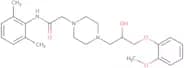
Ranolazine
CAS:<p>Anti-anginal; anti-arrhythmic; anti-ischemic; pFOX inhibitor</p>Formula:C24H33N3O4Purezza:Min. 95%Colore e forma:White SolidPeso molecolare:427.54 g/molPhosphoenolpyruvate monosodium salt hydrate
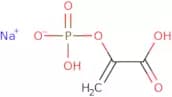
CAS:<p>PEP is a "high-energy phosphate" compound playing a vital role in enzymatic phosphate-transfer reactions involved in ATP synthesis. It is used in conjunction with pyruvate kinase as a phosphorylating agent for ATP generation. Substrate for phosphoenolpyruvate carboxylase. Reagent for determination of glycerol.</p>Formula:C3H4NaO6P·xH2OPurezza:Min. 95%Colore e forma:PowderPeso molecolare:190.02 g/molRef: 3D-FP29995
Prodotto fuori produzione2-Mesitylethanol
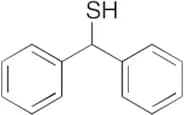
CAS:Formula:C11H16OPurezza:>98.0%(GC)Colore e forma:White to Almost white powder to crystalPeso molecolare:164.25Diphenylmethanethiol
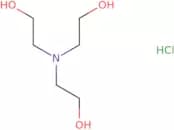
CAS:Prodotto controllatoFormula:C13H12SColore e forma:NeatPeso molecolare:200.299Triethanolamine hydrochloride
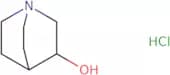
CAS:Prodotto controllato<p>Triethanolamine hydrochloride, widely known as TEA-HCl, is a buffer used in biochemistry to maintain a stable pH in the range of 7.3 to 8.3 during processes like protein extraction and purification. They are also used in enzyme assays.</p>Formula:C6H15NO3·HClPurezza:Min. 95%Colore e forma:PowderPeso molecolare:185.65 g/mol3-Quinuclidinol HCl
CAS:Prodotto controllato<p>3-Quinuclidinol HCl is a cholinergic drug that inhibits the enzyme acetylcholinesterase. This action prevents the breakdown of the neurotransmitter acetylcholine, which causes an increase in its concentration in the synaptic cleft. 3-Quinuclidinol HCl has been shown to have a dose-dependent effect on increasing acetylcholine levels, which is believed to be due to its ability to inhibit butyrylcholinesterase. In addition, this drug has been shown to have pharmacokinetic properties that are consistent with those of other cholinergic drugs. 3-Quinuclidinol HCl also interacts with other substances and can block nicotinic receptors at high doses.</p>Formula:C7H13NO·HClPurezza:Min. 95%Peso molecolare:163.64 g/mol(2-Iodophenyl)(2,3,6,7-tetrahydro-1H,5H-benzo[ij]quinolizin-9-yl)methanone
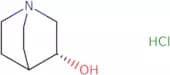
<p>2-Iodophenyl)(2,3,6,7-tetrahydro-1H,5H-benzo[ij]quinolizin-9-yl)methanone is a high quality reagent that can be used as a useful intermediate and building block in the synthesis of complex compounds.</p>Formula:C19H18INOPurezza:Min. 95 Area-%Peso molecolare:403.26 g/molR-(-)-3-Quinuclininol HCl
CAS:Prodotto controllato<p>Please enquire for more information about R-(-)-3-Quinuclininol HCl including the price, delivery time and more detailed product information at the technical inquiry form on this page</p>Purezza:Min. 95%Ref: 3D-FQ03212
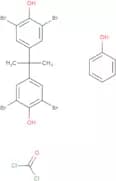
Prodotto fuori produzionePHenoxy terminated carbonate oligomer of tetrabispHenol A
CAS:Prodotto controllato<p>Phenoxy-terminated carbonate oligomer of tetrabispHenol A (PCO-TBA) is a chemical that has been used as an additive in the food industry. It is a colorless, odorless solid. PCO-TBA has been shown to be toxic to humans by causing organ damage and cancer. The toxicity of PCO-TBA may be due to its ability to form polyhalogenated dibenzodioxins or biphenyls when heated at high temperatures. PCO-TBA also reacts with human serum, forming diphenyl ethers. This chemical is a potential carcinogen and, although used as a food additive, should not be consumed on a regular basis.</p>Purezza:Min. 95%Colore e forma:PowderPeso molecolare:736.90 g/molRef: 3D-FP39597
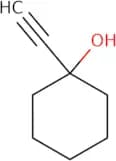
Prodotto fuori produzione1-Ethynyl-cyclohexan-1-ol
CAS:<p>1-ethynyl-cyclohexan-1-ol is a silicon sealant that can be used in a variety of industries. 1-ethynyl-cyclohexan-1-ol has high resistance to water, oil and other chemical substances. 1-ethynyl-cyclohexan-1-ol is a molecule with the formula CH2CH(OH)CH2 and it is not soluble in water. It is also chemically stable and does not react with hydrochloric acid. The FTIR spectra show that the carbonyl group in 1-ethynyl cyclohexanone is present as an ester. The nmr spectra indicate that the substrate film contains methyl ethyl silicone and that there are no other components present.</p>Formula:C8H12OPurezza:Min. 95%Colore e forma:PowderPeso molecolare:124.18 g/molRef: 3D-FE34314
Prodotto fuori produzione[1-(2-Chlorobenzyl)-1H-benzimidazol-2-yl]methanol
CAS:Prodotto controllato<p>Please enquire for more information about [1-(2-Chlorobenzyl)-1H-benzimidazol-2-yl]methanol including the price, delivery time and more detailed product information at the technical inquiry form on this page</p>Formula:C15H13ClN2OPurezza:Min. 95%Peso molecolare:272.73 g/molRef: 3D-FC135810
Prodotto fuori produzione2-Diethylamino)ethanol hydrochloride
CAS:Prodotto controllato<p>2-Diethylamino)ethanol hydrochloride is a chemical compound that is used in analytical chemistry as a stationary phase for thin layer chromatography. Sephadex G-100 was developed by Pharmacia & Upjohn Company and marketed in the 1970s. It has been shown to be useful in plasma mass spectrometry experiments, which measure the molecular weight of proteins and other compounds. The solubility of 2-diethylamino)ethanol hydrochloride has been studied using experimental solubility data, electrochemical impedance spectroscopy, and amines. The reaction mechanism of 2-diethylamino)ethanol hydrochloride is not well understood but it appears to involve potassium dichromate, hydrochloric acid, fluoroacetic acid, benzalkonium chloride and other chemicals.</p>Formula:C6H16ClNOPurezza:Min. 95%Peso molecolare:153.65 g/molRef: 3D-FD21828
Prodotto fuori produzione1,2-Distearoyl-sn-glycero-3-phosphoethanolamine-N-[amino(polyethylene glycol) 2000] (ammonium salt)
CAS:<p>1,2-Distearoyl-sn-glycero-3-phosphoethanolamine-N-[amino(polyethylene glycol) 2000] (ammonium salt) is a PEG compound with two different functional groups (also known as heterobifunctional). Unlike homobifunctional PEG compounds (same functional group on both ends), this type of compounds are more versatile as have two different anchor points. 1,2-Distearoyl-sn-glycero-3-phosphoethanolamine-N-[amino(polyethylene glycol) 2000] (ammonium salt) is used as a linker and spacer to add a PEG moiety, via pegylation (a bioconjugation technique) to proteins, peptides, oligonucleotides, small molecules and nanoparticles.</p>Formula:(C2H4O)nC44H87N2O10P•H3NPurezza:Min. 95%Colore e forma:White Powder2-Dimethylaminoethanol (+)-bitartrate salt
CAS:Prodotto controllato<p>2-Dimethylaminoethanol (+)-bitartrate salt is a potent, reversible inhibitor of protein synthesis that binds reversibly to the 50S ribosomal subunit. It is used in regulatory toxicology and clinical pathology as a positive control for the study of chronic toxicity and long-term effects. 2-Dimethylaminoethanol (+)-bitartrate salt has shown no treatment effect on ovary weight or estrous cycle length in female Sprague-Dawley rats after chronic exposure and long-term exposure at doses up to 1,000 mg/kg/day. This drug has also shown no effect on rat fertility or reproductive performance, indicating it does not cause reproductive toxicity.</p>Formula:C4H11NO·C4H6O6Colore e forma:White Off-White PowderPeso molecolare:239.22 g/mol




![(2-Iodophenyl)(2,3,6,7-tetrahydro-1H,5H-benzo[ij]quinolizin-9-yl)methanone](/_next/image/?url=https%3A%2Fstatic.cymitquimica.com%2Fproducts%2F3D%2Fthumb-webp%2FI-7660.webp&w=3840&q=75)
![[1-(2-Chlorobenzyl)-1H-benzimidazol-2-yl]methanol](/_next/image/?url=https%3A%2Fstatic.cymitquimica.com%2Fproducts%2F3D%2Fthumb-webp%2FFC135810.webp&w=3840&q=75)

![1,2-Distearoyl-sn-glycero-3-phosphoethanolamine-N-[amino(polyethylene glycol) 2000] (ammonium salt)](/_next/image/?url=https%3A%2Fstatic.cymitquimica.com%2Fproducts%2F3D%2Fthumb-webp%2FFD157101.webp&w=3840&q=75)
