Alcoli
Sottocategorie di "Alcoli"
Trovati 5817 prodotti di "Alcoli"
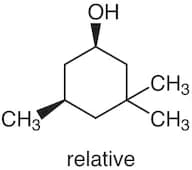
cis-3,3,5-Trimethylcyclohexanol
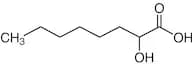
CAS:Formula:C9H18OPurezza:>96.0%(GC)Colore e forma:White or Colorless to Almost white or Almost colorless powder to lump to clear liquidPeso molecolare:142.242-Hydroxy-n-octanoic Acid
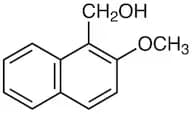
CAS:Formula:C8H16O3Purezza:>98.0%(T)Colore e forma:White to Almost white powder to crystalPeso molecolare:160.212-Methoxy-1-naphthalenemethanol
CAS:Formula:C12H12O2Purezza:>98.0%(GC)Colore e forma:White to Light yellow to Dark green powder to crystalPeso molecolare:188.23cis-2-Nonen-1-ol
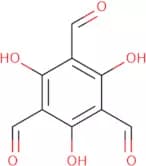
CAS:Formula:C9H18OPurezza:>95.0%(GC)Colore e forma:Colorless to Light yellow clear liquidPeso molecolare:142.242,4,6-Triformylphloroglucinol
CAS:2,4,6-Triformylphloroglucinol is a highly functionalised and symmetrical building block. 2,4,6-Triformylphloroglucinol contains 3 aldehyde groups which can react with nucleophiles, such as amines or anilines, to make β-ketoenamines. When the nucleophile contains more than one amine group, microporous polymers can be formed. These microporous polymers find a wide range of applications, including carbon dioxide capture.
Formula:C9H6O6Purezza:Min. 97 Area-%Colore e forma:Orange PowderPeso molecolare:210.14 g/molcis-13-Docosenol
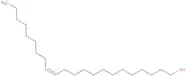
CAS:cis-13-Docosenol is a fatty acid that is biodegradable and is used in the production of film-forming polymers. It has been shown to have disinfectant properties, which may be due to its ability to break down hydrogen chloride. The molecular formula for cis-13-docosenol is C18H38O2. cis-13-Docosenol has not been assigned an IUPAC name and has a viscosity of 0.3 mPa·s at 25°C.
Formula:C22H44OPurezza:Min. 95%Colore e forma:PowderPeso molecolare:324.58 g/molAmodiaquine
CAS:Amodiaquine is a drug that belongs to the class of antimalarial agents. It is used for the treatment and prevention of malaria caused by erythrocytic forms of Plasmodium falciparum. Amodiaquine has shown synergistic effects with other drugs, such as sulfadoxine and pyrimethamine, for the treatment of malaria due to P. falciparum. The mechanism of action of amodiaquine is not well understood, but it may involve inhibition of the Toll-like receptor. Amodiaquine has been shown to inhibit polymerase chain reaction in a concentration-dependent manner and also inhibits polymorphonuclear leucocytes, which are important in innate immunity. In addition, amodiaquine is a hypoglycemic agent and can be used for the treatment of bowel disease.
Formula:C20H22ClN3OPurezza:Min. 95%Colore e forma:Off-White PowderPeso molecolare:355.86 g/mol4-[[4-(4-Chlorophenyl)-2-thiazolyl]amino]phenol
CAS:4-[[4-(4-Chlorophenyl)-2-thiazolyl]amino]phenol is a chemical that has been used in analytical and in vitro methods to study the cellular physiology of cells. It was found to inhibit sphingosine kinase, which is an enzyme that is involved in the synthesis of sphingosine. The inhibition of this enzyme leads to decreased levels of sphingosine and the effect on the cell. 4-[[4-(4-Chlorophenyl)-2-thiazolyl]amino]phenol can also affect mitochondrial membrane potential and cyclase activity, which may be useful for treating hyperproliferative diseases such as breast cancer.Formula:C15H11ClN2OSPurezza:Min. 95%Peso molecolare:302.78 g/mol4-Nitrophenylmethylcarbinol
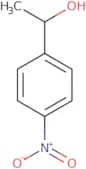
CAS:4-Nitrophenylmethylcarbinol is a nitro compound that has been isolated from the nitration of 4-nitrophenol. It is used as a reagent to synthesize β-unsaturated ketones. The inhibitory effect of 4-nitrophenylmethylcarbinol is due to the presence of two nitro groups and one methyl group on its structure. This compound has been shown to have an inhibitory effect on glucose 6-phosphate dehydrogenase, which functions in cellular respiration by catalyzing the conversion of glucose 6-phosphate to glucose 1,6-bisphosphate. The inhibition of this enzyme leads to a reduction in the formation of ATP and NADPH, which are essential for cell growth. 4-Nitrophenylmethylcarbinol also has reductase activities that allow it to reduce phosphotriesters (e.g., DNA) and dehydrogenase deficiency (e.g., py
Formula:C8H9NO3Purezza:Min. 95%Colore e forma:Orange Clear LiquidPeso molecolare:167.16 g/mol20S-Protopanaxatriol
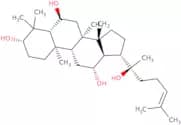
CAS:Prodotto controllato20S-Protopanaxatriol is a drug that has been shown to have anticancer effects in human HL60 cells. It inhibits the expression of cytokines and inflammatory mediators, such as tumor necrosis factor-α (TNF-α), interleukin-6 (IL-6), and IL-8. 20S-protopanaxatriol also has anti-inflammatory properties due to its ability to inhibit toll-like receptor 4 (TLR4) activity. The drug may also be used for the treatment of chronic inflammation, arthritis, and other diseases related to TLR4 activation. This compound is an active ingredient found in ginseng and ginsenosides. These natural compounds are thought to work by binding to a response element on DNA and regulating the transcription of genes involved in immune responses or cell growth.
Formula:C30H52O4Purezza:Min. 95%Colore e forma:White PowderPeso molecolare:476.73 g/mol2-Iminothiolane hydrochloride
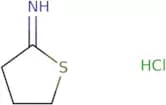
CAS:2-Iminothiolane hydrochloride is an amine that reacts with free thiol groups in proteins. It can be used to generate models of protein structures, as well as to study the effects of disulfide bonds on protein stability and function. 2-Iminothiolane hydrochloride has been shown to inhibit HIV infection by blocking the uptake of all-trans retinoic acid into cells. This drug also has minimal toxicity and can be used for cancer therapy. The drug was shown to have minimal toxicity in vitro, but it has not yet been tested in vivo.
Formula:C4H8ClNSPurezza:Min. 95%Colore e forma:White Off-White PowderPeso molecolare:137.63 g/mol1,1,1-Trifluoro-2-propanol
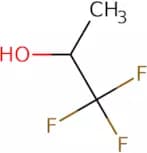
CAS:1,1,1-Trifluoro-2-propanol (TFHP) is a molecule that contains three hydrogen atoms and two fluorine atoms. It has a frequency shift of 0.00116 cm−1 in the infrared spectrum due to the conformational properties of its hydroxyl group, which causes the OH stretching vibration to be shifted. TFHP is a weak acid that reacts with sodium trifluoroacetate to form trifluoroacetic acid and hydroxyl ions. TFHP has been shown to have biological properties in bacteria, such as inhibiting bacterial growth and suppressing protein synthesis. The molecular structure of TFHP is made up of a hydrogen atom on each nitrogen atom, which is then bonded to an intramolecular hydrogen bond and an intermolecular hydrogen bond with other TFHP molecules. The deuterium isotope can also be found in this compound, which will cause a shift in IR frequency from 0.00116 cm
Formula:C3H5F3OPurezza:Min. 95%Colore e forma:Clear LiquidPeso molecolare:114.07 g/molCarboxyethylsilanetriol sodium salt - 25% in water
CAS:Carboxyethylsilanetriol sodium salt - 25% in water is a reagent that is used to form complex compounds. It can be used as a reaction component or a building block to create more complex compounds, such as new medicines. Carboxyethylsilanetriol sodium salt - 25% in water has been shown to be an efficient and versatile scaffold for the production of fine chemicals and research chemicals. CAS No. 18191-40-7 is a speciality chemical that can react with other organic compounds to form new compounds for research purposes. Carboxyethylsilanetriol sodium salt - 25% in water is a useful intermediate and building block for various synthetic reactions because it can easily react with other organics to form new compounds which are useful in pharmaceuticals, agrochemicals, and other industries.
Formula:C3H6Na2O5SiPurezza:Approximately 25%Colore e forma:Clear LiquidPeso molecolare:196.14 g/molEstradiol 17-butyrate
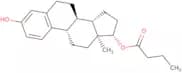
CAS:Estradiol 17-butyrate is a fine chemical that can be used as a versatile building block or in the synthesis of complex compounds. This product is a research chemical, but it can also be used as a reagent or a CAS No. 18069-79-9. It has many applications in the field of chemistry, including being useful as an intermediate in organic synthesis and as a reaction component. Estradiol 17-butyrate is also useful for use as a scaffold for the preparation of other chemicals with similar properties.
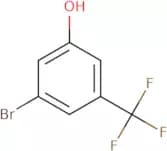
Formula:C22H30O3Purezza:Min. 95%Colore e forma:PowderPeso molecolare:342.47 g/mol3-Bromo-5-(trifluoromethyl)phenol
CAS:3-Bromo-5-(trifluoromethyl)phenol is a versatile building block that is used as a scaffold for synthesis of complex compounds. It can be used as a reaction component in the synthesis of valuable chemical products, such as fine chemicals and research chemicals. 3-Bromo-5-(trifluoromethyl)phenol is also useful for the production of speciality chemicals. This chemical has been shown to have high quality and can be used as a reagent in organic synthesis.
Formula:C7H4BrF3OPurezza:Min. 95%Colore e forma:Colorless Clear LiquidPeso molecolare:241.01 g/molRef: 3D-FB105856
Prodotto fuori produzione2-Phenyl-4-quinolinecarboxylic acid
CAS:2-Phenyl-4-quinolinecarboxylic acid is a nonsteroidal anti-inflammatory drug that is commonly used to treat bronchoconstrictor response and inflammatory bowel disease. It is also an antimicrobial agent, which can be used to treat infectious diseases. The compound was found to have structural similarity to other nonsteroidal anti-inflammatory drugs, such as ibuprofen and naproxen. 2-Phenyl-4-quinolinecarboxylic acid has shown the ability to inhibit leukemia inhibitory factor (LIF) production by lymphocytes, which may have a role in the development of leukemia. This drug also possesses antioxidative properties and has been shown to have high values in group P2 polymerase chain reactions.
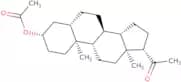
Formula:C16H11NO2Purezza:Min. 98.5%Colore e forma:PowderPeso molecolare:249.26 g/mol5α-Pregnan-3β-ol-20-one 3β-acetate
CAS:Prodotto controllato5α-Pregnan-3β-ol-20-one 3β-acetate is a synthetic steroid that is used to treat various neurological disorders, including dystonias, depression, and dyskinesias. It is an agonist of the GABA receptor and has been shown to have antidepressant effects in hamsters. 5α-Pregnan-3β-ol-20-one 3β-acetate has also been shown to have antiaggressive effects in mice and to decrease hormone levels in animals. The drug has been found to be safe for use in humans and does not affect fertility. 5α-Pregnan-3β-ol-20-one 3βacetate has been shown to be effective only when administered at high doses, which may be due to its poor oral bioavailability.
Formula:C23H36O3Purezza:Min. 95%Colore e forma:White PowderPeso molecolare:360.53 g/molRef: 3D-FP67983
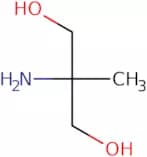
Prodotto fuori produzioneAMPD
CAS:AMPD, also known as 2-Amino-2-methyl-1,3-propanediol, is a buffer solution with a pH range of 7.8-9.7 and a pKa of 8.8. This chemical buffer is used in molecular biology, protein studies, enzyme assays, and separation techniques such as isatachophoresis (ITP) and SDS-gradient gel electrophoresis.
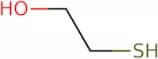
Formula:C4H11NO2Purezza:Min. 95%Colore e forma:PowderPeso molecolare:105.14 g/mol2-Mercaptoethanol
CAS:2-Mercaptoethanol, also known as β-mercaptoethanol or β-ME, is a disulfide reducing agent used in the reduction of disulfide bridges in proteins. β-ME is conveniently inexpensive, water-soluble and must be used in excess in order to drive the reduction to completion.
Formula:C2H6SOPurezza:Min. 98 Area-%Colore e forma:Clear LiquidPeso molecolare:78.13 g/molRef: 3D-FM46173
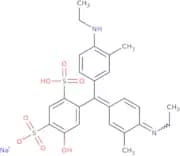
Prodotto fuori produzioneXylene cyanol
CAS:Xylene cyanol is a chemical compound that belongs to the group of phenols. It has been shown to be active in vitro against human skin cancer cells, and induces cell lysis. Xylene cyanol has also been found to bind to the BCR-ABL kinase domain, which is an enzyme that plays a crucial role in the development of leukemia and other autoimmune diseases. Xylene cyanol binds to dna binding domains on the protein surface and forms an adduct with bcr-abl kinase, which inhibits its activity. This inhibition prevents activation of this enzyme and leads to cell death by preventing DNA synthesis.
Formula:C25H27N2O7S2•NaPurezza:Min. 90%Colore e forma:PowderPeso molecolare:554.61 g/mol2,6-Dichlorophenylmethyl carbinol
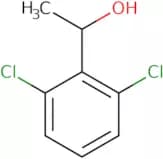
CAS:2,6-Dichlorophenylmethyl carbinol is a synthetic oxidant that can be used in the oxidation of alcohols. It is used to convert alcohols into aldehydes and ketones with magnesium as a catalyst. 2,6-Dichlorophenylmethyl carbinol has been shown to be effective in the oxidation of cyclohexanone and styrene. It also has been shown to undergo homologation reactions, which are useful for the synthesis of natural products.
!--Formula:C8H8Cl2OPurezza:Min. 95%Colore e forma:PowderPeso molecolare:191.05 g/mol3-Hydroxy-2-nitrobenzyl alcohol
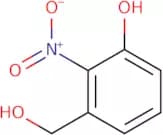
CAS:3-Hydoxy-2-nitrobenzyl alcohol is a high quality reagent that can be used as a complex building block, useful scaffold, and versatile building block for the synthesis of speciality chemicals. It is also used as a reaction component in the preparation of 3-hydroxy-2-nitrobenzyl chloride, which is an intermediate for the production of various pharmaceuticals. This chemical has a CAS number of 34112-74-8 and is classified as a research chemical.
Formula:C7H7NO4Purezza:Min. 95%Colore e forma:PowderPeso molecolare:169.13 g/molRef: 3D-FH67566
Prodotto fuori produzionea-[2-(Methylamino)ethyl]benzyl alcohol
CAS:a-[2-(Methylamino)ethyl]benzyl alcohol is a zwitterion that forms an imine when reacted with piperazine. It has been shown to have antibacterial activity in subcritical water extraction and HPLC analysis. This compound also has a profile of impurities, including β-unsaturated aldehydes and pseudoephedrine.
Formula:C10H15NOPurezza:Min. 95%Colore e forma:PowderPeso molecolare:165.23 g/molRef: 3D-FM02610
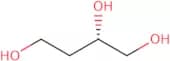
Prodotto fuori produzione(S)-(-)-1,2,4-Butanetriol
CAS:Prodotto controllatoTriphenylphosphonium is a reactive phosphonium salt that is used as an intermediate in the synthesis of 1,2,4-butanetriol. The synthesis of the triphenylphosphonium salt from the sodium salt of butyric acid and ferrocene is shown in this scheme. This synthetic route provides for planar chirality and an asymmetric synthesis. The byproduct, butyric acid, can be converted to its conjugate base with ammonium hydroxide or sodium hydroxide to provide cholic acid. Cholic acid is a hepatoprotective agent that has been used in the treatment of liver disease.
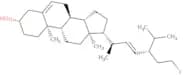
Formula:C4H10O3Purezza:Min. 95%Colore e forma:Clear LiquidPeso molecolare:106.12 g/mol(3β,22E)-29-Fluorostigmasta-5,22-dien-3-ol
CAS:Prodotto controllato3β,22E)-29-Fluorostigmasta-5,22-dien-3-ol is a plant growth regulator that belongs to the group of fatty alcohols. It is found in the horticultural and tissue culture industries and is used as an additive in bioassays. 3β,22E)-29-Fluorostigmasta-5,22-dien-3-ol enhances the growth rate of nematodes and has been shown to be a potent inhibitor of benzoate degradation. This compound also has hormone effects that are similar to those of furostanols or steroids.
Formula:C29H47FOPurezza:Min. 95%Peso molecolare:430.68 g/molSodium O-ethyl isopropylphosphonothiolate
CAS:Prodotto controllatoPlease enquire for more information about Sodium O-ethyl isopropylphosphonothiolate including the price, delivery time and more detailed product information at the technical inquiry form on this page
Formula:C5H12O2PS·NaPurezza:Min. 95%8-Fluoroquinoline
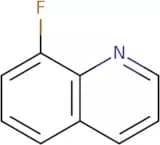
CAS:8-Fluoroquinoline is a quinoline derivative that has been shown to have in vitro anticancer activity against colon adenocarcinoma cells. It is a chiral molecule that can exist as two stereoisomers, (R)-8-fluoroquinoline and (S)-8-fluoroquinoline. These isomers may have different interactions with the tumorigenic cells, but both of them have anticancer activity. 8-Fluoroquinoline also interacts with cytochrome P450 enzymes, enhancing their ability to metabolize carcinogens.
Formula:C9H6FNPurezza:Min. 95%Peso molecolare:147.15 g/molRef: 3D-FF54377
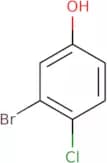
Prodotto fuori produzione3-Bromo-4-chlorophenol
CAS:3-Bromo-4-chlorophenol (3BCP) is a halogenated phenolic compound that is used as a preservative in the food industry. It is also used in the chemical and pharmaceutical industries for polymerization reactions and to produce other chemicals such as chlorinated hydrocarbons. 3BCP has been shown to inhibit the growth of organisms by binding to their receptors, which can be deformed and thus not function properly. The affinity of 3BCP for these receptors can be rationalized by its chemical nature, which includes chlorine atoms that are nucleophilic and can form hydrogen bonds with other molecules. 3BCP has two isomers: 3-bromo-4-chlorophenol and 4-bromo-3-chlorophenol, each with different effects on organisms.
Formula:C6H4BrClOPurezza:Min. 95%Colore e forma:PowderPeso molecolare:207.45 g/molRef: 3D-FB70155
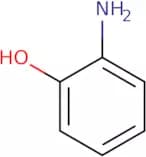
Prodotto fuori produzione2-Aminophenol
CAS:2-Aminophenol is a water soluble redox catalyst that is used in wastewater treatment. It has been shown to be a potent antimicrobial agent against bacteria, fungi, and viruses. 2-Aminophenol is active against the Gram-positive bacteria Staphylococcus aureus and Enterococcus faecalis. The mechanism of the reaction of 2-aminophenol with picolinic acid is believed to be due to intramolecular hydrogen bonding between nitrogen atoms (N) and amines (NH). The binding site for this reaction is not well understood, but it may involve an electrochemical mechanism such as constant pressure or electrochemical impedance spectroscopy. 2-Aminophenol also participates in electron transfer reactions involving NAD+/NADH or cytochrome c/cytochrome c oxidase.
Formula:C6H7NOPurezza:Min. 98 Area-%Colore e forma:Brown White PowderPeso molecolare:109.13 g/molRef: 3D-FA71182
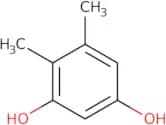
Prodotto fuori produzione4,5-Dimethylresorcinol
CAS:4,5-Dimethylresorcinol is a decarboxylated form of resorcinol that has been extracted from the acetate extract of an endophytic fungus. It has been shown to have anti-inflammatory properties and can be used for the treatment of symptoms such as diarrhea. 4,5-Dimethylresorcinol is produced by a series of enzymatic reactions in which resorcinol is first decarboxylated and then hydroxylated to produce 4,5-dimethylresorcinol. There are two isomers of this compound: the alpha-isomer and beta-isomer. The alpha-isomer has been shown to have more potent anti-inflammatory activity than the beta-isomer. 4,5-Dimethylresorcinol has also been found to be effective in treating intestinal disorders such as Crohn's disease and ulcerative colitis in clinical trials.
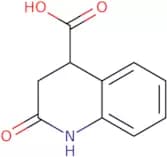
Formula:C8H10O2Purezza:Min. 95%Colore e forma:PowderPeso molecolare:138.16 g/mol2-Oxo-1,2,3,4-tetrahydroquinoline-4-carboxylic acid
CAS:2-Oxo-1,2,3,4-tetrahydroquinoline-4-carboxylic acid is a carboxylic acid that is an intermediate in the chemical synthesis of 2H and 3H tetrahydroquinolines. It can be synthesized by the oxidation of 2-(N,N-dimethylamino)benzaldehyde with hydrogen peroxide in methanol. The compound has been used to label animals for use in mass spectrometry studies and as a reactant in electron and nuclear magnetic resonance (NMR) spectroscopy experiments. In addition, 2-oxo-1,2,3,4-tetrahydroquinoline-4-carboxylic acid has been used to study equilibrium and reversible reactions as well as to identify the abundances of different spectral peaks. 2-Oxo-1,2,3,4-tetrahydroquinoline-4Formula:C10H9NO3Purezza:Min. 95%Peso molecolare:191.18 g/mol4-Butoxybenzyl alcohol
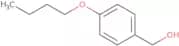
CAS:4-Butoxybenzyl alcohol is a primary alcohol that is used as a solvent and reagent. It has been shown to disrupt the architecture of bacterial cell walls by destabilizing the molybdenum cofactor, which is essential for the enzyme xylose reductase. The destabilization of this cofactor leads to inhibition of cell wall synthesis and subsequent death of bacteria. 4-Butoxybenzyl alcohol also has antibacterial properties and can be used to inhibit the growth of Gram-positive bacteria such as Staphylococcus aureus and Enterococcus faecalis. This compound may also act by inhibiting amide formation or by binding to magnesium, aluminium, or amides in the bacterial cell wall.
Formula:C11H16O2Purezza:Min. 95%Colore e forma:PowderPeso molecolare:180.24 g/molRef: 3D-FB64450
Prodotto fuori produzione






![4-[[4-(4-Chlorophenyl)-2-thiazolyl]amino]phenol](/_next/image/?url=https%3A%2Fstatic.cymitquimica.com%2Fproducts%2F3D%2Fthumb-webp%2FFC137468.webp&w=3840&q=75)


![a-[2-(Methylamino)ethyl]benzyl alcohol](/_next/image/?url=https%3A%2Fstatic.cymitquimica.com%2Fproducts%2F3D%2Fthumb-webp%2FFM02610.webp&w=3840&q=75)