Alcoli
Sottocategorie di "Alcoli"
Trovati 5831 prodotti di "Alcoli"
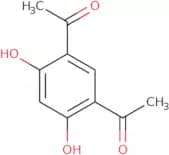
4,6-Diacetylresorcinol
CAS:4,6-Diacetylresorcinol is a tetradentate ligand that can be used for the palladium-catalyzed hydrogenation of phenols. The compound has been shown to have anticancer activity and was found to be selective against cancer cell lines. It also inhibits the growth of staphylococcus bacteria in biological studies. 4,6-Diacetylresorcinol is thermodynamically stable and has a high binding affinity with nitrogen nucleophiles such as amines and anilines. Molecular modeling studies show that the nitrogen atoms are located near the center of the molecule, making them accessible for intramolecular hydrogen transfer reactions.Formula:C10H10O4Purezza:Min. 95%Colore e forma:PowderPeso molecolare:194.18 g/mol20a-Dihydro pregnenolone
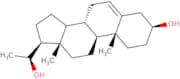
CAS:Prodotto controllatoPregnenolone is a steroid hormone that is synthesized in the adrenal cortex. It has been used as a diagnostic agent for detecting low levels of human chorionic gonadotropin (hCG). Pregnenolone interacts with the 3β-hydroxysteroid dehydrogenase, which is an enzyme involved in the conversion of pregnenolone to progesterone. The gene encoding this enzyme has been found to be mutated in patients with hydroxylase deficiency. Pregnenolone can also be converted into other hormones such as cortisol and androstenedione by various hydroxylases. This process may be inhibited by 20a-dihydroprogesterone, leading to increased concentrations of pregnenolone in the plasma.Formula:C21H34O2Purezza:Min. 95%Colore e forma:White PowderPeso molecolare:318.49 g/mol3-Benzyloxybenzyl alcohol
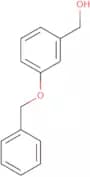
CAS:3-Benzyloxybenzyl alcohol is a condensation product of benzaldehyde and acetone. Hydration leads to the formation of an intramolecular hydrogen bond between the carbonyl group and the hydroxyl group. The ammonium salt is formed by reaction with ammonium chloride in water, which then undergoes a cyclization to form bicyclic ring system. 3-Benzyloxybenzyl alcohol has been shown to have antihistamine properties, as it inhibits histamine release from mast cells.
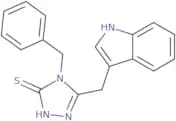
Formula:C14H14O2Purezza:Min. 98 Area-%Colore e forma:PowderPeso molecolare:214.26 g/mol5-(Indol-3-ylmethyl)-4-benzyl-1,2,4-triazole-3-thiol
CAS:Please enquire for more information about 5-(Indol-3-ylmethyl)-4-benzyl-1,2,4-triazole-3-thiol including the price, delivery time and more detailed product information at the technical inquiry form on this pageFormula:C18H16N4SPurezza:Min. 95%Colore e forma:PowderPeso molecolare:320.41 g/mol2,5-Dichlorobenzyl alcohol
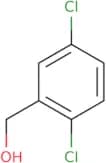
CAS:2,5-Dichlorobenzyl alcohol is a lacteous compound that is used as a herbicide. It inhibits the growth of plants by inhibiting the activity of enzymes that are involved in the biosynthesis of amino acids and fatty acids. 2,5-Dichlorobenzyl alcohol is also used to produce polychlorinated compounds and has significant effects on weed science. 2,5-Dichlorobenzyl alcohol may be used as a linker molecule in chemical reactions. This compound can be catalysed by dioxygenation to produce chlorobenzal or benzaldehyde.Formula:C7H6Cl2OPurezza:Min. 95%Colore e forma:PowderPeso molecolare:177.03 g/molEstratetraenol
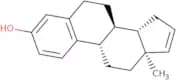
CAS:Estratetraenol is a synthetic estrogen that has the same structure as 17β-estradiol, but with three additional hydroxyl groups. It is used in research to study the effects of estrogens on humans and animals. Estratetraenol has been shown to activate the cell membrane receptors, which leads to a physiological response. This drug also causes an increase in oxygen consumption and inhibits ovulation. Estratetraenol binds to estrogen receptor cells and is metabolized by chemical substances in the liver into 17β-estradiol, which is then excreted by the kidneys. The drug does not bind to other types of receptor cells in humans or animals, such as those for progesterone or testosterone.Formula:C18H22OPurezza:Min. 98 Area-%Colore e forma:PowderPeso molecolare:254.37 g/mol4-Amino-3-chlorophenol hydrochloride
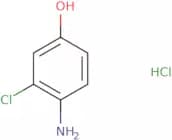
CAS:Intermediate in the synthesis of lenvatinibFormula:C6H7Cl2NOPurezza:Min. 95%Colore e forma:PowderPeso molecolare:180.03 g/mol2-Amino-3-(4-dimethylaminophenyl)propanol dihydrochloride
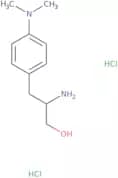
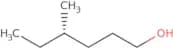
CAS:2-Amino-3-(4-dimethylaminophenyl)propanol dihydrochloride is a perovskite with the chemical formula CHN. It is a crystalline solid that has been found in the nasal cavity of Typhlopidae and Rostral rostral, dorsum, dorsal profile advances. 2-Amino-3-(4-dimethylaminophenyl)propanol dihydrochloride has not been determined to be either an organic or inorganic compound. The nature of this material is unclear, but it has been shown to have crystallization properties.Formula:C11H18N2O•2HClPurezza:Min. 95%Peso molecolare:267.19 g/mol(S)-(+)-4-Methyl-1-hexanol
CAS:(S)-(+)-4-Methyl-1-hexanol is a synthetic compound that has been shown to have antibacterial activity against Staphylococcus aureus. The (R)-enantiomer of the compound, which has been synthesized in the past, has also shown activity against S. aureus. However, this enantiomer is not commercially available. The (S)-enantiomer is soluble in organic solvents and can be used as an attractant for S. aureus monitoring purposes. In addition, it has antioxidant potential and may be useful as a medicine for short-chain fatty acid production disorders.Formula:C7H16OPurezza:Min. 95%Peso molecolare:116.2 g/molDesmosterol
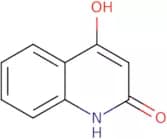
CAS:Prodotto controllato3b-Cholesta-5,24-dien-3-ol is a natural product that has been shown to be active against autoimmune diseases and infectious diseases. 3b-Cholesta-5,24-dien-3-ol inhibits the activity of the ATP binding cassette transporter (ABC) in human cells. ABC is a protein that transports molecules across cell membranes, which may play an important role in the development of autoimmune diseases and infectious diseases. 3b-Cholesta-5,24-dien-3-ol binds to cholesterol and phosphorus pentoxide to form an intermediate complex with ATP. This complex is then broken down into desmosterol and atp which can't bind to ABC anymore.Formula:C27H44OPurezza:Min. 95%Colore e forma:White PowderPeso molecolare:384.64 g/mol2,4-Dihydroxyquinoline
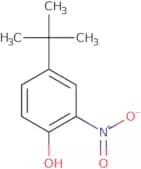
CAS:2,4-Dihydroxyquinoline is a malonic acid derivative that is used as an antimicrobial agent. It is a diazonium salt that can be synthesized from 2-chloro-4-nitrobenzene and malonic acid. The reaction mechanism for this compound involves the formation of a diazo intermediate, which reacts with the amine to form a quinoline. This compound has been shown to have antibiotic properties and is able to inhibit the growth of bacteria such as Salmonella typhi, Mycobacterium tuberculosis, Escherichia coli, and Staphylococcus aureus. 2,4-Dihydroxyquinoline has also been shown to have anticancer activity in vitro on human liver cells (HepG2) and human hepg2 cells.Formula:C9H7NO2Purezza:Min. 95%Colore e forma:White PowderPeso molecolare:161.16 g/mol2-Nitro-4-tert-butylphenol
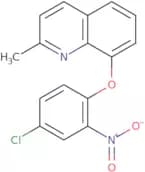
CAS:2-Nitro-4-tert-butylphenol is a phenolic antioxidant that has been used as a substitute for 2,6-di-tert-butylphenol (BHT) in cellulose triacetate. It also has been used in the production of 16-membered macrolides and macrocyclization reactions. 2NBP has been shown to be a potent inhibitor of ionophore transport across membranes, with the ability to inhibit membrane protein function and affect macrocyclization. It is also able to form mesoporous materials with diameters in the range of 10 nm to 100 nm. Nitroarenes are good candidates for molecular size control because they can be easily synthesized by addition reactions, which makes them ideal for use in organic chemistry.Formula:C10H13NO3Purezza:Min. 95%Colore e forma:PowderPeso molecolare:195.22 g/mol4-Chloro-1-(2-methyl(8-quinolyloxy))-2-nitrobenzene
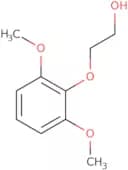
CAS:Please enquire for more information about 4-Chloro-1-(2-methyl(8-quinolyloxy))-2-nitrobenzene including the price, delivery time and more detailed product information at the technical inquiry form on this pageFormula:C16H11ClN2O3Purezza:Min. 95%Colore e forma:PowderPeso molecolare:314.72 g/mol2-(2,6-Dimethoxyphenoxy)ethanol
CAS:2-(2,6-Dimethoxyphenoxy)ethanol is a cleavage agent that can be used for the synthesis of lignin model compounds. It is a benzylic ether that is catalyzed by laccase to produce 2,6-dimethoxybenzaldehyde. The compound can be used as a substrate for versicolor or peroxy cleavage reactions. Versicolor cleavage is performed with 1-hydroxybenzotriazole, while peroxy cleavage is performed with hydrogen peroxide. 2-(2,6-Dimethoxyphenoxy)ethanol has been shown to have radical properties and reacts with molecular oxygen and ethanone in the presence of deuterium gas to form 2,6-dimethoxyacetophenone.Formula:C10H14O4Purezza:Min. 95%Colore e forma:PowderPeso molecolare:198.22 g/mol5-Methoxyresorcinol
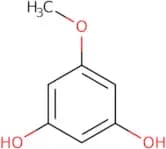
CAS:5-Methoxyresorcinol is a plant product that has been shown to inhibit protein synthesis. It was found to have a second-order rate constant of 0.079 M-1s-1 at pH 7, which is much lower than the first order rate constant for urea hydrolysis (0.71 M-1s-1). 5-Methoxyresorcinol has also been shown to demethylate methyl glycosides and synthesize cell cultures. This product inhibits the replication of herpes simplex virus by inhibiting the synthesis of viral proteins in infected cells and blocking the maturation of progeny virus particles.
Formula:C7H8O3Purezza:Min. 95%Colore e forma:Slightly Yellow PowderPeso molecolare:140.14 g/mol2,5,6-Triaminopyrimidin-4-ol sulphate
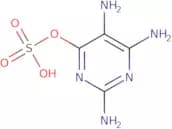
CAS:2,5,6-Triaminopyrimidin-4-ol sulphate is a fine chemical that is used as a reagent in the synthesis of other compounds. It can be used as a building block for research chemicals and speciality chemicals such as pesticides. This compound is also useful in the manufacture of pharmaceuticals and agrochemicals. 2,5,6-Triaminopyrimidin-4-ol sulphate has been shown to react with aniline derivatives to produce a variety of products including pyrrolidine and piperidine derivatives. This versatile compound can also be used as a scaffold in the synthesis of complex molecules.
Formula:C4H7N5O4SPurezza:Min. 95%Colore e forma:Yellow PowderPeso molecolare:221.2 g/mol2,2-Bis(hydroxymethyl)-2,2',2''-nitrilotriethanol
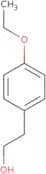
CAS:Bis-Tris is a Bis(2-hydroxyethyl) amine buffer that forms metal chelates and can be used with proteins and nucleic acids. This buffering agent has an optimal pH range of 5.8-7.2 and a pKa of 6.46.Formula:C8H19NO5Purezza:Min. 98%Colore e forma:PowderPeso molecolare:209.24 g/mol4-Ethoxyphenylethyl alcohol
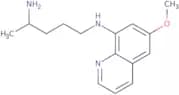
CAS:4-Ethoxyphenylethyl alcohol (4EPEA) is a non-invasive fluorescent probe that has been used in the study of nucleic acids. It is a small molecule that can be used to identify DNA and RNA sequences. 4EPEA terminates at a specific site on the DNA or RNA, where it forms a cavity with its hydroxyl group pointing outward. The cavity is then filled by the next base in the sequence, which reverses the orientation of 4EPEA and causes it to fluoresce. This process can be repeated to map the entire length of an RNA molecule or DNA strand. When 4EPEA is mixed with acetonitrile (ACN), it undergoes a transition from an amorphous state to a more crystalline state, which allows for better separation of 4EPEA from other compounds in ACN. The use of β-cyclodextrin as an additive further improves this separation as well as increasing the stability ofFormula:C10H14O2Purezza:Min. 95%Colore e forma:PowderPeso molecolare:166.22 g/molN1-(6-Methoxy-8-quinolinyl)-1,4-pentanediamine
CAS:Impurity found in Primaquine diphosphateFormula:C15H21N3OPurezza:Min. 95%Colore e forma:Yellow PowderPeso molecolare:259.35 g/mol1,2-Dimyristoyl-sn-glycerol
CAS:Dimyristoyl-sn-glycerol is a lipid that has a phase transition temperature of 42.6°C and melts at 44.6°C. It is found in the membrane of cells, where it interacts with other lipids to form structures that are essential for cellular function. Dimyristoyl-sn-glycerol has been shown to be an inhibitor of cycloheximide and can bind to the surface glycoprotein on the surface of some gram-negative bacteria, such as Escherichia coli. These interactions may play a role in protein synthesis and growth factor activation.Formula:C31H60O5Purezza:Min. 98 Area-%Colore e forma:PowderPeso molecolare:512.81 g/mol