Alcoli
Sottocategorie di "Alcoli"
Trovati 5831 prodotti di "Alcoli"
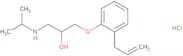
Alprenolol hydrochloride
CAS:Prodotto controllatoAlprenolol hydrochloride is a beta-adrenergic receptor blocker that is used to treat high blood pressure, angina pectoris, and myocardial infarcts. It binds to the β1-adrenergic receptor in the myocardium and blocks the stimulation of adenylate cyclase. This prevents cAMP production, which leads to decreased calcium influx into the myocardium and an inhibition of contractility. Alprenolol hydrochloride has been shown to be effective in treating congestive heart failure (CHF). Alprenolol is metabolized by esterases in the liver and gut wall. The drug has been shown to have a low potency because it is rapidly metabolized by esterases in humans. It also has potential for drug interactions with other drugs that are metabolized by these enzymes. Alprenolol hydrochloride has structural similarity to guanine nucleotide-binding proteins, which may
Formula:C15H23NO2·HClPurezza:Min. 98 Area-%Colore e forma:PowderPeso molecolare:285.81 g/molPolycaprolactone diol - MW 525-575
CAS:Biodegradable polymer
Formula:C4H8O3(C6H10O2)nColore e forma:Clear Liquid5-Fluoro-2-methylphenol
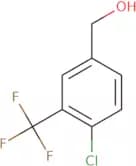
CAS:The fluoroquinolone 5-Fluoro-2-methylphenol (5FM) is an inhibitor of angiotensin, an enzyme that is involved in the regulation of blood pressure and fluid balance. The structure of this compound was optimized to make it more potent and selective for angiotensin, while minimizing its adverse effects. This optimization was achieved using high throughput screening and x-ray crystallography. The fluorine atom in 5FM binds to aspartyl protease, which prevents the protease from breaking down proteins into smaller amino acid chains. This binding also inhibits the activity of other enzymes that are involved in protein synthesis, such as aspartyl proteases and salicylic acid esterases. 5FM has been shown to inhibit the growth of bacteria such as Staphylococcus aureus at concentrations that are not toxic to mammalian cells.Formula:C7H7FOPurezza:Min. 95%Colore e forma:Clear LiquidPeso molecolare:126.13 g/mol3-Chloro-4-(trifluoromethyl)benzyl alcohol
CAS:3-Chloro-4-(trifluoromethyl)benzyl alcohol is a versatile building block for synthesis of various chemical compounds. It is used as a reagent, reaction component, or building block in organic synthesis. It is also useful as a speciality chemical or research chemical. CAS No. 65735-71-9Formula:C8H6ClF3OPurezza:Min. 95%Colore e forma:PowderPeso molecolare:210.58 g/mol2,2'-Biphenol
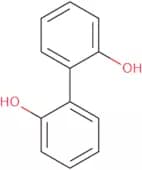
CAS:2,2'-Biphenol is a phenolic compound that is used in the synthesis of polymers. The thermal expansion coefficient of 2,2'-biphenol can be measured by DSC and found to be ˜6.5 × 10⁻⁴/°C. The UV absorption spectrum of 2,2'-biphenol shows three bands at wavelengths of 290 nm, 320 nm, and 370 nm. 2,2'-Biphenol has been shown to adsorb onto biological surfaces through an adsorption mechanism. It has been observed that this adsorption occurs via x-ray crystal structures and kinetic measurements have shown that the adsorption process is rate-limited by intramolecular hydrogen bonding between the protonated phenolic hydroxyl group and the aromatic ring. The activation energies for protonation and desorption have been determined to be ˜30 kJ/mol and ˜30 kJ/mol respectively. Ac
Formula:C12H10O2Purezza:Min. 98 Area-%Colore e forma:White PowderPeso molecolare:186.21 g/molL-Tyrosinol hydrochloride
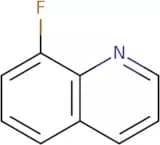
CAS:L-Tyrosinol hydrochloride is a chiral molecule that is the hydrogenated form of L-tyrosine. It is an intermediate in the synthesis of L-dopa, which is used to treat Parkinson's disease. The enzymatic reaction that converts L-tyrosinol hydrochloride to L-dopa requires adenosine 5'-phosphosulfate as cofactor and histidine as a catalyst. The conversion of L-tyrosinol hydrochloride to L-dopa occurs with high yield and has been shown to be stereoselective. This synthetic pathway has been shown to have an activation energy of 53 kcal/mol and a reaction time of 30 minutes at room temperature.Formula:C9H13NO2·HClColore e forma:White Off-White PowderPeso molecolare:203.67 g/mol8-Fluoroquinoline
CAS:8-Fluoroquinoline is a quinoline derivative that has been shown to have in vitro anticancer activity against colon adenocarcinoma cells. It is a chiral molecule that can exist as two stereoisomers, (R)-8-fluoroquinoline and (S)-8-fluoroquinoline. These isomers may have different interactions with the tumorigenic cells, but both of them have anticancer activity. 8-Fluoroquinoline also interacts with cytochrome P450 enzymes, enhancing their ability to metabolize carcinogens.
Formula:C9H6FNPurezza:Min. 95%Peso molecolare:147.15 g/mol4-Butoxy-1-butanol
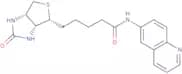
CAS:Prodotto controllato4-Butoxy-1-butanol is a solvent that has been shown to be safe for use in humans. It is used to modify the chemical structure of d-glycero-d-galacto-heptose and can be used as a solvent. 4-Butoxy-1-butanol was found to be safe for primary cells and was able to normalize their metabolism and growth rate. This compound has also been shown to have diagnostic properties based on its ability to inhibit the production of camaldulensis leaves, which are known to produce naphthalene. The mechanism by which this compound inhibits camaldulensis leaf production is unknown, but it may involve an acceptor molecule or biochemical reactions.Formula:C8H18O2Purezza:Min. 95%Colore e forma:Clear LiquidPeso molecolare:146.23 g/molBiotinyl-6-aminoquinoline
CAS:Biotinyl-6-aminoquinoline is a synthetic chemical that has been shown to inhibit the growth of cancer cells in laboratory mice. It was synthesized to be a substrate for the enzyme quinolinate synthase, which is involved in the synthesis of nicotinic acid. Biotinyl-6-aminoquinoline is an analytical method that has been used in urinary samples from patients with bladder cancer as well as healthy individuals. The sequences of each individual were determined and analyzed using an algorithm that performs logistic regression, which can predict whether or not the patient has bladder cancer.
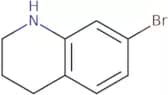
Formula:C19H22N4O2SPurezza:Min. 95 Area-%Colore e forma:PowderPeso molecolare:370.47 g/mol7-Bromo-1,2,3,4-tetrahydroquinoline
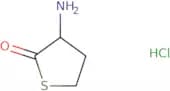
CAS:7-Bromo-1,2,3,4-tetrahydroquinoline is a high quality reagent that is an intermediate for the synthesis of heterocycles. It is useful as a building block for the synthesis of complex compounds. 7-Bromo-1,2,3,4-tetrahydroquinoline has been used as a useful scaffold in the synthesis of novel and versatile molecules with biological activity. This compound can be used as a reaction component in organic chemistry and can also be used to produce speciality chemicals and research chemicals. CAS No. 114744-51-3Formula:C9H10BrNPurezza:Min. 97 Area-%Colore e forma:PowderPeso molecolare:212.09 g/molDL-Homocysteine thiolactone hydrochloride
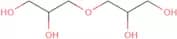
CAS:DL-Homocysteine thiolactone hydrochloride is a compound that has been found in human serum and urine. It is used to measure the concentration of homocysteine in the blood, which may be an indicator of coronary heart disease. DL-Homocysteine thiolactone hydrochloride is used to synthesize the amino acid cysteine, which is vital for cell growth and protein synthesis. DL-Homocysteine thiolactone hydrochloride also has optical properties that make it suitable as a photochromic material. The compound has been shown to be a hydrogen bond donor, which makes it useful for stabilizing proteins in mammalian cells.Formula:C4H8ClNOSPurezza:Min. 95%Colore e forma:White PowderPeso molecolare:153.63 g/molDiglycerol
CAS:Diglycerol is a glyceride that has antimicrobial properties. It is a surface-active agent, which inhibits bacterial growth and biofilm formation by disrupting the lipid bilayer of the cell membrane. Diglycerol is also used in the production of glycerin and glycol esters, which are used in the manufacture of soaps, lotions, and other cosmetics. This compound shows anti-atherosclerotic effects at low doses in laboratory animals by inhibiting inflammation and breakdown of blood vessels. The reaction mechanism for this effect is not fully understood; however, it may be due to its ability to inhibit the release of reactive oxygen species from macrophages or cardiac muscle cells.Formula:C6H14O5Purezza:Min. 80.0 Area-%Colore e forma:Colorless Clear LiquidPeso molecolare:166.17 g/mol2-Nitroethanol
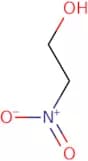
CAS:2-Nitroethanol is a chemical compound that is used as an antioxidant, antimicrobial preservative, and flavoring agent in foods. It can be synthesized in an asymmetric synthesis reaction, which involves the addition of a nitro group to one of the two carbons in ethylene glycol. The toxicity profile of 2-nitroethanol has not been extensively studied, but it appears to have low toxicity based on animal studies. A number of inhibitory compounds have been identified for 2-nitroethanol, including benzalkonium chloride and propionate. The inhibitory effects of 2-nitroethanol are concentration dependent and may be due to hydrogen bonding with proteins or intramolecular hydrogen transfer reactions with other molecules. Inhibition of viral replication by 2-nitroethanol has been observed in influenza virus and human immunodeficiency virus (HIV) studies. This inhibition may be due to alterations in fatty acid metabolism or changes in theFormula:C2H5NO3Purezza:Min. 95 Area-%Colore e forma:Clear LiquidPeso molecolare:91.06 g/molIodoquinol
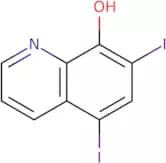
CAS:Iodoquinol is a quinoline derivative that has been shown to have antifungal properties in vitro. It is used to treat bowel disease and infectious diseases, such as malaria and tuberculosis. Iodoquinol has also been shown to reduce the incidence of autoimmune diseases by inhibiting the production of pro-inflammatory cytokines. The mechanism of action for this drug is not well understood, but it is believed that it reacts with DNA and may inhibit the synthesis of proteins. It has also been shown to cause genotoxic effects in a model system by binding covalently to DNA, as well as benzalkonium chlorideFormula:C9H5I2NOPurezza:Min. 95%Colore e forma:Yellow PowderPeso molecolare:396.95 g/mol2,4,6-Tribromo-3-methoxyphenol
CAS:2,4,6-Tribromo-3-methoxyphenol is a high quality reagent that is used as an intermediate in the production of many fine chemicals. It is also a useful building block for the synthesis of speciality chemicals and research chemicals. This chemical can be used as a versatile building block for reactions with other compounds. 2,4,6-Tribromo-3-methoxyphenol has CAS number 24967-79-1 and can be found at Chemical & Laboratory Equipment.
Formula:C7H5Br3O2Purezza:Min. 95%Peso molecolare:360.83 g/molAllopurinol
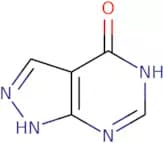
CAS:Allopurinol is a drug that is used in the treatment of gout and other disorders caused by excessive production of uric acid. It functions as an inhibitor of xanthine oxidase, which is the enzyme responsible for converting hypoxanthine to xanthine, and xanthine to uric acid. Allopurinol blocks the conversion of these compounds, thereby reducing the formation of uric acid. Allopurinol has been shown to be effective for treating inflammatory bowel disease such as ulcerative colitis and Crohn's disease. This drug also inhibits nuclear DNA synthesis, antioxidant vitamins (e.g., vitamin E), and brain functions. Allopurinol has been shown to be effective in protecting neurons against oxidative injury that may lead to neurodegenerative diseases such as Parkinson's disease.
Formula:C5H4N4OPurezza:Min. 95%Colore e forma:White PowderPeso molecolare:136.11 g/mol4-Methylresorcinol
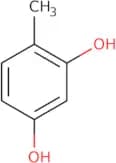
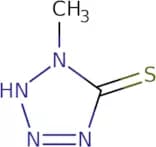
CAS:4-Methylresorcinol is a phenolic compound that has been shown to have a broad spectrum of antimicrobial activity. It is an inhibitor of 3-hydroxybenzoic acid, a key metabolic intermediate in the biosynthesis of aromatic amino acids and lignin. 4-Methylresorcinol inhibits the enzyme tyrosine ammonia lyase, which converts tyrosine to 3-hydroxybenzoic acid. The synthetic nature of 4-methylresorcinol makes it an attractive candidate for use as an antifungal agent, since it does not produce any byproducts in the human body. 4-Methylresorcinol also has antifungal activity against other organisms such as Candida albicans, Aspergillus niger, and Trichoderma viride.Formula:C7H8O2Purezza:Area-% Min. 90 Area-%Colore e forma:White PowderPeso molecolare:124.14 g/molN-Methyl-5-tetrazolethiol
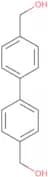
CAS:N-Methyl-5-tetrazolethiol is a vitamin B6 (pyridoxine) analog that inhibits bacterial growth by competitively inhibiting enzymes involved in the synthesis of folate. It has been shown to be toxic for animals and humans at high doses, but the toxicity of this compound has not been studied extensively. N-Methyl-5-tetrazolethiol has been shown to inhibit the activity of enzymes such as methionine synthase, cytochrome C reductase, and nitroreductase in vitro. This drug is used as a treatment for infectious diseases such as malaria and toxoplasmosis. The mechanism of action of N-methyl tetrazolethiol is not known, but it is believed to be related to its ability to inhibit enzyme activity.Formula:C2H4N4SPurezza:Min. 95 Area-%Colore e forma:PowderPeso molecolare:116.15 g/mol4,4'-Bisbenzyl alcohol
CAS:4,4'-Bisbenzyl alcohol is a colorless liquid with a faint aromatic odor. It is soluble in water and has a high boiling point. 4,4'-Bisbenzyl alcohol reacts with sodium hydroxide to form sodium 4,4'-bisbenzylate. It can be used as an intermediate in the production of dyes and pharmaceuticals. 4,4'-Bisbenzyl alcohol also reacts with chlorine to produce biphenyl. The reaction rate of this compound is dependent on the hydroxyl group present at one end of the molecule. The hydroxide solution should be adjusted using hydrochloric acid or sodium chloride solution as necessary before use.
Formula:C14H14O2Purezza:Min. 95%Colore e forma:PowderPeso molecolare:214.26 g/mol1,4-Cyclohexanedimethanol diglycidyl ether
CAS:1,4-Cyclohexanedimethanol diglycidyl ether is a symmetrical molecule with cyclohexyl core and 2 terminal epoxide groups on ether linkers. 1,4-Cyclohexanedimethanol diglycidyl ether is an epoxy resin used with phenol or amine hardeners.Formula:C14H24O4Colore e forma:Clear LiquidPeso molecolare:256.34 g/mol