Alcoli
Sottocategorie di "Alcoli"
Trovati 5818 prodotti di "Alcoli"
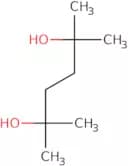
2,5-Dimethyl-2,5-hexanediol
CAS:2,5-Dimethyl-2,5-hexanediol is an organic compound that consists of a linear polymer. It can be found in natural gas and crude oil as well as in the atmosphere. 2,5-Dimethyl-2,5-hexanediol is used to make polyester resins and plasticizers. It can also be used as a solvent or a reactant in organic syntheses such as alkylation reactions. 2,5-Dimethyl-2,5-hexanediol has intramolecular hydrogen bonds which help it to have high transport properties. The molecule of 2,5-dimethyl-2,5 hexanediol consist of two ethane groups linked by a linear chain consisting of alternating methyl and hydroxyl groups. The molecular formula for this compound is CH(CH)CHOHCHOHCH(CH)OH. This compound has two sets of electron orbitals that are parallel to each other with one set being perpendicular to
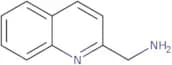
Formula:C8H18O2Purezza:Min. 95%Colore e forma:PowderPeso molecolare:146.23 g/molQuinolin-2-yl-methylamine
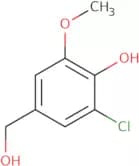
CAS:Quinolin-2-yl-methylamine is an amine that is used in the synthesis of other compounds. It can be prepared by protonation of quinoline with methylamine, followed by crystallization. The yield of this reaction is dependent on the purity of the starting materials and the reaction conditions. This compound has a molecular weight of 169.07 g/mol and a melting point at 217 °C. The infrared spectrum for Quinolin-2-yl-methylamine shows peaks at 2900 cm−1, 1670 cm−1, and 1590 cm−1. It also has x-ray crystallography data (space group P21/c).Formula:C10H10N2Purezza:Min. 96 Area-%Colore e forma:PowderPeso molecolare:158.2 g/mol5-Chlorovanillyl alcohol
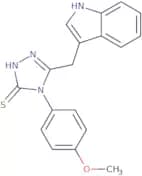
CAS:5-Chlorovanillyl alcohol is a useful building block. It is a fine chemical that can be used as a research chemical, reagent, or speciality chemical. This compound is versatile and can be used as a reaction component or scaffold for complex compounds. 5-Chlorovanillyl alcohol has CAS number 20624-92-4.Formula:C8H9ClO3Purezza:Min. 95%Colore e forma:PowderPeso molecolare:188.61 g/mol5-(Indol-3-ylmethyl)-4-(4-methoxyphenyl)-1,2,4-triazole-3-thiol
CAS:Please enquire for more information about 5-(Indol-3-ylmethyl)-4-(4-methoxyphenyl)-1,2,4-triazole-3-thiol including the price, delivery time and more detailed product information at the technical inquiry form on this pageFormula:C18H16N4OSPurezza:Min. 95%Colore e forma:PowderPeso molecolare:336.41 g/mol17a-Estradiol
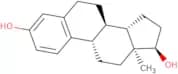
CAS:Prodotto controllato17a-Estradiol is a steroid hormone that belongs to the group of estrogens. It is a natural hormone produced by the ovaries and also found in plants, animals, and humans. 17a-Estradiol has been shown to have physiological effects on blood pressure, pro-apoptotic protein expression, allergic symptoms, and intracellular Ca2+ levels. 17a-Estradiol can be used to treat estrogen deficiency or as an adjunct treatment for breast cancer.Formula:C18H24O2Purezza:Min. 98 Area-%Colore e forma:White PowderPeso molecolare:272.38 g/mol9-Fluoro-3-methyl-7-oxo-10-(1-piperazinyl)-2,3-dihydro-7H-[1,4]oxazino[2,3,4-Ij]quinoline-6-carboxylic acid
CAS:9-Fluoro-3-methyl-7-oxo-10-(1-piperazinyl)-2,3-dihydro-7H-[1,4]oxazino[2,3,4-Ij]quinoline (FQ) is a fluoroquinolone antibiotic. It inhibits the DNA gyrase and topoisomerase IV enzymes that maintain the integrity of bacterial DNA. FQ has been used to treat urinary tract infections in humans and other animals. This drug is also effective against methicillin resistant Staphylococcus aureus (MRSA) and Clostridium perfringens. FQ binds to bacterial 16S ribosomal RNA and inhibits protein synthesis leading to cell death by inhibiting the production of proteins vital for cell division. The 9 position on the quinoline ring can be detected using UV detection at 260 nm. FQ can be analyzed using mass spectrometry with fluorFormula:C17H18FN3O4Purezza:Min. 95 Area-%Colore e forma:White PowderPeso molecolare:347.34 g/molLinolenic acid - 70%
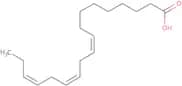
CAS:Linolenic acid is a polyunsaturated fatty acid that belongs to the omega-6 family. It has been shown to have apoptosis-inducing effects in various experimental models and has anti-oxidant properties. Linolenic acid also protects against UV radiation and skin cancer. In addition, linolenic acid may be beneficial for eye disorders such as dry eye syndrome and age-related macular degeneration. Clinical studies have shown that linolenic acid may help with weight loss, improve body mass index, and reduce inflammation.Formula:C18H30O2Purezza:Min. 95%Colore e forma:Brown Slightly Yellow Red Clear LiquidPeso molecolare:278.43 g/mol4-Keto retinol
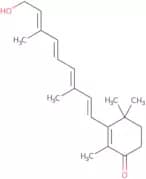
CAS:4-Keto retinol is an analog of vitamin A, which is used in the treatment of various diseases. It has been shown to reduce the levels of PGE2 and increase the redox potential in cells. 4-Keto retinol has also been shown to increase locomotor activity and improve energy metabolism. The structural analysis of 4-keto retinol has revealed that it binds to DNA polymerase, inhibiting transcriptional activity. The pharmacokinetic properties of this drug have been studied in rats and mice, but not yet humans. This compound will most likely be administered orally or intravenously with a dosage range from 0.01 mg/kg to 10 mg/kg per day.
Formula:C20H28O2Purezza:Min. 95%Colore e forma:PowderPeso molecolare:300.44 g/mol3,4-Methylenedioxyphenethyl alcohol
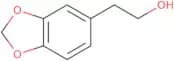
CAS:Prodotto controllato3,4-Methylenedioxyphenethyl alcohol (MDPA) is a model compound that is used to study the mechanism of action and synthesis of aniracetam. It has been shown to be an antagonist of pentylenetetrazole, a convulsant drug. MDPA was also found to have anticonvulsant properties in mice. It was found that this compound had no effect on the inhibition of movement when administered at doses up to 100 mg/kg. This compound is an analog of liriodenine, which has been shown to have anti-inflammatory properties. 3,4-Methylenedioxyphenethyl alcohol is not active in the central nervous system due to its stereoselectivity; this means it can only bind to one stereoisomer within the brain and does not cross the blood-brain barrier.Formula:C9H10O3Purezza:Min. 95%Colore e forma:Clear LiquidPeso molecolare:166.17 g/molEpifriedelanol
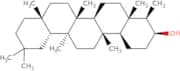
CAS:Prodotto controllatoEpifriedelanol is a sesquiterpene lactone that belongs to the group of natural compounds. This molecule is produced by the plant B. dracunculifolia and has shown anti-inflammatory properties in vitro. Epifriedelanol has been shown to inhibit mitochondrial membrane potential and activity index, which are important for cancer cell growth and survival. Epifriedelanol also has anticancer effects on colorectal adenocarcinoma cells as well as skin cancer cells. It may also be used for urinary tract infections due to its inhibition of bacterial growth.Purezza:Min. 95%Colore e forma:Powder(6S)-5,6,7,8-Tetrahydro-6-[propyl[2-(2-thienyl)ethyl]amino]-1-naphthalenol
CAS:Prodotto controllato(6S)-5,6,7,8-Tetrahydro-6-[propyl[2-(2-thienyl)ethyl]amino]-1-naphthalenol is a potent and selective dopamine receptor agonist. It acts by binding to the dopamine receptors in the brain. This binding stimulates the release of dopamine and prevents it from being reabsorbed into the neurons, which in turn increases levels of extracellular dopamine in the synapse. (6S)-5,6,7,8-Tetrahydro-6-[propyl[2-(2-thienyl)ethyl]amino]-1-naphthalenol has been shown to have antidepressant effects in animal models of depression. It also has a long half life and can be administered as a transdermal patch for prolonged relief from depression symptoms.Formula:C19H25NOSPurezza:Min. 95%Colore e forma:White Off-White PowderPeso molecolare:315.47 g/mol4-(1H-Imidazol-2-yl)phenol
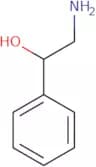
CAS:Please enquire for more information about 4-(1H-Imidazol-2-yl)phenol including the price, delivery time and more detailed product information at the technical inquiry form on this pageFormula:C9H8N2OPurezza:Min. 95%Peso molecolare:160.17 g/molDL-Phenylethanolamine
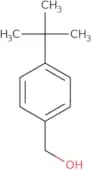
CAS:DL-Phenylethanolamine is a hydroxy amine that is used in the synthesis of other chemicals. It is obtained by reacting phenylacetic acid with hydroxylamine. DL-Phenylethanolamine is an intermediate in the synthesis of the anti-inflammatory drug Indomethacin. This molecule contains a asymmetric carbon atom, which can be distinguished using infrared spectroscopy. The uptake of DL-phenylethanolamine into cells can be measured by detecting the release of amines from lysosomes and mitochondria. In addition, this molecule has conformational properties that can be detected by NMR spectroscopy, making it useful for detection sensitivity and identification purposes.Formula:C8H11NOPurezza:(%) Min. 90%Colore e forma:PowderPeso molecolare:137.18 g/mol4-tert-Butylbenzyl alcohol
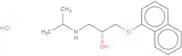
CAS:4-tert-Butylbenzyl alcohol is a chemical compound that binds to the acetyltransferase enzyme and blocks the conversion of acetate to acetyl-CoA. It is used as an inhibitor in biochemical research, where it is commonly used in control experiments. 4-tert-Butylbenzyl alcohol has a binding constant of 10 M, which is much higher than other inhibitors such as ethylene diamine (K = 3 x 10 M) and hydroxymethyl furfural (K = 1 x 10 M). This compound has been shown to inhibit wild type viruses by binding with the active site on their surface. The reaction mechanism for 4-tert-butylbenzyl alcohol involves forming an intermediate with chloride ions, which then reacts with ethylene diamine to form ethyl formate. The non-nucleoside inhibitors are thought to bind at the same site as nucleoside analogues, which inhibits reverse transcriptase activityFormula:C11H16OPurezza:Min. 95%Colore e forma:Colorless Clear LiquidPeso molecolare:164.24 g/mol(S)-Propranolol hydrochloride
CAS:Prodotto controllatoPropranolol hydrochloride is a prodrug that is converted to the active form, (S)-propranolol, by deesterification in vivo. Propranolol hydrochloride has been used for more than 50 years as a beta-blocker for the treatment of hypertension and angina pectoris. It is also used to treat other cardiovascular diseases such as arrhythmias and myocardial infarction. Propranolol hydrochloride inhibits the activity of human estrogen receptor (ER) and blocks the synthesis of proteins that are necessary for tumor growth. This drug has been shown to be effective against metastable polymorphs in urine samples and can be used as an analytical method to differentiate enantiomers.
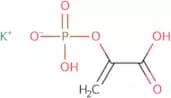
Formula:C16H21NO2•HClPurezza:Min. 95%Peso molecolare:295.8 g/molPhosphoenolpyruvate potassium salt
CAS:Emax (230 nm) = 3113
Formula:C3H4O6PKColore e forma:White PowderPeso molecolare:206.13 g/mol4-Vinylphenol, 10 wt % in propylene glycol
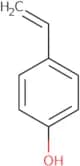
CAS:4-Vinylphenol is a chemical compound that has the molecular formula CH2=CHC6H4OH. It is a hydroxyl derivative of phenol and has the chemical structure of a phenolic acid. This compound is used in the laboratory to study the effects of cationic polymerization on surface methodology and activation energies. 4-Vinylphenol inhibits Saccharomyces cerevisiae strain, which is commonly found in urine samples as well as in recombinant cells, by inhibiting cell growth and reducing ATP production. The inhibition of Saccharomyces cerevisiae strain by 4-vinylphenol can be reversed with p-hydroxybenzoic acid or cationic polymerization. The molecule also contains two nitrogen atoms that can form hydrogen bonds with other molecules, such as water molecules. It is possible that these hydrogen bonds are what allow 4-vinylphenol to inhibit Saccharomyces cerevisiae strain, although this hypothesis hasFormula:C8H8OPurezza:Min. 95 Area-%Colore e forma:Colorless Clear LiquidPeso molecolare:120.15 g/mol3-Nitrobenzyl alcohol
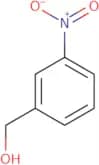
CAS:3-Nitrobenzyl alcohol is a low potency drug that is used for the treatment of cancer. It is a derivative of trifluoroacetic acid, which has been shown to have anti-tumor effects in animals. 3-Nitrobenzyl alcohol binds to the matrix on the surface of cells by hydrogen bonding and forms an intramolecular hydrogen bond with the nitrogen atom. This process leads to increased fluorescence intensity, which can be detected using matrix-assisted laser desorption ionization mass spectrometry (MALDI MS). The fatty acid group found in 3-nitrobenzyl alcohol increases its solubility in water and facilitates penetration into lipid bilayers. This compound exhibits cytotoxicity against monoclonal antibody-positive B cell lymphoma cells and may also have anti-inflammatory properties due to its inhibition of picolinic acid synthesis.Formula:C7H7NO3Purezza:Min 98%Colore e forma:PowderPeso molecolare:153.14 g/mol3-((2-Mercapto-1-methylpropyl)thio)-2-butanol
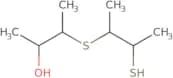
CAS:3-((2-Mercapto-1-methylpropyl)thio)-2-butanol is a high quality synthetic intermediate that can be used as a reagent, a building block for the synthesis of complex compounds, or as an intermediate for the production of speciality chemicals. 3-((2-Mercapto-1-methylpropyl)thio)-2-butanol is soluble in organic solvents and has a high boiling point. It is also useful as a reaction component in the synthesis of fine chemicals and research chemicals. 3-(2 Mercaptoethylthio) 2 butanol has CAS No. 54957-02-7, and may be found under various synonyms such as 1-(3 mercaptoethylthio) butane, 1-(3 mercaptoethylthiobutane), or 1-[3-(mercaptomethyl)propyl] thiobutane.
Formula:C8H18OS2Purezza:Min. 95%Colore e forma:Colorless Clear LiquidPeso molecolare:194.36 g/mol5-(Indol-3-ylmethyl)-4-benzyl-1,2,4-triazole-3-thiol
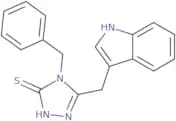
CAS:Please enquire for more information about 5-(Indol-3-ylmethyl)-4-benzyl-1,2,4-triazole-3-thiol including the price, delivery time and more detailed product information at the technical inquiry form on this pageFormula:C18H16N4SPurezza:Min. 95%Colore e forma:PowderPeso molecolare:320.41 g/mol

![9-Fluoro-3-methyl-7-oxo-10-(1-piperazinyl)-2,3-dihydro-7H-[1,4]oxazino[2,3,4-Ij]quinoline-6-carbox…](/_next/image/?url=https%3A%2Fstatic.cymitquimica.com%2Fproducts%2F3D%2Fthumb-webp%2FFF102861.webp&w=3840&q=75)
![(6S)-5,6,7,8-Tetrahydro-6-[propyl[2-(2-thienyl)ethyl]amino]-1-naphthalenol](/_next/image/?url=https%3A%2Fstatic.cymitquimica.com%2Fproducts%2F3D%2Fthumb-webp%2FFT76640.webp&w=3840&q=75)