Alcoli
Gli alcoli sono una vasta gamma di molecole organiche derivate dagli idrocarburi che contengono uno o più gruppi idrossilici (gruppo OH). Questi composti sono essenziali in varie reazioni chimiche e sono ampiamente utilizzati in laboratorio per la sintesi, come solventi e in chimica analitica. Da CymitQuimica, offriamo alcoli di alta qualità preparati per l'uso in laboratorio, supportando le tue ricerche e applicazioni industriali con prodotti affidabili ed efficaci. La nostra selezione garantisce che tu abbia gli alcoli giusti per le tue esigenze specifiche, sia per il lavoro di laboratorio di routine che per progetti di ricerca specializzati.
Sottocategorie di "Alcoli"
Trovati 5814 prodotti di "Alcoli"
Ordinare per
Purezza (%)
0
100
|
0
|
50
|
90
|
95
|
100
1,3-Distearoyl-2-chloropropanediol-d5
CAS:Please enquire for more information about 1,3-Distearoyl-2-chloropropanediol-d5 including the price, delivery time and more detailed product information at the technical inquiry form on this pageFormula:C39H70D5CIO4Purezza:Min. 95%Peso molecolare:751.95 g/mol2-Formyl-3,17b-O-bis(methoxymethyl)estradiol
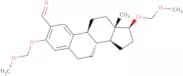
CAS:Prodotto controllatoPlease enquire for more information about 2-Formyl-3,17b-O-bis(methoxymethyl)estradiol including the price, delivery time and more detailed product information at the technical inquiry form on this pageFormula:C23H32O5Purezza:Min. 95%Peso molecolare:388.5 g/mol(3,5-Dimethylpyridin-2-yl)methanol
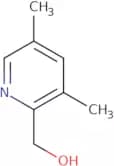
CAS:<p>3,5-Dimethylpyridin-2-yl)methanol is a compound used in the synthesis of esomeprazole. It is not considered an impurity or a target compound and does not need to be analyzed. 3,5-Dimethylpyridin-2-yl)methanol is synthesized by reacting 3,5-dimethylpyridine with methanol.</p>Formula:C8H11NOPurezza:Min. 95%Peso molecolare:137.18 g/molErythromycin A enol ether
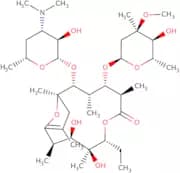
CAS:<p>Erythromycin A enol ether is an antimicrobial agent that is used as an antiretroviral therapy for HIV. It has been shown to be active against microbial infections caused by resistant microorganisms, such as methicillin-resistant Staphylococcus aureus and erythromycin-resistant Enterobacteriaceae. Erythromycin A enol ether has been found to be a promising candidate for topical applications due to its low toxicity and ability to penetrate the skin. The metabolite of erythromycin A enol ether is formed through hydrolysis with hydrochloric acid in the presence of glycol ester. The resulting product, erythromycin A, is an antibiotic that inhibits bacterial growth by blocking peptide synthesis at the ribosome level.</p>Formula:C37H65NO12Purezza:Min. 95%Peso molecolare:715.91 g/molRef: 3D-FE22798
10mg410,00€25mg607,00€50mgPrezzo su richiesta100mgPrezzo su richiesta250mgPrezzo su richiestaKushenol X
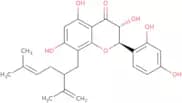
CAS:Kushenol X is a bioactive flavonoid compound, which is derived from the traditional Chinese medicinal plant Sophora flavescens. Known for its diverse pharmacological activities, Kushenol X primarily exerts its effects through the modulation of various cellular pathways. This compound has been found to interact with signaling molecules and pathways implicated in inflammation and cancer, exhibiting both anti-inflammatory and anticancer properties.Purezza:Min. 95%2-[(4-Methylbenzenesulfonyl)oxy]ethan-1-ol
CAS:<p>2-[(4-Methylbenzenesulfonyl)oxy]ethan-1-ol is a compound that contains a benzene ring and an ethyl chain. It has the following chemical structure: It is structurally related to benzodiazepine, but with an amide group instead of a diazepine ring. 2-[(4-Methylbenzenesulfonyl)oxy]ethan-1-ol is a membrane stabilizer that inhibits thrombin and can be used as an anticoagulant. This compound also has growth factor activity and can be used in the synthesis of heterocyclic compounds.</p>Formula:C9H12O4SPurezza:Min. 95%Colore e forma:Clear LiquidPeso molecolare:216.26 g/molRef: 3D-FM171828
1gPrezzo su richiesta2gPrezzo su richiesta5gPrezzo su richiesta250mg218,00€500mg291,00€4-Nitrophenol
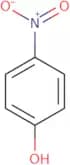
CAS:4-Nitrophenol is a chemical compound that is used in wastewater treatment to remove iron and copper ions. 4-Nitrophenol has been shown to catalyze the oxidation of picolinic acid by copper chloride, forming oxalic acid. The redox potential of 4-nitrophenol is -0.53 V, which makes it a suitable electron acceptor for the reaction. The reaction mechanism of this process involves the formation of a nitroso radical intermediate, which reacts with copper ions to form copper nitroso complexes and then reacts with oxygen to form hydroxylamine radicals. This reaction can also be followed using fluorescence probe measurements or electrochemical impedance spectroscopy (EIS).Formula:C6H5NO3Purezza:Min. 95%Colore e forma:PowderPeso molecolare:139.11 g/mol(1-Isopropyl-1H-benzimidazol-2-yl)methanol
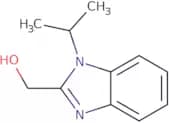
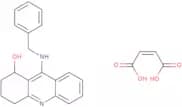
CAS:Prodotto controllato<p>Please enquire for more information about (1-Isopropyl-1H-benzimidazol-2-yl)methanol including the price, delivery time and more detailed product information at the technical inquiry form on this page</p>Formula:C11H14N2OPurezza:Min. 95%Peso molecolare:190.24 g/mol9-(Benzylamino)-1,2,3,4-tetrahydroacridin-1-ol maleate
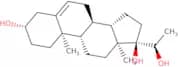
CAS:9-(Benzylamino)-1,2,3,4-tetrahydroacridin-1-ol maleate is a cholinergic drug that is used for the treatment of inflammatory diseases. It inhibits phosphodiesterase activity and has been shown to be effective in clinical studies against a number of inflammatory diseases. This drug also has anti-inflammatory properties and can be used to treat acute inflammation. 9-(Benzylamino)-1,2,3,4-tetrahydroacridin-1-ol maleate is also conjugated with fatty acids and this formation helps to increase its bioavailability.Formula:C24H24N2O5Purezza:Min. 95%Peso molecolare:420.46 g/mol(3b,20R)-Pregn-5-ene-3,17,20-triol
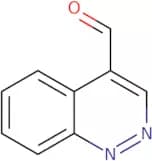
CAS:Prodotto controllato<p>Please enquire for more information about (3b,20R)-Pregn-5-ene-3,17,20-triol including the price, delivery time and more detailed product information at the technical inquiry form on this page</p>Formula:C21H34O3Purezza:Min. 95%Peso molecolare:334.49 g/mol4-Cinnolinecarboxaldehyde
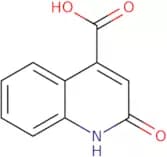
CAS:<p>4-Cinnolinecarboxaldehyde is an organic compound that belongs to the group of cinnoline. It is a colorless liquid that can be used as a precursor in the production of aluminum metal. 4-Cinnolinecarboxaldehyde reacts with lithium aluminum hydride to form a compound that can be used as a reducing agent in organic chemistry. 4-Cinnolinecarboxaldehyde is also used as a precursor for preparing other compounds, such as lithium aluminum hydride and lithium aluminum trihydride.</p>Formula:C9H6N2OPurezza:Min. 95%Peso molecolare:158.16 g/mol2-Hydroxyquinoline-4-carboxylic acid
CAS:<p>2-Hydroxyquinoline-4-carboxylic acid is a carboxylate that is structurally classified as a multidrug. It has been shown to inhibit bacterial efflux pumps and target enzymes, such as cancer cells and multidrug resistant bacteria. 2-Hydroxyquinoline-4-carboxylic acid also has potent antibacterial activity against Streptococcus faecalis, an opportunistic pathogen that causes infections in the urinary tract and on skin wounds. The fluorescence properties of this compound can be used for fluorescent labeling of biomolecules or for sensing applications.</p>Formula:C10H7NO3Purezza:Min. 95%Colore e forma:PowderPeso molecolare:189.17 g/mol1-(3',4'-Dimethoxyphenyl)-1-propanol
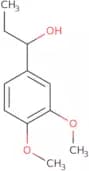
CAS:1-(3’,4’-Dimethoxyphenyl)-1-propanol is a naturally occurring chemical with the molecular formula C10H14O2. It has been found in the bark of Pinus pinaster and the rhizome of Piper auritum. This compound has been shown to have an antiinflammatory effect by inhibiting prostaglandin synthesis. It also inhibits nitrosation reactions and is being studied for its potential as a cancer chemopreventive agent. 1-(3’,4’-Dimethoxyphenyl)-1-propanol is an enantiomer of 2-(3',4'-dimethoxyphenyl)propane-1,3-diol.Formula:C11H16O3Purezza:Min. 95%Peso molecolare:196.24 g/mol3-[(4-Aminopiperidin-1-yl)methyl]phenol
CAS:<p>Please enquire for more information about 3-[(4-Aminopiperidin-1-yl)methyl]phenol including the price, delivery time and more detailed product information at the technical inquiry form on this page</p>Formula:C12H18N2OPurezza:Min. 95%Peso molecolare:206.28 g/mol3-Methylether-estradiol
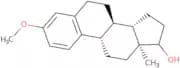
CAS:Prodotto controllato3-Methylether-estradiol is a naturally occurring estrogen that is found in humans and other mammals. It binds to estrogen receptors on the plasma membrane, which stimulates cell growth, protein synthesis, and modulates the immune system. 3-Methylether-estradiol has been shown to inhibit taurocholic acid induced hypertension in rats by blocking the conversion of angiotensin I to angiotensin II. In addition, this compound has been shown to have anti-inflammatory properties and can be used as an antihypertensive agent. 3-Methylether-estradiol has also been shown to increase blood pressure in pregnant rats when given at bolus doses. This drug should not be prescribed for use during pregnancy because it can cause fetal death.Formula:C19H26O2Purezza:Min. 95%Peso molecolare:286.41 g/molD-Tryptophanol
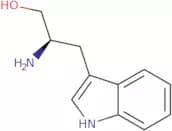
CAS:Prodotto controllato<p>D-Tryptophanol is a synthetic, enantiopure, hydroxymethylated tryptamine. It is a maltobionic molecule and it can be prepared by the hydrolysis of L-tryptophan with sodium hydroxide in water. D-Tryptophanol can also be synthesized from 3,4-diaminopyridine in the presence of a base and catalytic amount of copper(II) chloride. The chemical stability of D-tryptophanol has been studied using HPLC methods. Molecular modeling studies have shown that the compound forms hydrogen bonds with its neighboring molecules and has a high affinity for binding to human liver cells. D-Tryptophanol has been found to inhibit cancer cell growth at nanomolar concentrations, making it an attractive candidate for chemotherapeutic drugs. Calixarenes are used as chiral synthons to produce racemic mixtures of D-tryptophanol that could be</p>Formula:C11H14N2OPurezza:Min. 95%Peso molecolare:190.24 g/mol3,5-Dimethyl-1-hexyn-3-ol
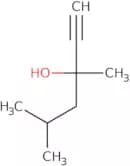
CAS:<p>3,5-Dimethyl-1-hexyn-3-ol is a reactive chemical that is used as a polymerase chain reaction (PCR) substrate film. The film has an active surface and can be used to detect the presence of DNA by adding colloidal gold. 3,5-Dimethyl-1-hexyn-3-ol reacts with the glycol ether and surfactant to form a hydrophobic film on the surface of the substrate film. The hydrophobic films are nonpolar and do not mix with water, so they do not dissolve in water. This allows for detection of DNA by using plasma mass spectrometry or eugenol, which reacts selectively with double bonds in DNA. 3,5-Dimethyl-1-hexyn-3-ol is also used in wastewater treatment as an antimicrobial agent to control bacterial growth.</p>Formula:C8H14OPurezza:Min. 95%Colore e forma:Clear LiquidPeso molecolare:126.2 g/mol(2-Chloro-4-nitrophenyl)methanol
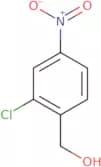
CAS:Please enquire for more information about (2-Chloro-4-nitrophenyl)methanol including the price, delivery time and more detailed product information at the technical inquiry form on this pageFormula:C7H6ClNO3Purezza:Min. 95%Colore e forma:PowderPeso molecolare:187.58 g/mol2-Carboxy mestanolone methyl ester
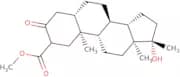
CAS:Prodotto controllato<p>Please enquire for more information about 2-Carboxy mestanolone methyl ester including the price, delivery time and more detailed product information at the technical inquiry form on this page</p>Formula:C22H34O4Purezza:Min. 95%Peso molecolare:362.5 g/mol3-Isoquinolinecarboxylic acid
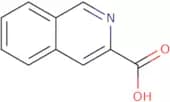
CAS:3-Isoquinolinecarboxylic acid is a molecule with a reactive group that can form cyclic structures. It has been shown that 3-Isoquinolinecarboxylic acid is an apoptotic agent in human macrophages and induces the release of picolinic acid from these cells. This molecule also has a high affinity for α7 nicotinic acetylcholine receptors, which are present on the surface of nerve cells. 3-Isoquinolinecarboxylic acid can be synthesized by condensing picolinic acid, an aromatic aminoacid, with an appropriate amine. The synthesis of this heterocycle is catalyzed by an enzyme called quinolinate synthase. The product of this reaction is oxidized to form 3-isoquinolyl carboxylic acid. The final step in the synthesis involves the oxidative cleavage of a disulfide bond using hydrogen peroxide, yielding 3-isoquinolyFormula:C10H7NO2Purezza:Min. 95%Peso molecolare:173.17 g/mol


![2-[(4-Methylbenzenesulfonyl)oxy]ethan-1-ol](/_next/image/?url=https%3A%2Fstatic.cymitquimica.com%2Fproducts%2F3D%2Fthumb-webp%2FFM171828.webp&w=3840&q=75)
![3-[(4-Aminopiperidin-1-yl)methyl]phenol](/_next/image/?url=https%3A%2Fstatic.cymitquimica.com%2Fproducts%2F3D%2Fthumb-webp%2FFA116167.webp&w=3840&q=75)