Alcoli
Gli alcoli sono una vasta gamma di molecole organiche derivate dagli idrocarburi che contengono uno o più gruppi idrossilici (gruppo OH). Questi composti sono essenziali in varie reazioni chimiche e sono ampiamente utilizzati in laboratorio per la sintesi, come solventi e in chimica analitica. Da CymitQuimica, offriamo alcoli di alta qualità preparati per l'uso in laboratorio, supportando le tue ricerche e applicazioni industriali con prodotti affidabili ed efficaci. La nostra selezione garantisce che tu abbia gli alcoli giusti per le tue esigenze specifiche, sia per il lavoro di laboratorio di routine che per progetti di ricerca specializzati.
Sottocategorie di "Alcoli"
Trovati 5814 prodotti di "Alcoli"
Ordinare per
Purezza (%)
0
100
|
0
|
50
|
90
|
95
|
100
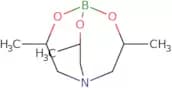
Triisopropanolamine Borate
CAS:<p>Triisopropanolamine borate is an organic compound with the formula (CH3)3N(CH2)3OH. It is a colorless liquid with a sweet, amine-like odor. Triisopropanolamine borate is widely used as a cross-linking agent in coatings, and as a reactive functional group in polycarboxylic acid synthesis and cationic polymerization. It also has been used as a blood pressure lowering agent and to treat high calcium levels in the blood. The chemical structure of triisopropanolamine borate can be seen below: Triisopropanolamine Borate, Chemical Structure The chemical formula for triisopropanolamine borate is CH3N(CH2)3OH. Triisopropanolamine borate has many applications due to its reactive functional groups, including cross-linking agents for coatings and polycarboxylic acid synthesis</p>Formula:C9H18BNO3Purezza:Min. 95%Peso molecolare:199.06 g/mol4-(4-Methylphenoxy)phenol
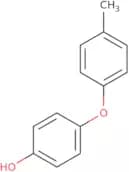
CAS:Please enquire for more information about 4-(4-Methylphenoxy)phenol including the price, delivery time and more detailed product information at the technical inquiry form on this pageFormula:C13H12O2Purezza:Min. 95%Peso molecolare:200.23 g/molRef: 3D-FM54190
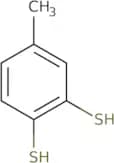
1gPrezzo su richiesta2gPrezzo su richiesta100mgPrezzo su richiesta250mgPrezzo su richiesta500mgPrezzo su richiestaToluene-3,4-dithiol
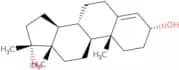
CAS:<p>Toluene-3,4-dithiol is a reactive dithiol that has been shown to have synergistic effects with other organic compounds. It is used in the preparation of methyl ethyl and its derivatives. Toluene-3,4-dithiol has also been shown to inhibit both the activity of enzymes and the growth of bacteria. The biological properties of this compound are not well understood, but it can be used as a model system for studying disulfide bonds and their role in protein folding. Studies have shown that this compound inhibits enzymatic activity and reduces bacterial growth without affecting cell viability.</p>Formula:C7H8S2Purezza:Min. 95%Peso molecolare:156.27 g/mol17-Methyl-4-androstene-3a,17a-diol
CAS:Prodotto controllatoPlease enquire for more information about 17-Methyl-4-androstene-3a,17a-diol including the price, delivery time and more detailed product information at the technical inquiry form on this pageFormula:C20H32O2Purezza:Min. 95%Peso molecolare:304.47 g/mol3,29-Dibenzoyl rarounitriol
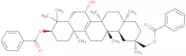
CAS:Prodotto controllato<p>3,29-Dibenzoyl rarounitriol (3,29-DBR) is a quercetin glycoside that has been shown to be an effective inhibitor of the H1 receptor. It prevents the binding of histamine to the H1 receptor on cells, preventing the release of inflammatory compounds such as lysosomal enzymes and prostaglandins. 3,29-DBR has been shown to be a potent inhibitor of terfenadine in both rats and humans. It has also been shown to inhibit other drugs metabolized by cytochrome P450 2D6. In a pharmacokinetic study in rats, 3,29-DBR was found to have a half-life of 5 hours and peak plasma concentrations at 1 hour following oral administration. Pharmacokinetic parameters are dose dependent with Cmax values ranging from 0.5 µg/mL for low doses to 14 µg/mL for high doses.</p>Purezza:Min. 95%4-(Decyloxy)butan-1-ol
CAS:Prodotto controllatoPlease enquire for more information about 4-(Decyloxy)butan-1-ol including the price, delivery time and more detailed product information at the technical inquiry form on this pageFormula:C14H30O2Purezza:Min. 95%Peso molecolare:230.39 g/mol1H-Pyrazol-4-ol
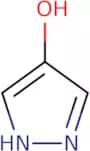
CAS:<p>1H-Pyrazol-4-ol is a molecule that has been shown to have antibacterial properties by inhibiting the growth of bacteria. It was also found to be effective in inhibiting the activity of dopamine β-hydroxylase, which is an enzyme that catalyzes the conversion of dopamine to norepinephrine. 1H-Pyrazol-4-ol has been shown to inhibit nitrite ion reductase, which converts nitrite ions into nitric oxide. Nitric oxide is a potent vasodilator and can cause hypotension. 1H-Pyrazol-4-ol also inhibits the formation of nitro groups from diazonium salts, which are used in many industrial processes, including dyeing and photography. 1H-Pyrazol-4-ol is activated by UV light and reacts with epididymal adipose tissue (fatty tissue) in rats to generate pyrazole derivatives with cytotoxic effects on liver</p>Formula:C3H4N2OPurezza:Min. 95%Peso molecolare:84.08 g/mol(1,5-Dimethyl-1H-benzimidazol-2-yl)methanol
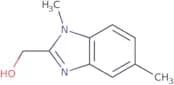
CAS:Prodotto controllatoPlease enquire for more information about (1,5-Dimethyl-1H-benzimidazol-2-yl)methanol including the price, delivery time and more detailed product information at the technical inquiry form on this pageFormula:C10H12N2OPurezza:Min. 95%Peso molecolare:176.22 g/mol9-Chloro triamcinolone acetonide
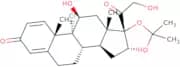
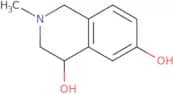
CAS:Please enquire for more information about 9-Chloro triamcinolone acetonide including the price, delivery time and more detailed product information at the technical inquiry form on this pageFormula:C24H31ClO6Purezza:Min. 95%Peso molecolare:450.95 g/mol1,2,3,4-Tetrahydro-4,6-dihydroxy-2-methyl-isoquinoline
CAS:<p>1,2,3,4-Tetrahydro-4,6-dihydroxy-2-methyl-isoquinoline is a useful building block in the synthesis of various compounds such as pharmaceuticals and pesticides. It is an intermediate for the preparation of other valuable chemicals such as the antihistamine diphenhydramine, which is used to treat allergies. Tetrahydroisoquinoline can also be used as a reagent to synthesize other chemical compounds. This compound has been used in research as well as commercial applications. Tetrahydroisoquinoline is also a versatile scaffold that can be modified to produce different derivatives with different properties.</p>Formula:C10H13NO2Purezza:Min. 95%Colore e forma:White PowderPeso molecolare:179.22 g/molKushenol W
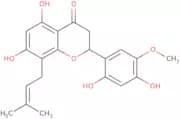
CAS:Kushenol W is a flavonoid compound, which is derived from the root of the Sophora flavescens plant. This plant, commonly known as "Kushen," is an important component in traditional Chinese medicine. The mode of action of Kushenol W involves multiple biological pathways, primarily exerting its effects through anti-inflammatory and anti-tumor activities. It interacts with various molecular targets, modulating pathways associated with oxidative stress and cell proliferation.Purezza:Min. 95%2-(2-Methoxyphenoxy)ethanol
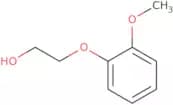
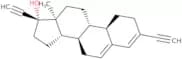
CAS:<p>2-(2-Methoxyphenoxy)ethanol (2-MPE) is a metabolite of propanediol, which is a precursor in the synthesis of polyurethanes. 2-MPE can be oxidized by monooxygenases to form syringyl and other reactive metabolites. Basic hydrolysis may also produce monomers such as phenols, alcohols, and carboxylic acids. Syringyl is one of the metabolic products of 2-MPE, which has been shown to be resistant to degradation by basidiomycete fungi.</p>Formula:C9H12O3Purezza:Min. 95%Peso molecolare:168.19 g/mol(17a)-3-Ethynyl-19-norpregna-3,5-dien-20-yn-17-ol
CAS:Prodotto controllato<p>Please enquire for more information about (17a)-3-Ethynyl-19-norpregna-3,5-dien-20-yn-17-ol including the price, delivery time and more detailed product information at the technical inquiry form on this page</p>Formula:C22H26OPurezza:Min. 95%Peso molecolare:306.44 g/mol2-(4-(4,4,5,5-Tetramethyl-l.3,2-dioxaborolan-2-yl)phenyl)ethanol
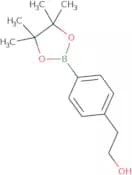
CAS:2-(4-(4,4,5,5-Tetramethyl-l,3,2-dioxaborolan-2-yl)phenyl)ethanol is a fine chemical that has been used as a reagent and as a building block for the synthesis of complex compounds. It is also an intermediate in organic reactions and has been used as a reaction component in the synthesis of various drugs and agrochemicals. 2-(4-(4,4,5,5-Tetramethyl-l,3,2-dioxaborolan-2-yl)phenyl)ethanol is useful as a scaffold in organic synthesis. This compound can be converted to other useful chemicals such as tetrahydropyranones and dibenzalacetone derivatives. 2-(4-(4,4,5,5-Tetramethyl-l,3,2-dioxaborolan-2-yl)phenyl)ethanolFormula:C14H21BO3Purezza:Min. 95%Colore e forma:White PowderPeso molecolare:248.13 g/mol3b-Acetoxyergosta-7,22-dien-5a-ol
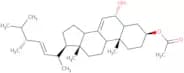
CAS:Prodotto controllatoPlease enquire for more information about 3b-Acetoxyergosta-7,22-dien-5a-ol including the price, delivery time and more detailed product information at the technical inquiry form on this pageFormula:C30H48O3Purezza:Min. 95%Peso molecolare:456.7 g/molKushenol R
CAS:Kushenol R is a bioactive flavonoid compound, which is extracted from the roots of the plant Sophora flavescens, commonly known as the shrubby sophora. Its chemical structure contributes to its role as a compound of interest in the realm of natural product chemistry and pharmacology. As a flavonoid, Kushenol R exhibits significant antioxidant activity, attributed to its ability to scavenge free radicals and mitigate oxidative stress at the cellular level. This mechanism of action is crucial as it offers potential therapeutic effects in combating diseases associated with oxidative damage, such as cancer and inflammatory disorders.Purezza:Min. 95%Azetidin-3-ol
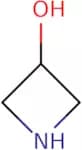
CAS:<p>Azetidin-3-ol is an amide. It can be synthesized by the acylation reaction of 3-hydroxypropanoic acid with an amine. Azetidin-3-ol is a chiral molecule and has two enantiomers. The maleate salt of azetidin-3-ol is used as a drug to treat Parkinson's disease. Azetidin-3-ol has been shown to have potent inhibition against the wild type strain of Clostridium botulinum, but not against its intermolecular hydrogen bonding mutant.</p>Formula:C3H7NOPurezza:Min. 95%Peso molecolare:73.09 g/mol1-Dodecanol
CAS:Dodecanol is a saturated fatty alcohol that has the molecular formula CH(CH)CHOH. It has two hydroxyl groups and exists as a colourless liquid at room temperature. Dodecanol is used in the preparation of sodium citrate, which is sometimes used in the treatment of kidney stones. Dodecanol reacts with sodium citrate to form dodecanedioic acid and hydrogen bonding interactions between dodecanedioic acid and linoleyl alcohol occur. This reaction mechanism can be explained by kinetic data. Dodecanol also has high values for chemical stability, sample preparation, hydroxyl group, and alcohol residue. The phase transition temperature of dodecanol ranges from -98°C to -42°C. Dodecanol can be oxidized by catalysts such as potassium permanganate or potassium dichromate.Formula:C12H26OPurezza:Min. 98 Area-%Colore e forma:White PowderPeso molecolare:186.33 g/mol2-(1-Adamantyl)propan-2-ol
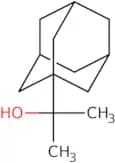
CAS:<p>2-(1-Adamantyl)propan-2-ol is an alcohol that can be synthesized in a multistep process. This molecule has been shown to inhibit the influenza virus, which is a type of negative strand RNA virus. It reacts with the sulfide group on the influenza virus, forming a covalent bond. The structure of 2-(1-Adamantyl)propan-2-ol is similar to that of amantadine and azetidine, which are also antiviral drugs used for the treatment of influenza.</p>Formula:C13H22OPurezza:Min. 95%Peso molecolare:194.31 g/molCloprednol
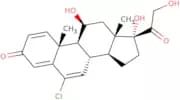
CAS:Prodotto controllato<p>Cloprednol is an anti-infective agent that belongs to the group of aziridine derivatives. It is a synthetic analog of prednisolone, which has been shown to inhibit the inflammatory response in the intestine. Cloprednol has been shown to be highly biocompatible and its long-term efficacy against microbial infection has been demonstrated by kinetic data. This drug also inhibits choroidal neovascularization, which is a major cause of blindness in patients with age-related macular degeneration. Cloprednol is used for the treatment of bowel diseases such as Crohn’s disease and ulcerative colitis. It also has been shown to be effective in treating autoimmune diseases such as psoriasis, rheumatoid arthritis, and systemic lupus erythematosus.</p>Formula:C21H25ClO5Purezza:Min. 95%Peso molecolare:392.87 g/mol