


Alcoli
Gli alcoli sono una vasta gamma di molecole organiche derivate dagli idrocarburi che contengono uno o più gruppi idrossilici (gruppo OH). Questi composti sono essenziali in varie reazioni chimiche e sono ampiamente utilizzati in laboratorio per la sintesi, come solventi e in chimica analitica. Da CymitQuimica, offriamo alcoli di alta qualità preparati per l'uso in laboratorio, supportando le tue ricerche e applicazioni industriali con prodotti affidabili ed efficaci. La nostra selezione garantisce che tu abbia gli alcoli giusti per le tue esigenze specifiche, sia per il lavoro di laboratorio di routine che per progetti di ricerca specializzati.
Sottocategorie di "Alcoli"
Trovati 5814 prodotti di "Alcoli"
Ordinare per
Purezza (%)
0
100
|
0
|
50
|
90
|
95
|
100
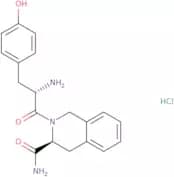
H-Tyr-L-1,2,3,4-tetrahydroisoquinoline-3-carboxamide·HCl
CAS:<p>H-Tyr-L-1,2,3,4-tetrahydroisoquinoline-3-carboxamide·HCl is a monoclinic crystalline compound. It has a molecular weight of 607.14 and contains the dipeptide Tyr-Lys in its structure. H-Tyr-L-1,2,3,4-tetrahydroisoquinoline-3-carboxamide·HCl crystallizes in the P21/c space group and has an asymmetric unit cell with dimensions a=8.851 Å, b=7.965 Å and c=5.98 Å. This compound has been shown to have antibacterial properties against methicillin resistant Staphylococcus aureus (MRSA) isolates and Clostridium perfringens strains by inhibiting bacterial protein synthesis through inhibition of peptidyl transferase activity.</p>Formula:C19H21N3O3·HClPurezza:Min. 95%Peso molecolare:375.85 g/molDimethyl benzyl carbinol acetate
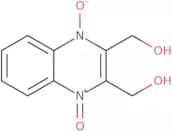
CAS:<p>Dimethyl benzyl carbinol acetate is a polymer that forms a film on the skin and prevents water loss. It has been shown to have enzyme-inhibiting properties, which may be due to its ability to prevent geranyl production. Dimethyl benzyl carbinol acetate has also been used as a sealant in microcapsules, which are then broken down by enzymes in order to release the contents of the capsule. Dimethyl benzyl carbinol acetate can also be used as an antimicrobial agent, where it inhibits bacterial cell growth by interfering with fatty acid synthesis.</p>Purezza:Min. 95%(1,4-Dioxidoquinoxaline-2,3-diyl)dimethanol
CAS:Polymyxin B is a cationic peptide antibiotic that is effective in the treatment of infectious diseases. It has been shown to inhibit growth of Gram-negative bacteria by binding to the outer membrane and disrupting osmotic balance. Polymyxin B has been shown to be toxic to liver cells, but it can be used as an antimicrobial agent in combination with ethylene diamine and clastogenic agents such as hydrochloric acid and hydrogen peroxide. This drug also has genotoxic effects. Polymyxin B has high resistance to hydrolysis by hydroxyl group-containing enzymes, making it a broad-spectrum antimicrobial agent that is active against Gram-positive bacteria, Gram-negative bacteria, and mycobacteria.Formula:C10H10N2O4Purezza:Min. 95%Colore e forma:PowderPeso molecolare:222.2 g/mol1,3-Bis(Dimethylamino)-2-Propanol
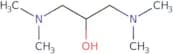
CAS:<p>1,3-Bis(dimethylamino)-2-propanol is a polymeric compound that is soluble in water and organic solvents. It has been shown to have a viscosity of less than 2.0 centipoise (cP) at 20°C and pH 8.5. This compound also has a high solubility in buffers, carboxylates, and chloride ions. 1,3-Bis(dimethylamino)-2-propanol has been used as an additive for silicone surfactants and in the production of tetranuclear gold nanoparticles for use in chemiluminescence applications.</p>Formula:C7H18N2OPurezza:Min. 95%Peso molecolare:146.23 g/mol2-Bromoethane-1-thiol
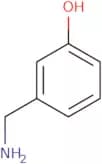
CAS:<p>2-Bromoethane-1-thiol (2BET) is a hydrogen bond sensitive sensor that can be used in the detection of reactive oxygen species. 2BET has been shown to have a high sensitivity and selectivity to hydrogen peroxide, with an observed response time of less than 1 second. This sensor has been found to be useful for detecting short-term changes in hydrogen peroxide concentrations and can also detect long term changes due to its stability in the membrane. 2BET is also highly selective for hydrogen peroxide and does not react with other compounds, such as nitric oxide or sulfur dioxide. 2BET is a cavity type sensor that consists of two gold electrodes with a polyelectrolyte membrane between them. When exposed to reactive oxygen species, the polyelectrolyte membrane becomes crosslinked and this change in permeability can be detected by measuring the current across the electrodes. 2BET sensors are able to distinguish between isotopomers</p>Formula:C2H5BrSPurezza:Min. 95%Colore e forma:Clear LiquidPeso molecolare:141.03 g/mol3-(Aminomethyl)phenol
CAS:3-(Aminomethyl)phenol is a potent inhibitor of growth factor receptor kinase (GRK) and protein kinase C. It has been shown to have inhibitory effects on cellular proliferation in mammalian cells and is being investigated as an adjuvant therapy for cancer treatment. 3-(Aminomethyl)phenol has also been shown to inhibit the enzyme cyclooxygenase-2, which is involved in the synthesis of prostaglandins. DISCUSSION: The carbonyl group of 3-(aminomethyl)phenol makes it a potent inhibitor of GRKs and protein kinases C. Kinases are enzymes that catalyze the addition of phosphate groups onto proteins, which affects their activity. As such, 3-(aminomethyl)phenol inhibits the activity of GRKs and protein kinases C by binding to the ATP-binding site, preventing ATP from binding and phosphorylating the enzyme's target proteinsFormula:C7H9NOPurezza:Min. 95%Peso molecolare:123.15 g/molN-Methyl-N-boc-aminopropan-3-ol
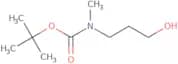
CAS:<p>N-Methyl-N-boc-aminopropan-3-ol is a fine chemical with CAS No. 98642-44-5 that is used in the synthesis of complex compounds, as a reagent for research chemicals, and as a speciality chemical. It is also used in the synthesis of versatile building blocks, reaction components and scaffolds. N-Methyl-N-boc-aminopropan-3-ol has a high quality and can be used as a versatile intermediate or a useful scaffold.</p>Formula:C9H19NO3Purezza:Min. 95%Colore e forma:Colourless To Pale Yellow LiquidPeso molecolare:189.25 g/mol2,4-Dimethoxyphenylmethylcarbinol
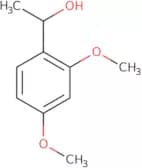
CAS:2,4-Dimethoxyphenylmethylcarbinol is a benzene derivative that can be synthesized from 2,4-dimethoxybenzaldehyde and formaldehyde. This compound is an efficient reductant for hydrazine and has been used as a screening agent for new drugs. It is also a pharmacological active substance with anti-inflammatory properties. 2,4-Dimethoxyphenylmethylcarbinol has shown activity against carrageenan-induced rat paw edema, as well as the vessel and ultrasonic effects of irradiation.Formula:C10H14O3Purezza:Min. 95%Peso molecolare:182.22 g/molPolyglycerine - Polyglycerol-2,3,4
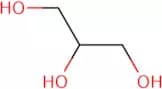
CAS:<p>Naturally-derived multifunctional moisturizer; used in cosmetic formulations</p>Formula:(C3H8O3)nPurezza:Min. 85%Colore e forma:Colorless PowderQuinoline-4-carboxylic acid
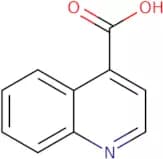
CAS:<p>Quinoline-4-carboxylic acid is a natural compound that is derived from the amino acid tryptophan. It has been shown to have antiinflammatory activity and to be an inhibitor of prostaglandin synthesis. Quinoline-4-carboxylic acid inhibits the growth of carcinoma cells in culture by inducing apoptosis, which is mediated by inhibition of protein synthesis. Quinoline-4-carboxylic acid also has pharmacokinetic properties, including a low volume of distribution, low clearance rate and high bioavailability.</p>Formula:C10H7NO2Purezza:Min. 97 Area-%Peso molecolare:173.17 g/mol3,4-Dichlorothiophenol
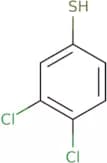
CAS:3,4-Dichlorothiophenol is a chemical compound that belongs to the group of reactive compounds. It can be used as a chemical intermediate for the synthesis of other organic compounds. 3,4-Dichlorothiophenol is an inhibitor of methylating enzymes such as glyoxalase I and II and glyceraldehyde-3-phosphate dehydrogenase. This inhibition leads to the accumulation of methylglyoxal and 3-deoxyglucosone in cells, which are potent inhibitors of protein glycosylation. 3,4-Dichlorothiophenol also inhibits nucleophilic attack on DNA by epoxide hydrolases such as epoxide hydrolase 1 and 2. This inhibition results in the accumulation of reactive metabolites that are covalently adducted with DNA bases.Formula:C6H4Cl2SPurezza:Min. 95%Peso molecolare:179.07 g/mol2-(3,4-Dichlorophenyl)ethanol
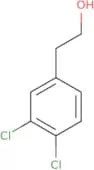
CAS:<p>2-(3,4-Dichlorophenyl)ethanol is a high quality reagent for the synthesis of complex compounds, useful as an intermediate in organic synthesis and as a building block for speciality chemicals. This chemical is also used as a research chemical in the synthesis of versatile building blocks. It can be used as a reaction component in various reactions such as Suzuki coupling, Negishi coupling, Heck reaction, and Sonogashira coupling.</p>Formula:C8H8Cl2OPurezza:Min. 95%Peso molecolare:191.05 g/mol(aR)-a-[[[2-(4-Aminophenyl)ethyl]amino]methyl]-benzenemethanol
CAS:Please enquire for more information about (aR)-a-[[[2-(4-Aminophenyl)ethyl]amino]methyl]-benzenemethanol including the price, delivery time and more detailed product information at the technical inquiry form on this pageFormula:C16H20N2OPurezza:Min. 95%Colore e forma:PowderPeso molecolare:256.34 g/mol3-Bromobenzyl alcohol
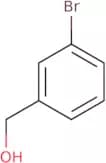
CAS:<p>3-Bromobenzyl alcohol (3BA) is a potent inhibitor of farnesyl diphosphate synthase, which is an enzyme that catalyzes the conversion of dimethylallyl diphosphate and 5,6,7,8-tetrahydrofolic acid to farnesyl diphosphate. It has been shown to be effective in the treatment of cancer. 3BA blocks the synthesis of farnesyl diphosphate and protein geranylgeranylation. It also inhibits tumor growth by inducing apoptosis. The efficacy of 3BA is limited by its toxicity at high concentrations. 3BA has also been found to inhibit nitrous oxide production in mice and rats.</p>Formula:C7H7BrOPurezza:Min. 95%Colore e forma:PowderPeso molecolare:187.03 g/molEstradiol cypionate
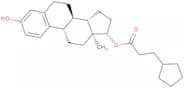
CAS:<p>Estradiol cypionate is a synthetic form of estrogen. It is used as a contraceptive and to treat certain types of breast cancer. Estradiol cypionate is administered by intramuscular injection, and has been shown to be effective in inhibiting ovulation, ovarian activity, and follicular growth. Estradiol cypionate is metabolized in the liver to estradiol benzoate and estrone, which have similar effects on the body. The pharmacokinetics of estradiol cypionate are complex because it binds to sex hormone-binding globulin (SHBG) in the blood serum. This binding reduces the availability of free estradiol for receptor binding, which may result in decreased effectiveness with long-term use.</p>Formula:C26H36O3Purezza:Min. 95%Colore e forma:White PowderPeso molecolare:396.56 g/mol2-Chloro-5-pyridylcarbinol
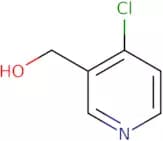
CAS:2-Chloro-5-pyridylcarbinol is an alkene that features a five-membered ring. It is a conformationally rigid molecule, which means it has no rotational or vibrational barriers. The molecule can be classified as a tricyclic heterocycle because the carbon atoms are arranged in three rings. The analogues of this compound feature six-membered carbocycles and intramolecular cycloadditions. 2-Chloro-5-pyridylcarbinol also constitutes one of the azomethine adducts of nicotine, which is a type of tricyclic heterocycle.Formula:C6H6ClNOPurezza:Min. 95%Peso molecolare:143.57 g/mol2-(Difluoromethoxy)Phenol
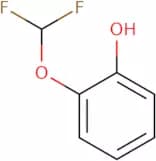
CAS:<p>2-(Difluoromethoxy)Phenol is a purine derivative and pyrimidine derivative. It has been shown to inhibit the growth of cancer cells in vitro and in vivo. 2-(Difluoromethoxy)phenol inhibits multidrug resistance by inhibiting the transport of drugs into cells and thereby preventing their accumulation. As a result, it suppresses inflammatory diseases and autoimmune diseases. The hydroxyl group in this compound can be replaced with fluorine or nitro groups to generate new derivatives with different properties. Piperidine can also be added to this molecule to create an analogue that is more potent than 2-(difluoromethoxy)phenol and has a longer duration of action.</p>Formula:C7H6F2O2Purezza:Min. 95%Peso molecolare:160.12 g/mol4-Chlorophenethyl alcohol
CAS:4-Chlorophenethyl alcohol is a synthetic, primary alcohol. It can be synthesized by reacting 2,4-dichlorobenzoic acid with a Grignard reagent. The reaction produces 4-chlorophenethyl alcohol, which is insoluble in water and reacts with chloride to form chloroform. This procedure can be used to produce other chlorinated alcohols. 4-Chlorophenethyl alcohol has been shown to have acute toxicities that are similar to those of trifluoroacetic acid and it is believed that the toxicity is due to its ability to react with proteins and nucleic acids.Formula:C8H9ClOPurezza:Min. 95%Colore e forma:PowderPeso molecolare:156.61 g/mol1,2-Dilauroyl-sn-glycero-3-phosphoethanolamine
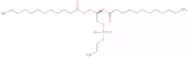
CAS:<p>1,2-Dilauroyl-sn-glycero-3-phosphoethanolamine (DLPE) is a lipid molecule that can induce phase transition in aqueous solutions. DLPE is an active ingredient in nonsteroidal anti-inflammatory drugs and has been shown to inhibit the activity of enzymes such as cyclooxygenase and lipoxygenase. DLPE also inhibits the growth of infectious organisms such as Escherichia coli and HIV by inhibiting receptor activity. DLPE binds to receptors on the surface of cells, which prevents these cells from releasing inflammatory cytokines.</p>Formula:C29H58NO8PPurezza:Min. 95%Colore e forma:PowderPeso molecolare:579.75 g/mol2-Chloro-N-[2-(diethylamino)ethyl]-4-quinolinecarboxamide
CAS:<p>2-Chloro-N-[2-(diethylamino)ethyl]-4-quinolinecarboxamide is a carboxamide analog of dibucaine. It is synthesized from chloroacetyl chloride and isatin in the presence of sodium hydroxide. The synthesis has been scaled to an industrial level. 2-Chloro-N-[2-(diethylamino)ethyl]-4-quinolinecarboxamide has been shown to have analgesic properties, similar to those of dibucaine. Radiolysis of this compound gives a carboxylic acid and a heterocyclic ring product.</p>Formula:C16H20ClN3OPurezza:95%MinColore e forma:PowderPeso molecolare:305.8 g/mol



![(aR)-a-[[[2-(4-Aminophenyl)ethyl]amino]methyl]-benzenemethanol](/_next/image/?url=https%3A%2Fstatic.cymitquimica.com%2Fproducts%2F3D%2Fthumb-webp%2FFA75045.webp&w=3840&q=75)

![2-Chloro-N-[2-(diethylamino)ethyl]-4-quinolinecarboxamide](/_next/image/?url=https%3A%2Fstatic.cymitquimica.com%2Fproducts%2F3D%2Fthumb-webp%2FFC20289.webp&w=3840&q=75)