Ammine
Sottocategorie di "Ammine"
- Nitrosamine(2.643 prodotti)
- Ammine primarie(30.948 prodotti)
- Cationi di ammonio quaternario(1.102 prodotti)
- Ammine secondarie(20.887 prodotti)
- Ammine terziarie(17.195 prodotti)
Trovati 8790 prodotti di "Ammine"
2-Amino-3,4,7,8-tetramethyl-3H-imidazo[4,5-f]quinoxaline
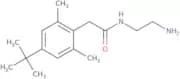
CAS:2-Amino-3,4,7,8-tetramethyl-3H-imidazo[4,5-f]quinoxaline is a potent inhibitor of amine oxidases that are involved in the oxidative metabolism of amines. It has been shown to inhibit the oxidation of aromatic and fatty acids, as well as the formation of heterocyclic amines. The 2-amino-3,4,7,8-tetramethyl-3H-imidazo[4,5-f]quinoxaline can be used to quantitatively determine the concentration of amine oxidases in food samples by liquid chromatography with electrochemical detection. 2-Amino-3,4,7,8-tetramethyl -3H -imidazo [4 , 5 -f ] quinoxaline has been shown to be a potent inhibitor for model systems involving fatty acids and aromatic hydrocarbons.Formula:C13H15N5Purezza:(%) Min. 95%Colore e forma:PowderPeso molecolare:241.29 g/molN-(2-Aminoethyl)-4-(1,1-dimethylethyl)-2,6-dimethylbenzeneacetamide
CAS:Please enquire for more information about N-(2-Aminoethyl)-4-(1,1-dimethylethyl)-2,6-dimethylbenzeneacetamide including the price, delivery time and more detailed product information at the technical inquiry form on this pageFormula:C16H26N2OPurezza:Min. 95%Colore e forma:PowderPeso molecolare:262.39 g/mol2-Fluorophenethylamine
CAS:Prodotto controllato2-Fluorophenethylamine is a molecule that can switch between two forms, one hydrophobic and one hydrophilic. When it is in the hydrophobic form, 2-fluorophenethylamine can bind to water molecules to form potential use products. When 2-fluorophenethylamine is in the hydrophilic form, it can desorb from the surface of water. 2-Fluorophenethylamine has been shown to be a neurotransmitter and may have potential use as an anti-depressant or anti-anxiety medication. It has also been suggested that 2-fluorophenethylamine may be used for the treatment of Parkinson's disease, because of its ability to inhibit dopamine degradation. An experiment conducted with spectra found that 2-fluorophenethylamine reacts with hydrogen bonds and other weak interactions to form dimers and monomers. The vibrational spectrum of this molecule shows that there are no strongFormula:C8H10FNPurezza:Min. 95%Peso molecolare:139.17 g/mol4-Amino-1,3-dimethyl-2,6-dioxo-5-nitrosopyrimidine
CAS:4-Amino-1,3-dimethyl-2,6-dioxo-5-nitrosopyrimidine is a monoclonal antibody that binds to cancer cells. It has been shown to be effective in the treatment of leukemia, Hodgkin's disease, and non-Hodgkin's lymphoma. The binding of 4-Amino-1,3-dimethyl-2,6-dioxo-5-nitrosopyrimidine to cancer cells is due to the formation of a coordination geometry between the copper complex and the nitrogen atoms on the amino group. This drug has been shown to inhibit tumor growth by blocking the synthesis of DNA and RNA, which are key components in cell division. 4AADNP also inhibits cancer cells' ability to uptake glucose by inhibiting cellular glucose transporters. The binding affinity of 4AADNP for cancer cells is higher than for normal cells because cancer cells have more receptors for this drugFormula:C6H8N4O3Purezza:Min. 95%Peso molecolare:184.15 g/mol2-Chloro-3,4-dimethoxyphenethylamine HCl
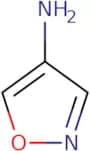
CAS:Prodotto controllato2-Chloro-3,4-dimethoxyphenethylamine is an intermediate in the synthesis of zepines. It can be synthesized by reduction of borohydride with 2-chloro-1,2,3,4-tetrahydrobenzaldehyde.Purezza:Min. 95%4-Aminoisoxazole
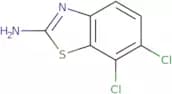
CAS:4-Aminoisoxazole is a triazole that has been found to be active against tumor cell lines. It is synthesized by reacting zinc powder with an acid solution containing 4-nitrobenzaldehyde, which results in the formation of 4-aminobenzonitrile, which subsequently undergoes nitration and reduction to form 4-aminoisoxazole. The synthesis of this compound can also be achieved by reacting ammonium nitrate with nitric acid in the presence of hydrochloric acid.Formula:C3H4N2OPurezza:Min. 95%Peso molecolare:84.08 g/mol2-Amino-5,6-dichlorobenzothiazole
CAS:2-Amino-5,6-dichlorobenzothiazole is an aminobenzothiazole derivative that has been shown to have antibacterial activity. It is a hydrophobic molecule with a skeleton consisting of alternating amines and carboxylic acids. 2-Amino-5,6-dichlorobenzothiazole binds to the fatty acid ester component of bacterial cell walls by hydrogen bonding or ionic interactions, disrupting the integrity of the cell wall and inhibiting the growth of bacteria. 2-Amino-5,6-dichlorobenzothiazole can be used to decolorize dyes and textiles that have been stained by oily materials. It is also used as a surfactant in personal care products such as shampoos and conditioners.
Formula:C7H4Cl2N2SPurezza:Min. 95%Peso molecolare:219.09 g/mol2-Isopropyl-4-(methylaminomethyl)thiazole
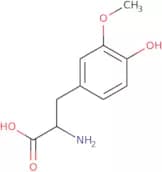
CAS:2-Isopropyl-4-(methylaminomethyl)thiazole is a chemical compound that belongs to the group of halogenating agents. It is used as a precursor in the manufacturing process of pesticides and pharmaceuticals. 2-Isopropyl-4-(methylaminomethyl)thiazole is produced by the chlorination reaction of methylamine with chlorine. This chemical has a variety of industrial uses, including as an intermediate for herbicides, insecticides, and fungicides.Formula:C8H14N2SPurezza:Min. 95%Peso molecolare:170.28 g/mol2-Amino-3-(4-hydroxy-3-methoxyphenyl)propanoic acid
CAS:Prodotto controllato2-Amino-3-(4-hydroxy-3-methoxyphenyl)propanoic acid is a metabolite of levodopa in the body. It is formed by oxidation of levodopa via the enzyme catechol-O-methyltransferase (COMT). This compound is used as an analytical reagent to measure levels of levodopa and its metabolites in biological samples. 2-Amino-3-(4-hydroxy-3-methoxyphenyl)propanoic acid can also be used to diagnose Parkinson’s disease, since it is produced in excess when dopamine production decreases due to the degeneration of dopaminergic neurons. The concentration–time curve for this compound can be used to calculate the clearance rate of levodopa from the blood plasma.Formula:C10H13NO4Purezza:Min. 95 Area-%Colore e forma:PowderPeso molecolare:211.21 g/molN-Methyl-1-(3,4,5-trimethoxyphenyl)methanamine hydrochloride
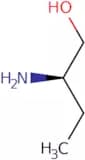
CAS:Prodotto controllatoPlease enquire for more information about N-Methyl-1-(3,4,5-trimethoxyphenyl)methanamine hydrochloride including the price, delivery time and more detailed product information at the technical inquiry form on this pageFormula:C11H17NO3Purezza:Min. 95%Peso molecolare:211.26 g/mol(R)-(-)-2-Amino-1-butanol
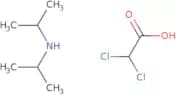
CAS:(R)-(-)-2-Amino-1-butanol is an organic compound that is used as a reagent in the synthesis of pharmaceuticals. It has antimycobacterial properties and can be used to treat tuberculosis. The mechanism for its antimycobacterial activity is not fully understood, but it may involve copper complex formation with the mycobacteria. The chloride ion may also play a role in this process by binding to the copper complex and increasing its solubility in water. This compound may react with aminothiols from the host cell, leading to degradation of DNA, RNA, and proteins. (R)-(-)-2-Amino-1-butanol has been shown to have cytotoxic effects on colorectal adenocarcinoma cells and human lung cancer cells in culture. It also inhibits human colon carcinoma cells in culture through the production of organic acids such as formic acid and acetic acid.Formula:C4H11NOPurezza:Min. 95%Peso molecolare:89.14 g/molDiisopropylammonium dichloroacetate
CAS:Prodotto controllatoDiisopropylammonium dichloroacetate (DADCA) is a chemical that inhibits the metabolism of glucose. It has been shown to have a hypoglycemic effect in rats and is being investigated as a treatment for metabolic disorders such as diabetes and obesity. DADCA has also been shown to reduce liver lesions in animals with chronic viral hepatitis, and has been found to be effective in reducing tumor growth in mice. This drug can also be used to treat bowel disease by reducing the amount of ammonia released by bacteria. DADCA may also have physiological effects on humans, including an increase in blood pressure and fever, although these effects have not yet been studied.
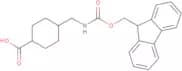
Purezza:Min. 95%Fmoc-trans-4-(aminomethyl)cyclohexane-1-carboxylic acid
CAS:Fmoc-trans-4-(aminomethyl)cyclohexane-1-carboxylic acid is a synthetic amino acid that has been shown in vitro to inhibit the growth of prostate cancer cells. It is an analog of butyric acid, a naturally occurring fatty acid. Fmoc-trans-4-(aminomethyl)cyclohexane-1-carboxylic acid has been synthesized by solid phase methods and labeled with radiotracers such as indium 111 or technetium 99m. The use of Fmoc-trans-4-(aminomethyl)cyclohexane-1-carboxylic acid in vivo is limited by its short circulating half life, rapid metabolism, and high toxicity.Formula:C23H25NO4Purezza:Min. 95%Colore e forma:White SolidPeso molecolare:379.45 g/molRef: 3D-FF55972
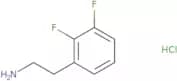
2gPrezzo su richiesta5gPrezzo su richiesta10gPrezzo su richiesta25gPrezzo su richiesta50gPrezzo su richiesta2-(2,3-Difluorophenyl)ethan-1-amine hydrochloride
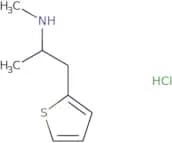
CAS:Prodotto controllatoPlease enquire for more information about 2-(2,3-Difluorophenyl)ethan-1-amine hydrochloride including the price, delivery time and more detailed product information at the technical inquiry form on this pageFormula:C8H10ClF2NPurezza:Min. 95%Peso molecolare:193.62 g/molN,alpha-Dimethyl-2-thiopheneethanamine hydrochloride
CAS:Prodotto controllatoMethiopropamine is a synthetic psychoactive substance that has been associated with long-term health effects. It is used recreationally for its stimulant properties, such as increased alertness and wakefulness. Methiopropamine may cause paranoia and delusions, as well as other long-term effects. The drug can be detected in the urine for up to five days after ingestion. Methiopropamine is an amphetamine analogue of cathinone, which is a naturally occurring substance found in the khat plant. It is classified by the DEA as a Schedule I controlled substance in the United States.
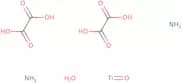
Formula:C8H14ClNSPurezza:Min. 95%Peso molecolare:191.72 g/molAmmonium titanyl oxalate monohydrate
CAS:Ammonium titanyl oxalate monohydrate is a compound that can be used as an antioxidant in a composition, including an electrophotographic composition. It has been shown to prevent photoreduction and nucleophilic attack on the surface of the photoconductor, as well as to reduce the magnitude of carboxylation reactions with transfer mechanism. Ammonium titanyl oxalate monohydrate may also be used for rechargeable batteries, which are devices that use electric current to generate chemical reactions. The addition of ammonium titanyl oxalate monohydrate to these batteries increases their capacity by reducing the number of cycles required before recharging. This compound also exhibits photocatalytic activity on metal surfaces in the presence of UV irradiation.Formula:C4H10N2O10TiPurezza:Min. 97%Peso molecolare:294 g/molN-[3-Fluoro-4-[(methylamino)carbonyl]phenyl]-2-methylalanine
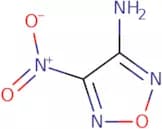
CAS:Please enquire for more information about N-[3-Fluoro-4-[(methylamino)carbonyl]phenyl]-2-methylalanine including the price, delivery time and more detailed product information at the technical inquiry form on this pageFormula:C12H15FN2O3Purezza:Min. 95%Peso molecolare:254.26 g/mol4-Nitro-1,2,5-oxadiazol-3-amine
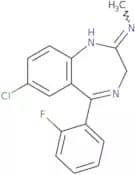
CAS:Prodotto controllato4-Nitro-1,2,5-oxadiazol-3-amine is a molecule that has been shown to be an inhibitor of the epidermal growth factor receptor (EGFR). The optimal reaction conditions for this molecule were determined by crystallography. These results were confirmed by prognosis assays and the determination of tautomers. This molecule may be used in diagnosis and as a potential treatment for cancer. 4-Nitro-1,2,5-oxadiazol-3-amine binds to the EGFR at a site different from that of erlotinib, an inhibitor currently used in the clinic. This binding leads to inhibition of protein synthesis and cell division by preventing the activation of downstream signal transduction pathways. The molecule also inhibits tumor cell proliferation and induces apoptosis by preventing the production of nitric oxide (NO) and reactive oxygen species (ROS).Formula:C2H2N4O3Purezza:Min. 95%Peso molecolare:130.06 g/mol7-Chloro-5-(2-fluorophenyl)-2-methylamino-3H-1,4-benzodiazepine
CAS:Prodotto controllatoPlease enquire for more information about 7-Chloro-5-(2-fluorophenyl)-2-methylamino-3H-1,4-benzodiazepine including the price, delivery time and more detailed product information at the technical inquiry form on this pageFormula:C16H13ClFN3Purezza:Min. 95%Peso molecolare:301.75 g/molMethyl 2-amino-4,6-dichloropyridine-3-carboxylate
CAS:Please enquire for more information about Methyl 2-amino-4,6-dichloropyridine-3-carboxylate including the price, delivery time and more detailed product information at the technical inquiry form on this pageFormula:C7H6Cl2N2O2Purezza:Min. 95%Peso molecolare:221.04 g/mol
![2-Amino-3,4,7,8-tetramethyl-3H-imidazo[4,5-f]quinoxaline](/_next/image/?url=https%3A%2Fstatic.cymitquimica.com%2Fproducts%2F3D%2Fthumb-webp%2FFA17488.webp&w=3840&q=75)





![N-[3-Fluoro-4-[(methylamino)carbonyl]phenyl]-2-methylalanine](/_next/image/?url=https%3A%2Fstatic.cymitquimica.com%2Fproducts%2F3D%2Fthumb-webp%2FFF99416.webp&w=3840&q=75)