Ammine
Sottocategorie di "Ammine"
- Nitrosamine(2.649 prodotti)
- Ammine primarie(30.948 prodotti)
- Cationi di ammonio quaternario(1.102 prodotti)
- Ammine secondarie(20.887 prodotti)
- Ammine terziarie(17.195 prodotti)
Trovati 8790 prodotti di "Ammine"
1-(4-(Aminomethyl)phenyl)pyridin-1-ium chloride
CAS:1-(4-(Aminomethyl)phenyl)pyridin-1-ium chloride is a chemical compound that belongs to the class of pyridines and has pinpoint as its molecular weight. It is an ionic liquid that can be used in analytical methods, such as liquid chromatography and ionization techniques, for the identification of unsaturated fatty acids. This compound can be analyzed by gas chromatography with either electron capture detection or chemical ionization. The GC separation column used for this analysis would have to be a phase column with an unsaturated fatty acid stationary phase. GC-EID and GC-CI are two common ionization techniques that could be used in conjunction with this analytical method. The lower limit of detection for this technique is about 0.1 ppm, which makes it a sensitive analytical tool for use in food production and quality control laboratories. The yield of 1-(4-(Aminomethyl)phenyl)pyridin-1-Purezza:Min. 95%N,N-Diethyl-N'-1-naphthylethylenediamine oxalate
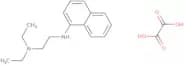
CAS:N,N-Diethyl-N'-1-naphthylethylenediamine oxalate (NDENOX) is a naphthalene derivative that is used to inhibit the growth of bacteria. It binds to the extracellular site on the bacterial cell membrane and inhibits sulfadiazine uptake. NDENOX has been shown to be effective against S. aureus and other bacteria that are resistant to sulfonamides, but not against Staphylococcus epidermidis or E. coli. This drug also inhibits enzyme activity in damaged human serum, which may be due to its binding with kynurenine or pupal. NDENOX is hydrolyzed by hydrochloric acid and procaine to release naphthalene and diethylenetriamine, respectively.Formula:C18H24N2O4•C2H2O4xPurezza:Min. 95 Area-%Colore e forma:PowderPeso molecolare:332.39 g/mol(S)-2-Azido isovaleric acid cyclohexylammonium
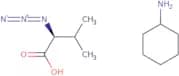
CAS:Please enquire for more information about (S)-2-Azido isovaleric acid cyclohexylammonium including the price, delivery time and more detailed product information at the technical inquiry form on this page
Formula:C6H13N•C5H9N3O2Purezza:Min. 95%Colore e forma:PowderPeso molecolare:242.32 g/molBoc-1-amino-1-cyclobutane carboxylic acid
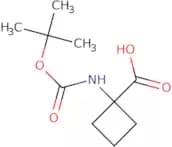
CAS:Boc-1-amino-1-cyclobutane carboxylic acid is a synthetic and potent agonist of the androgen receptor. It is an analog of apalutamide, which is a selective antagonist of the androgen receptor. Boc-1-amino-1-cyclobutane carboxylic acid has been shown to have high oral bioavailability, which makes it suitable for oral administration. Boc-1-amino-1-cyclobutane carboxylic acid has been shown to have increased functional activity in cancer cells, which may be due to its ability to inhibit the growth of tumor cells by binding to their androgen receptors. Boc-1-amino-1-cyclobutane carboxylic acid has also been found to have good affinity for the androgen receptor when tested on cultured cells.Formula:C10H17NO4Purezza:Min. 95%Colore e forma:White/Off-White SolidPeso molecolare:215.25 g/molS-(-)-Aminoglutethimide D-tartrate salt
CAS:Prodotto controllatoPlease enquire for more information about S-(-)-Aminoglutethimide D-tartrate salt including the price, delivery time and more detailed product information at the technical inquiry form on this page
Formula:C17H22N2O8Purezza:Min. 95%Peso molecolare:382.37 g/mol3-(3-Amino-1H-1,2,4-triazol-5-yl)propanoic acid
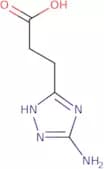
CAS:Aminoguanidine is a selective inhibitor of the enzyme succinic dehydrogenase, which catalyzes the conversion of succinic acid to fumarate. Aminoguanidine is used in the treatment of diabetic complications and other conditions that result from high levels of blood glucose in order to lower the levels of blood sugar. The drug is administered orally or intravenously as aminoguanidine hydrochloride, which is converted to aminoguanidine in the body. Aminoguanidine can also be synthesized by reacting succinic anhydride with guanidine hydrochloride in a regioselective reaction. This synthesis yields quantitatively aminoguanidine, with little or no formation of guanidine. The product can be purified by washing with alkali and recrystallizing it from water. X-ray diffraction studies have shown that aminoguanidine hydrochloride exists as zwitterions in solution at physiological pH values.Formula:C5H8N4O2Purezza:Min. 95%Peso molecolare:156.14 g/molAmmonium titanyl oxalate monohydrate
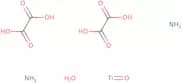
CAS:Ammonium titanyl oxalate monohydrate is a compound that can be used as an antioxidant in a composition, including an electrophotographic composition. It has been shown to prevent photoreduction and nucleophilic attack on the surface of the photoconductor, as well as to reduce the magnitude of carboxylation reactions with transfer mechanism. Ammonium titanyl oxalate monohydrate may also be used for rechargeable batteries, which are devices that use electric current to generate chemical reactions. The addition of ammonium titanyl oxalate monohydrate to these batteries increases their capacity by reducing the number of cycles required before recharging. This compound also exhibits photocatalytic activity on metal surfaces in the presence of UV irradiation.Formula:C4H10N2O10TiPurezza:Min. 97%Peso molecolare:294 g/mol3-Amino-5-bromobenzonitrile
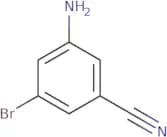
CAS:Please enquire for more information about 3-Amino-5-bromobenzonitrile including the price, delivery time and more detailed product information at the technical inquiry form on this pageFormula:C7H5BrN2Purezza:Min. 95%Peso molecolare:197.03 g/mol2,5-Diaminopyridine dihydrochloride
CAS:2,5-Diaminopyridine dihydrochloride is a compound that belongs to the class of hydroxamic acids. It is an intermediate in the synthesis of the anti-cancer drug, hydroxyurea (hydroxylamine). 2,5-Diaminopyridine dihydrochloride can be used as a cross-coupling reagent for coupling reactions with chlorinated and tritiated organic compounds. The efficiency of this reaction is dependent on the coulombic and mutagenic properties of 2,5-diaminopyridine dihydrochloride. 2,5-Diaminopyridine dihydrochloride has been shown to cause cancer in animal studies.Formula:C5H7N3•(HCl)2Purezza:Min. 95%Peso molecolare:182.05 g/mol2’-Nor thiamine hydrochloride
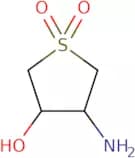
CAS:Please enquire for more information about 2’-Nor thiamine hydrochloride including the price, delivery time and more detailed product information at the technical inquiry form on this pageFormula:C11H16Cl2N4OSPurezza:Min. 95%Peso molecolare:323.24 g/mol4-Aminotetrahydrothiophene-3-ol 1,1-dioxide
CAS:Please enquire for more information about 4-Aminotetrahydrothiophene-3-ol 1,1-dioxide including the price, delivery time and more detailed product information at the technical inquiry form on this page
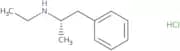
Formula:C4H9NO3SPurezza:Min. 95%Peso molecolare:151.19 g/mol(S)-N-Ethyl amphetamine hydrochloride
CAS:Prodotto controllatoPlease enquire for more information about (S)-N-Ethyl amphetamine hydrochloride including the price, delivery time and more detailed product information at the technical inquiry form on this pageFormula:C11H18ClNPurezza:Min. 95%Peso molecolare:199.72 g/mol1-(4-Aminophenyl)-1H-pyridin-2-one
CAS:1-(4-Aminophenyl)-1H-pyridin-2-one is a synthetic chemical that is used in the manufacturing of 8-hydroxyquinoline. It is an industrial chemical that is used to produce potassium carbonate by a reflux reaction with potassium and carbonate. 1-(4-Aminophenyl)-1H-pyridin-2-one is a gas at room temperature and pressure and has been shown to be stable under these conditions.
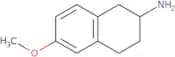
Formula:C11H10N2OPurezza:Min. 95%Colore e forma:White PowderPeso molecolare:186.21 g/mol6-Methoxy-1,2,3,4-tetrahydronaphthalen-2-ylamine
CAS:Prodotto controllatoPlease enquire for more information about 6-Methoxy-1,2,3,4-tetrahydronaphthalen-2-ylamine including the price, delivery time and more detailed product information at the technical inquiry form on this pageFormula:C11H15NOPurezza:Min. 95%Peso molecolare:177.24 g/mol2-(Diphenylphosphino)ethylamine
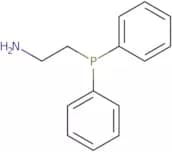
CAS:2-(Diphenylphosphino)ethylamine is a palladium complex that is used as a catalyst for the oxidation of alcohols to aldehydes and ketones. However, this compound can also be used in the synthesis of molybdenum complexes. 2-(Diphenylphosphino)ethylamine has been shown to catalyze the oxidation of aliphatic alcohols to corresponding aldehydes and ketones in homogeneous solution. This reaction proceeds by a transfer mechanism, with an irreversible oxidation at the metal center. The reaction products are not observed due to the high reactivity of hydrogen peroxide and its decomposition products. Control experiments showed that 2-(diphenylphosphino)ethylamine does not oxidize other substrates such as benzene or nitrobenzene, which are more stable than alcohols.
Formula:C14H16NPPurezza:Min. 95%Colore e forma:Clear LiquidPeso molecolare:229.26 g/mol1-(4-Ethylphenyl)ethanamine
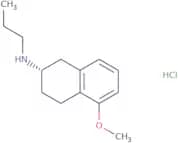
CAS:Please enquire for more information about 1-(4-Ethylphenyl)ethanamine including the price, delivery time and more detailed product information at the technical inquiry form on this pageFormula:C10H15NPurezza:Min. 95%Peso molecolare:149.23 g/mol(S)-1,2,3,4-Tetrahydro-5-methoxy-N-propyl-2-naphthalenamine hydrochloride
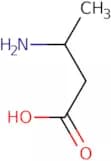
CAS:Prodotto controllatoPlease enquire for more information about (S)-1,2,3,4-Tetrahydro-5-methoxy-N-propyl-2-naphthalenamine hydrochloride including the price, delivery time and more detailed product information at the technical inquiry form on this pageFormula:C14H22ClNOPurezza:Min. 95%Peso molecolare:255.78 g/molDL-3-Aminobutyric acid
CAS:DL-3-Aminobutyric acid is a natural compound that belongs to the group of amino acids. It is found in human immunoglobulin, enzymes, and proteins. DL-3-Aminobutyric acid has been shown to have an effect on iron homeostasis, signal pathways, and water permeability. It has also been shown to have anti-fungal activity in vitro and can be used as a model system for plant physiology.
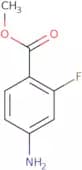
Formula:C4H9NO2Purezza:Min. 95%Peso molecolare:103.12 g/molMethyl 4-amino-2-fluorobenzoate
CAS:Please enquire for more information about Methyl 4-amino-2-fluorobenzoate including the price, delivery time and more detailed product information at the technical inquiry form on this page
Formula:C8H8FNO2Purezza:Min. 95%Peso molecolare:169.15 g/mol4-Aminoquinoline-2-one
CAS:4-Aminoquinoline-2-one is a nonsteroidal anti-inflammatory drug that has tuberculostatic activity. It binds to the nitrogen atoms of the enzyme dihydropteroate synthase, which is involved in the synthesis of folic acid and DNA. This leads to an increase in reactive oxygen species and inflammation, which causes disease activity. 4-Aminoquinoline-2-one has been shown to be synergistic with monoclonal antibodies when used as a treatment for inflammatory diseases. In order for 4-aminoquinoline-2-one to be taken up by cells, it must bind to cellular uptake proteins through hydrogen bonds or disulfide bonds.
Formula:C9H8N2OPurezza:Min. 95%Peso molecolare:160.17 g/mol