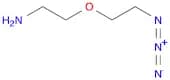
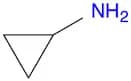
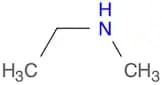
Ammine
Le ammine sono un insieme di molecole contenenti un gruppo funzionale amminico (derivato dall'ammoniaca). Questa categoria include ammine a qualsiasi livello di sostituzione: primarie, secondarie, terziarie e sali di ammonio. Le ammine sono fondamentali nella sintesi organica e sono ampiamente utilizzate in prodotti farmaceutici, agrochimici e scienze dei materiali. Da CymitQuimica, offriamo una selezione completa di ammine per soddisfare le tue esigenze di ricerca e industriali. La nostra gamma garantisce l'accesso a diverse ammine per vari processi chimici e ricerche innovative.
Sottocategorie di "Ammine"
- Nitrosamine(2.605 prodotti)
- Ammine primarie(30.947 prodotti)
- Cationi di ammonio quaternario(1.099 prodotti)
- Ammine secondarie(20.886 prodotti)
- Ammine terziarie(17.193 prodotti)
Trovati 8780 prodotti di "Ammine"
Ordinare per
Purezza (%)
0
100
|
0
|
50
|
90
|
95
|
100
5-[4-(1,2,4,5-Tetrazin-3-yl)benzylamino]-5-oxopentanoic acid
CAS:Please enquire for more information about 5-[4-(1,2,4,5-Tetrazin-3-yl)benzylamino]-5-oxopentanoic acid including the price, delivery time and more detailed product information at the technical inquiry form on this pageFormula:C14H15N5O3Purezza:Min. 95%Colore e forma:White To Yellow To Dark Red SolidPeso molecolare:301.3 g/molN-Phenylbenzene-1,3-diamine
CAS:<p>Please enquire for more information about N-Phenylbenzene-1,3-diamine including the price, delivery time and more detailed product information at the technical inquiry form on this page</p>Formula:C12H12N2Purezza:Min. 95%Colore e forma:PowderPeso molecolare:184.24 g/mol(R)(−)-DOI hydrochloride
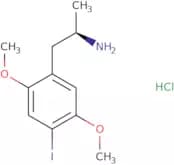
CAS:Prodotto controllato(R)(−)-DOI hydrochloride is a synthetic compound classified as a selective serotonin receptor agonist. It is primarily sourced from chemical synthesis processes designed to explore potential interactions within serotonergic pathways. The compound’s mode of action involves the activation of 5-HT2A, 5-HT2B, and 5-HT2C serotonin receptors, which play crucial roles in modulating neurotransmission and signaling pathways within the central nervous system.In research and experimental contexts, (R)(−)-DOI hydrochloride is utilized to investigate the molecular mechanisms of serotonin receptors, contributing to a deeper understanding of their role in neurophysiology and potential implications in neuropsychiatric disorders. Studies often explore its effects on cognition, perception, and mood regulation. Despite its promising role in scientific exploration, (R)(−)-DOI hydrochloride is not intended for therapeutic use and remains predominantly a tool for advancing the field of neuropharmacology through controlled experimental settings.Formula:C11H17ClINO2Purezza:Min. 95%Peso molecolare:357.62 g/molN-(5-Aminopentyl) methotrexate amide-LC-biotin
<p>N-(5-Aminopentyl) methotrexate amide-LC-biotin is a specialized bioconjugate, derived through the conjugation of methotrexate, an established antifolate drug, with an LC-biotin moiety. This product is synthesized by covalently linking methotrexate, which is known for its role in cancer therapy through the inhibition of dihydrofolate reductase (DHFR), to a biotin moiety via a long-chain spacer. The resultant bioconjugate retains the therapeutic effects of methotrexate, particularly in its ability to interrupt nucleotide synthesis, thereby affecting cell division in rapidly proliferating cancer cells.The inclusion of biotin in the structure allows for facile attachment to avidin or streptavidin-labeled systems, facilitating targeted delivery and enhanced detection in molecular and cellular studies. The primary application of N-(5-Aminopentyl) methotrexate amide-LC-biotin lies in the realm of targeted drug delivery and advanced research into methotrexate metabolism. By leveraging the high affinity of biotin-streptavidin interactions, researchers can effectively study the biodistribution and cellular uptake of methotrexate, advancing cancer therapeutic strategies and providing insights into antifolate drug mechanisms at the molecular level.</p>Formula:C41H59N13O7SPurezza:Min. 95%Colore e forma:PowderPeso molecolare:878.06 g/mol7-[(2S,3R)-3-Amino-2-methyl-azetidin-1-yl]-1-(2,4-difluorophenyl)-6-fluoro-4-oxo-quinoline-3-carboxylic acid
CAS:7-[(2S,3R)-3-Amino-2-methyl-azetidin-1-yl]-1-(2,4-difluorophenyl)-6-fluoro-4-oxo-quinoline-3-carboxylic acid (ABT) is a drug that binds to bacterial enzymes and inhibits their ability to synthesize proteins. ABT is a conjugate of fluoroquinolone and an amino acid. As the drug is degradable by hydrolysis, it has been shown to be less toxic in Sprague Dawley rats than other fluoroquinolones. This drug has been used in diagnostic tests as a ligand for affinity ligands, but has not been approved for human use. The drug also possesses functional groups that are important for binding to reconstituted enzymes.br>br>ABT's ester linkages are degradable by hydrolysis and can beFormula:C20H16F3N3O3Purezza:Min. 95%Peso molecolare:403.35 g/mol(+)(1S,2S,4R)-Bicyclo[2.2.1]heptane-2-amine
CAS:<p>(+)(1S,2S,4R)-Bicyclo[2.2.1]heptane-2-amine is a heterocyclic compound that contains a nitrogen atom and an amine group. It has been shown to be a potent inhibitor of the enzyme activities of malonic acid decarboxylase and acetylcholinesterase. This compound can be used as a diagnostic tool for chronic kidney disease, specifically in cases of renal failure and polycystic kidney disease. The palladium complexes can be used for the synthesis of (+)(1S,2S,4R)-bicyclo[2.2.1]heptane-2-amine in high yield from malonic acid and ammonia.</p>Formula:C7H13NPurezza:Min. 95%Peso molecolare:111.18 g/mol2-Hydroxyamino-3-methyl-3H-imidazo[4,5-f]quinoline
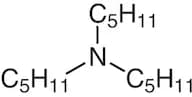
CAS:2-Hydroxyamino-3-methyl-3H-imidazo[4,5-f]quinoline (2HAIQ) is a reactive compound that binds to DNA. It has been shown to be a potent inhibitor of the enzyme cytosolic protein kinase C, which plays an important role in regulating cellular metabolism. 2HAIQ also inhibits the activity of enzymes such as hydroxylases and polymerases. The binding of 2HAIQ to DNA is thought to inhibit transcription by preventing RNA polymerase from transcribing DNA. 2HAIQ may also inhibit replication by binding to the dinucleotide phosphate molecule, which is essential for DNA synthesis.Formula:C11H10N4OPurezza:Min. 95%Peso molecolare:214.22 g/molTriamylamine (mixture of branched chain isomers)
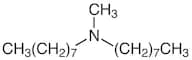
CAS:Formula:C15H33NPurezza:>97.0%(T)Colore e forma:Colorless to Light yellow to Light orange clear liquidPeso molecolare:227.44N-Methyldi-n-octylamine
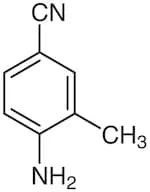
CAS:Formula:C17H37NPurezza:>97.0%(GC)(T)Colore e forma:Colorless to Light yellow to Light orange clear liquidPeso molecolare:255.494-Amino-3-methylbenzonitrile
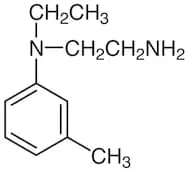
CAS:Formula:C8H8N2Purezza:>97.0%(GC)Colore e forma:White to Gray to Brown powder to crystalPeso molecolare:132.17N-(2-Aminoethyl)-N-ethyl-m-toluidine
CAS:Formula:C11H18N2Purezza:>98.0%(GC)Colore e forma:Light orange to Yellow to Green clear liquidPeso molecolare:178.283-Bromo-2-methylaniline
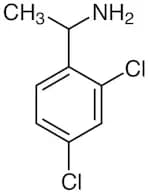
CAS:Formula:C7H8BrNPurezza:>98.0%(GC)(T)Colore e forma:Colorless to Brown clear liquidPeso molecolare:186.051-(2,4-Dichlorophenyl)ethylamine
CAS:Formula:C8H9Cl2NPurezza:>98.0%(GC)(T)Colore e forma:Colorless to Light yellow clear liquidPeso molecolare:190.073-Azidopropan-1-amine Hydrochloride Salt
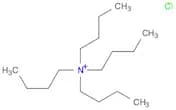
CAS:Formula:C3H9ClN4Purezza:97%Colore e forma:SolidPeso molecolare:136.5834Tetrabutylammonium chloride
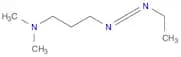
CAS:Formula:C16H36ClNPurezza:95%Colore e forma:SolidPeso molecolare:277.91671-(3-Dimethylaminopropyl)-3-ethylcarbodiimide
CAS:Formula:C8H17N3Purezza:98%Colore e forma:LiquidPeso molecolare:155.2407Ref: IN-DA00DJ11
Prodotto fuori produzione
![5-[4-(1,2,4,5-Tetrazin-3-yl)benzylamino]-5-oxopentanoic acid](/_next/image/?url=https%3A%2Fstatic.cymitquimica.com%2Fproducts%2F3D%2Fthumb-webp%2FFT170851.webp&w=3840&q=75)


![7-[(2S,3R)-3-Amino-2-methyl-azetidin-1-yl]-1-(2,4-difluorophenyl)-6-fluoro-4-oxo-quinoline-3-carbo…](/_next/image/?url=https%3A%2Fstatic.cymitquimica.com%2Fproducts%2F3D%2Fthumb-webp%2FFA30404.webp&w=3840&q=75)
![(+)(1S,2S,4R)-Bicyclo[2.2.1]heptane-2-amine](/_next/image/?url=https%3A%2Fstatic.cymitquimica.com%2Fproducts%2F3D%2Fthumb-webp%2FFB163197.webp&w=3840&q=75)
![2-Hydroxyamino-3-methyl-3H-imidazo[4,5-f]quinoline](/_next/image/?url=https%3A%2Fstatic.cymitquimica.com%2Fproducts%2F3D%2Fthumb-webp%2FFH24305.webp&w=3840&q=75)