Ammine
Sottocategorie di "Ammine"
- Nitrosamine(2.627 prodotti)
- Ammine primarie(30.947 prodotti)
- Cationi di ammonio quaternario(1.100 prodotti)
- Ammine secondarie(20.886 prodotti)
- Ammine terziarie(17.196 prodotti)
Trovati 8791 prodotti di "Ammine"
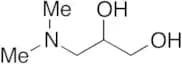
3-(Dimethylamino)-1,2-propanediol
CAS:Prodotto controllatoApplications 3-(Dimethylamino)-1,2-propanediol is a reagent in the synthesis of 1,2-Dioleoyl-3-trimethylammonium-propane, Chloride (D484450).
Not a dangerous good if item is equal to or less than 1g/ml and there is less than 100g/ml in the packageFormula:C5H13NO2Colore e forma:NeatPeso molecolare:119.162,3-Diaminophenol
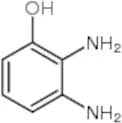
CAS:Prodotto controllatoApplications 2,3-Diaminophenol
Formula:C6H8N2OColore e forma:NeatPeso molecolare:124.149-[2-[[[10-(4,5-Dimethyl-3,6-dioxo-1,4-cyclohexadien-1-yl)decyl]oxy]carbonyl]phenyl]-3,6-bis(ethylamino)-2,7-dimethyl-Xanthylium
CAS:Prodotto controllatoApplications 9-[2-[[[10-(4,5-Dimethyl-3,6-dioxo-1,4-cyclohexadien-1-yl)decyl]oxy]carbonyl]phenyl]-3,6-bis(ethylamino)-2,7-dimethyl-Xanthylium is an intermediate in the synthesis of SkQR1 (S555050), a mitochondria-targeted plastoquinone antioxidant that exhibits neuroprotective effect.
References Isaev, N.K.: Biochem. 77, 996 (2012)Formula:C44H53N2O5Colore e forma:NeatPeso molecolare:689.99-Amino-3,4-dihydroacridin-1(2H)-one
CAS:Prodotto controllatoApplications Intermediate in the preparation of Mentane.
References Shutske, G., et al.: Bioorg. Med. Chem. Lett., 2, 865 (1992),Formula:C13H12N2OColore e forma:NeatPeso molecolare:212.25(AlphaS)-Alpha-Amino-4-nitrobenzenepropanamide
CAS:Prodotto controllatoApplications (αS)-α-Amino-4-nitrobenzenepropanamide (cas# 81677-61-4) is a compound useful in organic synthesis.
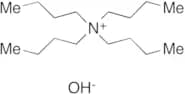
Formula:C9H11N3O3Colore e forma:NeatPeso molecolare:209.2Tetrabutylammonium Hydroxide (~50% in water)
CAS:Prodotto controllatoApplications Tetrabutylammonium Hydroxide is used in biological studies for the detection of counter-anion effect on antimicrobial activity of tetrabutylammonium salts.
Not a dangerous good if item is equal to or less than 1g/ml and there is less than 100g/ml in the package
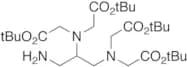
References Ingalsbe, M.L., et al.: Bioorg. Med. Chem., 19, 4984 (2009)Formula:C16H36N·HOColore e forma:Single SolutionPeso molecolare:259.47rac (Aminomethyl)ethylenediaminetetraacetic Acid tetra-(t-Butyl Ester)
CAS:Prodotto controllatoApplications rac (Aminomethyl)ethylenediaminetetraacetic Acid tetra-(t-Butyl Ester) (cas# 1391052-55-3) is a compound useful in organic synthesis.
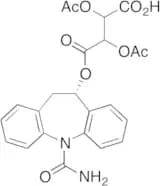
Formula:C27H51N3O8Colore e forma:NeatPeso molecolare:545.71(2R,3R)-2,3-Bis(acetyloxy)butanedioic Acid Mono[(10S)-5-(aminocarbonyl)-10,11-dihydro-5H-dibenz[b,f]azepin-10-yl] Ester
CAS:Prodotto controllatoApplications (2R,3R)-2,3-Bis(acetyloxy)butanedioic Acid Mono[(10S)-5-(aminocarbonyl)-10,11-dihydro-5H-dibenz[b,f]azepin-10-yl] Ester is an intermediate in the synthesis of Eslicarbazepine (M546510), a novel central nervous system drug.
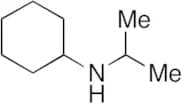
References Duncan, J., et al.: Br. J. Clin. Pharmacol., 53, 123 (2002), Almeida, L., et al.: J. Clin. Pharmacol., 45, 1062 (2005), Coppola, G., et al.: CNS Drugs, 18, 133 (2004),Formula:C23H22N2O9Colore e forma:NeatPeso molecolare:470.43N-Isopropylcyclohexylamine
CAS:Prodotto controllatoApplications N-Isopropylcyclohexylamine is a reagent that is used in the synthesis of N3-substituted coformycin aglycon analogs that inhibit AMP deaminase or adenosine deaminase.
Not a dangerous good if item is equal to or less than 1g/ml and there is less than 100g/ml in the package
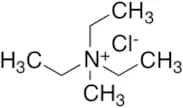
References Bookser, B.C., et al.: J. Med. Chem., 43, 1495 (2000);Formula:C9H19NColore e forma:NeatPeso molecolare:141.25Triethylmethylammonium Chloride
CAS:Prodotto controllatoApplications Triethylmethylammonium Chloride (cas# 10052-47-8) is a useful research chemical.
Formula:C7H18ClNColore e forma:NeatPeso molecolare:151.682-Amino-4,5,7,8-tetrahydro-6-(N-carbethoxy)thiazolo[5,4-d]azepine
CAS:Prodotto controllatoApplications 2-Amino-4,5,7,8-tetrahydro-6-(N-carbethoxy)thiazolo[5,4-d]azepine (cas# 887352-57-0) is a compound useful in organic synthesis.
Formula:C10H15N3O2SColore e forma:NeatPeso molecolare:241.3110-Amino-1-decanol
CAS:Prodotto controllatoApplications 10-Amino-1-decanol (cas# 23160-46-5) is a compound useful in organic synthesis.
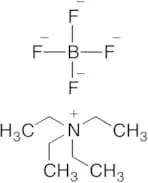
References Lee, T., et al.: J. Biol. Chem., 270, 5375 (1995),Formula:C10H23NOColore e forma:NeatPeso molecolare:173.3Tetraethylammonium Tetrafluoroborate
CAS:Prodotto controllatoApplications Tetraethylammonium Tetrafluoroborate is used in the preparation of some organic salts of fluoboric acids.
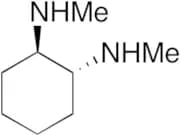
References Wilke-D., et al.: Ber. Dtsch Chem. Ges.; 60B, 115 (1927)Formula:C8H20BF4N3Colore e forma:NeatPeso molecolare:217.06trans-(1R,2R)-N,N’-Bismethyl-1,2-cyclohexanediamine
CAS:Prodotto controllatoApplications trans-(1R,2R)-N,N’-Bismethyl-1,2-cyclohexanediamine is a useful research chemical for organic synthesis and other chemical processes.
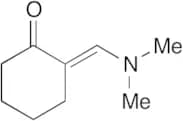
References Bollenbach, M., et al.: Chem. Eur. J., 23, 13676 (2017); Thaisrivongs, D. A., et al.: Org. Lett., 18, 5780 (2016)Formula:C8H18N2Colore e forma:NeatPeso molecolare:142.242-(Dimethylaminomethylene)cyclohexanone
CAS:Prodotto controllatoApplications 2-(Dimethylaminomethylene)cyclohexanone is an intermediate in the synthesis of 2-Pentylidenecyclohexanone (P280255), a fragrance chemical. It can also be used in the synthesis of dialkylphenols in the presence of zirconium catalyst.
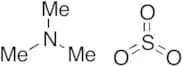
References Tetsuo, B. et al.: Kenkyu Hokoku - Asahi Garasu Zaidan, 58, 201 (1991); Hostynek, J. J., et al.: Toxicology in Vitro, 11, 377 (1997);Formula:C9H15NOColore e forma:NeatPeso molecolare:153.22Sulfur Trioxide Trimethylamine Complex
CAS:Prodotto controllatoApplications Sulfur Trioxide Trimethylamine Complex is a reagent that is used for the design and synthesis of Rho kinase inhibitors.
Not a dangerous good if item is equal to or less than 1g/ml and there is less than 100g/ml in the package
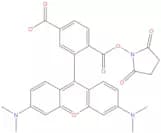
References Takami, A., et al.: Bioorg. Med. Chem., 12, 6317 (2004);Formula:C3H9NO3SColore e forma:NeatPeso molecolare:139.176-TAMRA-SE
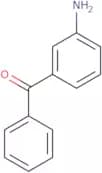
CAS:6-TAMRA-SE (6-TAMRA-NHS ester) is an amine-reactive form of tetramethylrhodamine and one of the traditional fluorophores used for automated DNA sequencing.Formula:C29H25N3O7Purezza:98%Colore e forma:SolidPeso molecolare:527.523-Aminobenzophenone
CAS:3-Aminobenzophenone is an antimicrobial agent that binds to the receptor site of bacterial cell membranes and inhibits the synthesis of fatty acids. 3-Aminobenzophenone has shown antibacterial activity against Gram-positive bacteria, such as Bacillus subtilis, Listeria monocytogenes, and Staphylococcus aureus. The mode of action is thought to be due to its ability to form hydrogen bonds with the amide group in proteins. 3-Aminobenzophenone has also been shown to be effective against Gram-negative bacteria, such as Escherichia coli and Pseudomonas aeruginosa. This compound can be synthesized by a number of methods, including a skeleton method or by using molecular modeling techniques.Formula:C13H11NOPurezza:Min. 95%Colore e forma:PowderPeso molecolare:197.23 g/mol3-Methyl-N-methylbenzylamine
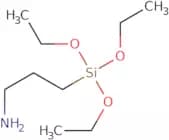
CAS:Formula:C9H13NPurezza:>97.0%(GC)Colore e forma:Colorless to Light yellow to Light orange clear liquidPeso molecolare:135.213-Aminopropyltriethoxysilane
CAS:3-Aminopropyltriethoxysilane is a liquid that has a phase transition temperature of -88.3°C. It is soluble in water at 1 g/L and in ethanol at 0.1 g/L. 3-Aminopropyltriethoxysilane has been shown to inhibit the production of prostaglandin E2 and leukotrienes by inhibiting cyclooxygenase activity in red blood cells, which may be due to its ability to chelate metal ions such as iron or copper. 3-Aminopropyltriethoxysilane also inhibits the production of prostaglandin E2 and leukotrienes by inhibiting cyclooxygenase activity in red blood cells, which may be due to its ability to chelate metal ions such as iron or copper. The compound also inhibits the production of prostaglandin E2 and leukotrienes by inhibitingFormula:C9H23NO3SiPurezza:Min. 97 Area-%Colore e forma:Colorless Clear LiquidPeso molecolare:221.37 g/mol2-Amino-9-fluorenol
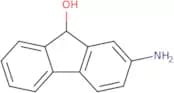
CAS:2-Amino-9-fluorenol is a hydrophobic compound that binds to RNA. 2-Amino-9-fluorenol has been shown to have a binding constant of 1.2 x 10, which is much higher than the binding constant for curculigoside (5.2 x 10). This substance has shown to be an effective inhibitor of RNA synthesis in HL60 cells and various bacterial strains by binding to the ribose moiety of RNA and preventing transcription. The metabolic pathway for 2-amino-9-fluorenol consists of two steps: one involving a reactive intermediate, potassium ion, and another with methylamine as the reactant. These reactions are catalyzed by enzymes such as acetaldehyde dehydrogenase and amino transferases, respectively.Formula:C13H11NOPurezza:Min. 95%Colore e forma:Yellow solid.Peso molecolare:197.23 g/molDodecylamine
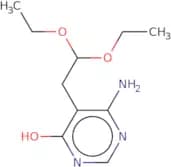
CAS:Dodecylamine is a chemical compound that belongs to the group of surfactants. It is a non-ionic, hydrophobic compound that has low toxicity and high water solubility. Dodecylamine can be used as a flotation agent in analytical chemistry. The dodecylamine-water system also shows thermodynamic data with an optimum at pH 10.5 and at 25 °C, which is the optimal temperature for flotation. This surfactant has been shown to have transport properties that are similar to ethylene diamine and particle size of about 0.1mm. Dodecylamine can also be used in the synthesis of polyurethanes by reacting with diisocyanates such as 1,6-hexamethylene diisocyanate (HDI) or 4,4'-methylene bis(phenylisocyanate) (MDI).Formula:C12H27NPurezza:Min. 95%Colore e forma:White Clear LiquidPeso molecolare:185.35 g/mol6-Amino-5(2,2-diethoxyethyl)-4-hydroxy pyrimidine
CAS:6-Amino-5(2,2-diethoxyethyl)-4-hydroxy pyrimidine is a reagent that is used in the synthesis of various chemical substances. It is a versatile building block and can be used as an intermediate for the production of fine chemicals. 6-Amino-5(2,2-diethoxyethyl)-4-hydroxy pyrimidine has been shown to have high reactivity and selectivity, making it a useful scaffold for organic synthesis. This compound can be used as an intermediate for the production of complex compounds such as pharmaceuticals, agrochemicals, or perfumes. 6-Amino-5(2,2-diethoxyethyl)-4-hydroxy pyrimidine is also known to be useful in research fields such as biology and medicine.Formula:C10H17N3O3Purezza:Min. 95%Colore e forma:White PowderPeso molecolare:227.26 g/mol1H-Pyrazolo[3,4-b]pyridine-3-amine
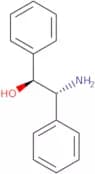
CAS:1H-Pyrazolo[3,4-b]pyridine-3-amine (1HPP) is a β-unsaturated ketone that can be synthesized from nitrous acid and triazine. 1HPP has been shown to inhibit the growth of cancer cells by binding to the DNA and inhibiting transcription and replication. Its binding to DNA may be due to hydrogen bonding interactions with chloride ions, as well as the presence of functional groups such as a carbonyl group and nitro group. 1HPP also inhibits the activity of xanthine oxidase, an enzyme that catalyzes the oxidation of hypoxanthine to xanthine. This inhibition may be due to its ability to form a covalent bond with this enzyme's cofactor, NADPH.Formula:C6H6N4Purezza:Min. 95%Colore e forma:PowderPeso molecolare:134.14 g/mol(1S,2R)-(+)-2-Amino-1,2-diphenylethanol
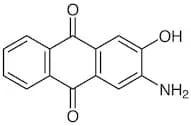
CAS:Prodotto controllato(1S,2R)-(+)-2-Amino-1,2-diphenylethanol is an enantiopure amine that has been used as a ligand in supramolecular chemistry. It can be prepared by reacting 2-chloropropane with thionyl chloride and primary alcohols. The chloride group facilitates the reaction rate and can be replaced by nitro groups to immobilize the product on a solid substrate. (1S,2R)-(+)-2-Amino-1,2-diphenylethanol has optical properties that are dependent on its environment. It can be used to label cells for studies of cell differentiation or cell migration. This compound also reacts with cyclohexane rings to form cyclic products with different optical properties than those of the reactants. The reaction yield is high in this process.Formula:C14H15NOPurezza:Min. 95%Colore e forma:White To Beige SolidPeso molecolare:213.28 g/mol2-Amino-3-hydroxyanthraquinone
CAS:Formula:C14H9NO3Purezza:>98.0%(T)Colore e forma:Orange to Amber to Dark red powder to crystalPeso molecolare:239.23Oxythiamine chloride
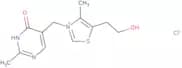
CAS:Oxythiamine chloride is a compound that binds to DNA in the nucleus of cells. It has been shown to inhibit cell growth and induce apoptosis by binding to a number of cellular molecules, including hydrogen bonding interactions with enzymes. Oxythiamine chloride also inhibits energy metabolism by inhibiting mitochondrial respiration and mitochondrial ATP production, and is toxic to cells. This drug has potent inducers, such as cell factor, which are necessary for the production of new cells. It also inhibits thiamine-dependent enzymes, such as pyruvate dehydrogenase kinase (PDK) and pyruvate dehydrogenase (PDH). The wild-type strain of Escherichia coli was used for these studies.
Formula:C12H15N3O2S·HClPurezza:Min. 95%Colore e forma:White to off-white solid.Peso molecolare:301.79 g/mol2-Benzylaminopyridine
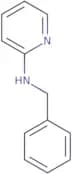
CAS:2-Benzylaminopyridine is a hydrogen bond donor that interacts with anions. This compound has been shown to be bactericidal and able to inhibit the activity of tyrosine kinase. It was also found to have functional theory properties. 2-Benzylaminopyridine is a ligand for coordination chemistry, which is used in supramolecular chemistry. The constant of this compound is high, making it useful as a starting material in the synthesis of other compounds. The imidazole derivatives of 2-benzylaminopyridine are chloride, which can be used as a ligand for interaction chemistry and dichroism spectroscopy.Formula:C12H12N2Purezza:Min. 98 Area-%Colore e forma:Yellow PowderPeso molecolare:184.24 g/mol2-(1-Benzylpiperidin-4-yl)ethanamine
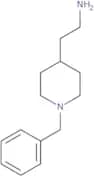
CAS:2-(1-Benzylpiperidin-4-yl)ethanamine is a linker that has been shown to have neuroprotective, antioxidant, and anti-inflammatory properties. It can be used as an innovative drug for the treatment of Alzheimer's disease and other neurological disorders. 2-(1-Benzylpiperidin-4-yl)ethanamine has been shown to exhibit significant antioxidant activity in biochemical assays and molecular modeling. This compound interacts with a number of proteins involved in oxidative stress including NADPH oxidases, peroxiredoxins, catalases, glutathione reductase, cytochrome p450s, mycobacterium tuberculosis protein ESX1 secretion system protein (ESX1), and thioredoxin reductase 1.
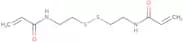
Formula:C14H22N2Purezza:Min. 95%Colore e forma:Colorless Clear LiquidPeso molecolare:218.34 g/molN,N'-Bis(acryloyl)cystamine
CAS:N,N'-Bis(acryloyl)cystamine is a cross-linking agent that has been shown to be effective in the prevention and treatment of cancer. It is a component of nanogels that have been shown to bind to viruses in a way that prevents them from infecting cells. N,N'-Bis(acryloyl)cystamine can also be used as an adjuvant for vaccines against infectious diseases such as malaria and HIV, by binding to antigens on these viruses so they are more easily recognized by the immune system. This drug can also be used for the treatment of inflammation due to its anti-inflammatory properties.
Formula:C10H16N2O2S2Purezza:Min. 95%Colore e forma:White PowderPeso molecolare:260.38 g/mol[2,3'-Bipyridin]-6'-amine
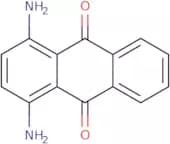
CAS:2,3'-Bipyridin-6'-amine is a chemical compound that is used as a building block for more complex molecules. It has high quality and can be used to make many different compounds. 2,3'-Bipyridin-6'-amine is versatile and can be used in the synthesis of a variety of compounds. It is also an intermediate in a number of reactions, including the formation of pyrimidine analogs. This chemical has been shown to be useful in the creation of new drugs for cancer treatment and other diseases.Formula:C10H9N3Purezza:Min. 95%Colore e forma:Off-White PowderPeso molecolare:171.2 g/mol1,4-Diaminoanthraquinone
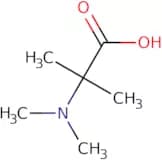
CAS:1,4-Diaminoanthraquinone is a monomeric dye that absorbs light in the visible region of the electromagnetic spectrum. It is soluble in organic solution and has a high solubility in glycol ether. The dye can be activated by hydrogen bonding to form the corresponding anthraquinone dye. 1,4-Diaminoanthraquinone has been shown to have an absorption maximum at around 520 nm and to be soluble in organic solvents such as glycol ethers. The compound is also water-insoluble, which makes it suitable for use in microcapsules.Formula:C14H10N2O2Purezza:Min. 95%Colore e forma:PowderPeso molecolare:238.24 g/mol2-(Dimethylamino)-2-methylpropanoic acid
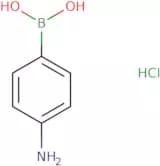
CAS:2-(Dimethylamino)-2-methylpropanoic acid is a solvent that has been investigated for use in vapor phase systems. It has been shown to have the ability to adsorb onto surfaces and to be able to desorb from these surfaces at a later time. This process allows 2-(dimethylamino)-2-methylpropanoic acid to be used as an additive for waterproofing and other applications. A thermogravimetric analysis of 2-(dimethylamino)-2-methylpropanoic acid showed that it decomposes at temperatures between 220°C and 260°C, which is lower than the temperature required for many other solvents. This property makes it suitable for use in vapor phase systems.Formula:C6H13NO2Purezza:Min. 95%Colore e forma:PowderPeso molecolare:131.17 g/mol4-Aminophenylboronic acid hydrochloride
CAS:4-Aminophenylboronic acid hydrochloride is a fluorescent probe that can be used to detect hydrogen bonds in proteins. It has been used to measure water vapor in human serum and as an electrochemical impedance spectroscopy probe for the detection of ATP levels. This compound has also been used as a fluorescence probe for the detection of viruses and fetal bovine serum, as well as nanomaterials and matrix effect studies. 4-Aminophenylboronic acid hydrochloride is synthesized through the reaction of 4-aminophenylboronic acid with hydrochloric acid in water at high temperature, which produces a white solid. The thermal expansion coefficient of this compound is 2.6 x 10^-5 K^-1.
Formula:C6H8BNO2•HClPurezza:Min. 95%Colore e forma:PowderPeso molecolare:173.4 g/mol4'-Amino-N-methylacetanilide
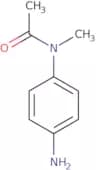
CAS:4'-Amino-N-methylacetanilide is a chemical reagent that can be used as a building block for the synthesis of other chemicals. It has been shown to have a high quality and is useful in the research field. It has been used as an intermediate in the production of pharmaceuticals and pesticides, such as acetaminophen, chloramphenicol, and nitrofurantoin. 4'-Amino-N-methylacetanilide has also been used as a versatile building block for the synthesis of various complex compounds, including dyes and polymers.
Formula:C9H12N2OPurezza:Min. 95 Area-%Colore e forma:PowderPeso molecolare:164.2 g/mol2,5,6-Triamino-4-hydroxypyrimidine
CAS:2,5,6-Triamino-4-hydroxypyrimidine (THP) is a nitrogenous base that has been shown to have anticancer activity. It is an intermediate in the biosynthesis of lysine and can be found in environmental pollution. THP is formed by the reaction of hydrogen chloride with dimethylformamide, which produces hydrochloric acid as a byproduct. 2,5,6-Triamino-4-hydroxypyrimidine also reacts with glyoxal to produce a compound that can cause metabolic disorders. THP is an acidic compound that becomes neutral when dissolved in water. The molecular formula for THP is C 3 H 6 N 8 O 4 .Formula:C4H7N5OPurezza:Min. 95%Colore e forma:PowderPeso molecolare:141.13 g/mol1-Benzyl-3-methyl-1H-pyrazol-5-amine HCl
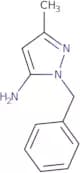
CAS:1-Benzyl-3-methyl-1H-pyrazol-5-amine HCl is a fine chemical that can be used as a versatile building block in research or as an intermediate in the synthesis of complex compounds. It has been shown to be a useful reagent for the preparation of speciality chemicals and reaction components. 1-Benzyl-3-methyl-1H-pyrazol-5-amine HCl has been shown to be a high quality compound with CAS No. 113482–3, which is listed on the Chemical Abstracts Service registry.Formula:C11H13N3·HClPurezza:Min. 95%Colore e forma:Off-White PowderPeso molecolare:223.7 g/mol2-Chloro-4,5-diaminopyrimidine
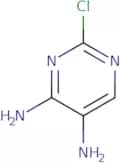
CAS:2-Chloro-4,5-diaminopyrimidine is a pyrimidine compound with the molecular formula CHClN. It can be synthesized by reacting glycine and phenol with piperidine in the presence of hydrochloric acid. 2-Chloro-4,5-diaminopyrimidine has a solubility of 1.2 g/100 mL in water and reacts with quinine to form a red solution. This product also reacts with proline to produce an orange solution that fluoresces green when exposed to UV light. 2-Chloro-4,5-diaminopyrimidine has been used as an intermediate in the synthesis of other compounds such as pyridoxal phosphate and cefixime.Formula:C4H5ClN4Purezza:Min. 95%Colore e forma:PowderPeso molecolare:144.56 g/mol4-Methyl-3-[[4-(3-pyridinyl)-2-pyrimidinyl]amino]benzoicacid methylester
CAS:4-Methyl-3-[[4-(3-pyridinyl)-2-pyrimidinyl]amino]benzoicacid methylester is a fine chemical that is useful as a scaffold for more complex compounds and has many other uses. It is a versatile building block, useful intermediate and research chemical, reaction component, speciality chemical, and building block. This compound can be used to make high quality reagents with many applications in medicine, chemistry, and biology.Formula:C18H16N4O2Purezza:Min. 95%Colore e forma:PowderPeso molecolare:320.35 g/mol2-Aminobiphenyl [for Sugar determination]
CAS:Formula:C12H11NPurezza:>99.0%(GC)(T)Colore e forma:White to Light yellow powder to crystalPeso molecolare:169.235-Chloro-2-methoxybenzylamine hydrochloride
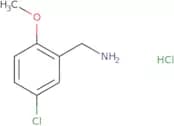
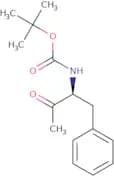
CAS:5-Chloro-2-methoxybenzylamine hydrochloride is a chemical substance that is used as an intermediate in the synthesis of pharmaceuticals and other chemicals. It can be used as a building block to create complex compounds, or it can be used in reactions to produce speciality chemicals. 5-Chloro-2-methoxybenzylamine hydrochloride is a high quality reagent that can be used as a reaction component in research and development. A fine chemical, 5-Chloro-2-methoxybenzylamine hydrochloride has many uses as a versatile building block for organic synthesis. It is also useful for generating research chemicals and complex compounds for use in medicines and other products.Formula:C8H10ClNO·(HCl)Purezza:Min. 95%Colore e forma:PowderPeso molecolare:208.08 g/molBoc-(3S)-3-amino-4-phenyl-2-butanone
CAS:Boc-(3S)-3-amino-4-phenyl-2-butanone is a chemical intermediate that is useful as a building block in organic synthesis. It has been used as a reaction component, reagent and high quality research chemical. Boc-(3S)-3-amino-4-phenyl-2-butanone is also a versatile building block and useful intermediate for the preparation of complex compounds. This chemical has shown to have speciality applications in fine chemicals such as pharmaceuticals and agrochemicals.
Formula:C15H21NO3Purezza:Min. 95%Colore e forma:White to off-white solid.Peso molecolare:263.33 g/mol2-[(4-Chlorophenyl)amino]nicotinic acid
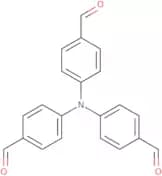
CAS:2-[(4-Chlorophenyl)amino]nicotinic acid is a fine chemical that is useful for the production of a variety of compounds. It is also used as a research chemical and a building block in the synthesis of complex compounds. This compound has no known use as a drug, but it can be used as a reagent or intermediate in chemical reactions. The CAS number for this compound is 16344-26-6.Formula:C12H9ClN2O2Purezza:Min. 95%Colore e forma:Brown PowderPeso molecolare:248.66 g/molTris(4-formylphenyl)amine
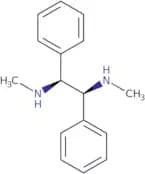
CAS:Tris(4-formylphenyl)amine is an organic molecule with a phenol and formamidine functional group. It has been shown to be effective in clinical studies when used as a chelating agent. Tris(4-formylphenyl)amine is able to bind metal ions in the presence of oxygen, which is due to its acidic nature. The molecule also has peroxidase-like activity, which can be used for the detection of plasma samples. Tris(4-formylphenyl)amine has been shown to have fluorescence properties that are dependent on pH and temperature, as well as fluorescence lifetimes. This molecule also exhibits optical properties that are dependent on the wavelength of light used for excitation.Formula:C21H15NO3Purezza:Min. 95%Colore e forma:Slightly Yellow PowderPeso molecolare:329.35 g/mol(1S,2S)-N,N'-Dimethyl-1,2-diphenyl-1,2-ethylenediamine
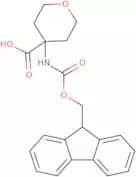
CAS:(1S,2S)-N,N'-Dimethyl-1,2-diphenyl-1,2-ethylenediamine is a chiral compound that has been shown to be an effective catalyst for the desymmetrization of acid moieties in dna microarrays. The nature of this ligand is determined by the interactions with zirconium complexes and amines. It has been shown to have a strong interaction with monolayers and can be used as a ligand for the expansion of amines.Formula:C16H20N2Purezza:Min. 95%Colore e forma:SolidPeso molecolare:240.34 g/molFmoc-4-amino-tetrahydropyran-4-carboxylic acid
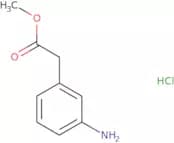
CAS:Fmoc-4-amino-tetrahydropyran-4-carboxylic acid is a versatile building block that can be used for the synthesis of many complex compounds and research chemicals. It is a speciality chemical which has been shown to be a useful intermediate in reactions, as well as being a reagent. Fmoc-4-amino-tetrahydropyran-4-carboxylic acid has also been shown to be an effective scaffold for drug design and development.Formula:C21H21NO5Purezza:Min. 95%Colore e forma:White/Off-White SolidPeso molecolare:367.4 g/molMethyl 3-aminophenylacetate hydrochloride
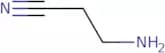
CAS:Methyl 3-aminophenylacetate hydrochloride is a versatile building block that can be used as a reagent for the synthesis of complex compounds. It has been widely used in the production of specialty chemicals, research chemicals and other building blocks. Methyl 3-aminophenylacetate hydrochloride is also an important intermediate in the production of speciality chemicals and pharmaceuticals. This chemical is a high quality chemical that can be used as a reaction component or scaffold for the synthesis of organic compounds.Formula:C9H12ClNO2Purezza:Min. 95%Peso molecolare:201.65 g/mol3-Aminopropionitrile
CAS:3-Aminopropionitrile is a chemical compound that is used in the synthesis of pharmaceuticals. It has been shown to have a high rate constant, which can be used to measure the rate of reaction. 3-Aminopropionitrile also has been found to be an injury signal peptide, and has been shown to induce metabolic response in liver cells. 3-Aminopropionitrile has been shown to inhibit enzyme activity, such as collagenase, elastase, and matrix metalloproteinase 2 (MMP2). It also is known to cause biochemical changes in the body. 3-Aminopropionitrile may also play a role in cancer tissues and can be used as a model system for studying experimental models.
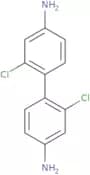
3-Aminopropionitrile's polymerizing effect on water molecules makes it useful in creating polymers that are resistant to UV light and heat. This chemical compound also binds with calcium pantFormula:C3H6N2Purezza:Min. 95%Colore e forma:PowderPeso molecolare:70.09 g/mol2,2'-Dichloro-1,1'-biphenyl-4,4'-diamine
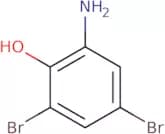
CAS:2,2'-Dichloro-1,1'-biphenyl-4,4'-diamine is a chemical that belongs to the class of organic compounds known as amines. It is insoluble in water and has a molecular weight of 190.8 g/mol. 2,2'-Dichloro-1,1'-biphenyl-4,4'-diamine has been shown to be carcinogenic in animals and can cause coagulation problems in humans. The compound also shows anti-inflammatory properties by inhibiting the production of prostaglandins.Formula:C12H10Cl2N2Purezza:Min. 95%Colore e forma:White/Off-White SolidPeso molecolare:253.13 g/mol2-Amino-4,6-dibromophenol
CAS:2-Amino-4,6-dibromophenol is an organic compound that is used in research for the synthesis of benzoxazoles and related compounds. It is a lactam analog that can be synthesized from commercially available starting materials. 2-Amino-4,6-dibromophenol has been shown to have pharmacological activity against tumor cells. This compound has also been used to synthesize regiospecific skeletal analogs of natural products.Formula:C6H5Br2NOPurezza:Min. 95 Area-%Colore e forma:Off-White PowderPeso molecolare:266.92 g/mol

![9-[2-[[[10-(4,5-Dimethyl-3,6-dioxo-1,4-cyclohexadien-1-yl)decyl]oxy]carbonyl]phenyl]-3,6-bis(ethyl…](/_next/image/?url=https%3A%2Fstatic.cymitquimica.com%2Fproducts%2FTR%2Fthumb-webp%2FD469485.webp&w=3840&q=75)


![2-Amino-4,5,7,8-tetrahydro-6-(N-carbethoxy)thiazolo[5,4-d]azepine](/_next/image/?url=https%3A%2Fstatic.cymitquimica.com%2Fproducts%2FTR%2Fthumb-webp%2FA629920.webp&w=3840&q=75)






![1H-Pyrazolo[3,4-b]pyridine-3-amine](/_next/image/?url=https%3A%2Fstatic.cymitquimica.com%2Fproducts%2F3D%2Fthumb-webp%2FFP09386.webp&w=3840&q=75)
![[2,3'-Bipyridin]-6'-amine](/_next/image/?url=https%3A%2Fstatic.cymitquimica.com%2Fproducts%2F3D%2Fthumb-webp%2FFB141123.webp&w=3840&q=75)

![4-Methyl-3-[[4-(3-pyridinyl)-2-pyrimidinyl]amino]benzoicacid methylester](/_next/image/?url=https%3A%2Fstatic.cymitquimica.com%2Fproducts%2F3D%2Fthumb-webp%2FFM151656.webp&w=3840&q=75)
![2-Aminobiphenyl [for Sugar determination]](/_next/image/?url=https%3A%2Fstatic.cymitquimica.com%2Fproducts%2F3B%2Fthumb-webp%2FB0467.webp&w=3840&q=75)
![2-[(4-Chlorophenyl)amino]nicotinic acid](/_next/image/?url=https%3A%2Fstatic.cymitquimica.com%2Fproducts%2F3D%2Fthumb-webp%2FFC136121.webp&w=3840&q=75)