Ammine
Le ammine sono un insieme di molecole contenenti un gruppo funzionale amminico (derivato dall'ammoniaca). Questa categoria include ammine a qualsiasi livello di sostituzione: primarie, secondarie, terziarie e sali di ammonio. Le ammine sono fondamentali nella sintesi organica e sono ampiamente utilizzate in prodotti farmaceutici, agrochimici e scienze dei materiali. Da CymitQuimica, offriamo una selezione completa di ammine per soddisfare le tue esigenze di ricerca e industriali. La nostra gamma garantisce l'accesso a diverse ammine per vari processi chimici e ricerche innovative.
Sottocategorie di "Ammine"
- Nitrosamine(2.649 prodotti)
- Ammine primarie(30.948 prodotti)
- Cationi di ammonio quaternario(1.102 prodotti)
- Ammine secondarie(20.887 prodotti)
- Ammine terziarie(17.195 prodotti)
Trovati 8790 prodotti di "Ammine"
Ordinare per
Purezza (%)
0
100
|
0
|
50
|
90
|
95
|
100
N1-Boc-diethylenetriamine
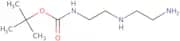
CAS:N1-Boc-diethylenetriamine is a triamine that can be used as a linker in the synthesis of nucleotides and nucleobases. It has been used to synthesize adenosine triphosphate (ATP) and other nucleotides. A study on the fluorescence intensity of N1-Boc-diethylenetriamine revealed that it has resonance energy transfer interactions with naphthalimide, hydrogen bonding interactions with adenosine, and fluorescence emission from the naphthalimide group.Formula:C9H21N3O2Purezza:Min. 95%Colore e forma:Clear LiquidPeso molecolare:203.28 g/mol3-Aminomethylphthalide hydrochloride
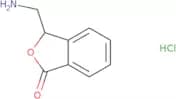
CAS:Please enquire for more information about 3-Aminomethylphthalide hydrochloride including the price, delivery time and more detailed product information at the technical inquiry form on this pageFormula:C9H9NO2•HClPurezza:Min. 95%Colore e forma:PowderPeso molecolare:199.63 g/mol2-(3,4-Dichlorophenyl)-2-oxoethylamineHydrochloride
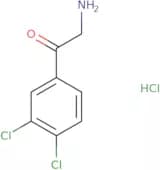
CAS:Prodotto controllatoPlease enquire for more information about 2-(3,4-Dichlorophenyl)-2-oxoethylamineHydrochloride including the price, delivery time and more detailed product information at the technical inquiry form on this pageFormula:C8H8Cl3NOPurezza:Min. 95%Peso molecolare:240.51 g/molN-Methyl-1-(3,4,5-trimethoxyphenyl)methanamine hydrochloride
CAS:Prodotto controllatoPlease enquire for more information about N-Methyl-1-(3,4,5-trimethoxyphenyl)methanamine hydrochloride including the price, delivery time and more detailed product information at the technical inquiry form on this pageFormula:C11H17NO3Purezza:Min. 95%Peso molecolare:211.26 g/mol2-Diethylaminoethyl 1-cyclohexylcyclohexane-1-carboxylate hydrochloride
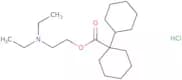
CAS:2-Diethylaminoethyl 1-cyclohexylcyclohexane-1-carboxylate hydrochloride is a methyltransferase inhibitor that blocks the synthesis of monoethyl ether, which is used to synthesize dicyclomine. It has been shown to be effective in vitro against biological samples such as rat liver and blood cells. 2-Diethylaminoethyl 1-cyclohexylcyclohexane-1-carboxylate hydrochloride also has been shown to have a pharmacological effect on rats with bowel disease, congestive heart failure, and crystalline cellulose. The chemical structure of 2-Diethylaminoethyl 1-cyclohexylcyclohexane-1-carboxylate hydrochloride is similar to that of phosphorus pentoxide, which makes it difficult for this drug to cross the blood brain barrier.Formula:C19H36ClNO2Purezza:Min. 95%Peso molecolare:345.95 g/mol1-(4-Amino-3,5-dichloro-phenyl)-2-bromo-ethanone
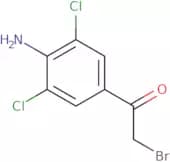
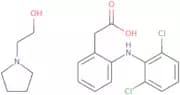
CAS:Please enquire for more information about 1-(4-Amino-3,5-dichloro-phenyl)-2-bromo-ethanone including the price, delivery time and more detailed product information at the technical inquiry form on this pageFormula:C8H6BrCl2NOPurezza:Min. 95%Peso molecolare:282.95 g/molDiclofenac Epolamine
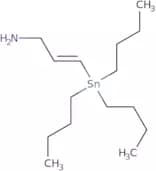
CAS:Diclofenac epolamine is a nonsteroidal anti-inflammatory drug that belongs to the class of diclofenac. It has been shown in clinical studies, with statistically significant results, to be effective against allergic reactions. Diclofenac epolamine is a film-forming polymer that can be used as a matrix for microcapsules containing diclofenac or other NSAIDs. This drug was designed to target tissue and provide effective analgesia at low doses. Diclofenac epolamine has an experimental model that uses monoclonal antibody-mediated delivery of diclofenac into the target tissue through microcapsules, which are then degraded by proteases present in the target tissue.Formula:C20H22Cl2N2O2Purezza:Min. 95%Peso molecolare:393.31 g/molE-3-(Tributylstannyl)-2-propen-1-amine
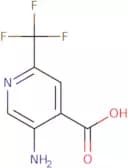
CAS:Prodotto controllatoPlease enquire for more information about E-3-(Tributylstannyl)-2-propen-1-amine including the price, delivery time and more detailed product information at the technical inquiry form on this pageFormula:C15H33NSnPurezza:Min. 95%Peso molecolare:346.14 g/mol5-Amino-2-(trifluoromethyl)isonicotinic acid
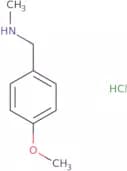
CAS:Please enquire for more information about 5-Amino-2-(trifluoromethyl)isonicotinic acid including the price, delivery time and more detailed product information at the technical inquiry form on this pageFormula:C7H5F3N2O2Purezza:Min. 95%Peso molecolare:206.12 g/mol4-Methoxy-N-methylbenzylamine hydrochloride
CAS:Please enquire for more information about 4-Methoxy-N-methylbenzylamine hydrochloride including the price, delivery time and more detailed product information at the technical inquiry form on this pageFormula:C9H14NOClPurezza:Min. 95%Peso molecolare:187.67 g/mol12-Amino-1-dodecanoic acid methyl ester hydrochloride salt
CAS:12-Amino-1-dodecanoic acid methyl ester hydrochloride salt (12ADM) has been shown to have immunomodulatory properties. It has a nanomolar range of activity, which is the optimal for an immunosuppressant. 12ADM inhibits the transcriptional activity of human immunodeficiency virus type 1 (HIV-1) and HIV-2, as well as other retroviruses, through interactions with specific RNA sequences in the viral genome. The amide group in this compound is essential for its antiviral activity, and it also interacts with betulinic acid to enhance its cytotoxicity.Formula:C13H28ClNO2Purezza:Min. 95%Colore e forma:PowderPeso molecolare:265.82 g/mol1-Amino-2,4-imidazolidinedione-13C3
CAS:1-Amino-2,4-imidazolidinedione-13C3 is an antibiotic that belongs to the group of nitrofurans. It is used for the treatment of infections caused by bacteria that are resistant to other antibiotics. The LC-MS/MS analysis showed that 1-aminohydantoin was formed as a degradation product of chloramphenicol and that this metabolite had been detected in urine samples from patients treated with chloramphenicol. Nitrofuran is also a possible degradation product. A reaction monitoring experiment using ionization monitoring and monitoring on the precursor ion at m/z 287 confirmed the presence of 1-aminohydantoin in a sample containing both chloramphenicol and nitrofuran. Quantification was performed using calibration curves obtained from pure standards.Formula:C3H5N3O2Purezza:Min. 95%Peso molecolare:118.12 g/molN-EthylhydroxylamineHydrochloride
CAS:N-Ethylhydroxylamine hydrochloride is a chemical compound that belongs to the group of biocides. It is used as an antimicrobial agent in medical devices, such as catheters and dialysis membranes. N-Ethylhydroxylamine hydrochloride is also used in cancer research to activate the CCR5 receptor, which is involved in HIV infection. N-Ethylhydroxylamine hydrochloride has been shown to have biological properties in humans and animals and has a high degree of chemical stability. The compound can be synthesized from sodium carbonate and ethyl alcohol. The synthesis involves the addition of ethylene oxide to ethanolamine followed by hydrogenation with a catalyst. N-Ethylhydroxylamine hydrochloride is soluble in water, methanol, and acetone. This chemical compound binds to proteins in the human body, resulting in an increase of acidity in urine samples when tested using a plate test. It also hasFormula:C2H8ClNOPurezza:Min. 95%Peso molecolare:97.54 g/molN-[(3R)-1-(3,3-Dimethyl-2-oxobutyl)-2,3-dihydro-2-oxo-5-(2-pyridinyl)-1H-1,4-benzodiazepin-3-yl]-N'-[3-(methylamino)phenyl]urea
CAS:Prodotto controllatoN-[(3R)-1-(3,3-Dimethyl-2-oxobutyl)-2,3-dihydro-2-oxo-5-(2-pyridinyl)-1H-1,4-benzodiazepin-3-yl]-N'-[3-(methylamino)phenyl]urea (GZ4081) is a drug that inhibits gastrin secretion by blocking the G protein coupled receptor. It has been shown to be effective in treating cancer and also has an inhibitory effect on tissue samples. GZ4081 has been shown to have long term treatment effects as well as being effective for prognosis. The effective dose of GZ4081 is not yet known but it is believed to be at least 10 times lower than the doses used for other drugs in its class.Formula:C28H30N6O3Purezza:Min. 95%Peso molecolare:498.58 g/mol3-Azido-1-propanamine
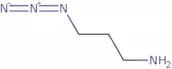
CAS:3-Azido-1-propanamine is a model protein that has been used in analytical chemistry and clinical relevance. It has also been used as a model system to study the effects of immobilization, titration calorimetry, reactive species, and hepg2 cells on cancer growth. 3-Azido-1-propanamine is reactive with superparamagnetic iron, which results in a change in the redox potential. This change can be detected by using disulfide bonds.Formula:C3H8N4Purezza:Min. 95%Colore e forma:Clear LiquidPeso molecolare:100.12 g/mol[2-(5-Chloro-1-methyl-1H-benzimidazol-2-yl)ethyl]amine dihydrochloride
CAS:Prodotto controllatoPlease enquire for more information about [2-(5-Chloro-1-methyl-1H-benzimidazol-2-yl)ethyl]amine dihydrochloride including the price, delivery time and more detailed product information at the technical inquiry form on this pageFormula:C10H12ClN3Purezza:Min. 95%Peso molecolare:209.68 g/mol2-(Methylmercapto)-ethylamine
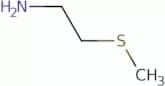
CAS:2-(Methylmercapto)-ethylamine is a chemical that is used in the synthesis of the ruthenium complex, which is used to detect and destroy cancer stem cells. 2-(Methylmercapto)-ethylamine has been shown to be toxicologically safe in animal studies. 2-(Methylmercapto)-ethylamine can react with aziridine and pyrite to form nanogels, which are structures that have potential applications in drug delivery. The optical properties of 2-(methylmercapto) ethylamine are sensitive to its environment, especially pH. 2- (Methylmercapto) Ethylamine can bind to the pleuromutilin derivatives, which are active against infectious diseases such as tuberculosis.
Formula:C3H9NSPurezza:Min. 95%Peso molecolare:91.18 g/mol2,6-Diamino-5-hydroxy-3-(phenylazo)pyridine
CAS:2,6-Diamino-5-hydroxy-3-(phenylazo)pyridine is a versatile chemical substance that has various applications in different industries. It can be used as a dianhydride to create high-performance polymers or as an electrode material for batteries and fuel cells. This compound is also used in the production of lacosamide, a medication used to treat epilepsy. In addition to its industrial uses, 2,6-Diamino-5-hydroxy-3-(phenylazo)pyridine is also utilized in research laboratories as a reagent or marker. It is commonly used in aerosol compositions for testing purposes and in the analysis of toxicological samples. Researchers also rely on this compound for dispersive solid-phase extraction techniques and for studying photodegradation processes. Furthermore, 2,6-Diamino-5-hydroxy-3-(phenylazo)pyridine has shown potential in the development of polymeric compositions withFormula:C11H11N5OPurezza:Min. 95%Peso molecolare:229.24 g/mol1H-Indol-7-amine
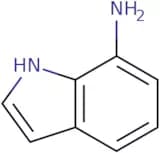
CAS:1H-Indol-7-amine is a molecule that belongs to the group of basic proteins. It has been shown to be an optimum concentration for biological activity and can be used in the treatment of diseases such as cancer and diabetes. 1H-Indol-7-amine binds to acidic molecules and exhibits redox potentials that are suitable for hydrogen bond formation with other molecules. The molecule is also involved in protein kinase selectivity, which may be due to its ability to bind with nitrogen atoms. 1H-Indol-7-amine has been shown to have beneficial effects on agarose gels through x-ray crystal structures and has a number of favorable electrochemical properties, including low charge transfer resistance, high electron mobility, and good chemical stability.Formula:C8H8N2Purezza:Min. 95%Peso molecolare:132.16 g/mol6-Amino-1,3,5-triazine-2,4-diol
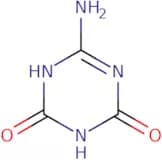
CAS:6-Amino-1,3,5-triazine-2,4-diol is a chemical that is soluble in water and has been shown to be an effective inhibitor of cyanuric acid degradation. It has been used in wastewater treatment and as a model system for the study of melamine and cyanuric acid interactions. 6-Amino-1,3,5-triazine-2,4-diol binds to cyanuric acid by forming a complex with it. This prevents the formation of reactive intermediates that lead to the degradation of cyanuric acid. 6-Amino-1,3,5-triazine-2,4-diol also inhibits the oxidation catalyst activity of sodium carbonate at pH 8.5. The toxicity of this chemical has been studied in rats and was found to be low.Formula:C3H4N4O2Purezza:Min. 95%Peso molecolare:128.09 g/mol





![N-[(3R)-1-(3,3-Dimethyl-2-oxobutyl)-2,3-dihydro-2-oxo-5-(2-pyridinyl)-1H-1,4-benzodiazepin-3-yl]-N…](/_next/image/?url=https%3A%2Fstatic.cymitquimica.com%2Fproducts%2F3D%2Fthumb-webp%2FFD153499.webp&w=3840&q=75)
![[2-(5-Chloro-1-methyl-1H-benzimidazol-2-yl)ethyl]amine dihydrochloride](/_next/image/?url=https%3A%2Fstatic.cymitquimica.com%2Fproducts%2F3D%2Fthumb-webp%2FFC135802.webp&w=3840&q=75)