Ciano-, Nitrile-
I composti ciano e nitrile sono molecole organiche che contengono gruppi ciano (C≡N) o nitrile nella loro struttura, caratterizzati dalla presenza di azoto. Questi gruppi svolgono ruoli importanti in varie reazioni chimiche e applicazioni industriali. In questa categoria, troverete un'ampia gamma di composti ciano e nitrile, che vanno da strutture semplici a complesse. Da CymitQuimica, offriamo composti ciano e nitrile di alta qualità adattati per soddisfare le esigenze di ricerca e industriali. I nostri composti sono adatti a una varietà di applicazioni di sintesi e analisi.
Trovati 9624 prodotti di "Ciano-, Nitrile-"
Ordinare per
Purezza (%)
0
100
|
0
|
50
|
90
|
95
|
100
Diethyl Cyanomethylphosphonate
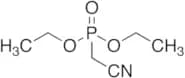
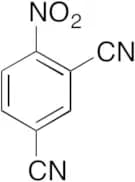
CAS:Prodotto controllato<p>Applications A Wittig reagent.<br>References Laine, D., et al.: J. Med. Chem., 52, 5241 (2009), Nakao, A., et al.: Bioorg. Med. Chem. Lett., 19, 4607 (2009), Arakawa, Y., et al.: Chem. Pharm. Bull., 57, 167 (2009),<br></p>Formula:C6H12NO3PColore e forma:NeatPeso molecolare:177.142,4-Dicyanonitrobenzene
CAS:Prodotto controllatoFormula:C8H3N3O2Colore e forma:NeatPeso molecolare:173.1284-Cyano-N,N-dimethylbenzamide
CAS:Prodotto controllato<p>Applications 4-cyano-N,N-dimethylbenzamide (cas# 24167-50-8) is a useful research chemical.<br></p>Formula:C10H10N2OColore e forma:NeatPeso molecolare:174.19N-(4-Cyanophenyl)-6-benzothiazolecarboxamide
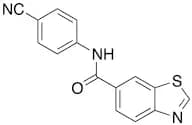
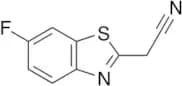
CAS:Prodotto controllato<p>Applications N-(4-Cyanophenyl)-6-benzothiazolecarboxamide is a compound used in the synthesis of piperazines presenting neuro and psychotropic agent with low toxicity.<br></p>Formula:C15H9N3OSColore e forma:NeatPeso molecolare:279.3176-Fluoro-2-benzothiazoleacetonitrile
CAS:Prodotto controllatoFormula:C9H5FN2SColore e forma:NeatPeso molecolare:192.213N-[[(2R,3S,4R)-4-[Bis[(3-cyanophenyl)methyl]amino]-3-hydroxyoxolan-2-yl]methyl]cyclopropanecarboxamide
CAS:Prodotto controllatoFormula:C25H26N4O3Colore e forma:NeatPeso molecolare:430.499Methyl 2-cyanobenzoate
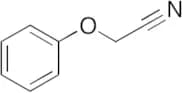
CAS:Prodotto controllato<p>Applications Methyl 2-cyanobenzoate<br></p>Formula:C9H7NO2Colore e forma:NeatPeso molecolare:161.16Phenoxyacetonitrile
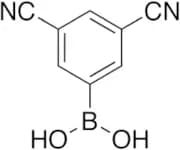
CAS:Prodotto controllato<p>Applications Phenoxyacetonitrile is a building block that has been used as a reactant for the preparation of [[(oxo)pyridazinyl]phenoxy]acetonitrile derivatives to be used as vasodilators.<br>References Bansal, R., et. al.: Drug Dev. Ind. Pharm., 74, 296 (2013)<br></p>Formula:C8H7NOColore e forma:NeatPeso molecolare:133.1473,5-Dicyanophenylboronic Acid
CAS:Prodotto controllatoFormula:C8H5BN2O2Colore e forma:NeatPeso molecolare:171.948Tert-butyl N-[(5-Cyanothiophen-2-yl)methyl]carbamate
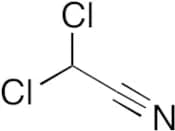
CAS:Prodotto controllatoFormula:C11H14N2O2SColore e forma:NeatPeso molecolare:238.306Dichloroacetonitrile
CAS:Prodotto controllato<p>Applications Dichloroacetonitrile is commonly used with gas chromatography-mass spectrometry instrument to evaluate and quantify the common halogenated disinfection by products using the headspace technique.<br> Not a dangerous good if item is equal to or less than 1g/ml and there is less than 100g/ml in the package<br>References Montesinos, I., et al.: J. Chromatogr. A., 1310 113 (2013)<br></p>Formula:C2HCl2NColore e forma:NeatPeso molecolare:109.94Cyclopropanone Cyanohydrin
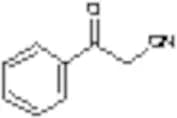
CAS:Prodotto controllatoFormula:C4H5NOColore e forma:NeatPeso molecolare:83.089Benzoylacetonitrile
CAS:Prodotto controllato<p>Applications Used as a building block for the preparation of 4H-pyrans, 2-pyridones, furans and carbocyclics.<br>References Herschhorn, A., et al.: J. Med. Chem., 50, 3402 (2007),<br></p>Formula:C9H7NOColore e forma:NeatPeso molecolare:145.16p-Biphenylacetonitrile
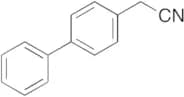
CAS:Prodotto controllato<p>Applications 4-Biphenylacetonitrile is a useful synthetic intermediate. It was used to study the adsorption orientation of the biphenyl derivatives on the Au colloidal surfaces with α-cyclodextrins. 4-Biphenylacetonitrile on condensation reaction with ethyl phenyl propiolate yields biphenyl derivatives of acetylenic β-ketocyanide.<br>References Lee, J., et al.: Bull. Korean. Chem. Soc., 30, 1637 (2009); Al-Jallo, H., et al.: J. Chem. Eng. Data, 17, 513, (1972)<br></p>Formula:C14H11NColore e forma:NeatPeso molecolare:193.243-Cyanopropionic acid methyl ester
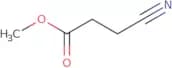
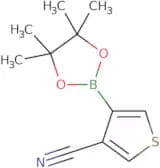
CAS:<p>3-Cyanopropionic acid methyl ester is a compound that belongs to the class of aliphatic carboxylic acids. It is an intermediate in the production of adiponitrile and acrylonitrile. This compound is used as a feedstock for the manufacture of vinylene, which can be used to produce c1-6 alkyl. 3-Cyanopropionic acid methyl ester can be produced from propylene and hydrogen cyanide in a high salt, activated reaction system. It has been shown that this compound may have metabolic disorders due to its ability to inhibit fatty acid oxidation and increase viscosity. 3-Cyanopropionic acid methyl ester is a colorless liquid at room temperature with a boiling point of 154°C and a molecular weight of 98.14 g/mol.</p>Formula:C5H7NO2Purezza:Min. 95%Colore e forma:Clear LiquidPeso molecolare:113.11 g/mol3-Cyanothiophene-4-boronic acid pinacol ester
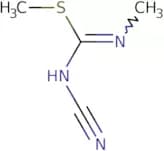
CAS:<p>Please enquire for more information about 3-Cyanothiophene-4-boronic acid pinacol ester including the price, delivery time and more detailed product information at the technical inquiry form on this page</p>Formula:C11H14BNO2SPurezza:Min. 95%Peso molecolare:235.11 g/molN-Cyano-N',S-dimethylisothiourea
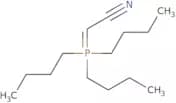
CAS:<p>Please enquire for more information about N-Cyano-N',S-dimethylisothiourea including the price, delivery time and more detailed product information at the technical inquiry form on this page</p>Formula:C4H7N3SPurezza:Min. 95%Peso molecolare:129.18 g/molCyanomethylenetributylphosphorane
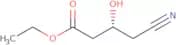
CAS:<p>Cyanomethylenetributylphosphorane (CMTP) is an agent used for the diagnosis of body formation. It is a chemical compound that can be used to produce images of tissue and organs by detecting apoptosis, or programmed cell death. CMTP binds to the glucose-dependent insulinotropic polypeptide receptor (GIPR), stimulating the release of insulin in the pancreas. CMTP also has therapeutic potential for metabolic disorders, as it has been shown to reduce triglycerides and increase HDL cholesterol levels in human serum. CMTP is synthesized from trifluoroacetic acid, which is then reacted with a cyclic peptide containing an amino acid derivative and 1-methyl-2-pyrrolidinone. This reaction produces a molecule with one free amino group at one end and two free carboxylic acid groups at the other end. The molecule can be reacted with epidermal growth factor (EGF) or insulin to</p>Formula:C14H28NPPurezza:Min. 95%Colore e forma:Yellow To Dark Brown Clear LiquidPeso molecolare:241.35 g/molEthyl (R)-(-)-4-cyano-3-hydroxybutyrate
CAS:<p>Ethyl (R)-(-)-4-cyano-3-hydroxybutyrate is an asymmetric synthesis of D-(+)-glyceraldehyde. This compound is an acidic, high cholesterol substrate that binds to disaccharides and has hydroxyl groups. It has been shown to reduce low density lipoprotein levels in the blood by inhibiting the production of cholesterol in the liver. The reaction solution is immobilized on a solid support and is used for kinetic studies. Kinetic measurements were performed at different concentrations of hydrochloric acid and immobilized cells as a function of time. The reaction yield was determined using UV absorbance at 275 nm, which was plotted against time.</p>Purezza:Min. 95%Diethyl cyanophosphonate
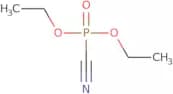
CAS:<p>Diethyl cyanophosphonate is a compound that is used as a fluorescence probe for amides and pyrazole rings. It binds to the ester form of the amide, which can then be detected with a fluorescence detector. The chemical reaction between diethyl cyanophosphonate and the ester form is reversible, so it can be used as a hypoglycemic agent. Diethyl cyanophosphonate has potent antitumor activity and binds to nerve cells, causing them to become electrically active.</p>Formula:C5H10NO3PPurezza:Min. 95%Colore e forma:PowderPeso molecolare:163.11 g/mol


![N-[[(2R,3S,4R)-4-[Bis[(3-cyanophenyl)methyl]amino]-3-hydroxyoxolan-2-yl]methyl]cyclopropanecarboxa…](/_next/image/?url=https%3A%2Fstatic.cymitquimica.com%2Fproducts%2FTR%2Fthumb-webp%2FB400145.webp&w=3840&q=75)

![Tert-butyl N-[(5-Cyanothiophen-2-yl)methyl]carbamate](/_next/image/?url=https%3A%2Fstatic.cymitquimica.com%2Fproducts%2FTR%2Fthumb-webp%2FB815518.webp&w=3840&q=75)