Ciano-, Nitrile-
I composti ciano e nitrile sono molecole organiche che contengono gruppi ciano (C≡N) o nitrile nella loro struttura, caratterizzati dalla presenza di azoto. Questi gruppi svolgono ruoli importanti in varie reazioni chimiche e applicazioni industriali. In questa categoria, troverete un'ampia gamma di composti ciano e nitrile, che vanno da strutture semplici a complesse. Da CymitQuimica, offriamo composti ciano e nitrile di alta qualità adattati per soddisfare le esigenze di ricerca e industriali. I nostri composti sono adatti a una varietà di applicazioni di sintesi e analisi.
Trovati 9618 prodotti di "Ciano-, Nitrile-"
Ordinare per
Purezza (%)
0
100
|
0
|
50
|
90
|
95
|
100
2-(4-Cyanophenyl)-1H-anthra[1,2-d]imidazole-6,11-dione
CAS:Colore e forma:SolidPeso molecolare:349.0851265924-Chloro-2-methylpyrimidine-5-carbonitrile
CAS:Purezza:95.0%Colore e forma:SolidPeso molecolare:153.570007324218755-amino-1-(3-chloro-4,5,6,7-tetrahydropyrazolo[1,5-a]pyridin-2-yl)-1H-pyrazole-4-carbonitrile
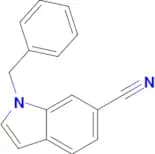
CAS:Purezza:97%Peso molecolare:262.700012207031251-benzyl-1H-indole-6-carbonitrile
CAS:Purezza:95.0%Colore e forma:Liquid, No data available.Peso molecolare:232.285995483398444-Cyanobenzylamine HCl
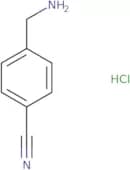
CAS:<p>4-Cyanobenzylamine HCl is a degradable polymer that has been shown to inhibit colonic adenocarcinoma in mice. This compound was synthesized by the reaction of 4-cyanobenzylamine with 3-mercaptopropionic acid and was characterized using IR, 1H NMR, and 13C NMR spectroscopy. It also showed an inhibitory effect on the proliferation of human colon cancer cells. The polymer was found to gel when mixed with different concentrations of acrylamide and methylene bisacrylamide. Gelation occurred at a lower concentration of acrylamide than the amount used in previous studies. This may be due to its functional groups and morphology, which could have contributed to the inhibition of cell growth.</p>Formula:C8H8N2·HClPurezza:Min. 95%Colore e forma:PowderPeso molecolare:168.62 g/mol5-Cyano-2-fluorobenzoic acid
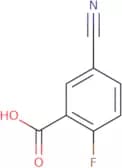
CAS:<p>5-Cyano-2-fluorobenzoic acid is a macrocyclization agent that is used in the synthesis of 16-membered macrocycles. It is a nucleophilic reagent that reacts with an electrophile to form a 5,5'-bifluoro-2,2'-dioxodibenzofuranone. This reaction can be performed under mild conditions and proceeds via a 1,4-addition mechanism. The product has two stereogenic centers and four stereoisomers that are formed by the relative configuration of these centers. 5-Cyano-2-fluorobenzoic acid also has application in the clinic as an analogue for fluoroquinolones.</p>Formula:C8H4FNO2Purezza:Min. 95%Colore e forma:PowderPeso molecolare:165.12 g/mol3-Cyano-5-bromopyridine
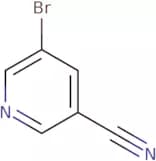
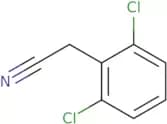
CAS:<p>3-Cyano-5-bromopyridine is an enantiopure organic compound that belongs to the group of halides. It is a functional group that is a reagent in organic synthesis, and it can be used as a precursor to dyestuffs. 3-Cyano-5-bromopyridine has been shown to have antimicrobial activity against bacteria and fungi. It also has a metabotropic glutamate receptor subtype selective affinity, which may be due to its ability to bind with glutamate in complex molecules.</p>Formula:C6H3BrN2Purezza:Min. 95%Colore e forma:White To Beige To Light (Or Pale) Yellow SolidPeso molecolare:183.01 g/mol2,6-Dichlorophenylacetonitrile
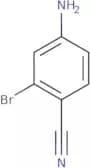
CAS:<p>2,6-Dichlorophenylacetonitrile (2,6-DCPA) is a cyanide herbicide that controls weed growth. 2,6-DCPA is used as a preemergent herbicide and is applied to the soil before planting. It can be mixed with calcium oxide or other materials to form a dust, which is then applied to the soil surface. 2,6-DCPA inhibits plant growth by interfering with the photosynthesis process, which may be due to its high cytotoxicity. The exact mechanism of action has not been determined but it may be due to interference with chloride transport or ethyl esters production in plants. This chemical has also been shown to inhibit amine metabolism in plants and animals.<br>2,6-DCPA has two isomers: cis and trans. They differ only in the position of the chlorine atom on the benzene ring: cis (left) and trans (right).</p>Formula:C8H5Cl2NPurezza:Min. 95%Colore e forma:White PowderPeso molecolare:186.04 g/mol4-Amino-2-bromobenzonitrile
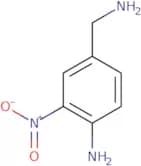
CAS:<p>4-Amino-2-bromobenzonitrile is a crystallized ligand with a molecular formula of C6H7BrN. It belongs to the cationic class of ligands and has been shown to form intermolecular hydrogen bonds with aromatic rings. The crystal has a hexagonal unit cell and space group P-1. 4-Amino-2-bromobenzonitrile has been used as an elemental analysis reagent in the determination of copper, lead, zinc, and cadmium.</p>Formula:C7H5BrN2Purezza:Min. 95%Colore e forma:PowderPeso molecolare:197.03 g/mol4-Amino-3-nitrobenzylamine hydrochloride
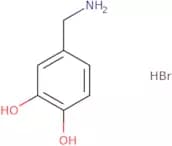
CAS:<p>4-Amino-3-nitrobenzylamine hydrochloride is a potential vanilloid receptor antagonist with potent antagonistic activities. It has been shown to inhibit the activation of neuronal TRPV1 receptors, as well as the uptake of 4-aminobenzoic acid (4-BA) in rat brain synaptosomes. In addition, this compound can be used to optimize drug structure, acting as an amide and alkyl groups. 4-Amino-3-nitrobenzylamine hydrochloride binds to the vanilloid receptor TRPV1 and blocks its activation. This prevents the release of proinflammatory substances that are responsible for pain, inflammation, and tissue injury.</p>Formula:C7H9N3O2·HClPurezza:Min. 95%Colore e forma:PowderPeso molecolare:203.63 g/mol3,4-Dihydroxybenzylamine hydrobromide
CAS:<p>3,4-Dihydroxybenzylamine hydrobromide is a chemical that reacts with hydrogen peroxide to produce light. It is used as a nutrient for the chemiluminescent reaction in a nutrient solution to detect dopamine, chlorogenic acids, and trifluoroacetic acid. 3,4-Dihydroxybenzylamine hydrobromide can also be used as an analytical method for the measurement of cortisol concentration in plasma and saliva samples. This chemical analogically reacts with monoamine neurotransmitters such as dopamine and gamma-aminobutyric acid (GABA) to form fluorescent probes. 3,4-Dihydroxybenzylamine hydrobromide is not toxic or mutagenic and has been shown to be safe for use in humans.</p>Formula:C7H10BrNO2Purezza:Min. 95%Colore e forma:PowderPeso molecolare:220.06 g/mol1-Cyano-4-(dimethylamino)pyridinium tetrafluoroborate
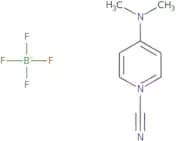
CAS:<p>1-Cyano-4-(dimethylamino)pyridinium tetrafluoroborate (CDAP) is an organic cyanylating agent. It is reactive under acidic conditions giving CDAP an advantage over other sulfhydryl labeling agents, as it can avoid potential thiol-disulfide exchange.</p>Formula:C8H10N3BF4Purezza:Min. 98 Area-%Colore e forma:PowderPeso molecolare:234.99 g/mol2-Chloro-5-hydroxybenzonitrile
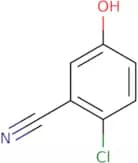
CAS:<p>2-Chloro-5-hydroxybenzonitrile is a versatile, building block chemical that can be used as a reactant or intermediate in the synthesis of other compounds. It is also an excellent research chemical with a high quality and purity. 2-Chloro-5-hydroxybenzonitrile has many uses, such as being a reagent for organic synthesis, a speciality chemical, and a useful intermediate. This compound is suitable for complex synthesis and has been shown to be useful as a building block or scaffold in the production of other chemicals.</p>Formula:C7H4ClNOPurezza:Min. 95%Colore e forma:Off-White PowderPeso molecolare:153.57 g/molDiphenylacetonitrile
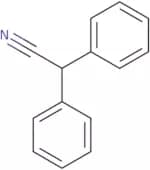
CAS:<p>Diphenylacetonitrile is an organic compound that has a low energy and is used as a nutritional supplement. It is a derivative of mandelonitrile, which can be synthesized by the Friedel-Crafts reaction between chloroform and diphenylacetic acid. Diphenylacetonitrile is an aromatic hydrocarbon with nitrogen atoms and hydroxyl groups, which can be found in the virus or p. aeruginosa. The molecule has been shown to have anti-inflammatory potency in animal models. The synthesis of this compound involves the use of halides, such as hydrogen sulfate or bromide, which are also present in high concentrations in this product. <br>Diphenylacetonitrile (DPCN) is a low-energy nitrile that undergoes Friedel-Crafts reactions with chloroform to produce the corresponding chloride (DPCCl). DPCN has been shown to inhibit inflammatory responses</p>Formula:C14H11NPurezza:Min. 95%Colore e forma:PowderPeso molecolare:193.24 g/molN-Cyanopiperidine
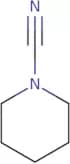
CAS:<p>N-Cyanopiperidine is a cyclohexane ring with a trifluoroacetic acid group. It is used in the synthesis of pharmaceutical preparations and has been shown to be stable in low-energy environments, such as when mixed with glycol ethers or chlorides. N-Cyanopiperidine is also used as an intermediate for the preparation of other compounds, such as metal carbonyl complexes and derivatives. N-Cyanopiperidine can be synthesized by reacting anhydrous hydrogen cyanide with piperidinium chloride in the presence of metal hydroxides. This reaction mechanism is known to produce two products: 1) a stable complex with a metal ion, and 2) a reaction product that contains the desired product and hydrogen cyanide.</p>Formula:C6H10N2Purezza:Min. 95%Colore e forma:PowderPeso molecolare:110.16 g/mol2-Bromo-4-cyanotoluene
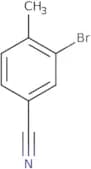
CAS:<p>2-Bromo-4-cyanotoluene is a ligand that is used in cross-coupling reactions. It is used to form complexes with metals, such as palladium and nickel, for the preparation of organometallic reagents. 2-Bromo-4-cyanotoluene has been shown to inhibit secretory phospholipase A2 (sPLA2) and PLA2 activity in a fluorimetric assay. This compound also inhibits the catalytic activity of spla2, which is an enzyme involved in the biosynthesis of arachidonic acid. 2-Bromo-4-cyanotoluene also inhibits piperazine synthesis by reacting with the nitrogen atom on the piperazine ring.</p>Formula:C8H6BrNPurezza:Min. 95%Peso molecolare:196.04 g/mol4-Cyanobenzamide
CAS:<p>4-Cyanobenzamide is a naphthalene derivative that is both reactive and intramolecular. It has been shown to react with the amino group of peptides, forming a ruthenium complex. The functional groups are acceptors and donors that can be used in assays for the detection of anions or cations. 4-Cyanobenzamide reacts with water to release hydrogen gas, which can be used to measure its hydration ability. This compound has been synthesized using solid-phase synthesis and it has amide bonds that vibrate at a specific frequency.</p>Formula:C8H6N2OPurezza:Min. 95%Colore e forma:PowderPeso molecolare:146.15 g/mol2-(Diphenylamino)benzoic acid
CAS:<p>Please enquire for more information about 2-(Diphenylamino)benzoic acid including the price, delivery time and more detailed product information at the technical inquiry form on this page</p>Formula:C19H15NO2Purezza:Min. 95%Peso molecolare:289.33 g/mol7-Cyano-7-deaza-2’-deoxyguanosine
CAS:<p>7-Cyano-7-deaza-2’-deoxyguanosine is a pyrrole nucleoside analog that has been shown to inhibit the replication of herpes simplex virus type 1 and 2 in human cell lines. 7-Cyano-7-deaza-2’-deoxyguanosine is a synthetic nucleoside analog that is structurally similar to deoxyadenosine, but with a cyanide group instead of an oxygen atom. This compound has been shown to have the same biochemical properties as deoxyadenosine, including inhibiting the incorporation of uridine into RNA and DNA. In addition, 7-Cyano-7-deaza-2’-deoxyguanosine inhibits the synthesis of proteins from amino acids by competitive inhibition of ribonucleotide reductase, which catalyzes the conversion of ribonucleotides to deoxyribonucleotides. The enzyme's function</p>Formula:C12H13N5O4Purezza:Min. 95%Colore e forma:PowderPeso molecolare:291.26 g/molPhenoxyacetonitrile
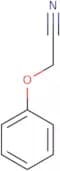
CAS:<p>Phenoxyacetonitrile is an efficient method for the synthesis of ethylene diamine by the reaction of hydrochloric acid, chloride and a carbon source. The nitro group can be reduced to an amine or a hydroxyl group by hydrogen chloride in acetonitrile. This method has been used in the synthesis of drugs such as acyclovir and penciclovir. Phenoxyacetonitrile also inhibits growth factor production, which may be due to its inhibitory properties on the enzyme houben-hoesch reaction.</p>Formula:C8H7NOPurezza:Min. 95%Peso molecolare:133.15 g/mol
![2-(4-Cyanophenyl)-1H-anthra[1,2-d]imidazole-6,11-dione](/_next/image/?url=https%3A%2Fstatic.cymitquimica.com%2Fproducts%2F10%2Fthumb-webp%2FF098008.webp&w=3840&q=75)


![5-amino-1-(3-chloro-4,5,6,7-tetrahydropyrazolo[1,5-a]pyridin-2-yl)-1H-pyrazole-4-carbonitrile](/_next/image/?url=https%3A%2Fstatic.cymitquimica.com%2Fproducts%2F10%2Fthumb-webp%2FF603435.webp&w=3840&q=75)