Ciano-, Nitrile-
I composti ciano e nitrile sono molecole organiche che contengono gruppi ciano (C≡N) o nitrile nella loro struttura, caratterizzati dalla presenza di azoto. Questi gruppi svolgono ruoli importanti in varie reazioni chimiche e applicazioni industriali. In questa categoria, troverete un'ampia gamma di composti ciano e nitrile, che vanno da strutture semplici a complesse. Da CymitQuimica, offriamo composti ciano e nitrile di alta qualità adattati per soddisfare le esigenze di ricerca e industriali. I nostri composti sono adatti a una varietà di applicazioni di sintesi e analisi.
Trovati 9618 prodotti di "Ciano-, Nitrile-"
Ordinare per
Purezza (%)
0
100
|
0
|
50
|
90
|
95
|
100
N-Cyanopiperidine
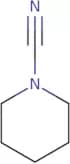
CAS:<p>N-Cyanopiperidine is a cyclohexane ring with a trifluoroacetic acid group. It is used in the synthesis of pharmaceutical preparations and has been shown to be stable in low-energy environments, such as when mixed with glycol ethers or chlorides. N-Cyanopiperidine is also used as an intermediate for the preparation of other compounds, such as metal carbonyl complexes and derivatives. N-Cyanopiperidine can be synthesized by reacting anhydrous hydrogen cyanide with piperidinium chloride in the presence of metal hydroxides. This reaction mechanism is known to produce two products: 1) a stable complex with a metal ion, and 2) a reaction product that contains the desired product and hydrogen cyanide.</p>Formula:C6H10N2Purezza:Min. 95%Colore e forma:PowderPeso molecolare:110.16 g/mol7-(Cyanomethoxy)indole
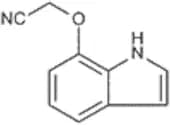
CAS:<p>7-(Cyanomethoxy)indole is a versatile building block that can be used as a scaffold for the synthesis of complex molecules. It has been used as an intermediate in organic synthesis and as a reaction component for the preparation of useful compounds. 7-(Cyanomethoxy)indole is also known to have high quality and is widely used in research laboratories.</p>Formula:C10H8N2OPurezza:Min. 95%Peso molecolare:172.18 g/mol2-Methoxyphenylacetonitrile
CAS:<p>2-Methoxyphenylacetonitrile is a chemical that is used in the manufacture of pharmaceuticals. It has antibacterial activity and can be used to treat typhoid fever, staphylococcal infections, and mental disorders such as schizophrenia. 2-Methoxyphenylacetonitrile is an alkylating agent that reacts with nucleophiles in proteins, DNA, and RNA. These reactions lead to the destruction of the bacterial cell wall and inhibition of protein synthesis. The mechanism by which 2-methoxyphenylacetonitrile exerts its antibacterial effect may involve formation of a reactive intermediate that inhibits bacterial ribonucleotide reductase. The addition of an electron to this intermediate leads to the formation of a covalent bond with one or more amino acids in the protein acceptor, thereby preventing further growth and division of bacteria.</p>Formula:C9H9NOPurezza:Min. 90%Colore e forma:White PowderPeso molecolare:147.17 g/mol3,4-Dihydroxybenzonitrile
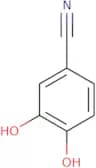
CAS:<p>3,4-Dihydroxybenzonitrile is a chemical compound that is found in soybean lipoxygenase. The molecule has been shown to be an excellent Michaelis-Menten substrate and hydrogen bonding partner. It also reacts with chlorine to form chlorinating agents such as 3,4-dichlorobenzonitrile and 3,4-dibromobenzonitrile. 3,4-Dihydroxybenzonitrile can act as a nucleophile and forms stable complexes when reacted with hydroxyl group compounds such as protocatechuic acid or reaction solution. This chemical is reactive and can be activated by redox cycling or light.<br>3,4-Dihydroxybenzonitrile has been used to treat protocatechuic acid levels in the blood of patients with chronic liver disease who are being treated for alcoholism.</p>Formula:C7H5NO2Purezza:Min. 95%Colore e forma:PowderPeso molecolare:135.12 g/mol2-Cyanoacetamide
CAS:<p>2-Cyanoacetamide is an organic compound that is used in pharmaceutical preparations. It reacts with malonic acid to form a dioxime, which is a precursor of various drugs. The optimum concentration for the reaction to occur is at 10% (w/v). The reaction mechanism has not been fully elucidated and it involves the transfer of nitrogen from an amide group to a carbonyl group. 2-Cyanoacetamide has shown anti-angiogenic effects in mice by inhibiting the expression of Mcl-1 protein, which is involved in the regulation of apoptosis and inflammation. This drug also has biological functions as a precursor for dopamine, which helps regulate motor and cognitive functions.</p>Formula:C3H4N2OPurezza:Min. 98%Colore e forma:White Off-White PowderPeso molecolare:84.08 g/mol2-Bromo-6-fluorobenzonitrile
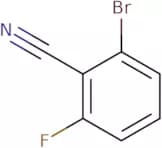
CAS:<p>2-Bromo-6-fluorobenzonitrile is an organic compound with a molecular formula of C6H3BrF. It is a colorless liquid that is used as a precursor in the synthesis of other compounds. 2-Bromo-6-fluorobenzonitrile has been shown to be an efficient fluorophore and can be activated by electron transfer, thermally, or chemically. 2-Bromo-6-fluorobenzonitrile also has a quantum efficiency of 0.5% and transport properties that make it ideal for fluorescence microscopy. The fluorescence intensity of 2-bromo-6-fluorobenzonitrile is proportional to the amount of energy absorbed, which makes it useful for quantifying the concentration of fluorescent molecules in solution. 2-Bromo-6-fluorobenzonitrile has also been shown to have high quantum yields and high efficiency levels when</p>Formula:C7H3BrFNPurezza:Min. 95%Colore e forma:PowderPeso molecolare:200.01 g/mol2-Amino-5-chlorobenzonitrile
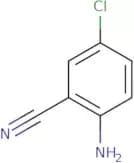
CAS:<p>2-Amino-5-chlorobenzonitrile is a potent inhibitor of butyrylcholinesterase (BChE) and has been shown to inhibit the activity of this enzyme in cell lung cancer and muscle. 2-Amino-5-chlorobenzonitrile also inhibits the activity of other enzymes, such as acetylcholinesterase (AChE) and phosphatidylcholine esterase (PCE), that are found in the membranes of cells. This inhibition leads to increased levels of acetylcholine in the synaptic cleft, which may lead to an increase in muscular contractions. 2-Amino-5-chlorobenzonitrile is also a product yield enhancer for chromene synthesis.</p>Formula:C7H5ClN2Purezza:Min. 95%Colore e forma:PowderPeso molecolare:152.58 g/mol5,6-Diamino-2,3-dicyanopyrazine
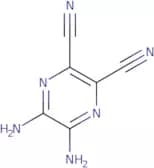
CAS:<p>5,6-Diamino-2,3-dicyanopyrazine (5,6-DDA) is a synthetic compound that has been shown to emit in the visible region. The emission spectrum of 5,6-DDA shows three peaks at 599 nm, 614 nm, and 637 nm. The molecular orbitals of 5,6-DDA are calculated to be sp2 hybridized with a singlet ground state. This molecule has been shown to form imines with aniline and pyrrole in the presence of chloride ions. It also forms a zn complex with zinc chloride and nitrate ions. The thermolysis of furyl derivatives produces the corresponding anions. 5,6-DDA can also undergo a photochemical reaction with chlorine gas to form its molecular ion at 637 nm.</p>Formula:C6N4N6Purezza:(%) Min. 98%Colore e forma:PowderPeso molecolare:160.14 g/mol(2,3-Dichlorophenyl)acetonitrile
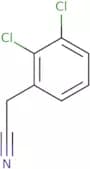
CAS:<p>(2,3-Dichlorophenyl)acetonitrile is a fine chemical that is useful as a building block in the synthesis of more complex compounds. It has been used in research as a reagent and as a speciality chemical. (2,3-Dichlorophenyl)acetonitrile reacts with many different types of compounds to form new molecules. This intermediate can be used in the synthesis of many different types of compounds and also serves as an important scaffold for larger molecules.</p>Formula:C8H5Cl2NPurezza:Min. 95%Colore e forma:PowderPeso molecolare:186.04 g/mol2-Amino-4-fluorobenzylamine dihydrochloride
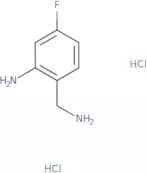
CAS:<p>2-Amino-4-fluorobenzylamine dihydrochloride is a research chemical that is used as a reactant in organic synthesis. 2-Amino-4-fluorobenzylamine dihydrochloride is an intermediate for the preparation of other chemicals and can also be used as a building block for more complex compounds. This chemical has been shown to have good quality and can be used in many different types of research.<br>2-Amino-4-fluorobenzylamine dihydrochloride has CAS number 606139-20-2.</p>Formula:C7H9FN2·2HClPurezza:Min. 95 Area-%Colore e forma:PowderPeso molecolare:213.08 g/mol2-Cyanoethyl phosphate barium salt hydrate
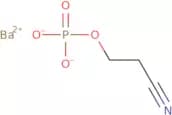
CAS:<p>2-Cyanoethyl phosphate barium salt hydrate is an alkaline compound that is soluble in water. It has been used to synthesize phosphodiesters, benzene, dioxan and alcohols. The chemical was originally developed as a reagent for the quantitative conversion of ethyl acetate esters to their corresponding acid chlorides. This reaction can be carried out quantitatively in tetrahydrofuran at room temperature with yields of about 95%. 2-Cyanoethyl phosphate barium salt hydrate also converts alcohols to their corresponding monophosphates quantitatively in alkaline conditions. Crystalline forms are obtained by reacting the compound with triethylamine and benzene.</p>Formula:C3H6BaNO4P•xH2OPurezza:Min. 95%Colore e forma:PowderPeso molecolare:324.42 g/mol4-Ethylbenzonitrile
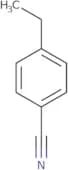
CAS:<p>4-Ethylbenzonitrile is a chemical that is found in human lung. It is a terminal alkene, which undergoes aerobic photooxidation to form reactive oxygen species such as superoxide radical anion and hydrogen peroxide. 4-Ethylbenzonitrile is also converted to triazine, which has been shown to have tumorigenic properties in the lungs of rats and mice. The functional groups on 4-ethylbenzonitrile are amines, hydroxyls, carbonyls, and nitriles. This compound has an inhibitory effect on lung fibroblasts due to its ability to interfere with the function of β-unsaturated ketones. 4-Ethylbenzonitrile's basic structure contains three carbon atoms, two double bonds, and one triple bond.</p>Formula:C9H9NPurezza:Min. 95%Colore e forma:Clear LiquidPeso molecolare:131.17 g/molDiphenylacetonitrile
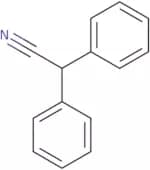
CAS:<p>Diphenylacetonitrile is an organic compound that has a low energy and is used as a nutritional supplement. It is a derivative of mandelonitrile, which can be synthesized by the Friedel-Crafts reaction between chloroform and diphenylacetic acid. Diphenylacetonitrile is an aromatic hydrocarbon with nitrogen atoms and hydroxyl groups, which can be found in the virus or p. aeruginosa. The molecule has been shown to have anti-inflammatory potency in animal models. The synthesis of this compound involves the use of halides, such as hydrogen sulfate or bromide, which are also present in high concentrations in this product. <br>Diphenylacetonitrile (DPCN) is a low-energy nitrile that undergoes Friedel-Crafts reactions with chloroform to produce the corresponding chloride (DPCCl). DPCN has been shown to inhibit inflammatory responses</p>Formula:C14H11NPurezza:Min. 95%Colore e forma:PowderPeso molecolare:193.24 g/mol4-Hydroxyphenylacetonitrile
CAS:<p>4-Hydroxyphenylacetonitrile (HPA) is a chemical compound that belongs to the group of nitriles. It is a precursor to the pigment sinalbin, which is found in corynebacterium and related bacteria. HPA has been shown to have an apoptotic effect on human cells, which may be due to its ability to inhibit protein synthesis and induce DNA fragmentation. The synthetic pathway for HPA starts with the conversion of L-phenylalanine into 4-hydroxyphenylpyruvic acid by a wild-type strain or bacterial strain. The 4-hydroxyphenylpyruvic acid is then converted into 4-hydroxybenzaldehyde through polymerase chain reactions or expression plasmids in corynebacterium glutamicum. This molecule can then be transformed into HPA by hydrolysis with hydrochloric acid or enzymatic activity. HPA has also been shown to stimulate</p>Formula:C8H7NOPurezza:Min. 95%Colore e forma:PowderPeso molecolare:133.15 g/mol3,4-Diethoxyphenylacetonitrile
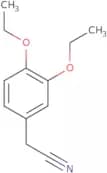
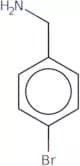
CAS:<p>3,4-Diethoxyphenylacetonitrile is an intermediate that is used in the synthesis of drotaverine. It can also be used to synthesize catechol, which is a medicine used to treat depression and anxiety. 3,4-Diethoxyphenylacetonitrile can be chloromethylated with phosphorus pentachloride to produce 3,4-diethoxyphenylacetic acid. This product has been used in the synthesis of sodium cyanide and catechol hydrochloride.</p>Formula:C12H15NO2Purezza:Min. 95%Colore e forma:PowderPeso molecolare:205.25 g/mol4-Bromobenzylamine
CAS:<p>4-Bromobenzylamine is a chemical compound that has been used to study the process optimization of sephadex g-100. It is also used as a chemotherapeutic treatment for cancer. 4-Bromobenzylamine binds to intracellular targets, such as nitrogen atoms and cell lysis, with physiological levels found in fetal bovine serum. The nitrogen atom is an essential structural component of 4-bromobenzylamine that is necessary for its biological activity and may be involved in binding to DNA polymerase. This drug has been shown to inhibit the growth of metastatic colorectal cancer cells by inhibiting cellular proliferation. Structural analysis has revealed that 4-bromobenzylamine interacts with the polymerase chain reaction (PCR) enzyme and inhibits the ability of DNA polymerases to add nucleotides to the growing strand of DNA.</p>Formula:C7H8BrNPurezza:Min. 95%Colore e forma:PowderPeso molecolare:186.05 g/mol2-Fluoro-4-methoxybenzylamine hydrochloride
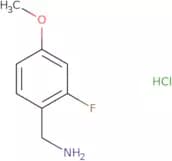
CAS:<p>2-Fluoro-4-methoxybenzylamine hydrochloride is a potent inhibitor of polymerase (DNA and RNA). It has been shown to inhibit the growth of human breast cancer cells and to induce apoptosis. 2-Fluoro-4-methoxybenzylamine hydrochloride binds to the polymerase, which blocks synthesis of DNA or RNA. The binding site is located near the active site of the enzyme. This drug also has an insulin-like effect by stimulating IGF-I production and increasing protein synthesis in somatotrophic cells.</p>Formula:C8H11ClFNOPurezza:Min. 95%Colore e forma:PowderPeso molecolare:191.63 g/molEthyl 4-cyano-3-nitrobenzoate
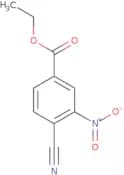
CAS:<p>Ethyl 4-cyano-3-nitrobenzoate is a chemical compound with the structural formula of CHNO. It is a building block for organic synthesis and can be used in the production of high quality research chemicals and speciality chemicals. Ethyl 4-cyano-3-nitrobenzoate has been shown to react with a variety of amines to form urea derivatives that are useful as versatile building blocks or complex compounds. This reagent is also useful as an intermediate in the synthesis of various pharmaceuticals. CAS No. 321162-58-7</p>Formula:C10H8N2O4Purezza:Min. 95%Colore e forma:PowderPeso molecolare:220.18 g/molm-Hydroxybenzonitrile
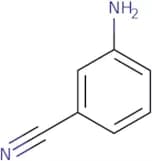
CAS:<p>m-Hydroxybenzonitrile is a cationic surfactant that has the ability to form hydrogen bonds with an intramolecular hydrogen. It is used in the production of detergents, textile processing aids, and inks. m-Hydroxybenzonitrile inhibits fatty acids by forming an inhibitory complex at the surface of the cell membrane. This complex disrupts lipid bilayers and inhibits protein synthesis. m-Hydroxybenzonitrile also has been shown to have vibrational properties that can be seen when it absorbs ultraviolet light.</p>Formula:C7H5NOPurezza:Min. 95%Colore e forma:Off-White PowderPeso molecolare:119.12 g/mol3-Aminobenzonitrile
CAS:<p>3-Aminobenzonitrile is an amine that has been shown to inhibit the growth of bacteria. It was synthesized by the reaction of nitrobenzene with benzamide in the presence of acetic acid. The chemical structure of 3-aminobenzonitrile is similar to that of a group of natural amino acids, including cysteine and tryptophan, which are known inhibitors of bacterial growth. This compound is soluble in organic solvents and can be used as an injection solution. 3-Aminobenzonitrile has been evaluated by kinetic studies and found to have a high affinity for bacterial cells, with an inhibition constant (Ki) value of 0.37 mM. It is also active against other microorganisms such as yeast or mold fungi, but not against plant or animal cells. 3-Aminobenzonitrile inhibits the synthesis of proteins by binding to a number of different sites on the ribosomes where</p>Purezza:Min. 95%Colore e forma:Yellow PowderPeso molecolare:118.14 g/mol