Ciano-, Nitrile-
I composti ciano e nitrile sono molecole organiche che contengono gruppi ciano (C≡N) o nitrile nella loro struttura, caratterizzati dalla presenza di azoto. Questi gruppi svolgono ruoli importanti in varie reazioni chimiche e applicazioni industriali. In questa categoria, troverete un'ampia gamma di composti ciano e nitrile, che vanno da strutture semplici a complesse. Da CymitQuimica, offriamo composti ciano e nitrile di alta qualità adattati per soddisfare le esigenze di ricerca e industriali. I nostri composti sono adatti a una varietà di applicazioni di sintesi e analisi.
Trovati 9618 prodotti di "Ciano-, Nitrile-"
Ordinare per
Purezza (%)
0
100
|
0
|
50
|
90
|
95
|
100
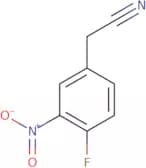
(4-Fluoro-3-Nitrophenyl)Acetonitrile
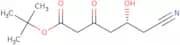
CAS:<p>4-Fluoro-3-nitrophenylacetonitrile is a monomer that can be synthesised from the reaction of carbamic acid and diphenyl ether. It is chiral, stereoselective and nucleophilic. 4-Fluoro-3-nitrophenylacetonitrile can also be synthesised by reacting fluoroacetamide with sodium cyanide in water, forming the corresponding amide, which reacts with acetonitrile to form the nitro compound. The anti-cancer properties of 4-fluoro-3 nitrophenylacetonitrile have been studied in vitro and in vivo. This substance has been shown to inhibit growth of cancer cells and induce apoptosis. In addition, this substance has been used as a synthetic strategy for dihydroisoquinolines, which are important for their anti-cancer properties.</p>Formula:C8H5FN2O2Purezza:Min. 95%Peso molecolare:180.14 g/mol(5R)-6-Cyano-5-hydroxy-3-oxo-hexanoic acid tert-butyl ester
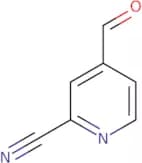
CAS:<p>Please enquire for more information about (5R)-6-Cyano-5-hydroxy-3-oxo-hexanoic acid tert-butyl ester including the price, delivery time and more detailed product information at the technical inquiry form on this page</p>Formula:C11H17NO4Purezza:Min. 95%Peso molecolare:227.26 g/mol2-Cyanopyridine-4-carboxaldehyde
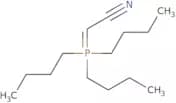
CAS:<p>Please enquire for more information about 2-Cyanopyridine-4-carboxaldehyde including the price, delivery time and more detailed product information at the technical inquiry form on this page</p>Formula:C7H4N2OPurezza:Min. 95%Peso molecolare:132.12 g/molCyanomethylenetributylphosphorane
CAS:<p>Cyanomethylenetributylphosphorane (CMTP) is an agent used for the diagnosis of body formation. It is a chemical compound that can be used to produce images of tissue and organs by detecting apoptosis, or programmed cell death. CMTP binds to the glucose-dependent insulinotropic polypeptide receptor (GIPR), stimulating the release of insulin in the pancreas. CMTP also has therapeutic potential for metabolic disorders, as it has been shown to reduce triglycerides and increase HDL cholesterol levels in human serum. CMTP is synthesized from trifluoroacetic acid, which is then reacted with a cyclic peptide containing an amino acid derivative and 1-methyl-2-pyrrolidinone. This reaction produces a molecule with one free amino group at one end and two free carboxylic acid groups at the other end. The molecule can be reacted with epidermal growth factor (EGF) or insulin to</p>Formula:C14H28NPPurezza:Min. 95%Colore e forma:Yellow To Dark Brown Clear LiquidPeso molecolare:241.35 g/molCyanoguanidine
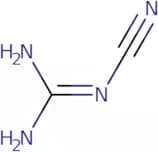
CAS:<p>Cyanoguanidine is an antimicrobial agent that inhibits the growth of bacteria by interfering with the synthesis of folic acid. This inhibits the production of DNA and protein, thereby leading to cell death. Cyanoguanidine has been shown to be effective in a model system for blood sampling and has been used as a pharmacological treatment for infectious diseases such as malaria. The optimum concentration for cyanoguanidine is between 5-20 mM, depending on the bacterial species. It can be synthesized from sulfamoyl chloride and dicyandiamide, which are commercially available chemicals. The analytical method for determining the inhibitory effects of cyanoguanidine on bacterial growth is plasma mass spectrometry.</p>Formula:C2H4N4Purezza:Min. 95%Colore e forma:PowderPeso molecolare:84.08 g/molα-Acetylphenylacetonitrile
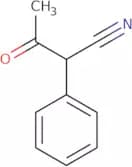
CAS:Prodotto controllato<p>Alpha-acetylphenylacetonitrile is a synthetic chemical compound that is used as a reagent in the analytical methods of wastewater. It has been shown to be an effective bifunctional agent for the treatment of wastewater, with fluorescence properties that can be used for detection and quantification of cyanide. Alpha-acetylphenylacetonitrile can also be used as a reagent in analytical chemistry techniques, such as gas chromatography and high performance liquid chromatography. This chemical compound has been shown to react with naphthalene to form alpha-naphthol by heating at 190 °C, which can then be used to synthesize phenacyl acetate. The acid catalyst may be either sulfuric acid or hydrochloric acid.</p>Formula:C10H9NOPurezza:Min. 95%Peso molecolare:159.18 g/molBromodichloroacetonitrile
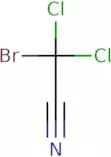
CAS:<p>Bromodichloroacetonitrile (BCN) is a chemical with disinfectant properties. It is used in wastewater treatment, as it is able to destroy bacteria and viruses. BCN also has been shown to be effective against the Covid-19 pandemic. BCN can be used as an analytical reagent for the analysis of chloride ions in deionized water. The carcinogenic potential of BCN in humans is unknown, but it has been shown to cause bladder cancer in rats.</p>Formula:C2BrCl2NPurezza:Min. 95%Colore e forma:Colorless PowderPeso molecolare:188.84 g/mol3-Cyanothiophene-4-boronic acid pinacol ester
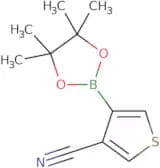
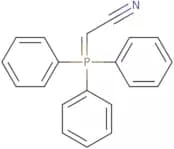
CAS:<p>Please enquire for more information about 3-Cyanothiophene-4-boronic acid pinacol ester including the price, delivery time and more detailed product information at the technical inquiry form on this page</p>Formula:C11H14BNO2SPurezza:Min. 95%Peso molecolare:235.11 g/mol(Triphenylphosphoranylidene)acetonitrile
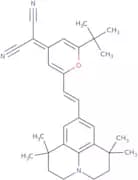
CAS:<p>(Triphenylphosphoranylidene)acetonitrile is a phosphorane that has been shown to have an inhibitory effect on the inflammatory response in animal models of bowel disease. It also has been shown to be effective in treating inflammatory diseases such as arthritis and multiple sclerosis. This drug binds to leukotriene D4, an inflammatory mediator, and inhibits its production by blocking the enzyme 5-lipoxygenase. The compound also has been shown to possess anti-inflammatory properties due to its inhibition of prostaglandin synthesis. (Triphenylphosphoranylidene)acetonitrile is used as a pharmaceutical preparation for the treatment of bowel disease, inflammatory diseases, and other conditions.</p>Formula:C20H16NPPurezza:Min. 95%Peso molecolare:301.32 g/mol4-(Dicyanomethylene)-2-tert-butyl-6-(1,1,7,7-tetramethyljulol
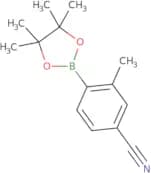
CAS:<p>4-(Dicyanomethylene)-2-tert-butyl-6-(1,1,7,7-tetramethyljulolidinium) (DCJTB) is a red fluorescent dye that emits light when activated by heat. DCJTB is cationic and can be polymerized thermally or chemically. The molecule has been shown to be activated by the addition of an electron donor such as a metal chelate. This reaction takes place in the solution phase. DCJTB has been used for the diagnosis of nonpolar solvents such as gasoline and oil leaks in machine parts. DCJTB has also been used to detect groundwater contamination with trichloroethylene (TCE).</p>Formula:C30H35N3OPurezza:Min. 95%Peso molecolare:453.62 g/mol4-Cyano-2-methylphenylboronic acid, pinacol ester
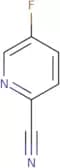
CAS:<p>Please enquire for more information about 4-Cyano-2-methylphenylboronic acid, pinacol ester including the price, delivery time and more detailed product information at the technical inquiry form on this page</p>Formula:C14H18BNO2Purezza:Min. 95%Peso molecolare:243.11 g/mol2-Cyano-5-fluoropyridine
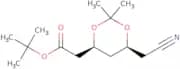
CAS:<p>2-Cyano-5-fluoropyridine is a potential antitubercular agent that has shown penetrability in the central nervous system and activity against Mycobacterium tuberculosis. It is orally active at low doses, and has been shown to be an effective inhibitor of mycobacterial growth and lipid synthesis. In addition, this compound also has antimycobacterial activity against M. avium complex and M. ulcerans, and is a potent inhibitor of β-amyloid aggregation.</p>Formula:C6H3FN2Purezza:Min. 95%Peso molecolare:122.1 g/mol(4S,6S)-6-(Cyanomethyl)-2,2-dimethyl-1,3-dioxane-4-acetic acid tert-butyl ester
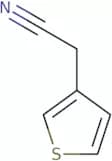
CAS:<p>Please enquire for more information about (4S,6S)-6-(Cyanomethyl)-2,2-dimethyl-1,3-dioxane-4-acetic acid tert-butyl ester including the price, delivery time and more detailed product information at the technical inquiry form on this page</p>Formula:C14H23NO4Purezza:Min. 95%Peso molecolare:269.34 g/molThiophene-3-acetonitrile
CAS:<p>Thiophene-3-acetonitrile is a reactive intermediate that is used in the synthesis of active enzymes. It has been shown to be an efficient method for the synthesis of antitubercular agents, such as rifamycins and other drugs. Thiophene-3-acetonitrile is an electron acceptor and can be used to generate active enzymes, such as those involved in DNA replication and transcription. This compound also has a variety of functional groups, which can be used for a number of techniques, including coordination geometry studies.</p>Formula:C6H5NSPurezza:Min. 95%Colore e forma:Clear LiquidPeso molecolare:123.18 g/mol2,4,6-Trimethylbenzonitrile
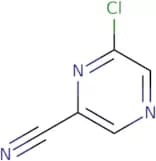
CAS:<p>2,4,6-Trimethylbenzonitrile (TMBN) is a reactive unsaturated ketone that reacts with phosphorus pentachloride to form the corresponding chloroform. It is used in nucleophilic substitution reactions and can be hydrolyzed by hydrochloric acid to form an n-oxide. The reaction mechanism of TMBN with phosphorus pentachloride has been studied using molecular modeling and NMR spectroscopy. TMBN can be converted into an oxide, which can react with hydrogen chloride to form the corresponding chloroform. Reaction products include the 2,4,6-trichlorobenzonitrile (TCBN), which is a carcinogen.</p>Formula:C10H11NPurezza:Min. 95%Colore e forma:PowderPeso molecolare:145.2 g/mol2-Chloro-6-cyanopyrazine
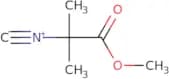
CAS:<p>2-Chloro-6-cyanopyrazine is a compound that has been shown to have antimycobacterial activity against Mycobacterium avium. It may also have tuberculostatic activity and be useful for the treatment of tuberculosis. 2-Chloro-6-cyanopyrazine inhibits bacterial growth by binding to DNA, RNA, and protein synthesis in mycobacteria. The antibacterial effect is due to its ability to inhibit amidation and alkylation reactions, as well as its nucleophilic properties. 2-Chloro-6-cyanopyrazine is an acidic compound with a pKa of 3.2, which makes it more soluble in water than hydrophobic compounds such as alkanoic acids.</p>Formula:C5H2ClN3Purezza:Min. 95%Peso molecolare:139.54 g/molMethyl-2-isocyanoisobutyrate
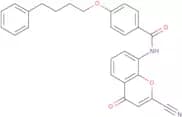
CAS:<p>Please enquire for more information about Methyl-2-isocyanoisobutyrate including the price, delivery time and more detailed product information at the technical inquiry form on this page</p>Formula:C9H9NO2Purezza:Min. 95%Peso molecolare:127.14 g/molN-(2-Cyano-4-oxo-4H-1-benzopyran-8-yl)-4-(4-phenylbutoxy)benzamide
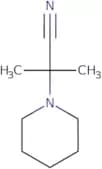
CAS:<p>Please enquire for more information about N-(2-Cyano-4-oxo-4H-1-benzopyran-8-yl)-4-(4-phenylbutoxy)benzamide including the price, delivery time and more detailed product information at the technical inquiry form on this page</p>Formula:C27H22N2O4Purezza:Min. 95%Peso molecolare:438.47 g/mola,a-Dimethyl-1-piperidineacetonitrile
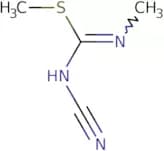
CAS:Prodotto controllato<p>Dimethylcyanamide is an organic compound that can be synthesized from cyanide or cyanic acid. Dimethylcyanamide is a colorless liquid with a strong odor. It has been used in the past as a precursor to other compounds, but it has since been replaced by cheaper and more convenient methods. Dimethylcyanamide reacts with primary amines to form nitriles, which are useful intermediates in organic synthesis. In addition, the reaction of dimethylcyanamide with secondary amines leads to the formation of primary amines. The transamination of dimethylamine-N-oxide yields a-dimethylaminopropionitrile as an intermediate product. The elimination reaction mechanism for this process involves the conversion of ammonia into hydroxide ions and hydrogen gas. This reaction produces high yields for both products and does not require high temperatures or pressures.</p>Formula:C9H16N2Purezza:Min. 95%Peso molecolare:152.24 g/molN-Cyano-N',S-dimethylisothiourea
CAS:<p>Please enquire for more information about N-Cyano-N',S-dimethylisothiourea including the price, delivery time and more detailed product information at the technical inquiry form on this page</p>Formula:C4H7N3SPurezza:Min. 95%Peso molecolare:129.18 g/mol