Ciano-, Nitrile-
I composti ciano e nitrile sono molecole organiche che contengono gruppi ciano (C≡N) o nitrile nella loro struttura, caratterizzati dalla presenza di azoto. Questi gruppi svolgono ruoli importanti in varie reazioni chimiche e applicazioni industriali. In questa categoria, troverete un'ampia gamma di composti ciano e nitrile, che vanno da strutture semplici a complesse. Da CymitQuimica, offriamo composti ciano e nitrile di alta qualità adattati per soddisfare le esigenze di ricerca e industriali. I nostri composti sono adatti a una varietà di applicazioni di sintesi e analisi.
Trovati 9618 prodotti di "Ciano-, Nitrile-"
Ordinare per
Purezza (%)
0
100
|
0
|
50
|
90
|
95
|
100
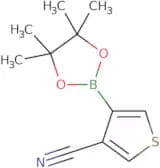
3-Cyanothiophene-4-boronic acid pinacol ester
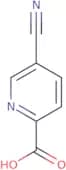
CAS:<p>Please enquire for more information about 3-Cyanothiophene-4-boronic acid pinacol ester including the price, delivery time and more detailed product information at the technical inquiry form on this page</p>Formula:C11H14BNO2SPurezza:Min. 95%Peso molecolare:235.11 g/mol5-Cyanopyridine-2-carboxylic acid
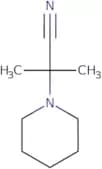
CAS:<p>5-Cyanopyridine-2-carboxylic acid is a small molecule that has been found to have significant biological activity in a number of different areas, including neurotherapeutics. It is the result of a scalable synthesis and is soluble in water. The molecule has two chiral centers and can exist as four different stereoisomers (enantiomers). In vitro studies show that 5-cyanopyridine-2-carboxylic acid inhibits fatty acid uptake by blocking the proton pump, which transports lipids into cells. This compound also binds to the cytosolic protein pyrazine 2-carboxylic acid receptor 1 (PYZR1), which may provide an explanation for its effects on fatty acid uptake.</p>Formula:C7H4N2O2Purezza:Min. 95%Peso molecolare:148.12 g/mola,a-Dimethyl-1-piperidineacetonitrile
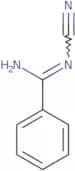
CAS:Prodotto controllato<p>Dimethylcyanamide is an organic compound that can be synthesized from cyanide or cyanic acid. Dimethylcyanamide is a colorless liquid with a strong odor. It has been used in the past as a precursor to other compounds, but it has since been replaced by cheaper and more convenient methods. Dimethylcyanamide reacts with primary amines to form nitriles, which are useful intermediates in organic synthesis. In addition, the reaction of dimethylcyanamide with secondary amines leads to the formation of primary amines. The transamination of dimethylamine-N-oxide yields a-dimethylaminopropionitrile as an intermediate product. The elimination reaction mechanism for this process involves the conversion of ammonia into hydroxide ions and hydrogen gas. This reaction produces high yields for both products and does not require high temperatures or pressures.</p>Formula:C9H16N2Purezza:Min. 95%Peso molecolare:152.24 g/molN'-Cyanobenzenecarboximidamide hydrochloride
CAS:<p>N-Cyanobenzenecarboximidamide hydrochloride (NCBCH) is an intermediate for the synthesis of azomethine dyes. It can be used to produce azo dyes with a methoxy group at the 3 position and a hydrogen atom at the 4 position. NCBCH is also an excellent substrate for chemical reactions involving fragmentation, extraction, or elimination. NCBCH can be synthesized from methyl ether and benzonitrile in the presence of benzamidine. The product is then treated with methanol to give a tautomeric mixture of benzyl and methyl ether.</p>Formula:C8H7N3Purezza:Min. 95%Peso molecolare:145.16 g/mol(5R)-6-Cyano-5-hydroxy-3-oxo-hexanoic acid tert-butyl ester
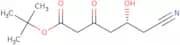
CAS:<p>Please enquire for more information about (5R)-6-Cyano-5-hydroxy-3-oxo-hexanoic acid tert-butyl ester including the price, delivery time and more detailed product information at the technical inquiry form on this page</p>Formula:C11H17NO4Purezza:Min. 95%Peso molecolare:227.26 g/molEthyl (R)-(-)-4-cyano-3-hydroxybutyrate
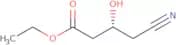
CAS:<p>Ethyl (R)-(-)-4-cyano-3-hydroxybutyrate is an asymmetric synthesis of D-(+)-glyceraldehyde. This compound is an acidic, high cholesterol substrate that binds to disaccharides and has hydroxyl groups. It has been shown to reduce low density lipoprotein levels in the blood by inhibiting the production of cholesterol in the liver. The reaction solution is immobilized on a solid support and is used for kinetic studies. Kinetic measurements were performed at different concentrations of hydrochloric acid and immobilized cells as a function of time. The reaction yield was determined using UV absorbance at 275 nm, which was plotted against time.</p>Purezza:Min. 95%Boc-2-cyano-D-phenylalanine
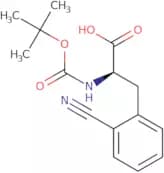
CAS:<p>Please enquire for more information about Boc-2-cyano-D-phenylalanine including the price, delivery time and more detailed product information at the technical inquiry form on this page</p>Formula:C15H18N2O4Purezza:Min. 95%Peso molecolare:290.31 g/molCyanoacetohydrazide
CAS:<p>Cyanoacetohydrazide is a nucleophilic compound that can react with a variety of molecules, including fatty acids and hydroxy methyl groups. The mechanism of this reaction involves the nucleophilic attack of the cyanide ion on the carbonyl group. This type of reaction has been shown to be reversible and involve the formation of an intermediate hemiacetal, which then attacks another molecule. Cyanoacetohydrazide is used as an antimicrobial agent in some products, such as mouthwashes and toothpaste. It also has anticancer activity.</p>Formula:C3H5N3OPurezza:Min. 95%Colore e forma:PowderPeso molecolare:99.09 g/mol2-Chloro-N-(3-cyano-4,5-dimethylthien-2-yl)acetamide
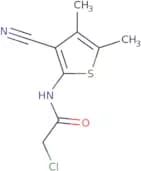
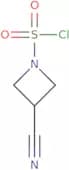
CAS:<p>Please enquire for more information about 2-Chloro-N-(3-cyano-4,5-dimethylthien-2-yl)acetamide including the price, delivery time and more detailed product information at the technical inquiry form on this page</p>Formula:C9H9ClN2OSPurezza:Min. 95%Peso molecolare:228.7 g/mol3-Cyano-1-azetidinesulfonyl chloride
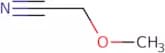
CAS:<p>Please enquire for more information about 3-Cyano-1-azetidinesulfonyl chloride including the price, delivery time and more detailed product information at the technical inquiry form on this page</p>Formula:C4H5ClN2O2SPurezza:Min. 95%Peso molecolare:180.61 g/molMethoxyacetonitrile
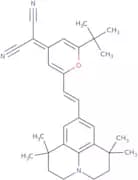
CAS:<p>Methoxyacetonitrile is a chemical that is used in the manufacture of acrylate polymers. Acrylate polymers are used in animal health, such as plastics for veterinary use and as a coating on animal feed. Methoxyacetonitrile can be used to create a cationic polymerization reaction with an organic solution. The resulting polymer film has been shown to have good chemical stability. Productivity depends on the temperature and size of the particles, which can be controlled with an electric field or by changing the concentration of reactants. Methoxyacetonitrile may also be used as a dietary supplement because it has been shown to provide relief from chronic coughs.</p>Formula:C3H5NOPurezza:Min. 95%Colore e forma:Clear LiquidPeso molecolare:71.08 g/mol4-(Dicyanomethylene)-2-tert-butyl-6-(1,1,7,7-tetramethyljulol
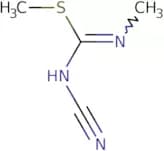
CAS:<p>4-(Dicyanomethylene)-2-tert-butyl-6-(1,1,7,7-tetramethyljulolidinium) (DCJTB) is a red fluorescent dye that emits light when activated by heat. DCJTB is cationic and can be polymerized thermally or chemically. The molecule has been shown to be activated by the addition of an electron donor such as a metal chelate. This reaction takes place in the solution phase. DCJTB has been used for the diagnosis of nonpolar solvents such as gasoline and oil leaks in machine parts. DCJTB has also been used to detect groundwater contamination with trichloroethylene (TCE).</p>Formula:C30H35N3OPurezza:Min. 95%Peso molecolare:453.62 g/molN-Cyano-N',S-dimethylisothiourea
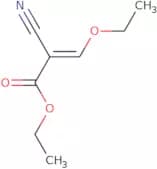
CAS:<p>Please enquire for more information about N-Cyano-N',S-dimethylisothiourea including the price, delivery time and more detailed product information at the technical inquiry form on this page</p>Formula:C4H7N3SPurezza:Min. 95%Peso molecolare:129.18 g/molEthyl (ethoxymethylene) cyanoacetate
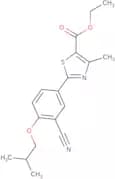
CAS:<p>Ethyl (Ethoxymethylene) cyanoacetate is a chemical compound that belongs to the family of aldehyde compounds. It is a colorless liquid at room temperature, with an odor similar to that of acetic acid. The compound has been used in the synthesis of epidermal growth factor and diazonium salts. It has also been used in the production of anti-cancer drugs such as malonic acid, which inhibits tumor growth by inhibiting protein synthesis. Ethyl (Ethoxymethylene) cyanoacetate reacts with quinoline derivatives to form carbon disulphide, which can be used as an antimicrobial agent and insecticide.</p>Formula:C8H11NO3Purezza:Min. 95%Colore e forma:PowderPeso molecolare:169.18 g/molEthyl 2-(3-cyano-4-isobutoxyphenyl)-4-methyl-5-thiazolecarboxylate
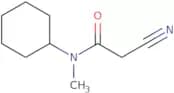
CAS:<p>Ethyl 2-(3-cyano-4-isobutoxyphenyl)-4-methyl-5-thiazolecarboxylate (ECIT) is a derivative of formyl that has been used as a solvent for industrial and laboratory purposes. ECIT is an amorphous substance with the chemical formula CH3COC6H2CH2COCH=N(C=O)C6H4CN. The compound has been quantified in various solvents, such as n-butyl alcohol and acetonitrile. ECIT is a colorless liquid that boils at 140° C. It has a formyl group and an alkynyl group, which are both reactive groups that can be used to synthesize other compounds. ECIT also contains two stereoisomers: the erythro isomer and the threo isomer. The erythro isomer has the structural formula of CH3COC6H2CH</p>Purezza:Min. 95%2-Cyano-N-cyclohexyl-N-methylacetamide
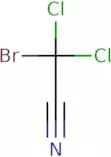
CAS:<p>Please enquire for more information about 2-Cyano-N-cyclohexyl-N-methylacetamide including the price, delivery time and more detailed product information at the technical inquiry form on this page</p>Formula:C10H16N2OPurezza:Min. 95%Peso molecolare:180.25 g/molBromodichloroacetonitrile
CAS:<p>Bromodichloroacetonitrile (BCN) is a chemical with disinfectant properties. It is used in wastewater treatment, as it is able to destroy bacteria and viruses. BCN also has been shown to be effective against the Covid-19 pandemic. BCN can be used as an analytical reagent for the analysis of chloride ions in deionized water. The carcinogenic potential of BCN in humans is unknown, but it has been shown to cause bladder cancer in rats.</p>Formula:C2BrCl2NPurezza:Min. 95%Colore e forma:Colorless PowderPeso molecolare:188.84 g/molPotassium tetracyanoplatinate(II)trihydrate
CAS:Prodotto controllato<p>Potassium tetracyanoplatinate(II)trihydrate (KTP) is a nanomaterial that is made of metal ions, such as ruthenium and copper, and organic molecules. It has the ability to absorb electrons from water, which are then transferred to carbon sources. This process can be used to remove proton in the water, thereby creating an acidic solution. The KTP particles have been shown to produce cavitation when exposed to ultrasound waves or other high-frequency sound waves. Cavitation occurs when bubbles form and rapidly collapse within a liquid. The resulting shockwaves can break down the cell membrane of microorganisms.</p>Formula:C4H6K2N4O3PtPurezza:Min. 95%Peso molecolare:431.4 g/mol3-Cyanoethylbenzoic acid
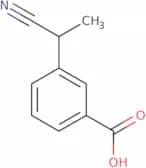
CAS:<p>3-Cyanoethylbenzoic acid is an anthropogenic compound that is produced by the Friedel-Crafts reaction between benzoyl chloride and acrylonitrile in the presence of a base. 3-Cyanoethylbenzoic acid is used as a solvent for chromatographic methods, such as gradient elution, ion exchange, and reversed phase. 3-Cyanoethylbenzoic acid has been used to determine the optical purity of benzoate salts and amides. This compound can be taken orally in solid oral dosage form or enterically in liquid oral dosage form. 3-Cyanoethylbenzoic acid interacts with other drugs that are metabolized by CYP3A4, such as erythromycin, to produce an active metabolite (N-desmethyldesipramide).</p>Formula:C10H9NO2Purezza:Min. 95%Colore e forma:PowderPeso molecolare:175.18 g/mol2,2'-(Perchloro-1,2-phenylene)diacetonitrile
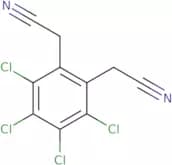
CAS:<p>Please enquire for more information about 2,2'-(Perchloro-1,2-phenylene)diacetonitrile including the price, delivery time and more detailed product information at the technical inquiry form on this page</p>Formula:C10H4Cl4N2Purezza:Min. 95%Peso molecolare:293.96 g/mol