Ciano-, Nitrile-
I composti ciano e nitrile sono molecole organiche che contengono gruppi ciano (C≡N) o nitrile nella loro struttura, caratterizzati dalla presenza di azoto. Questi gruppi svolgono ruoli importanti in varie reazioni chimiche e applicazioni industriali. In questa categoria, troverete un'ampia gamma di composti ciano e nitrile, che vanno da strutture semplici a complesse. Da CymitQuimica, offriamo composti ciano e nitrile di alta qualità adattati per soddisfare le esigenze di ricerca e industriali. I nostri composti sono adatti a una varietà di applicazioni di sintesi e analisi.
Trovati 9618 prodotti di "Ciano-, Nitrile-"
Ordinare per
Purezza (%)
0
100
|
0
|
50
|
90
|
95
|
100
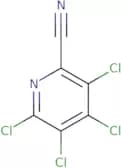
2-Cyano-3,4,5,6-tetrachloropyridine
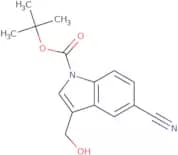
CAS:<p>2-Cyano-3,4,5,6-tetrachloropyridine is a genotoxic compound that is used for the preparation of picolinic acid. It has been shown to induce DNA damage and cytotoxicity in vitro. The reaction products of this compound have also been found to be genotoxic in vitro and in vivo. This chemical has been shown to inhibit the growth of cells in culture as well as cause cell death by releasing hydrogen chloride gas. 2-Cyano-3,4,5,6-tetrachloropyridine is a potent mutagen and carcinogen that can be activated by fluorine or chlorine compounds. This chemical can also form chlorinated derivatives with chlorine. 2-Cyano-3,4,5,6-tetrachloropyridine reacts with phosphorus pentachloride to produce hydrogen chloride gas and other reaction products such as chloride (Cl) or sublimed (P</p>Formula:C6Cl4N2Purezza:Min. 95%Peso molecolare:241.89 g/mol1-Boc-5-Cyano-3-hydroxymethylindole
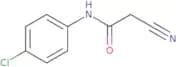
CAS:<p>Please enquire for more information about 1-Boc-5-Cyano-3-hydroxymethylindole including the price, delivery time and more detailed product information at the technical inquiry form on this page</p>Formula:C15H16N2O3Purezza:Min. 95%Peso molecolare:272.3 g/molN-(4-Chlorophenyl)-2-cyanoacetamide
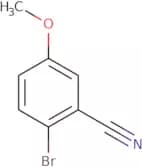
CAS:<p>N-(4-Chlorophenyl)-2-cyanoacetamide is a pyridine compound that can be synthesized from chloroacetonitrile and acetamide. It has been shown to react with an active methylene group in benzene or pyridine to produce a heterocycle. This reaction is reversible and can be used as a preparative method for the synthesis of heterocycles. The 1,3-dipolar cycloaddition of N-(4-chlorophenyl)-2-cyanoacetamide with nitro groups in nitrobenzene produces the corresponding 2-nitropyridines, which are important intermediates in the synthesis of other heterocycles. N-(4-Chlorophenyl)-2-cyanoacetamide has been used as an efficient method for the preparation of nitrogen nucleophiles that are useful for catalysis.</p>Formula:C9H7ClN2OPurezza:Min. 95%Peso molecolare:194.62 g/mol4-Bromo-3-cyanoanisole
CAS:<p>4-Bromo-3-cyanoanisole is a potent inhibitor of the tyrosine kinase receptor. The functional theory behind this drug's mechanism of action is that it binds to the ATP binding site of the receptor and blocks ATP from binding, preventing downstream signaling. 4-Bromo-3-cyanoanisole has been shown to be an effective inhibitor of cancer cell proliferation. This drug has also been shown to inhibit microtubule assembly and disrupt cellular function by inhibiting protein synthesis.</p>Formula:C8H6BrNOPurezza:Min. 95%Colore e forma:PowderPeso molecolare:212.04 g/mol4-Biphenylacetonitrile
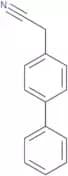
CAS:<p>Biphenylacetonitrile is an organic compound that belongs to the group of reactive functional groups and is used as a reagent in organic synthesis. It has been shown to inhibit the growth of cancer cells, likely due to its ability to react with sulfamates. Biphenylacetonitrile inhibits the production of the inflammatory mediator nitric oxide by reacting with trifluoroacetic acid, which may be useful for treating inflammatory diseases such as endometriosis. This drug also has an inhibitory effect on fatty acid metabolism and can thus be used for treating diabetes patients.</p>Formula:C14H11NPurezza:Min. 95%Peso molecolare:193.24 g/mol4-Isopropylphenylacetonitrile
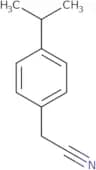
CAS:<p>4-Isopropylphenylacetonitrile is a nicotinic receptor agonist. It has high affinity for the nicotinic acid receptor, and potentiates the response to other nicotinic receptor agonists. 4-Isopropylphenylacetonitrile was discovered by screening for acid binding compounds and allosteric potentiators of the nicotinic acid receptor. This compound binds to the ion channel in the central nervous system, which leads to increased neuronal excitability and decreased pain sensation. 4-Isopropylphenylacetonitrile also displays antiinflammatory properties due to its ability to inhibit prostaglandin synthesis.</p>Formula:C11H13NPurezza:Min. 95%Peso molecolare:159.23 g/mol[4-(1-Cyano-1-methylethyl)phenyl]boronic acid
CAS:<p>Please enquire for more information about [4-(1-Cyano-1-methylethyl)phenyl]boronic acid including the price, delivery time and more detailed product information at the technical inquiry form on this page</p>Formula:C10H12BNO2Purezza:Min. 95%Peso molecolare:189.02 g/molEthyl-2-ethoxy-1-[[(2'-cyanobiphenyl-4-yl) methyl] benzimidazole-7-carboxylate
CAS:<p>Candesartan is a selective angiotensin II receptor antagonist that inhibits the binding of angiotensin II to its receptors, which in turn decreases the activity of angiotensin-converting enzyme. Candesartan cilexetil is an ester prodrug that has been shown to be effective in the treatment of high blood pressure. In the crystalline form, candesartan cilexetil is a white powder with a melting point of 130–135 °C and a solubility in water of >1 g/L. The molecular weight of candesartan cilexetil is 393.8 g/mol and it has a molecular formula C17H21NO2S. The chemical structure consists of two benzimidazole rings coupled together through an ethyl-2-ethoxy linker and attached to a carboxylate group on one end and an amide group on the other</p>Formula:C26H23N3O3Purezza:Min. 95%Peso molecolare:425.48 g/molPhycocyanobilin
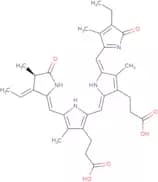
CAS:<p>Phycocyanobilin is a chromophore found in blue-green algae and cyanobacteria. It is a component of the holoprotein phycocyanin and aids in the harvesting of light energy. This biliverdin derivative is converted to phycocyanorubin by biliverdin reductase in mammalian cells. The addition of phycocyanobilin to human cells leads to potent inhibition of NADPH oxidase. It also binds to human serum albumin (HSA). Structurally, Phycocyanin shares many similarities to bilirubin and biliverdin.</p>Formula:C33H38N4O6Purezza:Min. 95 Area-%Colore e forma:Blue PowderPeso molecolare:586.68 g/mol3'-[2- Cyanoethyl N, N- bis(1- methylethyl) phosphoramidite]-5'- O- [bis(4- methoxyphenyl) phenylmethyl] - 2'- O- methyl- N- [2- [4- (1- methylethyl) phenoxy] acetyl] -guanosine
CAS:<p>Please enquire for more information about 3'-[2- Cyanoethyl N, N- bis(1- methylethyl) phosphoramidite]-5'- O- [bis(4- methoxyphenyl) phenylmethyl] - 2'- O- methyl- N- [2- [4- (1- methylethyl) phenoxy] acetyl] -guanosine including the price, delivery time and more detailed product information at the technical inquiry form on this page</p>Formula:C52H62N7O10PPurezza:Min. 95%Peso molecolare:976.06 g/mol2,6-Dimethoxy-4-hydroxybenzylamine
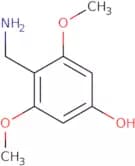
CAS:<p>2,6-Dimethoxy-4-hydroxybenzylamine is a fine chemical that is used as a versatile building block for the synthesis of complex compounds. It is also used as a reagent and reaction component in various chemical reactions. CAS No. 130632-98-3.</p>Formula:C9H13NO3Purezza:Min. 95%Colore e forma:Yellow PowderPeso molecolare:183.2 g/mol4-(Trifluoromethoxy)benzonitrile
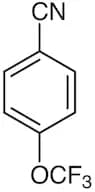
CAS:Formula:C8H4F3NOPurezza:>98.0%(GC)Colore e forma:Colorless to Almost colorless clear liquidPeso molecolare:187.122-Fluoro-5-(trifluoromethyl)benzonitrile
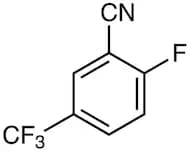
CAS:Formula:C8H3F4NPurezza:>98.0%(GC)Colore e forma:Colorless to Almost colorless clear liquidPeso molecolare:189.111-Pentyl isocyanate, 97%
CAS:<p>This Thermo Scientific Chemicals brand product was originally part of the Alfa Aesar product portfolio. Some documentation and label information may refer to the legacy brand. The original Alfa Aesar product / item code or SKU reference has not changed as a part of the brand transition to Thermo Scientific Chemicals.</p>Formula:C6H11NOPurezza:97%Colore e forma:Liquid, Clear colorlessPeso molecolare:113.162-(Triphenylphosphoranylidene)acetonitrile
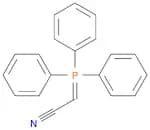
CAS:Formula:C20H16NPPurezza:98%Colore e forma:SolidPeso molecolare:301.32152,4,5-Trifluorobenzonitrile
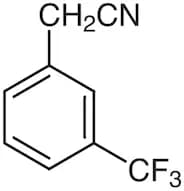
CAS:Formula:C7H2F3NPurezza:>98.0%(GC)Colore e forma:Colorless to Light yellow to Light orange clear liquidPeso molecolare:157.103-(Trifluoromethyl)phenylacetonitrile
CAS:Formula:C9H6F3NPurezza:>98.0%(GC)Colore e forma:Colorless to Almost colorless clear liquidPeso molecolare:185.15Ref: 10-F300776
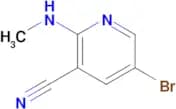
Prodotto fuori produzione5-Bromo-2-(methylamino)nicotinonitrile
CAS:Purezza:95.0%Colore e forma:SolidPeso molecolare:212.0500030517578

![[4-(1-Cyano-1-methylethyl)phenyl]boronic acid](/_next/image/?url=https%3A%2Fstatic.cymitquimica.com%2Fproducts%2F3D%2Fthumb-webp%2FFC121870.webp&w=3840&q=75)
![Ethyl-2-ethoxy-1-[[(2'-cyanobiphenyl-4-yl) methyl] benzimidazole-7-carboxylate](/_next/image/?url=https%3A%2Fstatic.cymitquimica.com%2Fproducts%2F3D%2Fthumb-webp%2FFE31863.webp&w=3840&q=75)
![3'-[2- Cyanoethyl N, N- bis(1- methylethyl) phosphoramidite]-5'- O- [bis(4- methoxyphenyl) phenylm…](/_next/image/?url=https%3A%2Fstatic.cymitquimica.com%2Fproducts%2F3D%2Fthumb-webp%2FFC165570.webp&w=3840&q=75)