Eteri
Trovati 40904 prodotti di "Eteri"
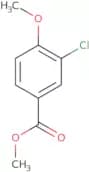
3-Chloro-4-methoxybenzoic acid methyl ester
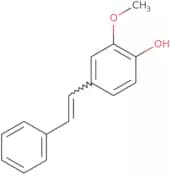
CAS:3-Chloro-4-methoxybenzoic acid methyl ester is a potent antiproliferative agent that inhibits the growth of cancer cells and bacteria. It is an amide, which has been synthesized by equilibration between two equivalents of 3-chlorobenzoic acid and methylamine. The copulatory proton profile for this compound has been determined using liquid chromatography with mass spectrometry detection (LCMS). This compound is also a weak inhibitor of tyrosine kinases, but is more potent as an inhibitor of protein kinase C. Sorafenib and dasatinib are examples of compounds that have been shown to be linked to this drug. 3-Chloro-4-methoxybenzoic acid methyl ester can induce the production of TNF-α in thp-1 cells at micromolar concentrations.Formula:C9H9ClO3Purezza:Min. 95%Colore e forma:PowderPeso molecolare:200.62 g/mol4-Hydroxy-3-methoxystilbene
CAS:4-Hydroxy-3-methoxystilbene is a natural phenolic compound found in plants. It is an olefinic peroxide that is unreactive and pressurized under normal conditions. It has been isolated from the leaves of the plant, Stilbocarpa erythrophylla, which grows in the tropical forests of Malaysia. The structure of 4-hydroxy-3-methoxystilbene was determined by chromatographic analysis and hydrogen peroxide plates. Phase chromatography was used to separate 4-hydroxy-3-methoxystilbene from other compounds with similar structures, such as acetylated flavonoids or hydroxylated flavonoids. The melting point of 4-hydroxy-3-methoxystilbene was determined by temperature measurements, and its ultraviolet spectrophotometry was used to detect the presence of a hydroxyl group in its chemical structure.
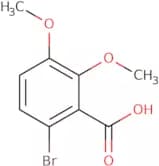
Formula:C15H14O2Purezza:Min. 95%Colore e forma:PowderPeso molecolare:226.27 g/mol6-Bromo-2,3-dimethoxybenzoic acid
CAS:6-Bromo-2,3-dimethoxybenzoic acid is a synthetic chemical that has been shown to have antibacterial activity. It has been shown to inhibit the growth of bacteria by binding to the imine group in the bacterial cell wall and preventing its synthesis. 6-Bromo-2,3-dimethoxybenzoic acid has also been shown to be synthesised from 2,3-dimethoxybenzoic acid and bromine. This compound is a benzophenanthridine alkaloid that inhibits protein synthesis and cell division.Formula:C9H9BrO4Purezza:Min. 95%Colore e forma:PowderPeso molecolare:261.07 g/mol4-Methoxy-2-methylbenzaldehyde
CAS:4-Methoxy-2-methylbenzaldehyde (4MMBA) is a synthetic chemical that is used as an antifungal agent. It interacts with the cellular membranes of fungi and disrupts their ability to maintain homeostasis. 4MMBA inhibits the growth of invasive aspergillosis by inhibiting protein synthesis, which leads to cell death. The mechanism of action for 4MMBA is not well understood, but it has been shown to inhibit the growth of fungi in a model system. It also inhibits the production of pyrylium, which may be responsible for its activity against fungi.Formula:C9H10O2Purezza:90%Peso molecolare:150.17 g/mol2,5-Dimethoxy-1,4-benzoquinone
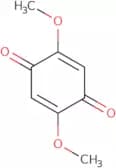
CAS:2,5-Dimethoxy-1,4-benzoquinone is an oxidizing agent that can be used to treat infections caused by bacteria. 2,5-Dimethoxy-1,4-benzoquinone has been shown to have antibacterial activity against a number of bacteria in the extracellular environment. It is also capable of inhibiting bacterial growth by inducing oxidative stress and generating reactive oxygen species. The mechanism of action is thought to involve oxidation reactions with the bacterial cell membrane and DNA. 2,5-Dimethoxy-1,4-benzoquinone is a rechargeable agent that can be regenerated from its reduced form back to its oxidized form through enzymatic or chemical reduction. This compound has been shown to react reversibly with magnesium ions in the presence of water. The crystal structure of 2,5-dimethoxy-1,4-benzoquinone has been determined using x ray diffraction techniques. The magnetic resonance
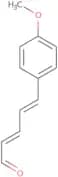
Formula:C8H8O4Purezza:Min. 95%Colore e forma:PowderPeso molecolare:168.15 g/mol4-Methoxycinnamylidene acetaldehyde
CAS:4-Methoxycinnamylidene acetaldehyde is a versatile building block with a CAS number of 27394-81-6. It is used in the research and production of fine chemicals, pharmaceuticals, and high quality reagents. 4-Methoxycinnamylidene acetaldehyde can be used as a useful scaffold for the synthesis of complex compounds. This building block is also a useful intermediate in organic chemistry reactions.
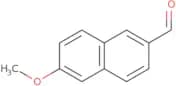
Formula:C12H12O2Purezza:Min. 95%Colore e forma:PowderPeso molecolare:188.22 g/mol6-Methoxy-2-naphthaldehyde
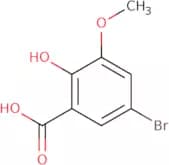
CAS:6-Methoxy-2-naphthaldehyde is a nonsteroidal antiinflammatory drug that belongs to the class of naphthalenes. It inhibits the formation of inflammatory prostaglandins, which are mediators of pain and inflammation. 6-Methoxy-2-naphthaldehyde has been shown to have cytotoxic effects on cancer cells and in vitro studies have shown that it can induce cell lysis. It has also been shown to be a potent fluorescence probe for use in biological applications. This compound binds to human serum proteins by hydrogen bonding interactions, which may affect its pharmacokinetic properties. In addition, this compound has been shown to inhibit the activity of detoxification enzymes such as CYP 2C9 and 2D6 at high concentrations, which may lead to unwanted side effects such as nausea or vomiting. The molecular docking analysis of 6-Methoxy-2-naphthaldehyde with the active site of human liver alcohol dehydrogenFormula:C12H10O2Purezza:Min. 98 Area-%Colore e forma:PowderPeso molecolare:186.21 g/mol5-Bromo-2-hydroxy-3-methoxybenzoic acid
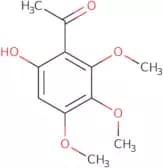
CAS:5-Bromo-2-hydroxy-3-methoxybenzoic acid (5BHB) is a phenolic compound that has been shown to have fungicidal properties. The uptake of 5BHB in the brain was studied using positron emission tomography and computerized tomography scans in monkeys. The affinity of 5BHB for the dopamine D2 receptor, and its ability to inhibit methylation reactions, were also investigated. The results show that 5BHB is able to cross the blood-brain barrier and bind with high affinity to the dopamine D2 receptor. These findings suggest that 5BHB may be used as a therapeutic agent for Parkinson's disease.Formula:C8H7BrO4Purezza:Min. 95%Colore e forma:PowderPeso molecolare:247.04 g/mol6-Hydroxy-2,3,4-trimethoxyacetophenone
CAS:6-Hydroxy-2,3,4-trimethoxyacetophenone (6HTMA) is a natural product that has been shown to have potent inhibitory activities against PC12 cells. This compound also possesses neuroprotective and antioxidative properties. 6HTMA was able to inhibit acetylation of proteins, which may be responsible for its neuroprotective activity. Furthermore, 6HTMA has been shown to possess anti-oxidant and anti-tuberculous activities.Formula:C11H14O5Purezza:Min. 95%Colore e forma:PowderPeso molecolare:226.23 g/mol3-Hydroxy-4-methoxyphenethylamine HCl
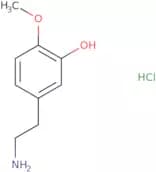
CAS:Prodotto controllato3-Hydroxy-4-methoxyphenethylamine HCl is an amine that is found in plants. It has been shown to be a reactive compound with a carbonyl group and an amine group. 3-Hydroxy-4-methoxyphenethylamine HCl can act as a dopamine receptor agonist, causing the release of serotonin from neurons. This chemical also has anti-inflammatory properties and may be used to treat inflammatory diseases such as asthma. 3-Hydroxy-4-methoxyphenethylamine HCl may also have blood pressure lowering effects.Formula:C9H14ClNO2Purezza:Min. 95%Colore e forma:White to off-white solid.Peso molecolare:203.67 g/mol3-(2-Aminoethyl)-5-methoxy-1H-indole-2-carboxylic acid
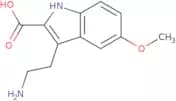
CAS:3-(2-Aminoethyl)-5-methoxy-1H-indole-2-carboxylic acid is a fine chemical that is used as a building block for research chemicals, reagents, and specialty chemicals. It has the CAS No. 52648-13-2. 3-(2-Aminoethyl)-5-methoxy-1H-indole-2-carboxylic acid is also a versatile building block for synthesis of complex compounds with high quality and is a reaction component in many reactions. This compound can serve as an intermediate or scaffold in chemical synthesis.Formula:C12H14N2O3Purezza:Min. 95%Colore e forma:White PowderPeso molecolare:234.25 g/mol(5-Bromo-4-methoxyphenyl)acetone
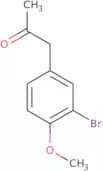
CAS:5-Bromo-4-methoxyphenyl)acetone (BMA) is a versatile building block that is used in the production of fine chemicals, research chemicals, and reagents. It has been shown to be a useful scaffold for the synthesis of complex compounds. BMA is also an intermediate for the production of other chemicals. This chemical has been shown to have high quality with a wide range of uses as a reaction component or useful scaffold.Formula:C10H11BrO2Purezza:Min. 95%Peso molecolare:243.1 g/molPoly[2-methoxy-5-(2-ethylhexyloxy)-1,4-phenylenevinylene - M.W. average 40,000-70,000
CAS:Poly[2-methoxy-5-(2-ethylhexyloxy)-1,4-phenylenevinylene] is a polymeric material that is soluble in various organic solvents. It has a high refractive index and can be used as an optical filter or polarizer. Poly[2-methoxy-5-(2-ethylhexyloxy)-1,4-phenylenevinylene] particles are monodisperse with an average size of 40,000 to 70,000 daltons. This material has been shown to have excellent light absorption properties and can be made into nanoparticles for use in biomedical applications.
Formula:(C18H28O2)nPurezza:Min. 95%Colore e forma:Powder5-Chloro-2-methoxy-4-methylnitrobenzene
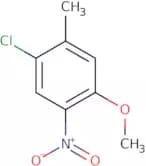
CAS:5-Chloro-2-methoxy-4-methylnitrobenzene is a high quality chemical that can be used as a research chemical, reagent, or a useful scaffold. It is also an intermediate in the synthesis of organic compounds. 5-Chloro-2-methoxy-4-methylnitrobenzene is a versatile building block for the synthesis of other chemicals and has many uses in the pharmaceutical industry. The CAS number for this chemical is 101080-03-9.Formula:C8H8ClNO3Purezza:Min. 95%Colore e forma:PowderPeso molecolare:201.61 g/mol2-Hydroxy-5-iodo-3-methoxybenzaldehyde
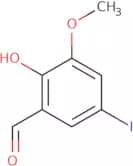
CAS:Please enquire for more information about 2-Hydroxy-5-iodo-3-methoxybenzaldehyde including the price, delivery time and more detailed product information at the technical inquiry form on this pageFormula:C8H7IO3Purezza:Min. 98%Colore e forma:PowderPeso molecolare:278.04 g/mol4'-Chloro-4-methoxychalcone
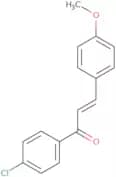
CAS:4'-Chloro-4-methoxychalcone is a dihedral molecule that has been studied by laser spectroscopy. The wavelength and efficiency of the laser have been shown to be dependent on the chalcone's dipole moment. Chalcones are also used in the synthesis of other compounds, such as benzene, which is an aromatic hydrocarbon. Chalcones are used as optical brighteners in detergents and soaps and can also be used to induce evaporation of organic solvents. 4'-Chloro-4-methoxychalcone is used as an intermediate in crystal x-ray diffraction studies.Formula:C16H13ClO2Purezza:Min. 95%Colore e forma:PowderPeso molecolare:272.73 g/mol2-Bromo-4-methoxybenzonitrile
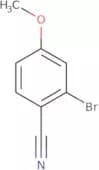
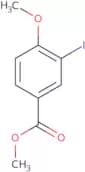
CAS:2-Bromo-4-methoxybenzonitrile is a high quality reagent that is used as a versatile building block in the synthesis of complex organic compounds. It is a useful intermediate and can be used to form 2,4-dimethoxybenzaldehyde. This compound has been used as a reaction component in the production of pharmaceuticals, pesticides, and other fine chemicals. The chemical formula for 2-bromo-4-methoxybenzonitrile is C6H5BrO2.Formula:C8H6BrNOPurezza:Min. 95%Peso molecolare:212.04 g/molMethyl 3-iodo-4-methoxybenzoate
CAS:Methyl 3-iodo-4-methoxybenzoate is a radioactive compound that has been shown to have pharmacological properties. It is used in the treatment of cancer and has demonstrated cytotoxic effects on tumor cells. Methyl 3-iodo-4-methoxybenzoate binds to the cell membrane and causes changes in membrane permeability, leading to cell death. This compound also demonstrates affinity for 4-ibp, a receptor found on cancer cells.Formula:C9H9IO3Purezza:Min. 95%Peso molecolare:292.07 g/mol2,4,6-Trimethoxy-3-methylbenzaldehyde
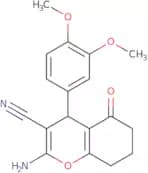
CAS:2,4,6-Trimethoxy-3-methylbenzaldehyde is a flavanone that is structurally related to the drug ciprofloxacin. The two molecules share a common molecular framework with the addition of a hydroxyl group on the 2 position of the benzene ring. In molecular docking studies, 2,4,6-Trimethoxy-3-methylbenzaldehyde has shown antitubercular activity against Mycobacterium tuberculosis and Mycobacterium avium complex. It is also an inhibitor of protein tyrosine phosphatase and has been shown to have antibacterial activity against various strains of bacteria.Formula:C11H14O4Purezza:Min. 95%Colore e forma:PowderPeso molecolare:210.23 g/mol2-amino-4-(3,4-dimethoxyphenyl)-5-oxo-4,6,7,8-tetrahydro2H-chromene-3-carbonitrile
CAS:Please enquire for more information about 2-amino-4-(3,4-dimethoxyphenyl)-5-oxo-4,6,7,8-tetrahydro2H-chromene-3-carbonitrile including the price, delivery time and more detailed product information at the technical inquiry form on this page
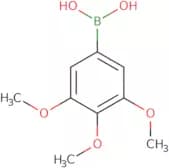
Formula:C18H18N2O4Purezza:Min. 95%Colore e forma:PowderPeso molecolare:326.35 g/mol(3,4,5-Trimethoxyphenyl)boronic acid
CAS:(3,4,5-Trimethoxyphenyl)boronic acid is an active analogue of 3,4,5-trimethoxybenzoic acid. It has potent anti-inflammatory properties and inhibits cancer cell proliferation. (3,4,5-Trimethoxyphenyl)boronic acid has been shown to inhibit the growth of cancer cells in vitro by binding to the gyrase enzyme. This drug also has biological properties that may be useful for treating human liver diseases such as hepatic steatosis or nonalcoholic fatty liver disease (NAFLD).Formula:C9H13BO5Purezza:Min. 95 Area-%Colore e forma:PowderPeso molecolare:212.01 g/mol5-Chloro-2-methoxyacetophenone
CAS:5-Chloro-2-methoxyacetophenone is a byproduct of the synthesis of 2-hydroxybenzofuran. It is also used in the synthesis of tetracyclic benzopyrans, which are known to be potent analgesics and have been found to have anti-inflammatory properties. 5-Chloro-2-methoxyacetophenone can be obtained by decarbonylation (loss of carbon) or elimination reactions.
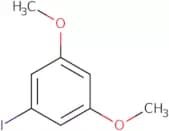
Formula:C9H9ClO2Purezza:Min. 95%Colore e forma:Clear LiquidPeso molecolare:184.62 g/mol3,5-Dimethoxyiodobenzene
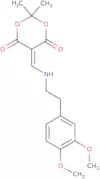
CAS:3,5-Dimethoxyiodobenzene is an organic molecule that is structurally similar to biphenyl. It has been shown to inhibit the growth of cancer cells by flipping the mcf-7 protein and cross-coupling with pterostilbene. 3,5-Dimethoxyiodobenzene can be used as a substitute for biphenyl in some reactions because it has a similar structure but does not have halogen groups. 3,5-Dimethoxyiodobenzene also inhibits the production of chloride ions in bacteria and causes accumulation of phosphane, which is an enzyme inhibitor. This compound has also been shown to act as a stereoselective inhibitor of enzymes that catalyze the synthesis of phytoalexins, which are plant secondary metabolites produced under biotic stress conditions (e.g., bacterial infection).Formula:C8H9IO2Purezza:Min. 95%Colore e forma:Light Brown To Brown SolidPeso molecolare:264.06 g/mol5-(((2-(3,4-dimethoxyphenyl)ethyl)amino)methylene)-2,2-dimethyl-1,3-dioxane-4,6-dione
CAS:Please enquire for more information about 5-(((2-(3,4-dimethoxyphenyl)ethyl)amino)methylene)-2,2-dimethyl-1,3-dioxane-4,6-dione including the price, delivery time and more detailed product information at the technical inquiry form on this pagePurezza:Min. 95%7-Methoxy-2-tetralone
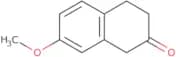
CAS:7-Methoxy-2-tetralone is an organic compound that is synthesised from the chlorination of phenol. It inhibits cancer cells by binding to their receptors and inhibiting the growth of new blood vessels, which are necessary for tumour growth. 7-Methoxy-2-tetralone also inhibits the synthesis of DNA, RNA, and protein in a cell-free system. It binds to chloride ions in solution and has a potent inhibitory activity against dehydrogenase and hydrochloric acid. 7-Methoxy-2-tetralone is used as a reagent for water treatment studies because it can be broken down to produce harmless products, such as chloride ion and cyanogen.
Formula:C11H12O2Purezza:Min. 95%Peso molecolare:176.21 g/mol4,4'-Dimethoxybenzhydrol
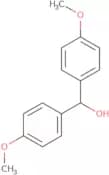
CAS:4,4'-Dimethoxybenzhydrol is a reaction system that has been used to control experiments in which the nucleophile is an iron catalyst. The reaction system was also used to determine the reactivity of various functional groups. The linear plot of the rate of reaction versus concentration of cyclopentenes, hydroxyl group, and dehydrated functionalities indicated that these factors had little effect on the rate of reaction. However, it was found that lactams and trifluorides were able to increase the rate of reaction. Anilines were also found to be effective as they reacted with hydrogen peroxide to form phenoxides.
Formula:C15H16O3Purezza:Min. 95%Colore e forma:White PowderPeso molecolare:244.29 g/mol5-Methoxyuracil
CAS:5-Methoxyuracil is a labile, colorless and crystalline compound that occurs spontaneously in the presence of oxygen. It has a chemical structure similar to thiourea, with one methyl group substituted for the amino group on the heterocycle. 5-Methoxyuracil is used as a precursor for synthesis of thymine and uracil. It also acts as an antioxidant, preventing reactive oxygen species from causing cellular damage. 5-Methoxyuracil can be used in regenerative medicine to increase the production of messenger RNA (mRNA) and ribosomal RNA (rRNA). This drug is used as a prebiotic agent and can be synthetically produced by dimethylation of uridine followed by ethyl formate oxidation.Formula:C5H6N2O3Purezza:Min. 95%Colore e forma:PowderPeso molecolare:142.11 g/mol3,5-Dibromo-4-methoxybenzylamine hydrochloride
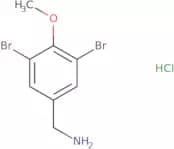
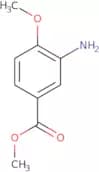
CAS:3,5-Dibromo-4-methoxybenzylamine hydrochloride is a high quality chemical with a CAS number of 1134918-17-4. It is also a versatile building block that can be used as an intermediate or reaction component in research, pharmaceuticals, and other chemical syntheses. This compound is stable and has been shown to react with various functional groups. It is a complex compound that can be used as a useful building block in organic synthesis reactions. The purity of this product is guaranteed at 98%.Formula:C8H9Br2NO•HClPurezza:Min. 95%Peso molecolare:331.43 g/mol3-Amino-4-methoxybenzoic acid methyl ester
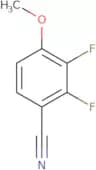
CAS:3-Amino-4-methoxybenzoic acid methyl ester is a modified quinoline derivative that exhibits potent antioxidant activity. It has been shown to inhibit the activation of p38 kinase, which is a proinflammatory enzyme. This leads to decreased levels of inflammatory cytokines and chemokines. 3-Amino-4-methoxybenzoic acid methyl ester also has anti-cancer effects and can be used as an anti-cancer agent in the treatment of cancer, such as lung cancer. It induces apoptosis by inhibiting the synthesis of DNA and proteins. The synthesized drug has been shown to have a chiral center, making it a potential candidate for use in pharmaceuticals.Formula:C9H11NO3Purezza:Min. 95%Colore e forma:PowderPeso molecolare:181.19 g/mol2,3-Difluoro-4-methoxybenzonitrile
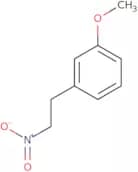
CAS:2,3-Difluoro-4-methoxybenzonitrile is a high quality chemical that can be used as a building block for the synthesis of more complex compounds. The compound has been shown to have useful intermediate properties and is often used in research. It is also a versatile scaffold that has been used to create many different types of chemical compounds. 2,3-Difluoro-4-methoxybenzonitrile can be used in the production of speciality chemicals and reaction components. It is not regulated by the Chemical Weapons Convention or other international treaties, making it an attractive reagent for those who are interested in purchasing this product.Formula:C8H5F2NOPurezza:Min. 95%Colore e forma:PowderPeso molecolare:169.13 g/mol1-(3-Methoxyphenyl)-2-nitroethane
CAS:1-(3-Methoxyphenyl)-2-nitroethane, also known as methyl isothiouronium chloride, is a chloride that can be used as an organocatalyst. It is able to catalyze the coupling of nitroalkanes with nitroalkenes in high yields and chemoselectivity, making it a valuable reagent for organic synthesis. 1-(3-Methoxyphenyl)-2-nitroethane can also be used for the preparation of conjugated dienes via the reaction of nitroalkenes with alkenes in the presence of base. This compound is easily recovered by distillation.
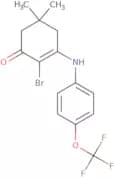
Formula:C9H11NO3Purezza:Min. 95%Colore e forma:Clear LiquidPeso molecolare:181.19 g/mol2-bromo-5,5-dimethyl-3-((4-(trifluoromethoxy)phenyl)amino)cyclohex-2-en-1-one
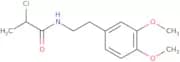
CAS:Please enquire for more information about 2-bromo-5,5-dimethyl-3-((4-(trifluoromethoxy)phenyl)amino)cyclohex-2-en-1-one including the price, delivery time and more detailed product information at the technical inquiry form on this pagePurezza:Min. 95%N-(2-(3,4-dimethoxyphenyl)ethyl)-2-chloropropanamide
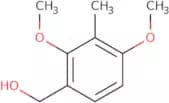
CAS:Please enquire for more information about N-(2-(3,4-dimethoxyphenyl)ethyl)-2-chloropropanamide including the price, delivery time and more detailed product information at the technical inquiry form on this pagePurezza:Min. 95%2,4-Dimethoxy-3-methylbenzyl alcohol
CAS:2,4-Dimethoxy-3-methylbenzyl alcohol is a syntheses and deuterium analogue of orsellinic acid. It has been shown to inhibit bacterial growth in the presence of an oxygen atmosphere.
Formula:C10H14O3Purezza:Min. 95%Peso molecolare:182.22 g/molNelotanserin
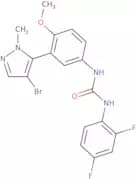
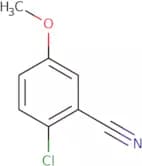
CAS:1-[3-(4-Bromo-1-methyl-1H-pyrazol-5-yl)-4-methoxyphenyl]-3-(2,4-difluorophenyl)urea is the active ingredient in a drug that is used to treat chronic schizophrenia. It has been shown to have both antipsychotic and antidepressant properties. The drug works by blocking the 5HT2A receptor, which inhibits the effects of serotonin on heterocyclic amines at the postsynaptic membrane. This causes hyperpolarization of the membrane, which blocks neurotransmitter release and prevents further transmission of signals. It also blocks the H1 receptor, which decreases histamine release and reduces inflammation in the brain.Formula:C18H15BrF2N4O2Purezza:Min. 95%Colore e forma:PowderPeso molecolare:437.24 g/mol2-Chloro-5-methoxybenzonitrile
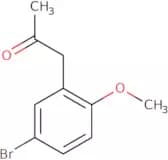
CAS:2-Chloro-5-methoxybenzonitrile is an organic compound that has a chlorinated methoxy group and a cyano group. It is synthesized by the reaction of 2-chloro-5-hydroxybenzonitrile with sulfuryl chloride in the presence of potassium carbonate. The yield of this reaction can be increased by adding a chlorinated solvent such as dichloromethane or chloroform. 2-Chloro-5-methoxybenzonitrile is used in the synthesis of various drugs and other organic compounds, such as amides and benzene ring compounds.Formula:C8H6ClNOColore e forma:PowderPeso molecolare:167.59 g/mol(5-Bromo-2-methoxyphenyl)acetone
CAS:5-Bromo-2-methoxyphenyl)acetone (BMPA) is a versatile building block used in the synthesis of complex compounds and speciality chemicals. BMPA has been shown to be a useful intermediate for the synthesis of pharmaceuticals, agrochemicals, perfumes, and other products. It is also used as a reagent for research purposes. The compound was first synthesized by the condensation of aniline with acetaldehyde in 1885 by two French chemists, but has since been prepared in various ways. CAS number: 205826-73-9Formula:C10H11BrO2Purezza:Min. 95%Peso molecolare:243.1 g/mol2-(4-Ethoxy-2,3-difluorophenyl)-4,4,5,5-tetramethyl-1,3,2-dioxaborolane
CAS:Purezza:98%Peso molecolare:284.10998544-Bromo-2,6-dimethylanisole
CAS:Formula:C9H11BrOPurezza:95%Colore e forma:LiquidPeso molecolare:215.09TERT-BUTYL (3S)-3-AMINO-1-OXA-8-AZASPIRO[4.5]DECANE-8-CARBOXYLATE
CAS:Purezza:98%Peso molecolare:256.34600832-Bromo-3-(difluoromethoxy)pyridine
CAS:Formula:C6H4BrF2NOPurezza:97%Colore e forma:LiquidPeso molecolare:224.0052-(3-Methoxy-5-(trifluoromethoxy)phenyl)-4,4,5,5-tetramethyl-1,3,2-dioxaborolane
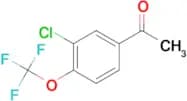
CAS:Purezza:98%Peso molecolare:318.10000611-(3-Chloro-4-(trifluoromethoxy)phenyl)ethanone
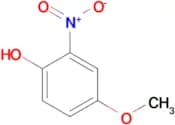
CAS:Formula:C9H6ClF3O2Purezza:98%Colore e forma:LiquidPeso molecolare:238.594-Methoxy-2-nitrophenol
CAS:Formula:C7H7NO4Purezza:98%Colore e forma:Solid, Crystalline Powder or PowderPeso molecolare:169.136Ref: 10-F790523
1g20,00€5g54,00€10g94,00€1kg3.047,00€25g188,00€100g490,00€500g1.789,00€250mg12,00€500mg20,00€Dichloro[9,9-dimethyl-4,5-bis(diphenylphosphino)xanthene]Cobalt(II)
CAS:Purezza:98%Colore e forma:SolidPeso molecolare:708.464-Methyl-1,3-dioxane
CAS:Formula:C5H10O2Purezza:97%Colore e forma:Liquid, ClearPeso molecolare:102.1332-Amino-6-methoxybenzothiazole
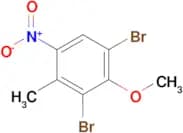
CAS:Formula:C8H8N2OSPurezza:96%Colore e forma:SolidPeso molecolare:180.231,3-Dibromo-2-methoxy-4-methyl-5-nitrobenzene
CAS:Formula:C8H7Br2NO3Purezza:98%Colore e forma:Liquid, No data available.Peso molecolare:324.9566-Methoxy-3,4-dihydroisoquinolin-1(2H)-one
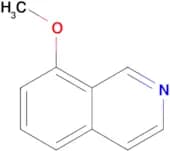
CAS:Formula:C10H11NO2Purezza:98%Colore e forma:SolidPeso molecolare:177.2038-Methoxyisoquinoline
CAS:Formula:C10H9NOPurezza:98%Colore e forma:Liquid, No data available.Peso molecolare:159.1882-Chloro-6-methoxybenzothiazole
CAS:Formula:C8H6ClNOSPurezza:97%Colore e forma:SolidPeso molecolare:199.65(R)-2,3-Dihydro-benzo[1,4]dioxine-2-carboxylic acid
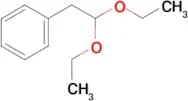
CAS:Formula:C9H8O4Purezza:95%Colore e forma:Solid, CrystallinePeso molecolare:180.159(2,2-diethoxyethyl)benzene
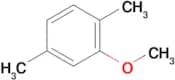
CAS:Formula:C12H18O2Purezza:95%Colore e forma:LiquidPeso molecolare:194.2742-Methoxy-1,4-dimethylbenzene
CAS:Formula:C9H12OPurezza:95%Colore e forma:No data available.Peso molecolare:136.1944,4-Dimethyl-3,5,8-trioxabicyclo[5.1.0]octane
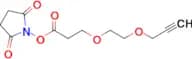
CAS:Formula:C7H12O3Purezza:98%Colore e forma:LiquidPeso molecolare:144.172,5-Dioxopyrrolidin-1-yl 3-(2-(prop-2-yn-1-yloxy)ethoxy)propanoate
CAS:Purezza:98%Peso molecolare:269.2529907Methyl 2-bromo-5-methoxybenzoate
CAS:Formula:C9H9BrO3Purezza:95%Colore e forma:LiquidPeso molecolare:245.0723′,4′,5′,6′-Tetrahydroxyspiro[benzo[c][1,2]oxathiole-3,9′-xanthene] 1,1-dioxide
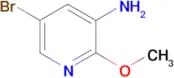
CAS:Purezza:95%Peso molecolare:400.35998545-Bromo-2-methoxypyridin-3-amine
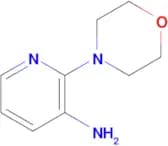
CAS:Formula:C6H7BrN2OPurezza:97%Colore e forma:SolidPeso molecolare:203.0392-Morpholinopyridin-3-amine
CAS:Formula:C9H13N3OPurezza:95%Colore e forma:SolidPeso molecolare:179.223





![6-BENZYL-1-OXA-6-AZASPIRO[2.5]OCTANE](/_next/image/?url=https%3A%2Fstatic.cymitquimica.com%2Fproducts%2F10%2Fthumb-webp%2FF800158.webp&w=3840&q=75)


![TERT-BUTYL (3S)-3-AMINO-1-OXA-8-AZASPIRO[4.5]DECANE-8-CARBOXYLATE](/_next/image/?url=https%3A%2Fstatic.cymitquimica.com%2Fproducts%2F10%2Fthumb-webp%2FF848758.webp&w=3840&q=75)


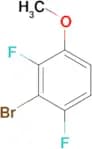


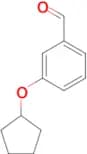
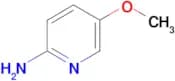
![1-[5-chloro-2-(difluoromethoxy)phenyl]ethan-1-one](/_next/image/?url=https%3A%2Fstatic.cymitquimica.com%2Fproducts%2F10%2Fthumb-webp%2FF676219.webp&w=3840&q=75)
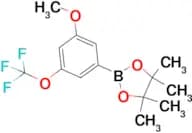
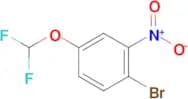
![Dichloro[9,9-dimethyl-4,5-bis(diphenylphosphino)xanthene]Cobalt(II)](/_next/image/?url=https%3A%2Fstatic.cymitquimica.com%2Fproducts%2F10%2Fthumb-webp%2FF987770.webp&w=3840&q=75)
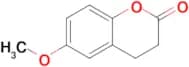
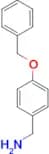
![[4-(benzyloxy)phenyl]methanamine hydrochloride](/_next/image/?url=https%3A%2Fstatic.cymitquimica.com%2Fproducts%2F10%2Fthumb-webp%2FF864105.webp&w=3840&q=75)
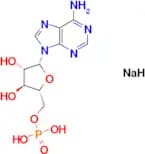
![7-Oxa-2-azaspiro[4.5]decane hydrochloride](/_next/image/?url=https%3A%2Fstatic.cymitquimica.com%2Fproducts%2F10%2Fthumb-webp%2FF624660.webp&w=3840&q=75)
![5-Fluoro-2H-benzo[b][1,4]oxazin-3(4H)-one](/_next/image/?url=https%3A%2Fstatic.cymitquimica.com%2Fproducts%2F10%2Fthumb-webp%2FF209442.webp&w=3840&q=75)

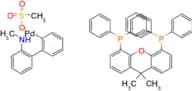


![2-Chloro-5-methoxy-1H-benzo[d]imidazole](/_next/image/?url=https%3A%2Fstatic.cymitquimica.com%2Fproducts%2F10%2Fthumb-webp%2FF241145.webp&w=3840&q=75)

![7-Methoxyimidazo[1,2-a]pyridine-2-carboxylic acid](/_next/image/?url=https%3A%2Fstatic.cymitquimica.com%2Fproducts%2F10%2Fthumb-webp%2FF692596.webp&w=3840&q=75)
![5-Methoxy-1H-pyrazolo[3,4-c]pyridine](/_next/image/?url=https%3A%2Fstatic.cymitquimica.com%2Fproducts%2F10%2Fthumb-webp%2FF329403.webp&w=3840&q=75)

![tert-Butyl (1R,3s,5S)-6-oxabicyclo[3.1.0]hexan-3-ylcarbamate](/_next/image/?url=https%3A%2Fstatic.cymitquimica.com%2Fproducts%2F10%2Fthumb-webp%2FF763752.webp&w=3840&q=75)


![(R)-2,3-Dihydro-benzo[1,4]dioxine-2-carboxylic acid](/_next/image/?url=https%3A%2Fstatic.cymitquimica.com%2Fproducts%2F10%2Fthumb-webp%2FF049582.webp&w=3840&q=75)
![4,4-Dimethyl-3,5,8-trioxabicyclo[5.1.0]octane](/_next/image/?url=https%3A%2Fstatic.cymitquimica.com%2Fproducts%2F10%2Fthumb-webp%2FF234763.webp&w=3840&q=75)

![3′,4′,5′,6′-Tetrahydroxyspiro[benzo[c][1,2]oxathiole-3,9′-xanthene] 1,1-dioxide](/_next/image/?url=https%3A%2Fstatic.cymitquimica.com%2Fproducts%2F10%2Fthumb-webp%2FF862878.webp&w=3840&q=75)