Eteri
Trovati 40941 prodotti di "Eteri"
3,4-Dimethoxy-2-methylcinnamic acid
CAS:3,4-Dimethoxy-2-methylcinnamic acid is a fine chemical that can be used as a building block to produce complex compounds. It is also an intermediate in the synthesis of chemicals such as cinnamyl alcohol, cinnamaldehyde, and 2-methyl-3-(4'-methoxyphenyl)propanoic acid. This compound is useful for research purposes as it has been shown to be an effective reaction component in organic reactions. 3,4-Dimethoxy-2-methylcinnamic acid is a high quality reagent with CAS No. 868562-26-9.Formula:C12H14O4Purezza:Min. 95%Colore e forma:PowderPeso molecolare:222.24 g/mol4-(2-Hydroxyethoxy)-3-nitroacetanilide
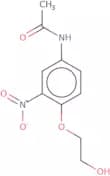
CAS:4-(2-Hydroxyethoxy)-3-nitroacetanilide is a versatile building block that can be used in the synthesis of complex compounds and research chemicals. This compound is also used as a reagent for organic synthesis, or as an intermediate for the production of other chemical substances. 4-(2-Hydroxyethoxy)-3-nitroacetanilide is high quality and has many uses in various reactions. It has been shown to be an effective scaffold for synthetic chemistry.Formula:C10H12N2O5Purezza:90%Colore e forma:PowderPeso molecolare:240.21 g/mol5-Bromo-2-methoxypyridine
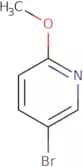
CAS:5-Bromo-2-methoxypyridine is a synthetic organic chemical that is used in organic chemistry. It is a precursor to the HIV integrase inhibitor, PSC 833, and has been shown to be effective in treating idiopathic pulmonary fibrosis. 5-Bromo-2-methoxypyridine is synthesized by reacting phosphorus oxychloride with 2-bromomethoxybenzene. This reaction produces a mixture of products that are then separated using column chromatography. The desired product can be purified by recrystallization or distillation. 5-Bromo-2-methoxypyridine has three pairs of asymmetric carbon atoms and four different functional groups: halides, sulfur trifluoride, bromine, and methoxy groups.
Formula:C6H6BrNOPurezza:Min. 95%Colore e forma:Clear LiquidPeso molecolare:188.02 g/mol2-Fluoro-5-methoxybenzonitrile
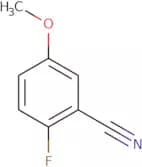
CAS:2-Fluoro-5-methoxybenzonitrile is a metal catalyst that has been shown to be effective in the synthesis of various organic compounds. The use of ultrasound can increase the yields of reactions involving 2-fluoro-5-methoxybenzonitrile. 2-Fluoro-5-methoxybenzonitrile has also been demonstrated as a pharmacological agent with a number of potential applications. It inhibits the activity of phosphodiesterase 4, which may lead to an improved therapeutic profile for conditions such as asthma and erectile dysfunction. 2-Fluoro-5-methoxybenzonitrile is also used in photochemical reactions, where it acts as an inhibitor to prevent the formation of undesired products.
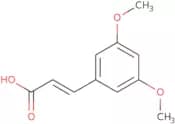
Formula:C8H6FNOPurezza:Min. 95%Colore e forma:PowderPeso molecolare:151.14 g/mol3,5-Dimethoxycinnamic acid
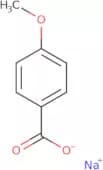
CAS:3,5-Dimethoxycinnamic acid is a compound that belongs to the class of cinnamic acid derivatives. It is a synthetic substance obtained by demethylation of 3,5-dimethoxybenzoic acid. This substance has been shown to have an antifungal activity in vitro against filamentous fungi and many other microorganisms. The antimicrobial effect can be explained by the presence of functional groups such as hydroxyl and methoxyl on the aromatic ring. Hydroxide solution can be used as an analytical reagent for determining the formation rate of this compound.Formula:C11H12O4Purezza:Min. 95%Colore e forma:PowderPeso molecolare:208.21 g/mol4-Methoxybenzoic acid sodium
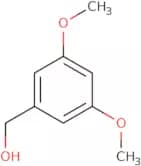
CAS:4-Methoxybenzoic acid sodium is an amide that has been used as a preservative and antimicrobial agent in food products. It is also a second-order rate constant with a Ca2+ concentration of 0.1 mM for staphylococcus. The fatty acids of 4-methoxybenzoic acid sodium are hydrophobic and inhibit the growth of microorganisms by disrupting the cell membrane, which leads to leakage of cellular content. This compound also inhibits the activity of fatty acyl coenzyme A reductase and has been shown to have a microbicidal effect on gram-positive bacteria, such as Staphylococcus aureus. 4-Methoxybenzoic acid sodium has also been shown to be effective against Candida albicans, Streptococcus pyogenes, and Bacillus subtilis when combined with an antimicrobial peptide or cationic surfactant.Formula:C8H7NaO3Purezza:Min. 98 Area-%Colore e forma:PowderPeso molecolare:174.13 g/mol3,5-Dimethoxybenzyl alcohol
CAS:3,5-Dimethoxybenzyl alcohol is a synthetic compound that exhibits potent inhibitory activity against carcinoma cell lines. It prevents the growth of cancer cells by inhibiting the synthesis of RNA and DNA. The activation energy for this inhibitory activity is 40.6 kJ/mol, which was determined using analytical methods. 3,5-Dimethoxybenzyl alcohol inhibits the growth of cancer cells in vitro and in vivo at concentrations between 50 and 500 µM. Its inhibitory activities are reversible and competitive with respect to chloride ions at concentrations greater than 250 µM. 3,5-Dimethoxybenzyl alcohol has been shown to be an effective inhibitor of phosphatase enzymes in Chinese medicinal herbs such as Polygonum multiflorum Thunb., Phellodendron amurense Rupr., or Pyrus pyrifolia Nakai.
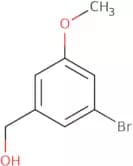
Formula:C9H12O3Purezza:Min. 95%Colore e forma:Off-White PowderPeso molecolare:168.19 g/mol5-Bromo-3-methoxybenzyl alcohol
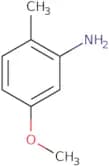
CAS:5-Bromo-3-methoxybenzyl alcohol is a synthetic hydroxyphenyl compound that can be used as a coupling agent. It is prepared by the reaction of bromoacetaldehyde with 3-hydroxybenzyl alcohol in the presence of an amine base, such as pyridine. 5-Bromo-3-methoxybenzyl alcohol can also be used to synthesize pyridines and bromides.Formula:C8H9BrO2Purezza:Min. 95%Colore e forma:PowderPeso molecolare:217.06 g/mol5-Methoxy-2-methylaniline
CAS:5-Methoxy-2-methylaniline is a synthetic compound that has been shown to have neurotoxic effects in rats. The neurotoxicity of this substance has been shown to be related to its ability to inhibit monoamine oxidase A (MAO-A). This inhibition leads to an accumulation of the neurotransmitter dopamine, which in turn leads to an increase in the production of free radicals and lipid peroxidation. 5-Methoxy-2-methylaniline also shows neuroprotective properties, which may be due to its ability to inhibit deoxypeganine and hydrochloric acid, two mediators involved in the generation of reactive oxygen species.Formula:C8H11NOPurezza:Min. 95 Area-%Colore e forma:PowderPeso molecolare:137.18 g/mol2,5-Dimethoxy-N-[(2-methoxyphenyl)methyl]-4-(trifluoromethyl)benzeneethanamine
CAS:Prodotto controllato2,5-Dimethoxy-N-[(2-methoxyphenyl)methyl]-4-(trifluoromethyl)benzeneethanamine is a synthetic drug that belongs to the group of psychotropic drugs. It has been shown to cause death in rats, which is likely due to its ability to inhibit serotonin uptake by neurons. 2,5-Dimethoxy-N-[(2-methoxyphenyl)methyl]-4-(trifluoromethyl)benzeneethanamine also inhibits the enzyme monoamine oxidase and prevents the breakdown of monoamines such as serotonin. This drug has been shown to have both stimulant and depressant properties. 2,5-Dimethoxy-N-[(2-methoxyphenyl)methyl]-4-(trifluoromethyl)benzeneethanamine can be quantified in human blood samples using liquid chromatography with aFormula:C19H22F3NO3Purezza:Min. 95%Peso molecolare:369.38 g/mol1-Fluoro-3-methoxy-2-nitrobenzene
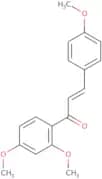
CAS:1-Fluoro-3-methoxy-2-nitrobenzene is a versatile building block that can be used as a scaffold for the synthesis of complex compounds. It is also used as a reaction component in research and development, especially in the production of pharmaceuticals, pesticides and other chemicals. 1-Fluoro-3-methoxy-2-nitrobenzene has many uses in the production of high quality reagents, such as pharmaceutical intermediates, dyes, and explosives.Formula:C7H6FNO3Purezza:Min. 95%Peso molecolare:171.13 g/mol2',4',4-Trimethoxychalcone
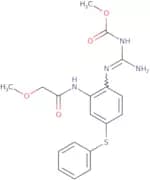
CAS:2',4',4-Trimethoxychalcone is a natural product that inhibits the enzyme activity of phospholipase A2, lipoxygenase, and cyclo-oxygenase. It also has high resistance to hydrochloric acid, chloride, and blood pressure. 2',4',4-Trimethoxychalcone has shown protein inhibition effects in vitro, as well as potent transport inhibitor activity against particles. This compound is synthesized using solid-phase chemistry on an immobilized resin.Formula:C18H18O4Purezza:Min. 95%Colore e forma:PowderPeso molecolare:298.33 g/molDes(methoxycarbonyl) febantel
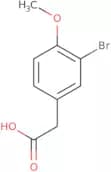
CAS:Please enquire for more information about Des(methoxycarbonyl) febantel including the price, delivery time and more detailed product information at the technical inquiry form on this pageFormula:C18H20N4O4SPurezza:Min. 95%Peso molecolare:388.44 g/mol3-Bromo-4-methoxyphenylacetic acid
CAS:3-Bromo-4-methoxyphenylacetic acid is a benzyl ester of hydroxybenzoic acid. It is used as a synthetic precursor for the synthesis of curare and related compounds. 3-Bromo-4-methoxyphenylacetic acid was first synthesized in 1869 by German chemist Wilhelm Koenigs and has been widely used as a synthetic intermediate in organic chemistry. This compound can be prepared from bromobenzene, methoxybenzene, and acetic acid in the presence of dimethyl ether or nitrite. 3-Bromo-4-methoxyphenylacetic acid is also used to produce nitromethane, an alkylating agent that reacts with amines, alcohols, thiols, and sulfides to form N-substituted nitro compounds.
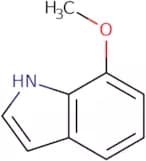
Formula:C9H9BrO3Purezza:Min. 95%Colore e forma:PowderPeso molecolare:245.07 g/mol7-Methoxy-1H-indole
CAS:7-Methoxy-1H-indole (7MI) is a synthetic compound that exhibits anti-inflammatory activity. It is an analog of the amino acid methionine found in proteins and its synthesis involves the condensation of a chlorinated alkyl acetate with an esterified hydrazide to form the corresponding amide. 7MI has been shown to inhibit both bacterial and mammalian protein synthesis, as well as to inhibit tumor cell growth. 7MI binds reversibly to the N7 atom of the adenine base in DNA, thereby inhibiting DNA replication through inhibition of DNA polymerase.Formula:C9H9NOPurezza:Min. 95%Colore e forma:Clear LiquidPeso molecolare:147.17 g/molN-[3,5-Bis(trifluoroMethyl)phenyl]-N'-[(9R)-6'-Methoxy-9-cinchonanyl]thiourea
CAS:Please enquire for more information about N-[3,5-Bis(trifluoroMethyl)phenyl]-N'-[(9R)-6'-Methoxy-9-cinchonanyl]thiourea including the price, delivery time and more detailed product information at the technical inquiry form on this pageFormula:C29H28F6N4OSPurezza:Min. 95%Colore e forma:PowderPeso molecolare:594.62 g/mol5-Iodo-2,3-dimethoxybenzoic acid
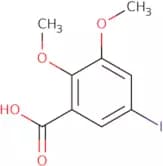
CAS:5-Iodo-2,3-dimethoxybenzoic acid (5IMB) is a synthetic chemical that is used as a radiolabeled substrate for the synthesis of dopamine. The 5IMB is a substrate for the enzyme monoamine oxidase, which converts it to 5-hydroxyindoleacetic acid (5HIAA). The intensity of the signal emitted by 5IMB increases with the increase in concentration of dopamine. It can be used as a positron emission tomography (PET) tracer for dopamine receptors in the brain. The kinetic and uptake properties of 5IMB are different in various regions of the brain, such as striatum and caudate putamen. This difference can be measured using high-performance liquid chromatography (HPLC) and flow rate.
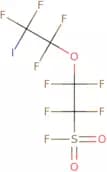
5IMB has been shown to have anti-oxidant properties due to its ability to scavenge peroxide radicals.Formula:C9H9IO4Purezza:Min. 98 Area-%Colore e forma:PowderPeso molecolare:308.07 g/molTetrafluoro-2-(tetrafluoro-2-iodoethoxy)ethanesulfonyl fluoride
CAS:Tetrafluoro-2-(tetrafluoro-2-iodoethoxy)ethanesulfonyl fluoride (TFEI) is a fluorinated solvent that has been used in the manufacture of organic thin films. TFEI is a colorless liquid with a strong, unpleasant odor. It is soluble in water and has a boiling point of about 140°C. TFEI possesses good thermal stability and can be used as an etchant for silicon or glass surfaces. TFEI is also capable of dissolving polymers such as polyimide, polyamide, polyethylene terephthalate, and polystyrene. TFEI has been shown to be highly toxic to bacteria and fungi and can be used as an antimicrobial agent in household cleaners, paints, adhesives, varnishes, plastics, textiles, and other industrial products.Formula:C4F9IO3SPurezza:Min. 95%Colore e forma:Clear LiquidPeso molecolare:426 g/mol(2R,3S,4S,5S)-5-Hydroxy-2,3,4-tris(phenylmethoxy)-5-[(phenylmethoxy)methyl]-cyclohexanone
CAS:(2R,3S,4S,5S)-5-Hydroxy-2,3,4-tris(phenylmethoxy)-5-[(phenylmethoxy)methyl]-cyclohexanone is a fine chemical that is used as a versatile building block in the synthesis of complex compounds. It has been shown to be an intermediate in the synthesis of some useful chemicals and it is one of the most commonly used reagents for organic chemistry reactions. The compound has a CAS number of 115250-38-9 and is soluble in various organic solvents such as dichloromethane or chloroform.Formula:C35H36O6Purezza:Min. 95%Colore e forma:PowderPeso molecolare:552.66 g/mol2-Carbomethoxybenzaldehyde
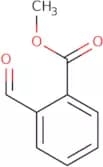
CAS:2-Carbomethoxybenzaldehyde (2CMB) is a synthetic chemical compound that has been used as an efficient method for the synthesis of amines. The carbonyl group in 2CMB reacts with nucleophiles, such as amines, to form a tetrahydroisoquinoline derivative. This nucleophilic attack leads to the formation of an unstable intermediate that can be isolated and purified by trifluoroacetic acid (TFA). 2CMB is also used in the synthesis of quinoline derivatives and naphthalene derivatives. The acidic properties of 2CMB allow it to react with carboxylic acids, leading to the formation of esters.
Formula:C9H8O3Purezza:Min. 95%Colore e forma:Colorless PowderPeso molecolare:164.16 g/mol


![2,5-Dimethoxy-N-[(2-methoxyphenyl)methyl]-4-(trifluoromethyl)benzeneethanamine](/_next/image/?url=https%3A%2Fstatic.cymitquimica.com%2Fproducts%2F3D%2Fthumb-webp%2FFD100429.webp&w=3840&q=75)

![N-[3,5-Bis(trifluoroMethyl)phenyl]-N'-[(9R)-6'-Methoxy-9-cinchonanyl]thiourea](/_next/image/?url=https%3A%2Fstatic.cymitquimica.com%2Fproducts%2F3D%2Fthumb-webp%2FFB100790.webp&w=3840&q=75)
![(2R,3S,4S,5S)-5-Hydroxy-2,3,4-tris(phenylmethoxy)-5-[(phenylmethoxy)methyl]-cyclohexanone](/_next/image/?url=https%3A%2Fstatic.cymitquimica.com%2Fproducts%2F3D%2Fthumb-webp%2FFH148464.webp&w=3840&q=75)