Eteri
Gli eteri sono composti organici contenenti un gruppo funzionale etere, caratterizzati da un atomo di ossigeno legato a due radicali idrocarburici. Questi composti sono preziosi nella sintesi e servono come solventi in varie reazioni chimiche. Da CymitQuimica, offriamo una selezione di eteri di alta qualità per supportare le vostre applicazioni di ricerca e industriali, garantendo risultati affidabili ed efficaci. La nostra gamma di eteri soddisfa diverse esigenze di laboratorio, dagli esperimenti di routine alla ricerca avanzata.
Trovati 40902 prodotti di "Eteri"
Ordinare per
Purezza (%)
0
100
|
0
|
50
|
90
|
95
|
100
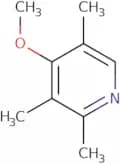
4-Methoxy-2,3,5-trimethylpyridine
CAS:<p>4-Methoxy-2,3,5-trimethylpyridine is an efficient hydrogenolysis catalyst that can be used for the synthesis of ethers from alcohols. It is a member of the methoxides family and can be produced by condensation of chloroform with acetaldehyde and formaldehyde. 4-Methoxy-2,3,5-trimethylpyridine inhibits palladium chloride from catalyzing hydrogenation reactions. The compound also has an inhibiting activity against acidic amines and n-Oxides. Its high yield makes it useful in organic synthesis as a precursor to diethyl malonate.</p>Formula:C9H13NOPurezza:Min. 95%Colore e forma:Colourless To Yellow LiquidPeso molecolare:151.21 g/mol2-Difluoromethoxyphenylboronic acid pinacol ester
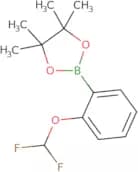
CAS:<p>2-Difluoromethoxyphenylboronic acid pinacol ester is a high quality reagent that can be used as a useful intermediate, fine chemical, or speciality chemical in reactions. This compound is an important building block for synthesizing other chemicals and can also be used to make novel compounds with pharmaceutical properties. 2-Difluoromethoxyphenylboronic acid pinacol ester is versatile and can be used in many different reactions. It has been reported to react with various other molecules to form new scaffolds and building blocks for use in organic synthesis.</p>Formula:C13H17BF2O3Purezza:Min. 95%Colore e forma:PowderPeso molecolare:270.08 g/mol2-(2-Methoxyphenoxy)Benzoic Acid
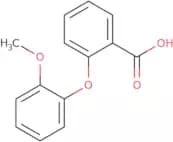
CAS:<p>2-(2-Methoxyphenoxy)benzoic acid is an organic compound that can be synthesized in the laboratory. It has been shown to dimerize spontaneously in aqueous solutions with the release of hydrogen peroxide and oxygen. The mechanism is thought to involve oxidative dimerization, which may lead to carboxylate bond cleavage, intramolecular radical formation, or mechanistically radical attack. This process also results in the formation of a 2-methoxyphenoxy radical.</p>Formula:C14H12O4Purezza:Min. 95%Colore e forma:PowderPeso molecolare:244.24 g/mol5-Methoxy-2-nitrophenylamine
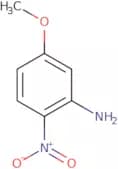
CAS:<p>5-Methoxy-2-nitrophenylamine (5MN) is a synthetic compound. It has been shown to produce an inhibitory effect on Alzheimer's disease and Leishmania infantum by inhibiting the formation of amyloid beta (Aβ) and leishmanicidal alpha-ketoglutarate, respectively. 5MN has also been observed to stabilize supramolecular structures in magnetic resonance spectroscopy experiments. This chemical is synthesized from 4-amino-3-nitrophenol and methylamine by reacting them in the presence of sodium hydroxide and sulfuric acid under refluxing conditions. The reaction products are analyzed using FTIR spectroscopy, as shown below:</p>Formula:C7H8N2O3Purezza:Min. 95%Colore e forma:PowderPeso molecolare:168.15 g/mol5-Methoxy-1-methyl-1H-indole-3-carbaldehyde
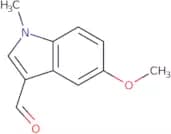
CAS:<p>5-Methoxy-1-methyl-1H-indole-3-carbaldehyde is a synthetic compound that has been shown to inhibit the growth of human tumour cells in vitro. This compound is a regioisomeric mixture of two enantiomers, with the (S) isomer being the more potent inhibitor. The (R) isomer was found to be less active against human tumour cells and may have an antimicrobial activity. 5-Methoxy-1-methyl-1H-indole-3-carbaldehyde has been shown to be bioreductive towards electron donors such as NADPH and glutathione. It also inhibits dt diaphorase and aerobic metabolism in human tumour cells.</p>Formula:C11H11NO2Purezza:Min. 95%Colore e forma:Off-White PowderPeso molecolare:189.21 g/mol2-Bromo-5-methoxybenzyl bromide
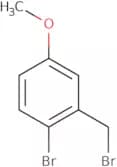
CAS:<p>2-Bromo-5-methoxybenzyl bromide is a ligand in organic chemistry. It is used as a reaction partner for the synthesis of heterocycles, such as 2-pyridone, which are biologically relevant. This ligand can be prepared by refluxing anhydrous potassium carbonate with chloroform and phenol. Macrocyclic compounds can be synthesized from this product through the Witting reaction. The efficiency of this method makes it suitable for use in biological studies.</p>Formula:C8H8Br2OPurezza:Min. 95%Colore e forma:White PowderPeso molecolare:279.96 g/mol4,5-Dimethoxy-2-(trimethylsilyl)phenyl trifluoromethanesulfonate
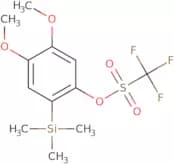
CAS:<p>4,5-Dimethoxy-2-(trimethylsilyl)phenyl trifluoromethanesulfonate is a reagent for the synthesis of propiolates. It is prepared by reacting methyl propiolate with tetrachloride, hexachloroethane, or tetrabromide in acetonitrile. The reactants are heated to reflux under argon and then cooled to room temperature. This product is an ionic liquid that can be used as a solvent. 4,5-Dimethoxy-2-(trimethylsilyl)phenyl trifluoromethanesulfonate is a zwitterion and reacts with amines to form quaternary ammonium salts. It can also be used for the synthesis of unactivated transition metal complexes by reacting it with palladium and amines.</p>Formula:C12H17F3O5SSiPurezza:Min. 95%Colore e forma:Colorless PowderPeso molecolare:358.41 g/mol2-(4-Methoxyphenyl)-4,6-bis(trichloromethyl)-1,3,5-triazine
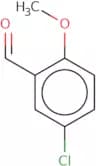
CAS:<p>2-(4-Methoxyphenyl)-4,6-bis(trichloromethyl)-1,3,5-triazine is a chemical compound that belongs to the class of cyanine dyes. It is used as a developer in photopolymerization and as an electron donor in electron-sensitive materials. 2-(4-Methoxyphenyl)-4,6-bis(trichloromethyl)-1,3,5-triazine has a viscosity of 0.56 Pa·s at 25°C and is sensitive to light with wavelengths ranging from 300 to 400 nm. This dye also has a yield of 1.0 g/g and a phenolic content of 0.2%.</p>Formula:C12H7Cl6N3OPurezza:Min. 95%Colore e forma:White PowderPeso molecolare:421.92 g/mol5-Chloro-2-methoxybenzaldehyde
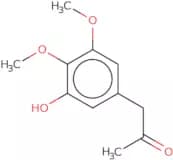
CAS:5-Chloro-2-methoxybenzaldehyde is a potent inhibitor of the bacterial enzyme acetylcholinesterase. It has been shown to have an interaction with biomolecules, such as chalcones, and can be used in the manufacture of antibacterial agents. 5-Chloro-2-methoxybenzaldehyde has been found to have potent inhibitory activity against organocatalytic aldehydes and atypical aldehydes and can be used as an active ingredient in the synthesis of novel compounds with antibacterial activity.Formula:C8H7ClO2Purezza:Min. 95%Colore e forma:PowderPeso molecolare:170.59 g/mol(3,4-Dimethoxy-5-hydroxyphenyl)acetone
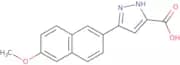
CAS:<p>(3,4-Dimethoxy-5-hydroxyphenyl)acetone is a fine chemical that belongs to the class of compounds known as reagents. It has been used in research and development as a building block or intermediate for the synthesis of other chemicals. It is also used as a versatile building block in complex organic syntheses, such as pharmaceuticals. The chemical is soluble in organic solvents and reacts with many other chemicals, making it useful for synthetic chemistry. This compound has been shown to be high quality and can be used to synthesize other chemicals with diverse properties.</p>Formula:C11H14O4Purezza:Min. 95%Peso molecolare:210.23 g/mol5-(6-Methoxynaphthalen-2-yl)-1H-pyrazole-3-carboxylic acid
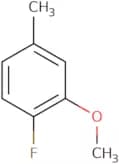
CAS:5-(6-Methoxynaphthalen-2-yl)-1H-pyrazole-3-carboxylic acid is a fine chemical that is used as an intermediate in research, development and production of pharmaceuticals. It can be also used as a reagent and speciality chemical, as well as a reaction component and useful scaffold when combined with other molecules. This compound has been found to be stable in air and water, which makes it easy to handle. 5-(6-Methoxynaphthalen-2-yl)-1H-pyrazole-3-carboxylic acid has CAS No. 1257877-12-5.Formula:C15H12N2O3Purezza:Min. 95%Colore e forma:Off-White PowderPeso molecolare:268.27 g/mol4-Fluoro-3-methoxytoluene
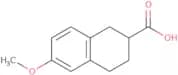
CAS:<p>4-Fluoro-3-methoxytoluene (4FMET) is a polymeric organic compound that has an index of refraction of 1.5. It is soluble in common solvents, such as chloroform, acetone and ethanol, but insoluble in water. 4FMET can be used as a copolymerization additive to improve the chemical stability of polymers and plastics. It also has antibacterial properties that are due to its ability to disrupt bacterial membranes and inhibit protein synthesis. 4FMET is FDA approved for use in ophthalmic solutions that transmit ultraviolet light, such as UV-A or UV-B radiation.</p>Formula:C8H9FOPurezza:Min. 95%Colore e forma:Clear LiquidPeso molecolare:140.15 g/mol6-Methoxy-1,2,3,4-tetrahydronaphthalene-2-carboxylic acid
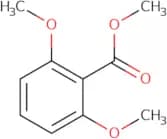
CAS:6-Methoxy-1,2,3,4-tetrahydronaphthalene-2-carboxylic acid (MTN) is a polyphenol that has been shown to be effective against Alzheimer's disease in vitro and in vivo. MTN is able to bind to the polymerase chain reaction (PCR) product of APP and inhibit it from binding to heme oxygenase. MTN also prevents the accumulation of amyloid plaques by inhibiting the formation of beta-amyloid protein. MTN binds to thioflavin T and can be used as a fluorescent probe for immunofluorescence staining. MTN also inhibits the expression levels of APP and PS1 proteins in APP/PS1 transgenic mice by modulating the activity of transcriptional factors such as CREB.Formula:C12H14O3Purezza:Min. 95%Colore e forma:PowderPeso molecolare:206.24 g/molMethyl 2,6-dimethoxybenzoate
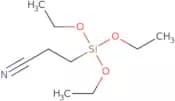
CAS:Methyl 2,6-dimethoxybenzoate is a synthetic compound with a crystalline structure. It has been used as an antidepressant agent in clinical studies. Methyl 2,6-dimethoxybenzoate binds to the serotonin transporter and inhibits serotonin uptake. This molecule can also inhibit the reuptake of dopamine and norepinephrine by binding to their respective transporters. The compound has been shown to be effective in the treatment of depressive disorders in mice; however, it is not yet approved for use in humans. Methyl 2,6-dimethoxybenzoate is a stereoselective biphenyl that can be oriented so that its methyl group is oriented towards two hydrogen atoms on the opposite side of the plane of symmetry. This asymmetric orientation allows methyl 2,6-dimethoxybenzoate to show different properties depending on which side of the molecule interacts with other molecules. For example, when methyl 2,6-dimethFormula:C10H12O4Purezza:Min. 95%Peso molecolare:196.2 g/mol2-Cyanoethyltriethoxysilane
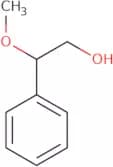
CAS:<p>2-Cyanoethyltriethoxysilane is a cross-linking agent that is used in coatings and adhesives. It has been shown to have an adsorption mechanism that is dependent on the pH of the solution, with a maximum adsorption at pH 3.2 and a minimum at pH 11. The rate of adsorption is also dependent on the concentration of 2-cyanoethyltriethoxysilane, with higher concentrations leading to faster adsorption rates. Kinetic data for 2-cyanoethyltriethoxysilane has been shown using gravimetric analysis to show that it has an adsorption rate constant of 1.0 × 10^4 s^(-1) at pH 3.2 and 6.5 × 10^4 s^(-1) at pH 11, which are independent of the concentration of this molecule in solution. Pluronic P123 was used as a model polymer</p>Formula:C9H19NO3SiPurezza:Min. 97 Area-%Colore e forma:PowderPeso molecolare:217.34 g/mol2-Methoxy-2-phenylethanol
CAS:<p>2-Methoxy-2-phenylethanol is a molecule that has been found to be a good catalyst for the ring-opening of epoxides. It is also used as a solid catalyst in kinetic studies and as an additive in organic syntheses. 2-Methoxy-2-phenylethanol is soluble in water and reacts with fatty acids to form acetylated products. This molecule has been shown to have an inhibitory effect on human liver alcohol dehydrogenase, which may be due to it's ability to bind to the enzyme's active site.</p>Formula:C9H12O2Purezza:Min. 95%Colore e forma:Colorless Clear LiquidPeso molecolare:152.19 g/mol3-(Ethoxycarbonylamino)phenothiazine
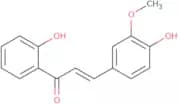
CAS:3-(Ethoxycarbonylamino)phenothiazine is a chemical compound that belongs to the group of speciality chemicals. It is an intermediate for the synthesis of other compounds and can be used in the production of fine chemicals, reagents, and complex compounds. 3-(Ethoxycarbonylamino)phenothiazine has been shown to have a high reactivity and is useful as a building block in organic chemistry. This product also has versatile uses in research, which includes drug discovery and development.Purezza:Min. 95%2',4-Dihydroxy-3-methoxychalcone
CAS:<p>2',4-Dihydroxy-3-methoxychalcone is a chalcone that has been shown to have reactive properties. The compound was found to be cytotoxic to cancer cells in the presence of neutrophils, and it has been shown to inhibit the growth of t47d cells in culture. There is also evidence that 2',4-Dihydroxy-3-methoxychalcone may help regulate the microflora in the gut, which may help prevent obesity and diabetes. In epidemiological studies, 2',4-Dihydroxy-3-methoxychalcone was found to be protective against cancer, but more research is required.</p>Formula:C16H14O4Purezza:Min. 95%Colore e forma:PowderPeso molecolare:270.28 g/mol1,1,2,2,3,3-Hexafluoro-1-(trifluoromethoxy)-3-[(1,2,2-trifluorovinyl)oxy]propane
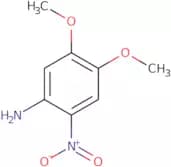
CAS:Formula:C6F12O2Purezza:>97.0%(GC)Colore e forma:Colorless to Almost colorless clear liquidPeso molecolare:332.044,5-Dimethoxy-2-nitroaniline
CAS:Prodotto controllato<p>4,5-Dimethoxy-2-nitroaniline (DMNA) is a nucleophilic compound that reacts with glyoxylate to form formic acid. DMNA has been shown to be an effective anti-malarial agent, as it inhibits the growth of leishmania and related protozoans. The mechanism of action is not fully understood but may be due to its ability to produce reactive oxygen species. DMNA also inhibits bacterial growth in vitro by interfering with DNA synthesis and protein synthesis. DMNA has been shown to have a cytotoxic effect on mammalian cells, which may be due to the production of free radicals from its reaction with formic acid.</p>Formula:C8H10N2O4Colore e forma:PowderPeso molecolare:198.18 g/mol



![1,1,2,2,3,3-Hexafluoro-1-(trifluoromethoxy)-3-[(1,2,2-trifluorovinyl)oxy]propane](/_next/image/?url=https%3A%2Fstatic.cymitquimica.com%2Fproducts%2F3B%2Fthumb-webp%2FH1610.webp&w=3840&q=75)