Eteri
Gli eteri sono composti organici contenenti un gruppo funzionale etere, caratterizzati da un atomo di ossigeno legato a due radicali idrocarburici. Questi composti sono preziosi nella sintesi e servono come solventi in varie reazioni chimiche. Da CymitQuimica, offriamo una selezione di eteri di alta qualità per supportare le vostre applicazioni di ricerca e industriali, garantendo risultati affidabili ed efficaci. La nostra gamma di eteri soddisfa diverse esigenze di laboratorio, dagli esperimenti di routine alla ricerca avanzata.
Trovati 40902 prodotti di "Eteri"
Ordinare per
Purezza (%)
0
100
|
0
|
50
|
90
|
95
|
100
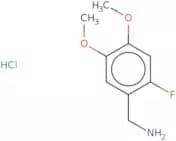
4,5-Dimethoxy-2-fluorobenzylamine hydrochloride
CAS:4,5-Dimethoxy-2-fluorobenzylamine hydrochloride is a fine chemical that is the building block for a variety of other compounds. It has been used as an intermediate in organic synthesis and as a research chemical. 4,5-Dimethoxy-2-fluorobenzylamine hydrochloride has also been used as a reaction component in the preparation of complex compounds with interesting physical and chemical properties. This compound is also used as a reagent in the production of high quality products.Formula:C9H12FNO2·HClPurezza:Min. 95%Peso molecolare:221.66 g/mol6-Methoxybenzothiazole-2-carboxylic acid
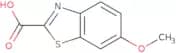
CAS:<p>6-Methoxybenzothiazole-2-carboxylic acid is a synthetic sulfur compound that is used in the synthesis of benzothiazines. It is also an intermediate in the biosynthesis of thiocyanate, a natural product that has been shown to have anti-inflammatory properties. 6-Methoxybenzothiazole-2-carboxylic acid has been shown to be highly efficient as a luciferin, and can be used in the production of bioluminescence. 6-Methoxybenzothiazole-2-carboxylic acid belongs to the family of benzothiazines, which are benzoquinones with two fused rings. Benzothiazines are found in marine natural products such as luciferins and some other nature products.</p>Formula:C9H7NO3SPurezza:Min. 95%Colore e forma:PowderPeso molecolare:209.22 g/mol2'-Hydroxy-5'-methoxyacetophenone
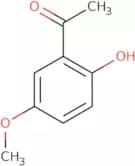
CAS:<p>2'-Hydroxy-5'-methoxyacetophenone is a molecule that has been shown to have anticancer activity. It inhibits the production of molecules in cancer cells, such as carbonic anhydrase and nitric oxide synthase. This molecule also binds to DNA and prevents the transcription of genes involved in cell proliferation, including NF-κB DNA. 2'-Hydroxy-5'-methoxyacetophenone also has inhibitory properties on the growth of cancer cells, including MCF-7 cells.</p>Formula:C9H10O3Purezza:Min. 95%Colore e forma:Off-White PowderPeso molecolare:166.17 g/mol6-Ethoxypurine
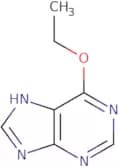
CAS:6-Ethoxypurine is a nucleoside analog that inhibits the enzyme ribonucleotide reductase, which converts ribonucleotides to deoxyribonucleotides. It is used in cell culture to measure the effects of radiation and hydrochloric acid on the production of ATP. 6-Ethoxypurine has been shown to inhibit influenza virus replication with an IC50 of 10 μM. This compound has reactive hydroxyl groups that allow it to participate in hydrogen bonding, which can be beneficial for interactions with other molecules. 6-Ethoxypurine also exhibits nucleophilic properties, which allows it to react with other chemical species and can be useful for generating new chemical compounds.Formula:C7H8N4OPurezza:Min. 95%Colore e forma:PowderPeso molecolare:164.16 g/mol2-[2-[4-[Bis(4-fluorophenyl)methyl]piperazin-1-yl]ethoxy]acetic acid HCl
CAS:<p>2-[2-[4-[Bis(4-fluorophenyl)methyl]piperazin-1-yl]ethoxy]acetic acid HCl (BAY-85788) is a drug which acts as a histamine receptor antagonist. It has been shown to be effective in the treatment of idiopathic urticaria. BAY-85788 has also been found to have less potential for drug interactions than other histamine receptor antagonists, and does not cause an increase in blood pressure, unlike other compounds with this activity. This compound is metabolized by cytochrome P450 enzymes and does not contain nitrogen atoms or heterocyclic rings. Experimental studies have shown that orally administered BAY-85788 is absorbed from the GI tract and eliminated unchanged in urine. Studies have also shown that BAY-85788 is active against inflammatory diseases such as atopic dermatitis, asthma, and chronic obstructive pulmonary disease (COPD</p>Formula:C21H24F2N2O3·xHClPurezza:Min. 95%Colore e forma:PowderPeso molecolare:390.42 g/mol(Z)-2-(5-Amino-1,2,4-thiadiazol-3-yl)-2-(ethoxyimino)acetic acid
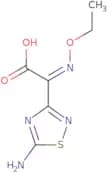
CAS:(Z)-2-(5-Amino-1,2,4-thiadiazol-3-yl)-2-(ethoxyimino)acetic acid is a synthetic compound that can be used as an antibiotic. It is synthesized from acetonitrile and phosphorus oxychloride in the presence of hydroxyl groups. This reaction yields a mixture of amides and cyanoacetamide derivatives. The amides are then converted to their respective alkyl chlorides with methyl iodide, which are then reacted with dimethyl acetylenedicarboxylate to form the desired product. The final step is to hydrolyze the ester group with hydrochloric acid to yield (Z)-2-(5-amino-1,2,4-thiadiazol-3-yl)-2-(ethoxyimino)acetic acid. This chemical has been shown to have antibacterial properties against some strains of bacteria such asFormula:C6H8N4O3SPurezza:Min. 95%Colore e forma:PowderPeso molecolare:216.22 g/mol3-Methoxybenzenamine
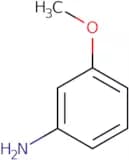
CAS:<p>3-Methoxybenzenamine is a molecule that can be synthesized by an asymmetric reaction. It has carcinogenic potential and is classified as a chemical substance. 3-Methoxybenzenamine reacts with hydrochloric acid to form hydrogen chloride gas and methoxybenzene. The hydroxyl group on the molecule reacts with l-tartaric acid to form an ester, which then undergoes hydrolysis to produce 3-hydroxybutanoic acid. This reaction also produces water, which may result in a decrease of the concentration of the reactants. 3-Methoxybenzenamine can also react with amines to form quaternary ammonium salts, which are highly soluble in water and have a high detection sensitivity.</p>Formula:C7H9NOPurezza:Min. 95%Colore e forma:Clear LiquidPeso molecolare:123.15 g/mol4'-Trifluoromethoxy-β-methyl-β-nitrostyrene
CAS:4'-Trifluoromethoxy-beta-methyl-beta-nitrostyrene is a fine chemical that is a useful building block in organic synthesis. It can be used as a reagent, specialty chemical, or intermediate for the preparation of more complex compounds. This compound has been shown to be useful in the synthesis of natural products and pharmaceuticals.Formula:C10H8F3NO3Purezza:Min. 95%Peso molecolare:247.17 g/molPoly[2-methoxy-5-(2-ethylhexyloxy)-1,4-phenylenevinylene] - M.W. average 10,000-100,000
CAS:Poly[2-methoxy-5-(2-ethylhexyloxy)-1,4-phenylenevinylene] (MEH-PPV) is a polymer that has been extensively studied in the past. It has an average molecular weight of 10,000 to 100,000 and exhibits semiconducting properties. MEH-PPV can be synthesized by chemical sulfonation of MEH-PPV with sulfuric acid followed by addition of potassium hydroxide. This process yields a polymer that is soluble in organic solvents. The degree of sulfonation can be controlled by adjusting the ratio of sulfuric acid to MEH-PPV. MEH-PPV can also be synthesized from vinyl alcohol and vinylene monomers by free radical polymerization or copolymerization reactions. In this process, vinyl alcohol and vinylene are copolymerized to form polymers with alternating ethylene glycol and phenylethynyl moieties.Formula:(C17H24O2)nPurezza:Min. 95%Colore e forma:Red PowderMethyl 2-ethoxybenzoate
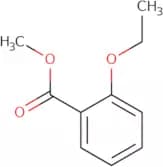
CAS:<p>Methyl 2-ethoxybenzoate is a zwitterion that can be used as a chromatographic technique for the separation of mixtures. It has been shown to have an important role in signal pathways and mass spectrometric techniques. Methyl 2-ethoxybenzoate also has the ability to form imines, which are compounds formed from the reaction between a primary amine and an aldehyde or ketone. These compounds are found in plants, such as cryptochlorogenic acid and phenetole, which are known to have anti-inflammatory properties. The isomeric forms of methyl 2-ethoxybenzoate include aziridine and biphenyl, which have been shown to have anti-inflammatory activities.</p>Formula:C10H12O3Purezza:Min. 95%Colore e forma:Clear LiquidPeso molecolare:180.2 g/mol4-Methoxy-2,3,5-trimethylpyridine
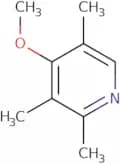
CAS:<p>4-Methoxy-2,3,5-trimethylpyridine is an efficient hydrogenolysis catalyst that can be used for the synthesis of ethers from alcohols. It is a member of the methoxides family and can be produced by condensation of chloroform with acetaldehyde and formaldehyde. 4-Methoxy-2,3,5-trimethylpyridine inhibits palladium chloride from catalyzing hydrogenation reactions. The compound also has an inhibiting activity against acidic amines and n-Oxides. Its high yield makes it useful in organic synthesis as a precursor to diethyl malonate.</p>Formula:C9H13NOPurezza:Min. 95%Colore e forma:Colourless To Yellow LiquidPeso molecolare:151.21 g/mol2-[(Acetyloxy)methoxy]ethyl acetate
CAS:2-[(Acetyloxy)methoxy]ethyl acetate is a drug that inhibits the enzyme orotidine 5′-monophosphate decarboxylase, which is responsible for the conversion of uridine to orotic acid. This inhibition prevents the synthesis of RNA and DNA and leads to cell death by inhibiting protein synthesis. 2-[(Acetyloxy)methoxy]ethyl acetate has shown tuberculostatic activity in leukemic mice, with an inhibition constant of 3.2 × 10 M. The compound also inhibits diphenolase activity, which is important in the production of uridine phosphorylase, an enzyme that produces uridine from orotic acid. 2-[(Acetyloxy)methoxy]ethyl acetate has been tested for its ability to inhibit herpes simplex virus (HSV) in vitro and in vivo and has been shown to be effective against HSV type 1 and HSVFormula:C7H12O5Purezza:Min. 95%Colore e forma:Colorless Clear LiquidPeso molecolare:176.17 g/mol2,5-Dihydro-2,5-dimethoxy-2-dimethoxymethylfuran
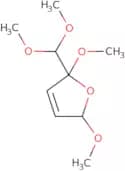
CAS:<p>2,5-Dihydro-2,5-dimethoxy-2-dimethoxymethylfuran is a chemical compound that belongs to the group of reagents. It is used as a reaction component in organic synthesis and has been shown to be a useful scaffold for the development of new compounds. 2,5-Dihydro-2,5-dimethoxy-2-dimethoxymethylfuran is also a versatile building block for complex compounds and fine chemicals.</p>Formula:C9H16O5Purezza:Min. 95%Peso molecolare:204.22 g/mol3,4-Difluoro-2-methoxybenzonitrile
CAS:<p>3,4-Difluoro-2-methoxybenzonitrile is an organic chemical compound that is a useful scaffold for the synthesis of complex compounds. It reacts with nucleophiles such as Grignard reagents to form a wide range of products. 3,4-Difluoro-2-methoxybenzonitrile has been shown to be a versatile building block for the synthesis of high quality and speciality chemicals, including pharmaceuticals and agrochemicals. This chemical is also used as a research chemical, which can be used in drug discovery and development. The CAS number for this chemical is 886496-72-6.</p>Formula:C8H5F2NOPurezza:Min. 95%Colore e forma:Clear LiquidPeso molecolare:169.13 g/molMethyl 3,4,5-trimethoxyphenyl acetate
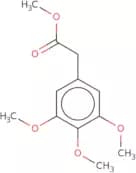
CAS:Methyl 3,4,5-trimethoxyphenyl acetate is an ester that is used as a building block and intermediate in the synthesis of pharmaceuticals. It can also be used as an intermediate in research and as a reagent for chemical analysis. Methyl 3,4,5-trimethoxyphenyl acetate has high purity and is available at competitive prices.Formula:C12H16O5Purezza:Min. 95%Peso molecolare:240.25 g/mol4-Cyano-3-methoxy-benzenesulfonyl chloride
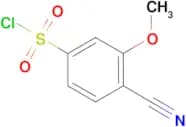
CAS:Formula:C8H6ClNO3SPurezza:95.0%Colore e forma:SolidPeso molecolare:231.65(2E)-3-(2,4-dimethoxyphenyl)-1-(4-fluorophenyl)prop-2-en-1-one
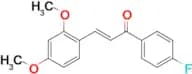
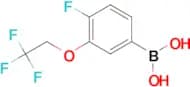
CAS:Formula:C17H15FO3Purezza:95.0%Peso molecolare:286.302(4-Fluoro-3-(2,2,2-trifluoroethoxy)phenyl)boronic acid
CAS:Formula:C8H7BF4O3Purezza:95.0%Peso molecolare:237.94

![2-[2-[4-[Bis(4-fluorophenyl)methyl]piperazin-1-yl]ethoxy]acetic acid HCl](/_next/image/?url=https%3A%2Fstatic.cymitquimica.com%2Fproducts%2F3D%2Fthumb-webp%2FFB98570.webp&w=3840&q=75)

![Poly[2-methoxy-5-(2-ethylhexyloxy)-1,4-phenylenevinylene] - M.W. average 10,000-100,000](/_next/image/?url=https%3A%2Fstatic.cymitquimica.com%2Fproducts%2F3D%2Fthumb-webp%2FFP165854.webp&w=3840&q=75)
![2-[(Acetyloxy)methoxy]ethyl acetate](/_next/image/?url=https%3A%2Fstatic.cymitquimica.com%2Fproducts%2F3D%2Fthumb-webp%2FFA64791.webp&w=3840&q=75)