Eteri
Gli eteri sono composti organici contenenti un gruppo funzionale etere, caratterizzati da un atomo di ossigeno legato a due radicali idrocarburici. Questi composti sono preziosi nella sintesi e servono come solventi in varie reazioni chimiche. Da CymitQuimica, offriamo una selezione di eteri di alta qualità per supportare le vostre applicazioni di ricerca e industriali, garantendo risultati affidabili ed efficaci. La nostra gamma di eteri soddisfa diverse esigenze di laboratorio, dagli esperimenti di routine alla ricerca avanzata.
Trovati 40902 prodotti di "Eteri"
Ordinare per
Purezza (%)
0
100
|
0
|
50
|
90
|
95
|
100
(9Z)-N-[(3-Methoxyphenyl)methyl]-9-octadecenamide
CAS:Please enquire for more information about (9Z)-N-[(3-Methoxyphenyl)methyl]-9-octadecenamide including the price, delivery time and more detailed product information at the technical inquiry form on this pageFormula:C26H43NO2Purezza:Min. 95%Peso molecolare:401.63 g/mol4-Chloro-2-methoxy-5-methylaniline
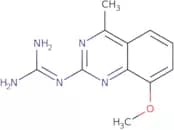
CAS:4-Chloro-2-methoxy-5-methylaniline is a dye molecule that is used in the synthesis of other molecules, such as diketene. It is also used as a solvent, coupling agent, and a dye molecule. This compound can be synthetically prepared by reacting naphthylamine with pyrazolone. The reaction requires catalytic amounts of polyvalent metal salts, such as zinc chloride or iron(III) chloride. The halogenation of 4-chloro-2-methoxy-5-methylaniline to produce 2,4,5-trichlorophenol can be achieved by diazotising the molecule with sodium nitrite and potassium dichromate. 4-Chloro-2-methoxy-5 methylaniline's substituents are methyl groups on the phenyl ring (Cl) and chlorine atoms (C1). Derivatives of thisFormula:C8H10ClNOPurezza:Min. 95%Peso molecolare:171.62 g/molN-(8-Methoxy-4-methylquinazolin-2-yl)guanidine
CAS:<p>Please enquire for more information about N-(8-Methoxy-4-methylquinazolin-2-yl)guanidine including the price, delivery time and more detailed product information at the technical inquiry form on this page</p>Formula:C11H13N5OPurezza:Min. 95%Peso molecolare:231.25 g/mol(-)-N-[1-(R)-Ethoxycarbonxyl-3-phenylpropyl]-L-alanine
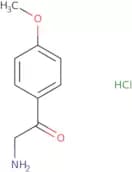
CAS:<p>Please enquire for more information about (-)-N-[1-(R)-Ethoxycarbonxyl-3-phenylpropyl]-L-alanine including the price, delivery time and more detailed product information at the technical inquiry form on this page</p>Formula:C15H21NO4Purezza:Min. 95%Peso molecolare:279.33 g/mol2-Amino-4'-methoxyacetophenone hydrochloride
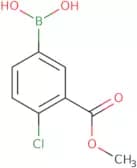
CAS:Prodotto controllato<p>Please enquire for more information about 2-Amino-4'-methoxyacetophenone hydrochloride including the price, delivery time and more detailed product information at the technical inquiry form on this page</p>Formula:C9H11NO2·HClPurezza:Min. 95%Colore e forma:PowderPeso molecolare:201.65 g/mol(4-Chloro-3-(methoxycarbonyl)phenyl)boronic acid
CAS:<p>Please enquire for more information about (4-Chloro-3-(methoxycarbonyl)phenyl)boronic acid including the price, delivery time and more detailed product information at the technical inquiry form on this page</p>Formula:C8H8BClO4Purezza:Min. 95%Peso molecolare:214.41 g/molN-(Ethoxycarbonylphenyl)-N'-methyl-N'-phenylformamidine
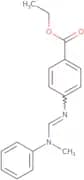
CAS:Please enquire for more information about N-(Ethoxycarbonylphenyl)-N'-methyl-N'-phenylformamidine including the price, delivery time and more detailed product information at the technical inquiry form on this pageFormula:C15H14N2O2Purezza:Min. 95%Peso molecolare:254.28 g/mol(4-Ethoxyphenyl)boronic acid
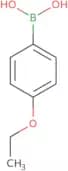
CAS:4-Ethoxyphenylboronic acid is a boron-containing compound that has been shown to have potent antiviral activity. This compound is synthesized from adipose tissue and optical properties of the phenoxazine derivative are studied in order to find an efficient process for solid-phase synthesis. 4-Ethoxyphenylboronic acid has been shown to inhibit triglyceride lipase and fatty acid, which may be an important drug target. It has also been found to have potent antagonistic effects on fatty acids.Formula:C8H11BO3Purezza:Min. 95%Peso molecolare:165.98 g/mol2-(Phenylmethoxy)-acetic acid hydrazide
CAS:<p>2-(Phenylmethoxy)-acetic acid hydrazide is a synthetic depressant that belongs to the group of phthalimides. It is an orally active drug with a triazolo structure and has been used in the treatment of psychoneurosis and anxiety, but it has also been found to be effective in treating reflexes and diazepine-induced psychosomatic disorders. 2-(Phenylmethoxy)-acetic acid hydrazide may also act as a prodrug for other agents, such as azides or phenylureas.</p>Formula:C9H12N2O2Purezza:Min. 95%Peso molecolare:180.2 g/mol3,7,4'-Trihydroxy-5-methoxy-8-prenylflavanone, (2R,3R)-
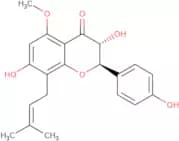
CAS:3,7,4'-Trihydroxy-5-methoxy-8-prenylflavanone, (2R,3R)- is a prenylated flavonoid compound, which is a type of naturally occurring polyphenol. These compounds are known for their complex structures and biological activities, frequently contributing to the therapeutic properties of various plants. The source of this flavanone is often plants belonging to the Fabaceae family, including the roots and other parts of certain legumes, where it accumulates as part of the plant’s secondary metabolism.Purezza:Min. 95%2-Methoxypyrimidine-5-boronic acid
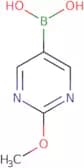
CAS:<p>Please enquire for more information about 2-Methoxypyrimidine-5-boronic acid including the price, delivery time and more detailed product information at the technical inquiry form on this page</p>Formula:C5H7BN2O3Purezza:Min. 95%Peso molecolare:153.93 g/mol5-[(2-Methoxyphenoxy)-methyl]-2-oxazolidinone
CAS:Prodotto controllato5-[(2-Methoxyphenoxy)-methyl]-2-oxazolidinone is a pharmacological agent that is structurally similar to rapamycin. It has been shown to inhibit the production of creatine kinase in rat liver microsomes and has been used in studies on degenerative diseases. 5-[(2-Methoxyphenoxy)-methyl]-2-oxazolidinone inhibits the activity of polymerase chain reaction (PCR) by binding to the DNA polymerase and blocking the extension of an oligonucleotide primer. It has also been shown to be toxic to humans, as it can cause fatty acid accumulation and a clinical response. In addition, this drug is enantiopure, meaning that it is composed of only one type of molecule with a specific configuration. The analytical chemistry for this drug includes gas chromatography (GC) and high performance liquid chromatography (HPLC).Formula:C11H13NO4Purezza:Min. 95%Colore e forma:White PowderPeso molecolare:223.23 g/molDesmethoxy ranolazine
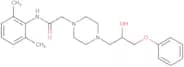
CAS:Please enquire for more information about Desmethoxy ranolazine including the price, delivery time and more detailed product information at the technical inquiry form on this pageFormula:C23H31N3O3Purezza:Min. 95%Peso molecolare:397.51 g/mol2-Chloro-5-methoxyaniline
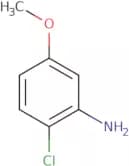
CAS:<p>2-Chloro-5-methoxyaniline is a primary amine that has structural isomers. It is also a lactam with an aromatic ring. 2-Chloro-5-methoxyaniline can be used as a cytotoxic compound. It can inhibit the uptake of unlabeled chemical ionization by cells and has been shown to have potent inhibition of brain uptake in rats. 2-Chloro-5-methoxyaniline has been shown to be effective against Alzheimer's disease in clinical studies. Chemical ionization mass spectrometry has demonstrated that this compound binds to the molecule acetylcholine, which is involved in the neurotransmitter system.</p>Formula:C7H8ClNOPurezza:Min. 95%Colore e forma:Colourless To Yellow To Brown Solid Or Liquid (May Vary)Peso molecolare:157.6 g/mol2,5-Dichloro-4-methoxybenzoic acid
CAS:<p>2,5-Dichloro-4-methoxybenzoic acid is a synthetic herbicide that inhibits the enzyme 5-enolpyruvylshikimate-3-phosphate synthase (EPSPS). This enzyme is necessary for the synthesis of aromatic amino acids. 2,5-Dichloro-4-methoxybenzoic acid is used as a selective herbicide in plants grown in vitro to eliminate weeds. It is also used to control populations of wild plants and grasses. 2,5-Dichloro-4-methoxybenzoic acid has been shown to inhibit the growth of glyphosate resistant weed species by inhibiting EPSPS activity.</p>Purezza:Min. 95%1,1,3,3-Tetraethoxypropane
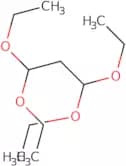
CAS:1,1,3,3-Tetraethoxypropane is a fatty acid that is produced by the metabolism of plant and animal lipids. It has been used as a food additive to bind water and improve texture in baked goods. It also has shown to have antioxidant properties. In addition, 1,1,3,3-Tetraethoxypropane has been shown to be reactive with human feces and inhibit enzyme activities in infectious diseases. This compound is also an autoimmune disease agent that inhibits physiological activities in humans. The bound form of 1,1,3,3-Tetraethoxypropane can be found in human serum and liver cells.Formula:C11H24O4Purezza:Min. 95%Colore e forma:Clear LiquidPeso molecolare:220.31 g/mol1-(Chloroacetyl)-4-(4-methoxyphenyl)piperazine
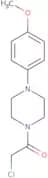
CAS:Prodotto controllatoPlease enquire for more information about 1-(Chloroacetyl)-4-(4-methoxyphenyl)piperazine including the price, delivery time and more detailed product information at the technical inquiry form on this pageFormula:C13H17ClN2O2Purezza:Min. 95%Peso molecolare:268.74 g/mol4-(Trifluoromethoxy)phenylboronic Acid (contains varying amounts of Anhydride)
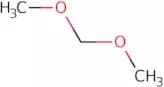
CAS:<p>4-(Trifluoromethoxy)phenylboronic acid is a boron-containing compound that has been shown to be a potent inhibitor of the histone deacetylase (HDAC) enzyme. It also has surfactant properties and can be used as a photochemical reagent. 4-(Trifluoromethoxy)phenylboronic acid is orally bioavailable and may have therapeutic potential for neurodegenerative diseases, such as Alzheimer's disease, Parkinson's disease, and Huntington's disease. It also has the ability to inhibit cancer cell growth by inhibiting HDAC activity. This drug has been found to cross-couple with organosilicon compounds in order to form new compounds with potent inhibitory activity against HDAC enzymes.</p>Formula:C7H6BF3O3Purezza:Min. 95%Peso molecolare:205.93 g/molDimethoxymethane
CAS:Dimethoxymethane is a colorless liquid with a sweet odor. Dimethoxymethane has been used as an intermediate in organic synthesis, as well as a solvent for various reactions.Formula:C3H8O2Purezza:Min. 95%Peso molecolare:76.09 g/mol4-(Benzyloxy)-5-methoxy-2-nitrobenzaldehyde
CAS:<p>4-(Benzyloxy)-5-methoxy-2-nitrobenzaldehyde (BOMBA) is an amide with affinity for microtubules. It has been shown to interact with the microtubule lattice and inhibit the polymerization of tubulin. This leads to a decrease in cell viability and cytotoxicity, as well as a decrease in tumor size. In vivo studies have demonstrated that BOMBA inhibits tumor growth by inducing thrombosis and coagulation, which results in reduced blood flow to the tumor. The mechanism of action of BOMBA is thought to be due to its ability to form sulfamates, which are known for their anti-coagulant activity.</p>Formula:C15H13NO5Purezza:Min. 95%Peso molecolare:287.27 g/mol
![(9Z)-N-[(3-Methoxyphenyl)methyl]-9-octadecenamide](/_next/image/?url=https%3A%2Fstatic.cymitquimica.com%2Fproducts%2F3D%2Fthumb-webp%2FFN165022.webp&w=3840&q=75)


![(-)-N-[1-(R)-Ethoxycarbonxyl-3-phenylpropyl]-L-alanine](/_next/image/?url=https%3A%2Fstatic.cymitquimica.com%2Fproducts%2F3D%2Fthumb-webp%2FFE22879.webp&w=3840&q=75)

![5-[(2-Methoxyphenoxy)-methyl]-2-oxazolidinone](/_next/image/?url=https%3A%2Fstatic.cymitquimica.com%2Fproducts%2F3D%2Fthumb-webp%2FFM25063.webp&w=3840&q=75)