Nitro
I composti nitro sono molecole organiche contenenti uno o più gruppi nitro (NO2). Questi composti sono ampiamente utilizzati nella sintesi di esplosivi, prodotti farmaceutici e coloranti. Da CymitQuimica, offriamo una vasta gamma di composti nitro di alta qualità per supportare le vostre applicazioni di ricerca e industriali, garantendo risultati sicuri ed efficaci. La nostra selezione include una varietà di composti nitro adatti a diverse sintesi chimiche e applicazioni.
Trovati 2516 prodotti di "Nitro"
Ordinare per
Purezza (%)
0
100
|
0
|
50
|
90
|
95
|
100
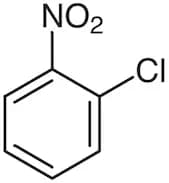
2-Chloronitrobenzene
CAS:Formula:C6H4ClNO2Purezza:>99.0%(GC)Colore e forma:White or Colorless to Yellow powder to lump to clear liquidPeso molecolare:157.553-(4-Nitrophenyl)isoxazole
CAS:Formula:C9H6N2O3Purezza:>96.0%(GC)Colore e forma:Slightly Pale Yellow - Yellow SolidPeso molecolare:190.164-Iodo-3-nitrotoluene
CAS:Formula:C7H6INO2Purezza:>98.0%(GC)Colore e forma:Light yellow to Brown powder to crystalPeso molecolare:263.032-Iodo-3-nitrotoluene
CAS:Formula:C7H6INO2Purezza:>98.0%(GC)Colore e forma:Light orange to Yellow to Green powder to crystalPeso molecolare:263.032,4-Dibromo-6-nitrophenol
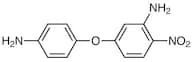
CAS:Formula:C6H3Br2NO3Purezza:>98.0%(GC)Colore e forma:White to Yellow to Green powder to crystalPeso molecolare:296.903,4'-Diamino-4-nitrodiphenyl Ether
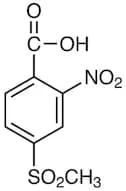
CAS:Formula:C12H11N3O3Purezza:>98.0%(GC)Colore e forma:Orange to Brown powder to crystalPeso molecolare:245.244-Methylsulfonyl-2-nitrobenzoic Acid
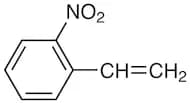
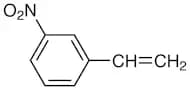
CAS:Formula:C8H7NO6SPurezza:>98.0%(GC)(T)Colore e forma:White to Orange to Green powder to crystalPeso molecolare:245.211-Nitro-2-vinylbenzene (stabilized with TBC)
CAS:Formula:C8H7NO2Purezza:>95.0%(GC)Colore e forma:White to Light yellow to Light orange powder to crystalPeso molecolare:149.155-Methoxy-2-nitrobenzaldehyde
CAS:Formula:C8H7NO4Purezza:>98.0%(GC)Colore e forma:White to Light yellow powder to crystalPeso molecolare:181.15(E)-1-Chloro-2-(2-nitrovinyl)benzene
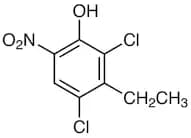
CAS:Formula:C8H6ClNO2Purezza:>98.0%(GC)Colore e forma:White to Light yellow powder to crystalPeso molecolare:183.592,4-Dichloro-3-ethyl-6-nitrophenol
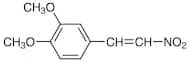
CAS:Formula:C8H7Cl2NO3Purezza:>98.0%(GC)(T)Colore e forma:Light yellow to Yellow to Orange powder to crystalPeso molecolare:236.051,2-Dimethoxy-4-(2-nitrovinyl)benzene
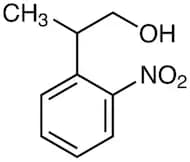
CAS:Formula:C10H11NO4Purezza:>98.0%(GC)Colore e forma:White to Yellow to Yellow green powder to crystalPeso molecolare:209.202-(2-Nitrophenyl)propan-1-ol
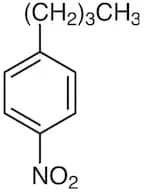
CAS:Formula:C9H11NO3Purezza:>98.0%(GC)Colore e forma:Light yellow to Brown clear liquidPeso molecolare:181.191-Butyl-4-nitrobenzene
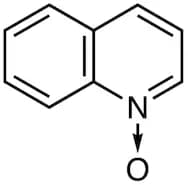
CAS:Formula:C10H13NO2Purezza:>96.0%(GC)Colore e forma:Light yellow to Amber to Dark green clear liquidPeso molecolare:179.22Quinoline N-Oxide
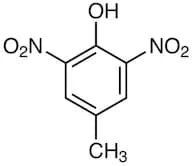
CAS:Formula:C9H7NOPurezza:>98.0%(GC)Colore e forma:White to Gray to Brown powder to crystalinePeso molecolare:145.162,6-Dinitro-p-cresol (wetted with ca. 20% Water) (unit weight on dry weight basis)
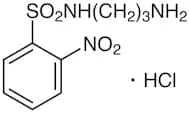
CAS:Formula:C7H6N2O5Purezza:>98.0%(GC)(T)Colore e forma:Light yellow to Brown powder to crystalPeso molecolare:198.13N-(3-Aminopropyl)-2-nitrobenzenesulfonamide Hydrochloride
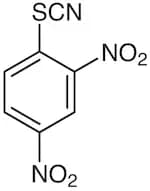
CAS:Formula:C9H13N3O4S·HClPurezza:>98.0%(T)Colore e forma:White to Light yellow to Light orange powder to crystalPeso molecolare:295.742,4-Dinitrophenyl Thiocyanate
CAS:Formula:C7H3N3O4SPurezza:>98.0%(GC)Colore e forma:Light yellow to Yellow to Orange powder to crystalPeso molecolare:225.183-Nitrostyrene (stabilized with 3,5-Di-tert-butylcatechol)
CAS:Formula:C8H7NO2Purezza:>98.0%(GC)Colore e forma:Colorless to Yellow clear liquidPeso molecolare:149.15N-(3-Hydroxypropyl) 4-hydroxy-2-nitroaniline
CAS:Prodotto controllato<p>Stability Hygroscopic<br>Applications N-(3-Hydroxypropyl) 4-hydroxy-2-nitroaniline is a hair ingredient. It is used as a semipermanent (nonoxidative) hair colorant and as a toner in permanent (oxidative) hair dye products.<br> Not a dangerous good if item is equal to or less than 1g/ml and there is less than 100g/ml in the package<br>References Burnett, C. L., et al.: Int. J. Toxicol., 28, 217S (2009); Yazar, K., et al.: Contact Dermatitis, 61, 269 (2009)<br></p>Formula:C9H12N2O4Colore e forma:NeatPeso molecolare:212.2rac-4-Benzyloxy-3-nitrostyrene Oxide
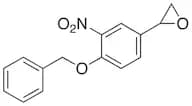
CAS:Prodotto controllato<p>Applications rac-4-Benzyloxy-3-nitrostyrene Oxide (cas# 51582-41-3) is a compound useful in organic synthesis.<br>References Karellas, P., et al.: J. Med. Chem., 51, 6128 (2008),<br></p>Formula:C15H13NO4Colore e forma:NeatPeso molecolare:271.276-Amino-1,3-dipropyl-5-nitrosouracil
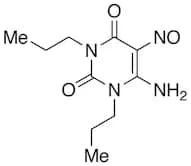
CAS:Prodotto controllato<p>Stability Stable at RT<br>Applications An intermediate used for the sythesis of xanthine derivatives.<br>References Daly, J.W., et al.: J. Med. Chem., 28, 487 (1985), Erickson, R.H., et al.: J. Med. Chem., 34, 3405 (1991),<br></p>Formula:C10H16N4O3Colore e forma:NeatPeso molecolare:240.264-Nitrocatechol
CAS:<p>Applications 4-Nitrocatechol can be used as a catalyst and an antibacterial against intestinal bacteria.<br>References Jones, Matthew D., et al.: Polymer Preprints (Amer. Chem. Soc.), 48(2), 873-874 (2007);Jeong, Eun-Young, et al.: Food Chem., 115(3), 1006-1010 (2009)<br></p>Formula:C6H5NO4Colore e forma:NeatPeso molecolare:155.113,5-Dinitro-4-hydroxybenzoic Acid
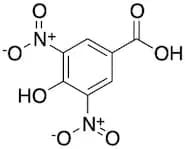
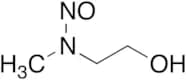
CAS:Prodotto controllato<p>Applications 3,5-DINITRO-4-HYDROXYBENZOIC ACID (cas# 1019-52-9) is a useful research chemical.<br></p>Formula:C7H4N2O7Colore e forma:NeatPeso molecolare:228.116N-(Nitrosomethyl)ethanolamine
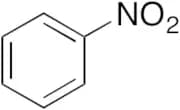
CAS:Prodotto controllato<p>Applications N-(Nitrosomethyl)ethanolamine can be used to study the chemical-molecular perspective of the liver specificity of the carcinogenicity of NOCs.<br>References Yuan, J., et.al.: Chem. Res. Toxicol., 25, 2432-2442, (2012);<br></p>Formula:C3H8N2O2Colore e forma:Colourless To Light YellowPeso molecolare:104.11Nitrobenzene
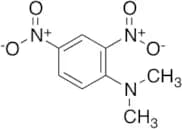
CAS:Prodotto controllato<p>Applications Nitrobenzene is a compound that exhibits chromosomal genotoxicity against hamster lung cells, and has the potential to cause cancer in humans (1,2). Nitrobenzene is also used as a starting material to synthesize 4-Aminophenol (A618920) through catalytic hydrogenation (3). Drinking water contaminant candidate list 3 (CCL 3) compound as per United States Environmental Protection Agency (EPA), environmental, and food contaminants.<br> Not a dangerous good if item is equal to or less than 1g/ml and there is less than 100g/ml in the package<br>References 1. Bonacker, D. et al.: Arch. Toxicol. 2004 Jan;78(1):49-57.2. Hsu, C. et al.: J. Environ. Sci. Health. C. Environ. Carcinog. Ecotoxicol. Rev. 2007 Apr-Jun;25(2):155-843. Rode, C. et al.: Org. Proc. Res. Dev. 1999 Nov;3(6), pp 465–470<br></p>Formula:C6H5NO2Colore e forma:Light YellowPeso molecolare:123.11N,N-dimethyl-2,4-dinitroaniline
CAS:Prodotto controllato<p>Applications N,N-dimethyl-2,4-dinitroaniline (cas# 1670-17-3) is a useful research chemical.<br></p>Formula:C8H9N3O4Colore e forma:NeatPeso molecolare:211.17Cantrodifene
CAS:Prodotto controllato<p>Stability Moisture Sensitive<br>Applications 4-Isothiocyanato-4'-nitrodiphenyl ether (cas# 19881-18-6) is a useful research chemical.<br> Not a dangerous good if item is equal to or less than 1g/ml and there is less than 100g/ml in the package<br></p>Formula:C13H8N2O3SColore e forma:NeatPeso molecolare:272.274-Nitroguaiacol
CAS:Prodotto controllato<p>Applications 4-Nitroguaiacol (cas# 3251-56-7) is a compound useful in organic synthesis. Dyes and metabolites.<br>References Conn, H., et al.: J. Bacteriol.,54, 291(1947), Schleifer, K., et al.: Bacteriol. Rev., 36, 407 (1972), Collins, M., et al.: J. Gen. Microbiol., 100, 221(1977), Schleifer, K., et al.: Methods Microbiol., 18, 123 (1985),<br></p>Formula:C7H7NO4Colore e forma:NeatPeso molecolare:169.13N,N-Diethyl-4-nitroaniline
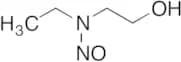
CAS:Prodotto controllato<p>Applications N,N-Diethyl-4-nitroaniline<br></p>Formula:C10H14N2O2Colore e forma:Light Yellow To YellowPeso molecolare:194.23N-Ethyl-N-(2-hydroxyethyl)nitrosamine
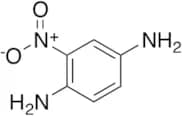
CAS:Prodotto controllato<p>Applications N-Ethyl-N-(2-hydroxyethyl)nitrosamine is a member of the nitrosamine class of carcinogens and induces renal cancer. It has been shown to induce tumors in the kidneys of rats and in the lungs of mice.<br>References Hiasa, Y., et al.: Cancer Lett, 145, 143-149 (1999)<br></p>Formula:C4H10N2O2Colore e forma:NeatPeso molecolare:118.132-Nitrobenzene-1,4-diamine
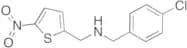
CAS:Prodotto controllato<p>Applications 2-nitrobenzene-1,4-diamine (cas# 5307-14-2) is a useful research chemical.<br></p>Formula:C6H7N3O2Colore e forma:NeatPeso molecolare:153.14N-(4-Chlorobenzyl)-1-(5-nitrothiophen-2-yl)methanamine
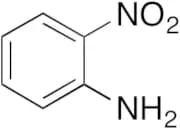
CAS:Prodotto controllato<p>Applications N-(4-Chlorobenzyl)-1-(5-nitrothiophen-2-yl)methanamine is an analogue of GSK 4112 (G797700) which is a synthetic ligand for REV-ERBα, a member of the nuclear receptor superfamily that functions as a receptor for the porphoryin heme. GSK 4112 mimics the action of heme acting as agonist and suppresses the expression of REV-ERBα target genes involved in gluconeogenesis.<br>References Kojetin, D. et al.: ACS Chem. Biol., 6, 131 (2011); Grant, D. et al.: ACS Chem. Biol., 5, 925 (2010)<br></p>Formula:C12H11ClN2O2SColore e forma:NeatPeso molecolare:282.7462-Nitroaniline
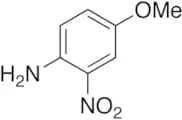
CAS:Prodotto controllato<p>Impurity Albendazole Impurity 4<br>Applications 2-Nitroaniline, is the main precursor to phenylenediamines, which are converted to benzimidazoles, a family of heterocycles that are key components in pharmaceuticals. Albendazole Impurity 4<br> Not a dangerous good if item is equal to or less than 1g/ml and there is less than 100g/ml in the package<br>References Booth, G.,et al.: Ull. Encyc. Indust. Chem. (2007);<br></p>Formula:C6H6N2O2Colore e forma:NeatPeso molecolare:138.124-Methoxy-2-nitroaniline(2-Nitro-p-anisidine)
CAS:Prodotto controllato<p>Applications Toxic to some wild and domestic birds and mice. Molluscicidal activity<br> Not a dangerous good if item is equal to or less than 1g/ml and there is less than 100g/ml in the package<br>References De Abreu, F. et al.; Bioorg. Med. Chem. 9, 659 (2001); Schafer, E.W. et al.; Arch. Environ. Con. Tox. 14, 111 (1985); Schafer, E.W. et al.; Arch. Environ. Con. Tox. 12, 355 (1983)<br></p>Formula:C7H8N2O3Colore e forma:NeatPeso molecolare:168.152-(2-Nitroanilino)ethanol
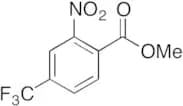
CAS:Prodotto controllato<p>Applications 2-(2-Nitroanilino)ethanol is used in the preparation of (phenylamino)quinoxalinone derivatives which has been identified as a new class of glycogen phosphorylase inhibitors.<br>References Dudash, J., et al.: Bioorg. Med. Chem. Lett., 21, 4790 (2005); Hellerstein, M., et al.: J. Clin. Invest. 100, 1305 (1994)<br></p>Formula:C8H10N2O3Colore e forma:Dark Red To RedPeso molecolare:182.18Methyl 2-Nitro-4-(trifluoromethyl)benzoate
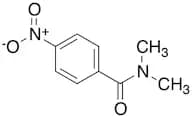
CAS:Prodotto controllato<p>Applications Methyl 2-Nitro-4-(trifluoromethyl)benzoate has been used in the synthesis of isoxazolinone antibacterial agents, using nitrogen as a replacement for the stereogenic center of the molecule. Also used in the preparation of benzo[b]azepines as inhibitors of cholesterol ester transfer.n<br>References Snyder, L. et al.: Bioorg. Med. Chem. Lett., 14, 4735 (2004);<br></p>Formula:C9H6F3NO4Colore e forma:Colourless To Light YellowPeso molecolare:249.15N,N-Dimethyl-4-nitrobenzamide
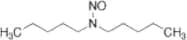
CAS:Prodotto controllato<p>Applications N,N-Dimethyl-4-nitrobenzamide<br></p>Formula:C9H10N2O3Colore e forma:NeatPeso molecolare:194.19N,N-Diamylnitrosamine
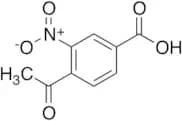
CAS:Prodotto controllato<p>Applications N,N-Diamylnitrosamine (cas# 13256-06-9) is a compound useful in organic synthesis.<br></p>Formula:C10H22N2OColore e forma:NeatPeso molecolare:186.294-Acetyl-3-nitrobenzoic Acid
CAS:Prodotto controllatoFormula:C9H7NO5Colore e forma:NeatPeso molecolare:209.1561,3-Dinitrobenzene
CAS:Prodotto controllato<p>Applications 1,3-Dinitrobenzene is used as an analyte to detect explosive environments (1), including those containing picric acid (2). Neurotoxic agent (3). Drinking water contaminant candidate (CCL3) as per United States Environmental Protection Agency (EPA). Environmental contaminants; Food contaminants.<br> Not a dangerous good if item is equal to or less than 1g/ml and there is less than 100g/ml in the package<br>References 1. ÄŒapka, L. et al.: J. Chromatogr. A. 2015 Apr 3;1388:167-73.2. Sanda, S. et al.: Chem. Commun. (Camb) 2015 Apr 18;51(30):6576-93. Maurer, L. et al.: Neurotoxicology. 2016 Mar;53:74-84<br></p>Formula:C6H4N2O4Colore e forma:Light YellowPeso molecolare:168.11Nitrofurate
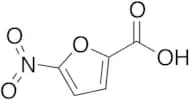
CAS:Prodotto controllato<p>Applications Nitrofurate is a useful organic reagent. It is used for preparation of polycyclic small molecules.<br>References Tan, D., et al.: J. Am. Chem. Soc., 121, 9073 (1999); Lu, P., et al.: Org. Lett., 11, 5710 (2009);<br></p>Formula:C5H3NO5Colore e forma:NeatPeso molecolare:157.08Ethyl Nitroacetate
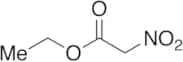
CAS:Prodotto controllato<p>Applications Ethyl Nitroacetate is an ester of nitrocarboxylic acid used as an intermediate in the preparation of unsubstituted amino acids.<br>References Sidorin, G.I.: Gig. Aspe. Okhr. Zdor. Nasel., 144 (1977);<br></p>Formula:C4H7NO4Colore e forma:NeatPeso molecolare:133.1Methyl 3-Nitroisonicotinate
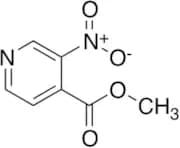
CAS:Prodotto controllato<p>Applications Methyl 3-nitroisonicotinate (cas# 103698-10-8) is a useful research chemical.<br></p>Formula:C7H6N2O4Colore e forma:NeatPeso molecolare:182.13Bromonitromethane
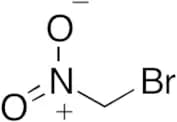
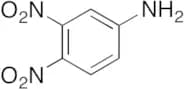
CAS:<p>Applications Bromonitromethane is used in the preparaton of [2,3-d]pyrimidines as inhibitors of Lck which can be used in the treatment of diseases where T-cell proliferation is unwanted. It is also used in the synthesis of isoxazoline N-oxides.<br> Not a dangerous good if item is equal to or less than 1g/ml and there is less than 100g/ml in the package<br>References DiMauro, E. et al.: Bioorg. Med. Chem. 17, 2305 (2007); Kunetsky, R. et al.: Org. Lett., 5, 4907 (2003);<br></p>Formula:CH2BrNO2Colore e forma:ColourlessPeso molecolare:139.943,4-Dinitroaniline
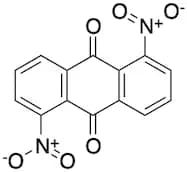
CAS:Prodotto controllato<p>Applications 3,4-Dinitroaniline is a useful intermediate for the preparation of various industrially important chemicals like dyes, pestices, herbicides and other useful research chemicals.<br>References Sivakumar, K. K., et al.: Int. J. Res. Pharm. Chem., 4, 517 (2014); Shahinian, E. G. H., et al.: Sci. Bull. B: Chem. Mater. Sci., 73, 153 (2011); Jahn, U.: Science of Synthesis, 41, 371 (2010)<br></p>Formula:C6H5N3O4Colore e forma:NeatPeso molecolare:183.121,5-Dinitroanthraquinone
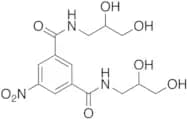
CAS:Prodotto controllato<p>Applications 1,5-Dinitroanthraquinone 97% (cas# 82-35-9) is a useful research chemical.<br></p>Formula:C14H6N2O6Purezza:97%Colore e forma:NeatPeso molecolare:298.21N,N’-Bis(2,3-dihydroxypropyl)-5-nitro-1,3-benzenedicarboxamide
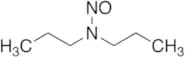
CAS:Prodotto controllato<p>Impurity Iohexol USP Related Compound C<br>Applications N,N'-Bis(2,3-dihydroxypropyl)-5-nitro-1,3-benzenedicarboxamide is used in the preparation of X-ray contrast agents.<br>References Haavaldsen, J. et al.: Acta Pharmac. Sue., 20, 219 (1983);<br></p>Formula:C14H19N3O8Colore e forma:White To Off-WhitePeso molecolare:357.32N-Nitrosodipropylamine
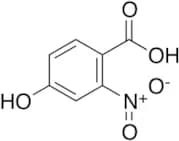
CAS:Prodotto controllato<p>Applications N-Nitrosodipropylamine is a a N-nitrosamine derivative. The mutagenic activities of the carcinogenic N-nitrosamines were studied on both S. typhimurium TA100 and TA98, revealing moslty mutagenic activities on TA100 with few exceptions on TA98 (1). Water contaminant (2). Drinking water contaminant candidate list 3 (CCL 3) compound as per United States Environmental Protection Agency (EPA), environmental, and food contaminants.<br> Not a dangerous good if item is equal to or less than 1g/ml and there is less than 100g/ml in the package<br>References 1. Yahagi, T. et al.: Mutat. Res. Fund. Mol. Mech. Mut. 1977. Apr:48(2) p121-1292. Mestankova, H. et al.: Water Res. 2016 Apr 15;93:110-20<br></p>Formula:C6H14N2OColore e forma:YellowPeso molecolare:130.194-Hydroxy-2-nitrobenzoic Acid
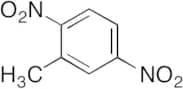
CAS:Prodotto controllato<p>Applications 4-hydroxy-2-nitrobenzoic acid (cas# 74230-08-3) is a useful research chemical.<br></p>Formula:C7H5NO5Colore e forma:Dark Red To Dark BrownPeso molecolare:183.1182,5-Dinitrotoluene
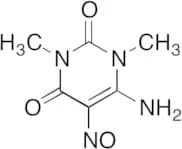
CAS:Prodotto controllato<p>Applications 2,5-Dinitrotoluene, is a building block used in various chemical synthesis.<br> Not a dangerous good if item is equal to or less than 1g/ml and there is less than 100g/ml in the package<br></p>Formula:C7H6N2O4Colore e forma:NeatPeso molecolare:182.134-Amino-1,3-dimethyl-5-nitrosouracil x-H2O
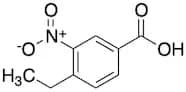
CAS:Prodotto controllato<p>Applications 4-Amino-1,3-dimethyl-5-nitrosouracil is a useful building block for organic synthesis.<br></p>Formula:C6H8N4O3Colore e forma:NeatPeso molecolare:184.154-Ethyl-3-nitrobenzoic Acid
CAS:Prodotto controllato<p>Applications 4-ETHYL-3-NITROBENZOIC ACID (cas# 103440-95-5) is a useful research chemical.<br></p>Formula:C9H9NO4Colore e forma:White To Off-WhitePeso molecolare:195.1723-Nitrobenzoylacetonitrile
CAS:Prodotto controllato<p>Applications 3-Nitrobenzoylacetonitrile (cas# 21667-64-1) is a useful research chemical.<br></p>Formula:C9H6N2O3Colore e forma:Yellow To Dark YellowPeso molecolare:190.1554-Nitrobenzoic Acid
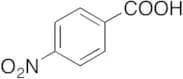
CAS:Prodotto controllato<p>Stability Hygroscopic<br>Applications 4-Nitrobenzoic Acid is used in the synthesis of anti-Trypanosoma cruzi agents in the treatment of chagas disease.<br>References Palace-Berl, F. et al.: Bioorg, Med. Chem. Lett., 21, 5395 (2013); Zhou, L. et al.: J. Med. Chem., 56, 796 (2013);<br></p>Formula:C7H5NO4Colore e forma:NeatPeso molecolare:167.12Ethyl 4-Nitrobenzoate
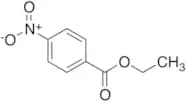
CAS:Prodotto controllato<p>Applications ETHYL 4-NITROBENZOATE (cas# 99-77-4) is a useful research chemical.<br></p>Formula:C9H9NO4Colore e forma:White To Light YellowPeso molecolare:195.172-Amino-5-nitrothiazole
CAS:Prodotto controllato<p>Impurity Niltazoxanide USP Related Compound A 2-Amino-5-nitrothiazole<br>Applications Niltazoxanide USP Related Compound A 2-Amino-5-nitrothiazole.<br>References Kariduraganavar, M. et al.; J. Mol. Struct. 987, 158 (2011). Tambe, S. J. et al.; Appl Polymer Sci. 114, 2291 (2009)<br></p>Formula:C3H3N3O2SColore e forma:YellowPeso molecolare:145.142-Amino-5-nitro-2'-chlorobenzophenone
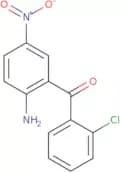
CAS:<p>2-Amino-5-nitro-2'-chlorobenzophenone (2ACCB) is a precursor for the synthesis of 2,4,6-trichlorophenol. 2ACCB reacts with hydrochloric acid in the presence of a scrubber to produce diphenyl ether and activated 2ACCB. The reaction rate can be increased by adding sodium hydroxide solution to the reaction solution. The hydroxy group on the 2ACCB molecule can be converted to a terpene by transfer reactions with glycol esters. This compound has been used as a sterilant and disinfectant in reaction solutions containing chlorine atoms or carbonyl groups.</p>Formula:C13H9ClN2O3Purezza:Min. 95%Colore e forma:PowderPeso molecolare:276.67 g/mol2,5-Dichloronitrobenzene
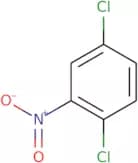
CAS:<p>2,5-Dichloronitrobenzene is a compound that is used to manufacture dyes and pharmaceuticals. It can be synthesized from sodium carbonate, 4-tert-butylbenzoic acid, and sodium hydroxide solution. To produce 2,5-dichloronitrobenzene, the reactants are heated in a reaction vessel with a diphenyl ether as an acid catalyst. The product of this reaction is then dissolved in deionized water or water containing other solvents such as methanol or ethanol. The reaction yield is approximately 95%. The byproducts of this process include 2-chloroacetophenone and hydrogen chloride gas. 2,5-Dichloronitrobenzene reacts with sodium hydroxide solution to form 4-tert-butyl benzoic acid and sodium chloride. This reaction occurs because these compounds have polar functional groups which can form hydrogen bonds with each</p>Formula:C6H3Cl2NO2Purezza:Min. 95%Colore e forma:PowderPeso molecolare:192 g/mol6-Chloro-2-nitrotoluene
CAS:<p>6-Chloro-2-nitrotoluene is a synthetic organic compound that has been identified in environmental samples as a reaction product of chlorine and organic compounds. It has been shown to induce root formation in plants, which is related to its ability to inhibit the formation of chlorinated hydrocarbons. 6-Chloro-2-nitrotoluene can be produced by reacting nitrogen atoms with zirconium at high temperatures and low pressures, requiring an activation energy of 50 kcal/mol.</p>Formula:C7H6ClNO2Purezza:Min. 95%Peso molecolare:171.58 g/mol(1-(4-Diethylamino)phenyl)-2-nitroethane
CAS:1-(4-Diethylamino)phenyl)-2-nitroethane is a reagent that is used as a building block in the synthesis of various heterocycles. It has been shown to be useful for the preparation of many heterocyclic compounds. The compound is also used as a research chemical and as a precursor to other organic compounds. 1-(4-Diethylamino)phenyl)-2-nitroethane is also an intermediate in the production of other speciality chemicals, such as pharmaceuticals, dyes, and pesticides.Formula:C12H18N2O2Purezza:Min. 95%Peso molecolare:222.28 g/mol3-Nitro-o-cresol
CAS:<p>3-Nitro-o-cresol is a chlorinated aromatic compound that has been shown to be an inhibitor of the enzyme catalase. Catalase is an enzyme that catalyzes the decomposition of hydrogen peroxide into water and oxygen. 3-Nitro-o-cresol inhibits this reaction by binding to the heme group in the enzyme, which prevents it from binding with molecular oxygen. This chemical also has a vibrational frequency of 1225 cm−1 and a molecular weight of 171.2 g/mol. 3-Nitro-o-cresol can be used as an antimicrobial agent against organisms such as Streptococcus pneumoniae, Escherichia coli, and Pseudomonas aeruginosa in liquid phase systems.</p>Formula:C7H7NO3Purezza:Min. 95%Colore e forma:PowderPeso molecolare:153.14 g/mol3-Amino-5-nitrobenzhydrazide
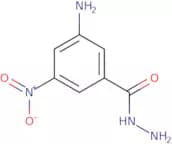
CAS:<p>3-Amino-5-nitrobenzhydrazide is a useful scaffold that can be used as a building block in the synthesis of other chemical compounds. It is a versatile intermediate that has been used in research to synthesize drugs and other chemicals, such as insecticides and herbicides. 3-Amino-5-nitrobenzhydrazide has been shown to be an effective reagent for the synthesis of complex compounds. This chemical has also been found to be an effective reaction component for the synthesis of speciality chemicals. 3-Amino-5-nitrobenzhydrazide is a fine chemical that can be used in many different applications.</p>Formula:C7H8N4O3Purezza:Min. 95%Colore e forma:PowderPeso molecolare:196.16 g/mol2-(2-Nitrophenoxy)acetic acid
CAS:<p>2-(2-Nitrophenoxy)acetic acid (NPAA) is a molecule that has been found in plants of the genus Balanites. It has been shown to be an intramolecular hydrogen bond acceptor, which may contribute to its chemical structure and stability. NPAA has also been shown to have a constant pKa value of 4.7, which means it is slightly acidic. NPAA is used as an industrial process sample preparation agent and can be synthesized by reacting phenol with nitric acid.</p>Formula:C8H7NO5Peso molecolare:197.14 g/mol2,4-Dinitrophenetole
CAS:<p>2,4-Dinitrophenetole is a nucleophilic compound that reacts with the hydrogen bond of an acid. It is a thermodynamic and kinetic acid which reacts with bile acids in the second order. The rate enhancement of 2,4-dinitrophenetole is due to its uncoupling effect on hepg2 cells. This chemical has been shown to react faster with picric acid than with nitric acid solutions.</p>Formula:C8H8N2O5Purezza:Min. 95%Colore e forma:PowderPeso molecolare:212.16 g/mol2-(2,2-dimethylpropanoyl)-3-(3-nitrophenyl)prop-2-enenitrile
CAS:<p>Please enquire for more information about 2-(2,2-dimethylpropanoyl)-3-(3-nitrophenyl)prop-2-enenitrile including the price, delivery time and more detailed product information at the technical inquiry form on this page</p>Purezza:Min. 95%(5-Chloro-2-methoxyphenyl)(4-(3-nitrophenyl)(2,5-thiazolyl))amine
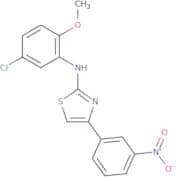
CAS:<p>Please enquire for more information about (5-Chloro-2-methoxyphenyl)(4-(3-nitrophenyl)(2,5-thiazolyl))amine including the price, delivery time and more detailed product information at the technical inquiry form on this page</p>Purezza:Min. 95%4-Chloro-2-nitrobenzylamine hydrochloride
CAS:4-Chloro-2-nitrobenzylamine hydrochloride is a fine chemical that can be used as a reagent or speciality chemical. It is also a versatile building block and reaction component for the preparation of various chemical compounds. 4-Chloro-2-nitrobenzylamine hydrochloride has been used as an intermediate in the synthesis of other chemicals, such as 1,2,3,4,5,6-hexahydrobenzo[e]pyrrolo[1,2-a]pyrazine. This compound has been shown to have antibacterial activity against Escherichia coli and Pseudomonas aeruginosa.Formula:C7H7ClN2O2•HClPurezza:Min. 95%Peso molecolare:223.06 g/mol3-Bromo-4-nitroanisole
CAS:<p>3-Bromo-4-nitroanisole is a nitroarene that reacts with biphenyls to form alkylated biphenyls. This reaction has been shown to be catalyzed by magnesium and halides, as well as organocatalytic techniques. The yield of the reaction depends on the technique used, as well as the reaction time and temperature. 3-Bromo-4-nitroanisole is a ligand that can be used in regression analysis, magnetic separation techniques, and other chemical reactions.</p>Formula:C7H6BrNO3Purezza:Min. 95%Colore e forma:PowderPeso molecolare:232.03 g/mol2-Fluoro-4-nitrobenzoic acid
CAS:<p>2-Fluoro-4-nitrobenzoic acid (2F4NBA) is an antibiotic that inhibits the growth of bacteria by blocking their amination reactions. 2F4NBA has been shown to be effective against multidrug-resistant pathogens, such as methicillin resistant Staphylococcus aureus and vancomycin resistant Enterococci. The drug has also been shown to inhibit the growth of cancer cells in vivo studies and can be used for the treatment of primary tumors. It is a benzoate analogue with a benzimidazole derivative structure, which is fluorescent and analytical chemistry compatible. 2F4NBA has good pharmacokinetic properties, with a half life time between 4 and 8 hours.</p>Formula:C7H4FNO4Purezza:Min. 95%Colore e forma:PowderPeso molecolare:185.11 g/mol1-(2-Methoxyphenyl)-2-nitroethane
CAS:1-(2-Methoxyphenyl)-2-nitroethane is a natural alkaloid that is found in the plant Piper methysticum. This compound has been shown to inhibit the transformation of nitroalkenes to nitropropene and nitrobenzene. The synthetic studies on this compound are mainly focused on its effects on other nitroalkenes. It has been shown that 1-(2-methoxyphenyl)-2-nitroethane can be used as an inhibitor of cyclization reactions, such as the synthesis of indole alkaloids, which are important in many pharmacological processes and biological systems.Formula:C9H9NO3Purezza:Min. 95%Colore e forma:PowderPeso molecolare:179.17 g/mol3-Fluoro-6-nitrobenzoic acid ethyl ester
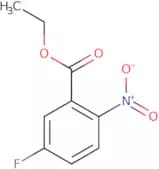
CAS:<p>3-Fluoro-6-nitrobenzoic acid ethyl ester is a high quality chemical that is used as an intermediate in the synthesis of complex compounds. It is also a useful scaffold for the synthesis of other compounds and can be used as a building block in the production of speciality chemicals. 3-Fluoro-6-nitrobenzoic acid ethyl ester has many reactions that it participates in, such as being a reaction component for the synthesis of pharmaceuticals and agrochemicals. This compound is versatile enough to be used in research or for commercial purposes.</p>Formula:C9H8FNO4Purezza:Min. 95%Colore e forma:PowderPeso molecolare:213.16 g/mol4-Nitrocinnamyl alcohol
CAS:<p>4-Nitrocinnamyl alcohol is an antiarrhythmic agent that is structurally related to the nitro group. It is produced by a synthetic process, and it has been shown to be mediated by piperidine. This compound is prepared by catalytic chlorinating of primary alcohols in the presence of hydrotalcite or catalysis with tosylates.</p>Formula:C9H9NO3Purezza:Min. 95%Colore e forma:PowderPeso molecolare:179.17 g/mol1-(3,4-Dimethoxyphenyl)-2-nitroethene
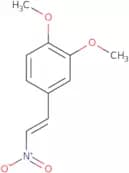
CAS:<p>1-(3,4-Dimethoxyphenyl)-2-nitroethene is a trifluoroacetic acid derivative that can be synthesized using the reaction of 1-(3,4-dimethoxyphenyl)ethanone and 2-nitroethanol. It is an unsymmetrical molecule with two possible structures. The first structure is postulated to be the energetically favored conformation, while the second structure is postulated to be the result of elimination of HCl during synthesis. This compound has shown potential as a prodrug for amine-containing drugs such as resveratrol or hydrazines.</p>Formula:C10H11NO4Purezza:Min. 95%Colore e forma:PowderPeso molecolare:209.2 g/molSodium 3-nitrobenzoate
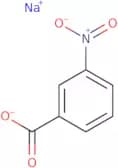
CAS:<p>Sodium 3-nitrobenzoate trihydrate is a salt of the chemical compound sodium 3-nitrobenzoate. It is an analytical chemistry reagent that is commonly used as a standard in solute analysis. Sodium 3-nitrobenzoate trihydrate has been shown to be soluble in water vapor, but not in anhydrous sodium. The hydrogen bond between this molecule and water molecules has been observed using vibrational spectroscopy and quantum theory. This solubility data can be used to calculate an activation energy for the dissociation of the hydrogen bond with water molecules.</p>Formula:C7H5NO4•NaPurezza:Min. 95%Colore e forma:PowderPeso molecolare:190.11 g/mol2-Chloro-4-nitro benzamide
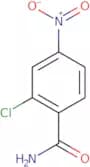
CAS:<p>2-Chloro-4-nitrobenzamide is a drug that belongs to the sulfa drugs. It has been shown to be effective in treating autoimmune diseases, particularly bowel disease and inflammatory bowel disease. 2-Chloro-4-nitrobenzamide inhibits the synthesis of fatty acids by blocking the enzyme acetyl CoA carboxylase, which is involved in the formation of long chain fatty acids. This drug also has immunosuppressive activities, which may be due to its ability to block T cell proliferation. 2-Chloro-4-nitrobenzamide is used as a chemical intermediate for antibiotics such as maduramicin ammonium and salinomycin sodium. It is also used as a dietary supplement or pharmaceutical dosage form for cardiac glycoside drugs such as digoxin.</p>Formula:C7H5ClN2O3Purezza:Min. 95%Colore e forma:PowderPeso molecolare:200.58 g/mol4-Iodo-3-nitro-1-(trifluoromethyl)benzene
CAS:<p>4-Iodo-3-nitro-1-(trifluoromethyl)benzene is a versatile building block in organic synthesis. It is an excellent reagent for the preparation of valuable heterocycles and complex molecules, such as spirocyclic amines, quinolines, benzooxazoles, and benzothiazoles. 4-Iodo-3-nitro-1-(trifluoromethyl)benzene is also used for the protection of reactive groups and as a temporary protecting group for alcohols. This chemical has CAS number 40097-5 and can be used as a research chemical or speciality chemical.</p>Formula:C7H3F3INO2Purezza:Min. 95%Colore e forma:PowderPeso molecolare:317 g/mol4-Nitroanthranilonitrile
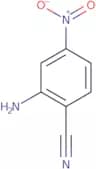
CAS:<p>4-Nitroanthranilonitrile is a pyridine that has been shown to be genotoxic, mutagenic, and mutagenic. It is also potentiating and can enhance the activity of other mutagens. 4-Nitroanthranilonitrile is a nitroreductase substrate, which may be mediated by its ability to reduce nitrite to nitrate. This compound has been shown to have the potential to act as a probe for detecting the presence of nitroreductase in cells.</p>Formula:C7H5N3O2Purezza:Min. 95%Colore e forma:PowderPeso molecolare:163.13 g/mol2-Nitro-4'-chloro diphenylsulfide
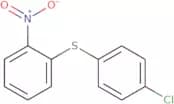
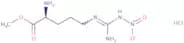
CAS:<p>2-Nitro-4'-chloro diphenylsulfide is a versatile intermediate that is used in the synthesis of a variety of other compounds. It is an important reagent in organic synthesis and has been shown to be useful as a building block for the synthesis of complex compounds with various functional groups. 2-Nitro-4'-chloro diphenylsulfide has been shown to participate in many different reactions, including nucleophilic substitution, elimination, condensation, and oxidation. This chemical is a fine chemical that can be used for research purposes.</p>Formula:C12H8ClNO2SPurezza:Min. 95%Colore e forma:PowderPeso molecolare:265.72 g/molN-Nitro-L-arginine methyl ester hydrochloride
CAS:<p>Inhibitor of nitric oxide synthase</p>Formula:C7H16ClN5O4Purezza:Min. 96 Area-%Colore e forma:PowderPeso molecolare:269.69 g/mol3-Chloro-4-nitrobenzoic acid
CAS:<p>3-Chloro-4-nitrobenzoic acid (3CNB) is an amine that has been shown to be a 5-HT1A receptor agonist. It has been used in animal models of anxiety, depression and schizophrenia. 3CNB is able to activate the 5-HT1A receptor, which is involved in the regulation of anxiety, mood and other behaviors. The activation energies for the binding of 3CNB to the 5-HT1A receptor are calculated to be 8.3 kcal/mol and 9.2 kcal/mol at pH 7.0 and 10 respectively. A clinical study found that this agent was effective in treating trichomonas vaginalis infections as well as reducing symptoms of irritable bowel syndrome. In vivo studies have revealed that 3CNB is capable of inducing a sustained increase in extracellular serotonin levels in rat brain tissue with a half life of 2 hours. Kinetic studies have also shown that nitro groups enhance</p>Formula:C7H4ClNO4Purezza:Min. 98 Area-%Colore e forma:PowderPeso molecolare:201.56 g/mol3-Methoxy-4-nitrobenzoic acid methyl ester
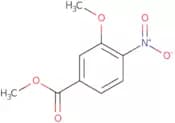
CAS:<p>3-Methoxy-4-nitrobenzoic acid methyl ester is a dianellidin, a type of natural product. It is an ionizing acid that catalyzes the reaction between carboxylic acids and hydroxyl compounds. This compound is used to produce some drugs, such as methyldopate, which is an antiarrhythmic drug that slows heart rate. The catalytic rate of 3-methoxy-4-nitrobenzoic acid methyl ester can be increased by buffers and solvents (e.g., methanol). These compounds increase the concentration of the reactants in solution and reduce the activation energy required for the reaction to take place. Uncatalyzed reactions are slow because there are no molecules to act as intermediates in the process.</p>Formula:C9H9NO5Purezza:95%NmrColore e forma:PowderPeso molecolare:211.17 g/mol4'-Methoxy-3',beta-dimethyl-beta-nitrostyrene
<p>4'-Methoxy-3',beta-dimethyl-beta-nitrostyrene is a fine chemical that belongs to the group of versatile building blocks. It is an intermediate for the synthesis of complex compounds, research chemicals, and speciality chemicals. 4'-Methoxy-3',beta-dimethyl-beta-nitrostyrene is a useful reagent in organic synthesis and can be used as a reaction component or scaffold. It has been shown to have high quality and it can be used as a useful building block.</p>Formula:C11H13NO3Purezza:Min. 95%Colore e forma:PowderPeso molecolare:207.23 g/mol2-Bromo-5-nitrobenzoic acid
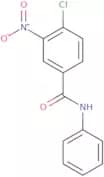
CAS:<p>2-Bromo-5-nitrobenzoic acid is an amine that has been shown to have a potent inhibitory effect on the enzyme fibrinogen, which is needed for blood clotting. It also inhibits other enzymes in the fibrinogen pathway, including those involved in protein synthesis and cellular metabolism. 2-Bromo-5-nitrobenzoic acid has been shown to inhibit cancer cells by blocking their ability to use amino acids as building blocks for new proteins. This drug may be used as a treatment for cancer and other diseases where protein synthesis is critical.</p>Formula:C7H4BrNO4Purezza:Min. 95%Colore e forma:PowderPeso molecolare:246.02 g/mol4-Chloro-3-nitrobenzanilide
CAS:<p>4-Chloro-3-nitrobenzanilide is a versatile building block for the preparation of complex compounds. It is used as a reagent in research and as a speciality chemical for the production of high quality fine chemicals. This compound can be used as a reaction component or scaffold to synthesize other compounds. 4-Chloro-3-nitrobenzanilide is a useful intermediate in organic synthesis because it has many functional groups that are easy to modify, making it easy to synthesize new compounds.</p>Formula:C13H9ClN2O3Purezza:Min. 95%Colore e forma:PowderPeso molecolare:276.67 g/mol4-Chloro-3-nitrobenzamide
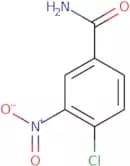
CAS:<p>4-Chloro-3-nitrobenzamide (4CNBA) is a potent inducer of hepatic drug metabolizing enzymes. It reacts with methyl cinnamate to form the 4-chloro-3-nitrobenzamide methyl ester and chloride ions. This reaction is catalyzed by copper, which binds to the 4CNBA molecule. The chloride ion then displaces water from the ester, producing a nitroso intermediate. This intermediate breaks down into an unstable nitrite, which in turn reacts with hydrogen peroxide to form a hydroxylamine intermediate. Hydroxylamine can then react with sulfhydryl groups to produce reactive thiols that are responsible for the induction of detoxification enzymes in the liver.<br>4CNBA has been shown to be toxic at high concentrations and is rapidly detoxified by Phase II enzymes such as glutathione S transferase, UDP glucuronosyltransferase, and N-acetyl</p>Formula:C7H5ClN2O3Purezza:Min. 95%Colore e forma:PowderPeso molecolare:200.58 g/mol1-(3,4-Difluorophenyl)-2-nitroethene
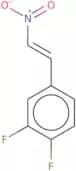
CAS:<p>1-(3,4-Difluorophenyl)-2-nitroethene is a versatile chemical building block that can be used as a reagent, intermediate, or scaffold in the synthesis of complex compounds. It is a high quality product with a wide range of uses. 1-(3,4-Difluorophenyl)-2-nitroethene has been shown to react with various other chemicals to form new compounds. For example, it reacts with methyl bromoacetate to form 1-(3,4-difluorophenyl)ethanone and 2-bromoacetaldehyde. This product can also be used as an intermediate in the synthesis of organic derivatives such as 3-[(2'-chloro-1'-fluoroethyl)amino]propionitrile hydrochloride.</p>Formula:C8H5F2NO2Purezza:Min. 95%Peso molecolare:185.13 g/mol2-Hydroxy-5-methoxy-3-nitrobenzaldehyde
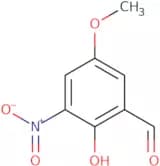
CAS:<p>2-Hydroxy-5-methoxy-3-nitrobenzaldehyde is a 6-membered aromatic compound that has been shown to have anti-cancer properties. It has been shown to inhibit the proliferation of cancer cells by inhibiting protein synthesis, as well as inducing apoptosis. This compound also inhibits the growth of colon cancer cells and cervical cancer cells in culture. 2-Hydroxy-5-methoxy-3-nitrobenzaldehyde has an inhibitory effect on the growth of cancer cells and may be used for treatment against tumors.</p>Formula:C8H7NO5Purezza:Min. 95%Colore e forma:PowderPeso molecolare:197.14 g/mol3'-Bromo-4'-fluoro-β-methyl-β-nitrostyrene
CAS:<p>3'-Bromo-4'-fluoro-beta-methyl-beta-nitrostyrene is a chemical compound with the molecular formula C9H5BrFN2O. It can be used as an intermediate in the synthesis of other chemical compounds. 3'-Bromo-4'-fluoro-beta-methyl-beta-nitrostyrene can also be used to produce research chemicals, speciality chemicals, and complex compounds. This compound has a high quality and is useful for research purposes.</p>Formula:C9H7BrFNO2Purezza:Min. 95%Colore e forma:PowderPeso molecolare:260.06 g/mol5-Nitroisatoic anhydride
CAS:<p>5-Nitroisatoic anhydride is a chemical compound that has found use in the synthesis of complex compounds and fine chemicals. It is a useful intermediate for the preparation of 5-nitro-1,2,4-triazole, which can be used as a research chemical or speciality chemical. 5-Nitroisatoic anhydride reacts with alcohols to form nitrosamines. This reaction component is also used in organic syntheses and as a reagent in the production of other chemicals.</p>Formula:C8H4N2O5Purezza:Min. 95%Peso molecolare:208.13 g/mol4-Chloro-3-nitro-5-sulfamoylbenzoic acid
CAS:4-Chloro-3-nitro-5-sulfamoylbenzoic acid is a chemical compound that belongs to the group of speciality chemicals. It is a versatile building block for the synthesis of complex compounds. 4-Chloro-3-nitro-5-sulfamoylbenzoic acid has high quality and can be used as reagents in research or as a building block for the synthesis of new molecules.Formula:C7H5ClN2O6SPurezza:Min. 95%Colore e forma:PowderPeso molecolare:280.64 g/mol4-Acetamido-2',4'-dinitro-5'-methyldiphenyl sulphone
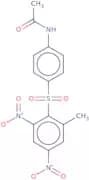
CAS:4-Acetamido-2',4'-dinitro-5'-methyldiphenyl sulphone is a high quality, versatile building block that is used as a reagent and complex intermediate. It can be used in the production of speciality chemicals, research chemicals and fine chemicals. 4-Acetamido-2',4'-dinitro-5'-methyldiphenyl sulphone is also a useful scaffold for the construction of new chemical compounds. This compound has been shown to be a reaction component in organic synthesis reactions.Formula:C15H13N3O7SPurezza:Min. 95%Colore e forma:Solid.Peso molecolare:379.35 g/mol4-Hydroxy-3-nitrobenzophenone
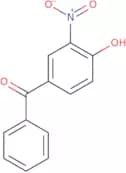
CAS:<p>4-Hydroxy-3-nitrobenzophenone is a divinylbenzen compound that is used as a polymerization catalyst. This product is an efficient method for synthesizing polymeric matrices containing immobilized carboxylic acids, which can be used in chromatographic science. 4-Hydroxy-3-nitrobenzophenone has been shown to have anticholinesterase activity and can be used for the synthesis of polymeric matrices containing immobilized carboxylic acids, which can be used in chromatographic science. 4-Hydoxy-3-nitrobenzophenone also has an acid catalyst that can react with glyceraldehyde 3 phosphate dehydrogenase.</p>Formula:C13H9NO4Purezza:Min. 95%Colore e forma:SolidPeso molecolare:243.21 g/mol2-Bromo-6-methyl-4-nitroaniline
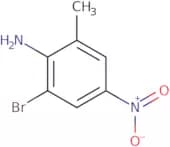
CAS:<p>2-Bromo-6-methyl-4-nitroaniline is a fine chemical that is used in the preparation of other chemicals and as a reagent. It can be used as an intermediate for organic synthesis, such as the conversion of 2-bromoindole to indoxyl, or as a building block for the preparation of more complex compounds. This chemical is also versatile in that it can be used in reactions with different reactants, including amines, carboxylic acids, thiols, and alcohols.</p>Formula:C7H7BrN2O2Purezza:Min. 95%Colore e forma:PowderPeso molecolare:231.05 g/mol2-Nitrophenethylamine hydrochloride
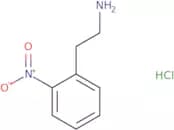
CAS:Prodotto controllato<p>2-Nitrophenethylamine hydrochloride is a fine chemical that is useful as a versatile building block. It can be used as a reaction component, or in the synthesis of other chemicals. 2-Nitrophenethylamine hydrochloride has CAS No. 861337-74-8 and is a complex compound with many possible uses, including as a research chemical or speciality chemical. As an intermediate for other compounds, it can be used to produce high quality reagents and products.</p>Formula:C8H11ClN2O2Purezza:Min. 95 Area-%Colore e forma:PowderPeso molecolare:202.64 g/mol2-Nitrobenzhydrazide
CAS:<p>2-Nitrobenzhydrazide is a pharmaceutical drug that inhibits the growth of cancer cells. It is a nitro-substituted benzoic acid derivative that reacts with nucleophilic groups in proteins to form covalent adducts, which inhibit cell growth. 2-Nitrobenzhydrazide has been shown to be effective against cervical cancer and spontaneous human breast cancer cells in culture. The mechanism of action involves the formation of reactive nitrosamines, which are thought to react with DNA bases or cause DNA strand breaks.</p>Formula:C7H7N3O3Purezza:90%Colore e forma:PowderPeso molecolare:181.15 g/mol4-Methyl-2-nitroanisole
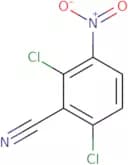
CAS:<p>4-Methyl-2-nitroanisole (4NA) is a hydronium that has been shown to be an anticancer drug. It inhibits the growth of cancer cells by binding to reactive methoxy groups on the cell surface and promotes apoptosis, or programmed cell death. 4NA also produces nitric oxide, which may cause DNA damage in cancer cells. The mechanism of action for 4NA is not fully understood but it has been shown to have a radical mechanism of action which leads to the formation of reactive molecules that can react with other molecules in the cell, leading to DNA damage and cell death. Preparative methods for synthesizing 4NA are acidic and involve aldehydes and nitrites.</p>Formula:C8H9NO3Purezza:Min. 95%Colore e forma:PowderPeso molecolare:167.16 g/mol2,6-Dichloro-3-nitrobenzonitrile
CAS:<p>2,6-Dichloro-3-nitrobenzonitrile is a chemical compound that has been synthesized by optimising the potentials of monoclonal antibodies. It has shown to have high affinity for rat brain membranes and is also able to bind to the target molecule with high affinity. 2,6-Dichloro-3-nitrobenzonitrile can be used as a pesticide and has been shown to have an affinity for the target molecule with high affinity. This chemical compound is trisubstituted and has three nitro groups, which are all located in the same position on the benzene ring. The structure of this chemical compound is optimized, meaning that it has been modified so that its physical properties are more desirable than its original form.</p>Formula:C7H2Cl2N2O2Purezza:Min. 95%Colore e forma:PowderPeso molecolare:217.01 g/molβ-Nitrostyrene
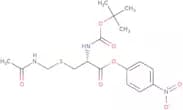
CAS:<p>b-Nitrostyrene is a nitroso compound that has been shown to inhibit the activity of methoxy groups in the intestine. It also inhibits the growth of animals, both in vitro and in vivo. b-Nitrostyrene binds to a receptor that is found on cells in the brain and other organs, which may be related to its ability to prevent cancerous tumors from forming. The binding affinity for this receptor is much lower than that of carbazole or sulfonic acid compounds, which may account for its greater toxicity. b-Nitrostyrene also has a number of other effects, such as inhibiting radiation-induced damage to maternal tissue or optical properties. It can also act as an additive for devices or quaternary alkaloids.</p>Formula:C8H7NO2Purezza:Min. 95%Peso molecolare:149.15 g/molBoc-S-acetamidomethyl-L-cysteine 4-nitrophenyl ester
CAS:Please enquire for more information about Boc-S-acetamidomethyl-L-cysteine 4-nitrophenyl ester including the price, delivery time and more detailed product information at the technical inquiry form on this pageFormula:C17H23N3O7SPurezza:Min. 95%Colore e forma:PowderPeso molecolare:413.45 g/mol